Video wird geladen...

Video konnte nicht geladen werden

Zur Startseite

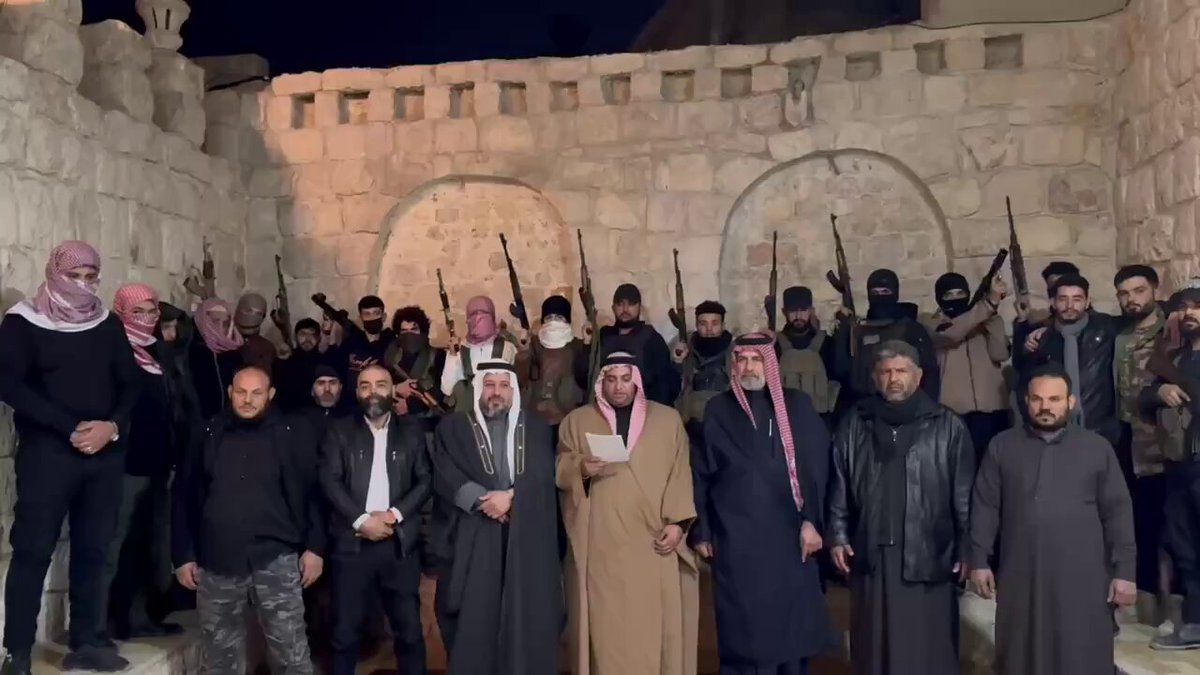
#Syria how did the SDF/YPG gradually lose leverage over its Arab component and with Washington which privileges a state to state relation with Damascus & where does Ankara stand ? ⁦François Picard⁩ ⁦FRANCE 24 English

31,218 Aufrufe • vor 6 Monaten •via X (Twitter)

0 Kommentare

Keine Kommentare verfügbar

Kommentare vom Original-Post werden hier angezeigt

Ähnliche Videos

Mazloum Abdi's European tour and the limits of European influence SDF commander Mazloum Abdi this past week visited several European countries, including Italy and France. In Paris, he held meetings with French officials to discuss developments in Syria and the continuing integration process between the SDF and Damascus. • The tour caused controversy in pro-government Syrian media. Some outlets cited Syrian diplomatic sources as saying that Abdi travelled without prior consultation with or approval from Damascus, describing the visit as a violation of the integration agreement. • The SDF has not been formally dissolved, and Abdi remains its commander during the transitional integration period. Damascus continues to deal with him in that capacity, with Syrian officials and government-linked media still referring to him as the commander of the Syrian Democratic Forces. His foreign travel therefore does not clearly violate the agreement. The SDF and its civilian institutions continue to exist while their gradual incorporation into Syrian state structures proceeds, and Abdi retains a distinct political and military position throughout. • The visits carry symbolic importance, but France has no physical leverage in northern Syria. With US forces withdrawn, there is no allied military framework within which French engagement could be anchored. France cannot deploy forces, secure supply lines or meaningfully deter pressure from Damascus or Turkey. • France's domestic constraints compound its external weakness. Economic deterioration, internal political pressures and the migration debate make European governments more inclined to seek workable arrangements with Damascus than to confront it. • Turkey holds the strongest immediate external position by a considerable margin. Geographic proximity, deep intelligence penetration, established local networks, military reach and a demonstrated willingness to act give Ankara tools that no European state can match in northern Syria. • The remaining SDF pocket is geographically incoherent and demographically vulnerable. Most Kurdish-majority cities lie within a few kilometres of the Turkish border. Hasakah, the only city with some distance from Turkey, has considerable Arab depth. The area cannot be held against sustained indirect pressure. • Direct military action may not be required. Turkey and Damascus may be able to achieve their objectives through intelligence operations, recruitment of local informants and defectors, sabotage and selective drone strikes, eroding SDF cohesion below the threshold of overt provocation and hollowing out its organisational capacity through the integration process itself. Recent reporting of sleeper cells near Qamishli illustrates how exposed the SDF's position already is. • Israel's influence does not reach the north. Whatever leverage Tel Aviv holds over Damascus is concentrated in the south and tied to its campaign against Iranian entrenchment. In northern Syria, Israeli influence is wholly overshadowed by Turkey's. • European engagement may produce limited influence over specific details: representation arrangements, treatment of former SDF personnel, administrative appointments, cultural rights and the pace of institutional transfers. This is the realistic ceiling. • The SDF retains agency. Its internal cohesion, negotiating strategy, political manoeuvring and capacity to exploit divisions among its opponents will shape the pace and final form of integration. The prolonged process also leaves room for regional developments to alter the balance. Growing discussion of possible US pressure on Damascus to move against Hezbollah in Lebanon could place further strain on Ahmed al-Sharaa's still-consolidating government. A wider confrontation or internal crisis could distract Damascus, weaken its centralising momentum and allow the SDF to recover some negotiating leverage, preserving elements of de facto autonomy through locally concentrated security forces, administrative continuity and political representation. Whether that materialises will depend on disciplined leadership, internal cohesion and a more effective political strategy than Damascus can easily contain. • Any durable SDF role in Syria requires accommodation with Turkey. No amount of European diplomatic support can substitute for that. More:

The National Context

24,477 Aufrufe • vor 1 Monat