正在加载视频...

视频加载失败

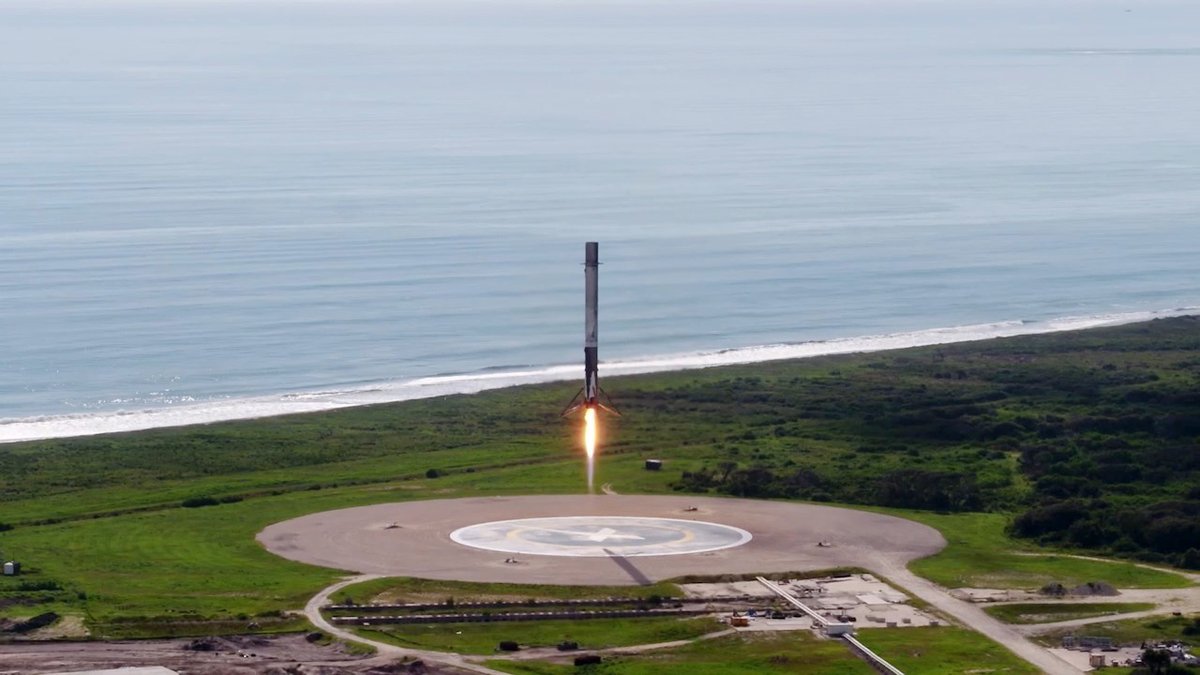
TerraFirma started with a question: when SpaceX gets to Mars, who builds the city? Noah Schochet and Noah McGuinness worked on programs including Starlink, Starshield, and Starship. They saw that even at SpaceX, physical infrastructure was often the bottleneck. Now they’re building the answer with TerraFirma: a new kind...

10,797 次观看 • 2 个月前 •via X (Twitter)

3 条评论

hira 的头像
hira2 个月前

@SpaceX @noah_schochet @NoahMcGuinn robots building cities on mars? count me in

Dolan 的头像
Dolan2 个月前

@SpaceX @noah_schochet @NoahMcGuinn Nice thread 👏

Shieldmaiden Sophia 的头像
Shieldmaiden Sophia2 个月前

@SpaceX @noah_schochet @NoahMcGuinn Been following construction tech and the productivity decline is staggering. 500k worker shortfall and 40% of the workforce retiring in a decade. You can't hire through that. TerraFirma's retrofit approach is what caught my attention.

相关视频

Today, we’re announcing that we’ve raised $115 million in funding, including a $100M Series A led by Kleiner Perkins. America has lost the ability to build, and we’re here to restore it. My co-founder, Noah McGuinness, and I left our jobs at SpaceX , where we worked on programs including Starship, Starshield, and Starlink, to build a company that will solve construction’s greatest challenges. Infrastructure is the foundation of civilization, and construction is the precursor to innovation. If America wants to build a brighter future for the next generation, we have to make it faster, cheaper, and safer to build. That’s where TerraFirma comes in. We’re a new type of company, a robotic construction company that builds the full technology stack needed to deliver an order-of-magnitude improvement in one of the world’s oldest, largest, most important, but least efficient industries. We are building technology that expands what’s possible in construction on Earth, and then we'll use that same technology to build megastructures and colonies on the Moon and Mars. We’ve made tremendous progress over the past year, growing the company more than 10x in the last 12 months. We are performing projects across the world. By the end of October 2026, we are on track to operate 3 of the top 3 largest robotic construction fleets in the world, each on a different continent, bringing unprecedented speed, scale, and efficiency to some of the world’s most complex critical infrastructure projects. This funding will allow us to step on the gas and scale our manufacturing, software, operations, and construction deployments, including work on massive commercial and government contracts. We’re building the future of construction right here in Austin, Texas, and scaling it globally. If you want to be part of the team changing the world, now and on Mars, join us. Our Series A was led by Kleiner Perkins, with participation from Bain Capital Ventures, Glade Brook Capital Partners, BANNER VC, Saga Ventures, Trust Ventures, Definition, PEAK6, Magnetar Capital, and Ravelin Capital. Huge thanks to all of our angel investors, friends, and family who have helped and supported us throughout this journey. Apply here:

Noah Schochet

2,292,608 次观看 • 2 个月前

The Rapid Growth of SpaceX, Starlink, Starshield & Armada: “I am very grateful that SpaceX is an American company.” "Data centers in space is coming, & it makes sense" “5 years ago they hadn’t even launched Starlink—now it’s in 150 countries & it’s continuing to grow every week.” “It’s an unfair advantage that we have with Starshield.” “If the world can get access to SpaceX, I think that’s a good thing.” Dan Wright (Dan Wright), CEO of Armada Elon (Elon Musk) builds long-term advantage, then unleashes it at massive scale: SpaceX, Starlink, Tesla, Neuralink, xAI.. . . . "We started the company working with SpaceX & they’ve continued to be a great partner for us. What that means is that as SpaceX rolls out throughout the world—& most people don’t know 5 years ago they hadn’t even launched Starlink —it’s in 150 countries & it’s continuing to grow every week. We are the first mover when it comes to the infrastructure, & that partnership works really well because we complement the connectivity with the infrastructure & the AI. We always are at the edge. It’s funny, I get messages from our team all the time & it’s like the most crazy places you can imagine. And the edge is gonna continue to get redefined. I get calls literally—I was on the call with somebody and they’re like, “Hey, can we get one of these in Antarctica?” I’m like, “Well yeah, Starlink’s live in Antarctica. No reason why we can’t do that.” Obviously data center in space is the new hotness. Everybody’s talking about it." "Yeah, what’s the deal with that—so are you gonna get these in space?" :They are modular. I mean the edge is continuing—this is actually a debate that we have in terms of how soon it’s going to happen—but it’s definitely going to happen. Data centers in space is coming, and it makes sense, right? If you think about what SpaceX is talking about with Starship going to the moon—you’re going to need compute, especially as you start to think about Optimus robots building bases on the moon, later Mars. You’re going to need large amounts of compute. Not to mention a lot of the things that we do here on Earth, you’re gonna want to do there in space. And it’s a lot more efficient to do it, especially in hostile environments, if you can automate more of that—things like mining, for example. And so you’re gonna see data centers in space, and I’m sure we’re definitely gonna be a part of it. "What do you think about SpaceX’s rumored IPO for 2026?" "I mean, I think SpaceX is an incredible company and they have a ton of value. So I don’t have any insider information here—but I would say, hey, if the world can get access to SpaceX, I think that’s a good thing. Starlink is really amazing in the sense that it just continues to get better so fast. They’re rolling out in new countries every week in major markets. Just as a real recent example, just this last week they launched in South Korea—big market and an important ally for the US, so that’s a big deal. They’re also expanding the types of services that are available. It started as a consumer product, then they brought it to enterprise. Initially that was used more as a backup, and now it’s being used more as a primary—and that is because the service keeps getting better and better as more satellites go up into the sky. Each generation of satellite is also better, not to mention the terminals on the ground. There’s now multiple types of terminals, including the more recent minis that people really like—“Hey, I can put it in a backpack if I go on a hike or if I’m traveling. I can put it on the ski rack of my car.” Perfect internet all the time. All that does for us is it gives us more use cases that we can unlock. Now that you have connectivity on the oil rig, or on a farm, or a ranch—wherever you are—we can apply the AI to those situations on the ground without latency, and then send the metadata back to some other location that they want it. Part of the full-stack approach. And also with Starshield—that’s a huge advantage when you think about some of the conflicts that are going on. People talk to me a lot about this race with China and the geopolitical conflicts around the world. I am very grateful that SpaceX is an American company. I feel like it’s an unfair advantage that we have with Starshield available to the DoD. We want to be the first mover with the infrastructure and the AI to help solve problems at the edge, and the work we’re doing with the Navy is a good example of that."

Molly O’Shea

30,317 次观看 • 7 个月前