Video yükleniyor...
Video Yüklenemedi
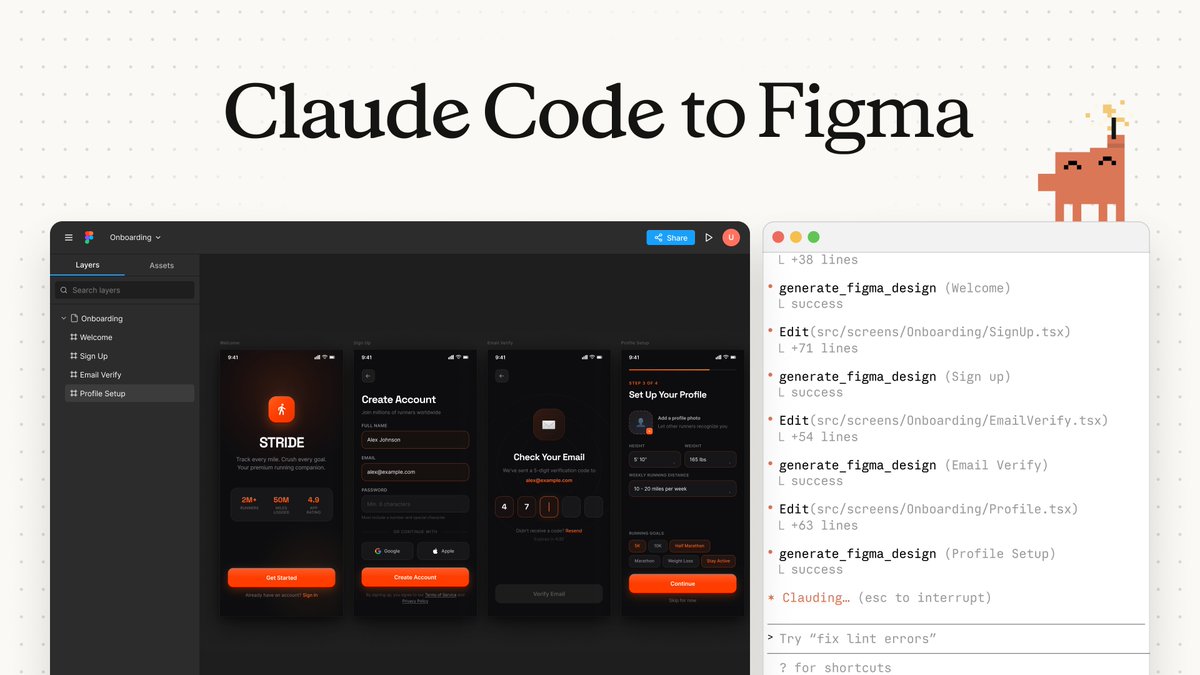
That gap between design and production? Closed. 🔁 GitHub Copilot, Visual Studio Code, and Figma now create a continuous loop. With the bidirectional Figma MCP server, Copilot users can: 🔹 Pull design context into code 🔹 Push working UI back to the canvas Connect your canvas and stay in... show more

113,405 görüntüleme • 7 ay önce •via X (Twitter)
31 Yorum

@code @figma pull design context into code — Cursor and Claude Code both do this already via Figma MCP. the actually new part is pushing working UI back to the canvas. bidirectional sync is what nobody else has shipped. that's the lede

@code @figma WTF - this is sick!

@code @figma Nice. The bidirectional part is the real win. Most design to code flows stop at codegen. Pushing working UI back into Figma is what actually cuts drift.

@code @figma Dormint copilot 💤 @Dormint_io

@code @figma wow guess i’m not sleeping tonight

@code @figma Bidirectional Figma MCP is the missing piece. pushing working UI back to the canvas sounds nice until the auto layout gets weird lol.

Bidirectional is the key word here. Every other design-to-code tool is a one-way street. You get the initial code and then design and implementation drift apart forever. Pushing working UI back to the canvas means the Figma file stays the source of truth. MCP is quietly becoming the standard for connecting every tool in the dev stack.

@code @figma The wall between designers and developers just got thinner. Design → code → UI updates in one loop.

@code @figma I just tried Code to Canvas via Claude Code, turns ourt it doesn't support flutter yet. And I literally said "YES!!" when i saw .dart in your demo. Thanks man!

The bidirectional Figma MCP server is the real differentiator here. Most design-to-code tools only go one way. Being able to push UI changes back to the canvas means you can iterate on generated code and have it reflect in the design file—that's where the actual productivity gain lives.

@code @figma #github #code and #figma

@code @figma But we have That in Antigravity IDE already

@code @figma This makes everything so much easier damn.

@code @figma That's amazing

@code @figma pity it can't edit an existing design on the canvas.

The bidirectional part is understated. Code→Figma means designers finally get to see what their specs actually look like when implemented — not a pixel-perfect mockup but real component behavior. This kills the "your design doesn't match the spec" argument forever because the spec IS the implementation

@code @figma Interesting

@code @figma Closing the gap is impressive, but will this loop actually speed real development?

@code @figma figma to code pipelines getting real now

@code @figma the design-to-code gap was the last excuse for slow shipping. bidirectional mcp just killed it

@code @figma Good

@code @figma GitHub just killed the greatest tech excuse: “It looked perfect in Figma.” Designers can’t blame devs anymore. Devs can’t blame unrealistic designs. Our favorite sport just got cancelled. This much peace feels illegal. 😭 #TechHumor #DevLife #Trending

@code @figma Hey there! Who still spends weekends manually aligning Photoshop layers? 🤖 The gap between "design" and production is officially a myth now.

@code @figma The bidirectional sync is the real hero here. No more "is this the final design?" guessing games. This finally makes Figma a living document. Huge for design engineering.

@code @figma Design to code to design in a loop

@code @figma how much did they pay you for this? figma is dedddddddd

@code @figma Wow, estuve probando figma make, como no tiene la version canva me parecio medio basico. Pero esta integracion definitivamente la voy a probar!

@code @figma From canvas to code and back again… this loop is magic 😎

@code @figma the bidirectional figma mcp server is the real engine here. that's where the actual magic happens for closing that loop.

@code @figma Devs now have a direct line from Figma frames to functional UI and back again. The handoff was always the bottleneck.

@code @figma You're forgetting that users often need to debug and iterate quickly - having seamless integration with Figma is great, but users still need tools to easily identify and fix UI issues in both environments.