Загрузка видео...

Не удалось загрузить видео

На главную

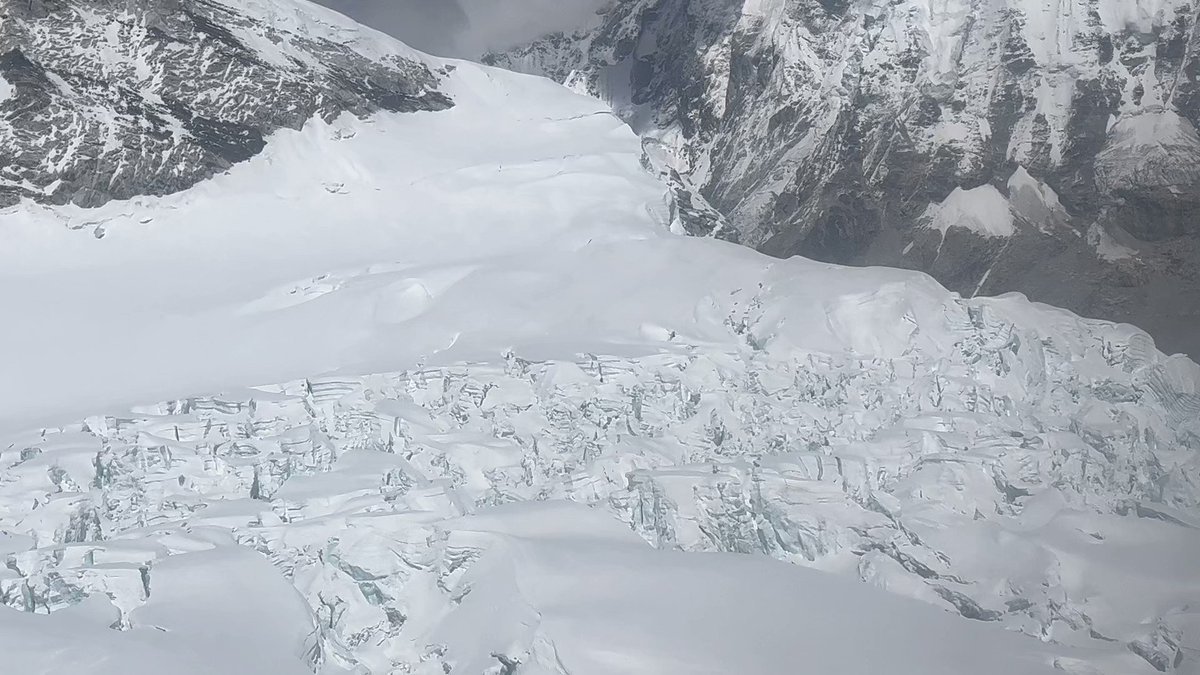
That’s us setting off from Everest base camp for our summit push this evening (20th May) at 11pm local Nepalese time (NPT). I will also be doing an X live at around 11pm just before we set off through the Khumbu Icefall to camp 1, where I’ll be starting...

111,169 просмотров • 2 месяцев назад •via X (Twitter)

Комментарии: 0

Нет доступных комментариев

Здесь появятся комментарии из оригинального поста

Похожие видео

EVEREST IN 4 DAYS FROM SEA LEVEL, NEW WORLD RECORD, NEW ERA OF CLIMBING EVEREST 🙌🏽🙏🏽🙌🏽🙇- Huge Congratulations Andrew ! He has just become the fastest person to go from sea-level to the summit of Everest in 3 days 23 hours and 7 minutes. Andrew Ushakov had a dream to be the fastest person to do this challenge, and show a different way to attempt Everest. Normally Everest missions can take 50+days due to acclimatisation routines, but Andrew wanted to show that with dedication, training and lots of preparation and hypoxic training for acclimatisation (*including 400+ hours in a hypoxic tent), it could be done faster. At Elite Exped we want to help clients achieve their big dreams in a safe way – that’s our priority. Andrew started his challenge from Sea Level, starting at New York on May 15th at 00.30am and flying to Kathmandu, and then flying to Everest Base Camp. Then he and his team climbed from Base Camp and stood on the summit of Everest on May 19th date at 9.22am – meaning he completed the incredible feat in 3 days, 23 hours and 7 minutes! This new record is a triumph, not just for Andrew, but for everyone who believes in their dreams. Andrew only started climbing in 2020, he is not a full-time athlete, which makes this feat even more impressive. Huge Congratulations Andrew – Brother, we are proud to have helped you realise your dream! So proud of our Elite Exped team who supported Andrew’s record led by Tejan Gurung. #AndrewUshakov #4daystosummitEverest #Everest #EliteExped #Nothingisimpossible

Nirmal Purja MBE

29,366 просмотров • 1 год назад

Vinod Khosla on the right way to execute a business plan Vinod Khosla, who founded Sun Microsystems and Khosla Ventures, likes to say: “Be obstinate about your vision, but be really flexible about your tactics.” He explains what he means by this: “It’s important to have a vision of where you’re trying to go, but how you get there is a series of experiments… What entrepreneurs do is effectual reasoning. They have a big vision, but they don’t try and get there in one leap… You take a step in the right direction so you can garner more resources and then try the next experiment… You try and garner resources for the next step, every step — not do the whole thing in one step.” This, Vinod believes, is one of the reasons raising too much money can lead founders astray: “People who raise too much money get too much confidence in their own plan, which is normally BS. The right way to do a business plan is flex-planning: have a vision, but plan the next 3-6 months to test every assumption you have. A business plan is about testing every assumption. Even if you’re sure it’s true, test it if you can in the marketplace by running an experiment.” He gives another analogy for the point he’s trying to make: “You want to shoot for Mount Everest, but nobody ever got to Mount Everest without getting to base camp first. You build a base camp of a stable place where you’ve learned a lot and where you can tread water for a while… Maybe you get to cash flow breakeven at base camp. But you want to set up base camp where it helps you scope out the path to Mount Everest.” Video source: Startup Grind (2015)

Startup Archive

13,930 просмотров • 7 месяцев назад

Some thoughts about this and essentially leaving people on the mountain and not saving them. Everest is tricky regarding helping people who are stuck and can't walk any longer. It's not about not helping them because you won't summit, It's about not helping them because you'll both die. A lot of time spent on Everest, you're essentially dying. At around 8,000 meters, you reach what's called the death zone. So if summitting from the Nepal side, that'd be Camp IV/South Col. When you cross that, you can no longer acclimatize because of the lack of oxygen. Even sherpas who have been born into these high altitudes struggle. Yes, oxygen tanks help, and sherpas will stash some for you, but ounces truly equal lbs up there. You have a short window to summit, based on predicted weather, and you shoot your shot and pray the weather holds. Even under ideal weather conditions, it can be a nightmare because the mountain has become a tourist attraction. It's no longer just skilled climbers trying to summit. It's people with money who didn't know how to use crampons before arriving at basecamp. You can die on the mountain because of a traffic jam from everyone taking their summit shot during the same window. At these heights, with your body shutting down already, how do you expect someone to carry another grown man down the mountain? Someone who can barely move from hypoxia and is oftentimes not even in the right frame of mind. You have around 20 hours WITH oxygen in the death zone before you die. Most deaths on the mountain happen during the descent, too. At that altitude, your decision making isn't the best either due to the lack of oxygen. You're just not getting someone off the mountain in almost all cases. Rarely, but it happens, a sherpa might accomplish it. It's not about missing the summit, it's about not becoming another brightly colored jacket icicle on the way to the summit. When you agree to go up that high, you agree that you're willing to die for it. You understand that no one is coming to save you, and that's the true price of admission .

9mmSMG

145,458 просмотров • 9 месяцев назад