正在加载视频...

视频加载失败

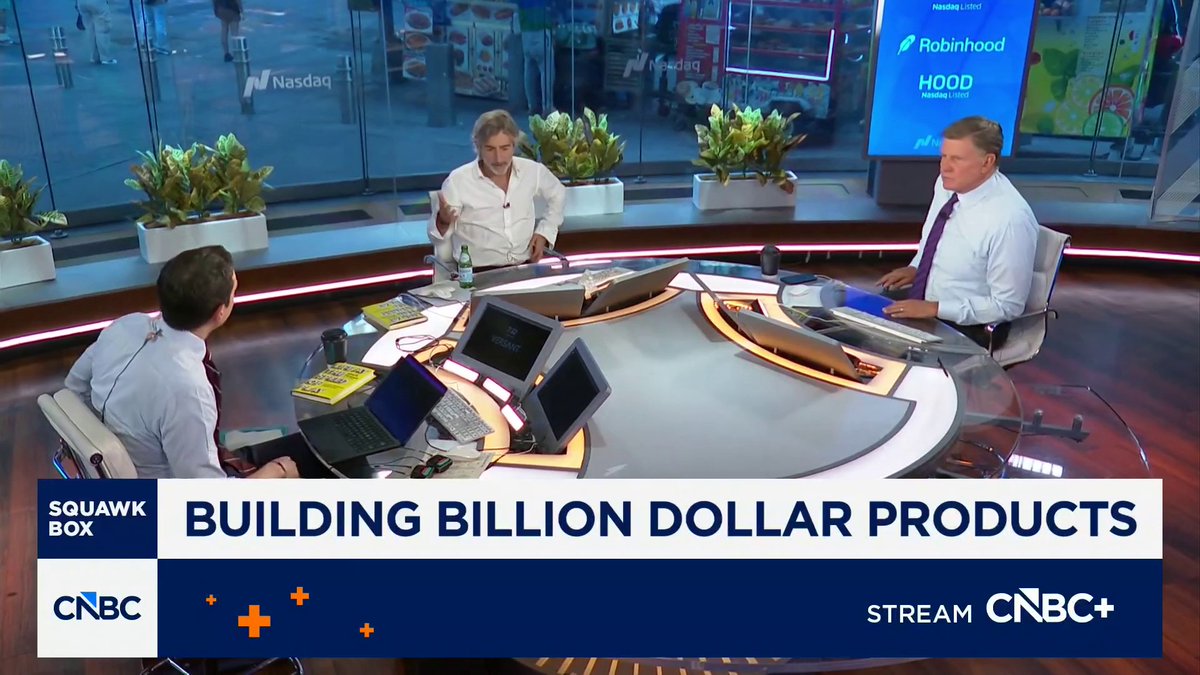
“the best programmers are using AI already.” here is what a senior programmer who’s been coding for decades thinks about the future of programming:
248,375 次观看 • 4 个月前 •via X (Twitter)

0 条评论

暂无评论

原始帖子的评论将显示在这里

相关视频

Marc Andreessen: AI coding doesn’t eliminate programmers — it redefines them. The job is no longer typing code line by line, it’s orchestrating 10 coding bots in parallel, arguing with them, debugging their output, changing the spec, and pushing them toward the right result. But here’s the catch: if you don’t understand how to write code yourself, you can’t evaluate what the AI gives you. The next layer of programming isn’t writing scripts — it’s supervising AI that writes them. Today’s best programmers spend their day jumping between terminals, managing multiple coding bots, fixing mistakes, and refining instructions. The irony? You still need deep fundamentals, because without them, you won’t know when the AI is wrong. The job of the programmer has changed. Now it’s about arguing with coding bots, debugging AI-generated code, and understanding why something doesn’t work or isn’t fast enough. AI abstracts the work — but only people who truly understand code can tell if the abstraction is doing the right thing. Programmers aren’t going away — they’re becoming 10x, 100x, even 1,000x more productive. Tasks are changing, the job is changing, but humans are still overseeing the process, evaluating results, fixing errors, and making judgment calls. AI changes how we code, not who is responsible. The future programmer isn’t replaced by AI — they’re upgraded by it. You still need to learn how to write and understand code, because when the AI gets it wrong, humans are the ones who have to know why. That up-leveling of capability is the real revolution.

Ian Miles Cheong

911,487 次观看 • 4 个月前

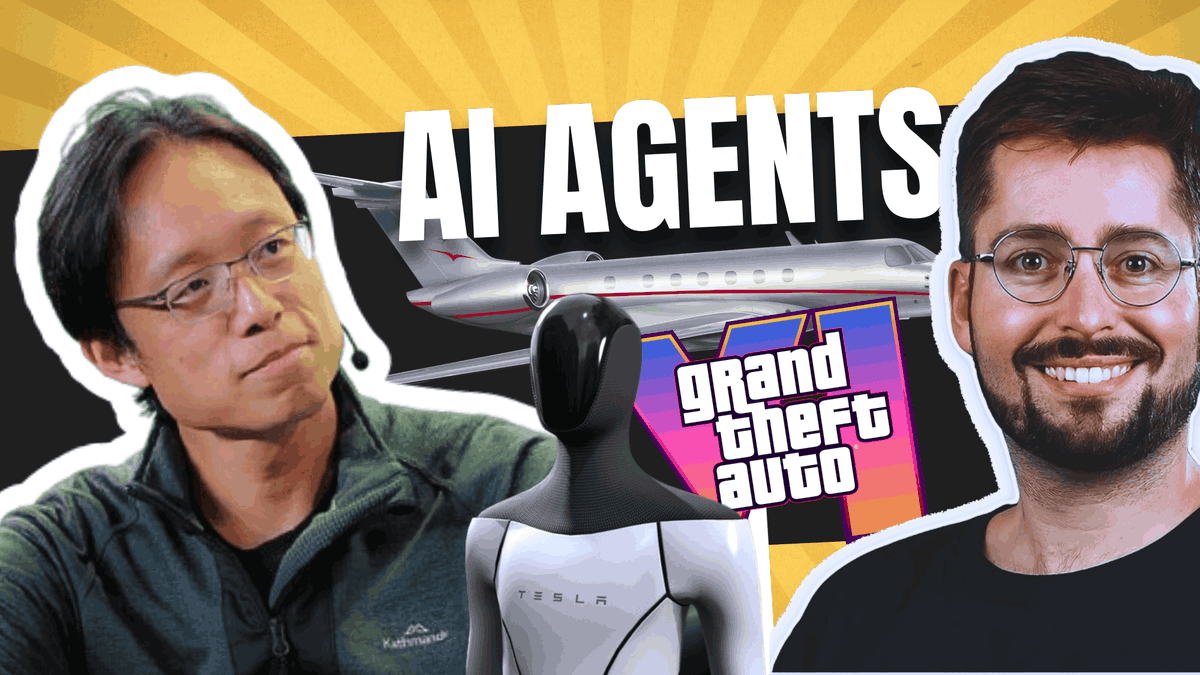
AI has changed software engineering more in the last 3 years than it has changed in the previous 30. What’s needed is not a debate about whether it’s going away—instead it’s a serious discussion about its future: What are the new primitives, techniques, and best practices for software engineering in the age of AI. That’s why I brought Scott Wu (Scott Wu) on AI & I. He’s the founder of Cognition, the company behind the world’s first autonomous AI coding agent, Devin. Cognition got to $73M ARR in less than 2 years—and they just acquired Windsurf to accelerate their growth. I had Scott on the show to talk about where the programming goes from here. We get into: - What the new tools and workflows are for AI engineers. In the near term, Scott sees software engineering defined by a spectrum of tools. At one end are AI features that speed up coding, like tab complete; at the other are agentic systems, like Devin, that can take on tasks independently. Until engineers can operate entirely at the higher layer of abstraction, he argues, both are essential. - Why Scott thinks AGI is already here. By the benchmarks of a decade ago—passing the Turing test, solving hard math problems, and operating agentically—AGI is already here. The line keeps moving, he argues, because humans constantly redefine work around what machines can’t yet do. - Why developers will turn into product architects. Scott sees the long-term future of software engineering as a steady climb up the ladder of abstraction. Just as programming went from assembly to languages like Python and JavaScript, he thinks the future is humans focusing on the product, while AI agents execute. - How Devin stacks up against Anthropic’s Claude Code. Scott credits Claude Code’s success to great product design and the models becoming capable enough to support autonomous workflows. But according to him, the CLI itself isn’t the breakthrough, it’s how a tool fits into a developer’s workflow. Claude Code’s paradigm is that the AI is you, taking the wheel of your computer, he says, while Devin is like the engineer sitting beside you: it runs in its own cloud environment, manages the repo, and improves over time at testing and refining code. This episode of Every 📧’s AI & I is a must-watch for anyone interested in the brass tacks of how AI changes the future of programming. Watch below! Timestamps: Introduction: 00:02:02 Why Scott thinks AGI is here: 00:02:32 Scott’s personal journey as a founder: 00:09:27 Why the fundamentals of computer science still matter: 00:16:55 How the future of programming will evolve: 00:22:30 A new workflow for the AI-first software engineer: 00:26:50 How Devin stacks up against Claude Code: 00:29:33 Reinforcement learning to build better coding agents: 00:40:05 What excites Scott about AI beyond Cognition: 00:50:05

Dan Shipper 📧

34,753 次观看 • 8 个月前

Marc Andreessen explains why AI coding won't replace programmers, but fundamentally change what they do. He argues that AI coding is just the latest abstraction layer, and the job of a programmer has always evolved with each one. Andreessen's key reframe of what's actually happening: "AI coding actually abstracts away the process of actually writing the scripting code... This is the next layer of the task redefinition under the job of programmer." He's clear that the best programmers aren't being replaced. They're already adapting, even if their day-to-day looks radically different now. Their job has shifted from writing code line by line to managing dozens of AI agents working in parallel. "The world's best programmers today will tell you, 'My job is I'm sitting there and I'm orchestrating 10 code bots running in parallel.' Their day job now is kind of arguing with the AI bots to try to get them to write the right code." But Marc Andreessen 🇺🇸 is adamant this doesn't make foundational knowledge obsolete — it makes it more important. "You need to still fully understand and learn how to write and understand code, because if it doesn't work or it's not doing what you expect, you need to be able to understand the results of what the AI is giving you." He draws a direct parallel: Just as someone writing scripting languages still needs to understand how a microprocessor works, someone orchestrating AI bots needs to understand the code those bots produce. "It's this upleveling of capability where you actually want the depth to go down and understand what the thing is actually doing, even if you're not spending your day doing that by hand." The result, in his view, is transformative: "Now programmers are going to be 10 times or 100 times or a thousand times more productive. And that is overwhelmingly a good thing." The pattern: New abstraction layer emerges → tasks change → the job gets redefined upward → productivity explodes It raises a question every programmer should be sitting with... Are you building the depth to evaluate what AI gives you, or just accepting the output?

Big Brain AI

45,187 次观看 • 3 个月前