Video wird geladen...

Video konnte nicht geladen werden

Zur Startseite

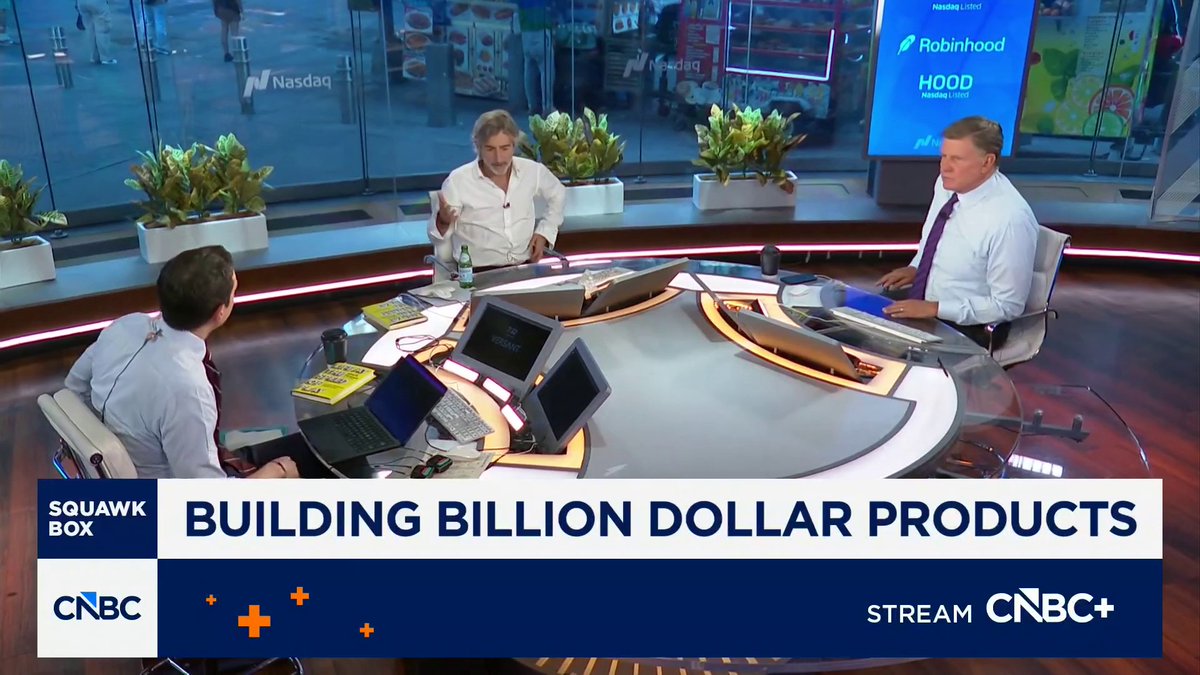
“the best programmers are using AI already.” here is what a senior programmer who’s been coding for decades thinks about the future of programming:

249,060 Aufrufe • vor 9 Monaten •via X (Twitter)

38 Kommentare

Profilbild von Ayush Bhagwat
Ayush Bhagwatvor 9 Monaten

Senior programmer using AI > Beginners playing with AI

Profilbild von ℏεsam
ℏεsamvor 9 Monaten

it amplifies your skills the more the better

Profilbild von 𝛼
𝛼vor 9 Monaten

whoever's a non-architect developer yet is ... advised to become an architect one.

Profilbild von The Messaging Guy
The Messaging Guyvor 9 Monaten

if you want to build production ready apps you still need to know how to code

Profilbild von Lion Kimbro
Lion Kimbrovor 9 Monaten

I've been programming for 40 years. Everything he said is 100% correct. small caveat: ... correct for the next couple years, at least..!

Profilbild von Sound
Soundvor 9 Monaten

Yea... I still don't see what stops opus 5.5 or whatever from being better than us at everything he listed. Sorry, your argument is invalid

Profilbild von Thibault Lb
Thibault Lbvor 9 Monaten

Just a chill guy with common sense

Profilbild von I interject
I interjectvor 9 Monaten

High value isn’t replaced. High value absorbs.

Profilbild von Leith42
Leith42vor 9 Monaten

yep my take... effective as a tool. worthless as a replacement. Nail guns did not replace construction workers, and there are cases where a hammer is still preferred

Profilbild von Dabo
Dabovor 9 Monaten

He has the right idea. Short of AGI, programming will require human programmers. LLMs, though they can invent new ways of doing things, rely on pre-existing information. Humans surpass this ability by creating. Programming is a creative process, not a technical one. You have to know the technology, similar to how a painter knows their brushes, paints, and canvas, but the art comes from some creative aspect of humans and their experiences. If you want an e-commerce website with a backend and a flashy presentation, A/I is for you. You won’t need a programmer for that anymore. But when you add complexity that hides what needs to get done, you need a human. Macrohard will be a harbinger for what’s to come, for sure. We look forward to what innovations that will bring. Someday, we won’t need programmers. That will be when A/I can think for itself - something similar to, or literally, AGI.

Profilbild von Name cannot be blank
Name cannot be blankvor 9 Monaten

No. There won't be programmers. There may still be architects, and that means that it will only be people with 10, 15 years of experience in the field will be needed. They won't need juniors or interns, then it breaks skill development, then no more mids or seniors, just AI.

Profilbild von Roy
Royvor 9 Monaten

My hot take is most of these people you see you should be immediately skeptical of. Why did they stay in the same role/position for such a long period of time? With programmer salaries you can easily retire in a decade too if you want to cruise.

Profilbild von ℏεsam
ℏεsamvor 9 Monaten

have you heard about passion?

Profilbild von Roy
Royvor 9 Monaten

If he was doing it for passion he wouldn't be working for someone else or a big company for that long. He'd be doing his own thing.

Profilbild von PolskaGurom
PolskaGuromvor 9 Monaten

@Hesamation His passion is not talk to customers, growing company and hiring people. These are two things. He is specialist in his field.

Profilbild von Roy
Royvor 9 Monaten

@Hesamation I didn't say it had to be a business

Profilbild von klos
klosvor 9 Monaten

All he said is true, but now. He's not looking 5 years ahead. If you want to understand: 1. Look 5 years back. 2. Compare. 3. Imagine that 5 years forward the change will be bigger. It always is.

Profilbild von DE Had
DE Hadvor 9 Monaten

Means: Ai is productivity tool not a replacement for employees. My questions: who is going to review AI programming, test them, approve them, deploy…etc? I think a humane should

Profilbild von as Johnny sees it
as Johnny sees itvor 9 Monaten

Since there was not much enterprise-level source code for ai to chew on, quality senior devs are still needed in the workflow Sadly, many quality developers were laid off years ago for cheaper more deferential options Expect regressions in the enterprise, lots of them

Profilbild von Number Fifteen
Number Fifteenvor 9 Monaten

Have a friend who was a lead developer for Netflix when they first started. Last year he thought AI developers were garbage. This year he manages a team of AI agents and coordinates the integration of several of them developing code before it goes to production.

Profilbild von CurtisForrester
CurtisForrestervor 9 Monaten

Yes. And, there are things that AI makes so easy. I use it constantly to create regex patterns. I know regex, but it's always tedious. Grok will give several variants for general to specific use cases. It takes a lot of pain out of the job.

Profilbild von David AI
David AIvor 9 Monaten

The narrative that ai is replacing programmers is wrong. It’s making them better and more is expected. This will not change and least for many years.

Profilbild von Eric Welsh
Eric Welshvor 9 Monaten

Five years ago, we didn't think AI could generate code. Now we're saying AI can't architect large-scale software. Give AI a year. Not five years like the previous hurdle. One year.

Profilbild von Edmon Mariné Clota
Edmon Mariné Clotavor 9 Monaten

A real engineer knows that coding is just a tool for a better future. Anyone who loves the tool more than the product, is focusing in the wrong thing

Profilbild von memorIA
memorIAvor 9 Monaten

You can do that today already with AI. We do. APIfy focus build is the base when you build a big app with Claude Code.

Profilbild von Muzamil Syed
Muzamil Syedvor 9 Monaten

Now a days even the seasoned programmers have switched to full AI coding...earlier there was rejection, then insistence on rejection, then came the realization and now the liberty of not moving figures but exploring ideas further more...

Profilbild von MMA
MMAvor 9 Monaten

Ai won't replace programmers, it's just a productivity tool.. Enhance ai to it's best use cases. He is right & to the point, experience speaks.

Profilbild von equant
equantvor 9 Monaten

Industry rewriting…

Profilbild von Jithin Palepu
Jithin Palepuvor 9 Monaten

totally get that. b2c is definitely a tough game with so many variables. but with the right tools like First100, it can be a bit easier to navigate those crowded markets and actually find customers. sometimes it's all about having the right strategy and support.

Profilbild von IronRed | SandHive
IronRed | SandHivevor 9 Monaten

when agents rewrite code claude ain’t the only author in the room slop

Profilbild von Carl
Carlvor 9 Monaten

This is straight up false, programmers are having so much cope because they can’t gate keep things anymore. You can do anything and everything that guy said and it’s only going to get easier

Profilbild von Brian
Brianvor 9 Monaten

Sr Dev here, I don’t even say that any more. I call myself an AI Orchestrator or and AI support human.

Profilbild von Hassan Abedi 📚🌿🦉🪬
Hassan Abedi 📚🌿🦉🪬vor 9 Monaten

That look though 👀

Profilbild von TechGringo
TechGringovor 9 Monaten

Nailed it. The ones shipping the most aren't overthinking tools, they're using them to think better. AI raises the floor so high that half your job becomes deciding what to build instead of how.

Profilbild von 7alken
7alkenvor 9 Monaten

agreed; it can't save fools butts; but it is helping;

Profilbild von Alex Mano
Alex Manovor 9 Monaten

Stop with all this bullshit AI prompts. It's not there. And probably will never be. It's a matter of time until it will get more stupid than it is. I don't need to justify this, you will see.

Profilbild von truckfinger
truckfingervor 9 Monaten

Exactly 😁

Profilbild von Nolan Bailey
Nolan Baileyvor 9 Monaten

That's been my observation too. I've been using it-- and giving it guidance to make the code ideal-- having real, hands on experience with writing enterprise software, asking right questions, etc. are key.

Ähnliche Videos

Marc Andreessen: AI coding doesn’t eliminate programmers — it redefines them. The job is no longer typing code line by line, it’s orchestrating 10 coding bots in parallel, arguing with them, debugging their output, changing the spec, and pushing them toward the right result. But here’s the catch: if you don’t understand how to write code yourself, you can’t evaluate what the AI gives you. The next layer of programming isn’t writing scripts — it’s supervising AI that writes them. Today’s best programmers spend their day jumping between terminals, managing multiple coding bots, fixing mistakes, and refining instructions. The irony? You still need deep fundamentals, because without them, you won’t know when the AI is wrong. The job of the programmer has changed. Now it’s about arguing with coding bots, debugging AI-generated code, and understanding why something doesn’t work or isn’t fast enough. AI abstracts the work — but only people who truly understand code can tell if the abstraction is doing the right thing. Programmers aren’t going away — they’re becoming 10x, 100x, even 1,000x more productive. Tasks are changing, the job is changing, but humans are still overseeing the process, evaluating results, fixing errors, and making judgment calls. AI changes how we code, not who is responsible. The future programmer isn’t replaced by AI — they’re upgraded by it. You still need to learn how to write and understand code, because when the AI gets it wrong, humans are the ones who have to know why. That up-leveling of capability is the real revolution.

Ian Miles Cheong

913,931 Aufrufe • vor 8 Monaten

AI has changed software engineering more in the last 3 years than it has changed in the previous 30. What’s needed is not a debate about whether it’s going away—instead it’s a serious discussion about its future: What are the new primitives, techniques, and best practices for software engineering in the age of AI. That’s why I brought Scott Wu (Scott Wu) on AI & I. He’s the founder of Cognition, the company behind the world’s first autonomous AI coding agent, Devin. Cognition got to $73M ARR in less than 2 years—and they just acquired Windsurf to accelerate their growth. I had Scott on the show to talk about where the programming goes from here. We get into: - What the new tools and workflows are for AI engineers. In the near term, Scott sees software engineering defined by a spectrum of tools. At one end are AI features that speed up coding, like tab complete; at the other are agentic systems, like Devin, that can take on tasks independently. Until engineers can operate entirely at the higher layer of abstraction, he argues, both are essential. - Why Scott thinks AGI is already here. By the benchmarks of a decade ago—passing the Turing test, solving hard math problems, and operating agentically—AGI is already here. The line keeps moving, he argues, because humans constantly redefine work around what machines can’t yet do. - Why developers will turn into product architects. Scott sees the long-term future of software engineering as a steady climb up the ladder of abstraction. Just as programming went from assembly to languages like Python and JavaScript, he thinks the future is humans focusing on the product, while AI agents execute. - How Devin stacks up against Anthropic’s Claude Code. Scott credits Claude Code’s success to great product design and the models becoming capable enough to support autonomous workflows. But according to him, the CLI itself isn’t the breakthrough, it’s how a tool fits into a developer’s workflow. Claude Code’s paradigm is that the AI is you, taking the wheel of your computer, he says, while Devin is like the engineer sitting beside you: it runs in its own cloud environment, manages the repo, and improves over time at testing and refining code. This episode of Every 📧’s AI & I is a must-watch for anyone interested in the brass tacks of how AI changes the future of programming. Watch below! Timestamps: Introduction: 00:02:02 Why Scott thinks AGI is here: 00:02:32 Scott’s personal journey as a founder: 00:09:27 Why the fundamentals of computer science still matter: 00:16:55 How the future of programming will evolve: 00:22:30 A new workflow for the AI-first software engineer: 00:26:50 How Devin stacks up against Claude Code: 00:29:33 Reinforcement learning to build better coding agents: 00:40:05 What excites Scott about AI beyond Cognition: 00:50:05

Dan Shipper 📧

35,342 Aufrufe • vor 1 Jahr

Marc Andreessen explains why AI coding won't replace programmers, but fundamentally change what they do. He argues that AI coding is just the latest abstraction layer, and the job of a programmer has always evolved with each one. Andreessen's key reframe of what's actually happening: "AI coding actually abstracts away the process of actually writing the scripting code... This is the next layer of the task redefinition under the job of programmer." He's clear that the best programmers aren't being replaced. They're already adapting, even if their day-to-day looks radically different now. Their job has shifted from writing code line by line to managing dozens of AI agents working in parallel. "The world's best programmers today will tell you, 'My job is I'm sitting there and I'm orchestrating 10 code bots running in parallel.' Their day job now is kind of arguing with the AI bots to try to get them to write the right code." But Marc Andreessen 🇺🇸 is adamant this doesn't make foundational knowledge obsolete — it makes it more important. "You need to still fully understand and learn how to write and understand code, because if it doesn't work or it's not doing what you expect, you need to be able to understand the results of what the AI is giving you." He draws a direct parallel: Just as someone writing scripting languages still needs to understand how a microprocessor works, someone orchestrating AI bots needs to understand the code those bots produce. "It's this upleveling of capability where you actually want the depth to go down and understand what the thing is actually doing, even if you're not spending your day doing that by hand." The result, in his view, is transformative: "Now programmers are going to be 10 times or 100 times or a thousand times more productive. And that is overwhelmingly a good thing." The pattern: New abstraction layer emerges → tasks change → the job gets redefined upward → productivity explodes It raises a question every programmer should be sitting with... Are you building the depth to evaluate what AI gives you, or just accepting the output?

Big Brain AI

45,371 Aufrufe • vor 8 Monaten