Video wird geladen...

Video konnte nicht geladen werden

Zur Startseite

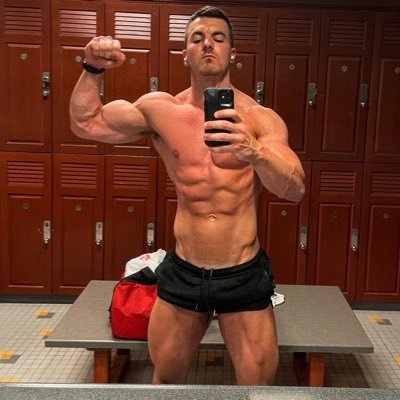
The bulk/cut thing is literally so simple: Spend as much time as you need getting to 10-12% body-fat one single time Baseline established! After that, simply oscillate between 10-12% body-fat and 15-17% body-fat Never go above the high end Only go below the low end if doing a show/just...

140,857 Aufrufe • vor 2 Tagen •via X (Twitter)

0 Kommentare

Keine Kommentare verfügbar

Kommentare vom Original-Post werden hier angezeigt

Ähnliche Videos

IF I WAS FORCED to build a $20K/month AI creative agency using nothing but Photoshop, starting from 0, here's exactly what I would do in steps: The production setup (Days 1–3) 1. Download the Higgsfield plugin inside Photoshop — takes 5 minutes 2. You now have: sketch-to-image, layer decomposer, mockup studio, relight, upscale, face swap, character swap, background removal, AI stylist — all in 1 tool 3. Old creative agency workflow: designer + photographer + editor + 3–5 day turnaround 4. New workflow: 1 person, Photoshop, 30 minutes per deliverable The offer (Days 3–7) 5. Pick 1 niche — ecom brands, real estate agents, or course creators all need visuals constantly 6. Build a simple offer: "10 ad creatives delivered in 24 hours — $500" 7. Old agencies charge $2,000–$5,000/month for the same output 8. Your cost to deliver: $0 beyond the plugin. Pure margin. 9. Create 3 sample mockups using the tool — drop a product image in, generate 9 variations, pick the best 3 10. That's your portfolio. Built in under 1 hour. Cost: $0. The client machine (Days 7–20) 11. Go on X and search "[niche] + need a designer" or "[niche] + creatives" 12. DM 50 people per day — "I'll make you 3 free ad creatives in 24 hours, no catch" 13. Deliver them in 30 minutes using the plugin 14. 50 DMs/day × 14 days = 700 outreach messages 15. Conservative 3% conversion = 21 people see the free work 16. Close 5 of them at $500 = $2,500 in week 3 The scale (Days 20–30) 17. Upsell every client to a $1,500/month retainer — 10 creatives/week, unlimited revisions 18. 1 client per day in Photoshop takes 45 minutes max 19. 10 retainer clients × $1,500 = $15,000/month 20. Add 3 one-off clients at $500/month = $1,500 21. Add a $997 "AI creative system" course teaching other people this exact workflow = $3,000+/month from 3 sales The math: 50 DMs/day × 30 days = 1,500 outreach messages 3% book a call = 45 calls 40% close at $1,500/month retainer = 18 clients 18 × $1,500 = $27,000/month recurring Time per client per day: 45 minutes Total daily work: 4–5 hours Every mockup — AI. Every restyle — AI. Every layer rebuild — AI. Every variation — AI. No photographer. No designer and no reshoot. Start it here. 👇

ALEX SUZUKI

20,557 Aufrufe • vor 2 Monaten

The Bro Split that every young lad gets sold on looks like this.⠀ ⠀ Monday: Chest⠀ Tuesday: Back⠀ Wednesday: Rest⠀ Thursday: Legs⠀ Friday: Shoulders⠀ Saturday: Arms⠀ Sunday: Rest⠀ ⠀ And yes, Arnold did it. Arnold also took enough drugs to sedate a medium-sized country, so perhaps not the most transferable template.⠀ ⠀ The problem is simple. Each muscle here gets hit once a week. Train hard enough and you'll trigger a window of muscle protein synthesis that runs for roughly 2-3 days. After that the window closes, and the muscle fibres begin to catabolise slowly. The back half of the week isn't neutral. It's quietly eroding the growth stimulus you picked up on Monday.⠀ ⠀ Once a week is not a holding pattern. It's a losing one.⠀ ⠀ The fix is training each muscle at least twice. An upper/lower split does this cleanly.⠀ ⠀ Monday: Upper⠀ Tuesday: Lower⠀ Wednesday: Rest⠀ Thursday: Upper⠀ Friday: Rest⠀ Saturday: Lower⠀ Sunday: Rest⠀ ⠀ Same days in the gym. Every muscle getting two shots at the growth window per week instead of one.⠀ ⠀ If there's a specific muscle you want to bring up faster, glutes being the obvious example, you can push that to three times a week with a full body approach, hitting the priority muscle first in every session when you're freshest.⠀ ⠀ Monday: Full Body (glutes first)⠀ Wednesday: Full Body (glutes first)⠀ Friday: Full Body (glutes first)⠀ ⠀ More frequent stimulus. More growth windows captured. Less of the week spent sliding backwards.⠀ ⠀ The Bro Split isn't useless. It just isn't optimal. And if you're going to spend the time, you may as well spend it on something that actually works.⠀ ⠀ Minimum twice a week per muscle. Three if you're serious about a lagging group. The rest is just detail.

Sama Hoole

24,136 Aufrufe • vor 4 Monaten

Distinctive Yield Mechanics 1/2 I hold 1,000,000 $XPR at $7 each. That gives me $7,000,000 in collateral value. If I borrow against 25% of that position, my loan amount is: $7,000,000 × 25% = $1,750,000 My current LTV is 25%. At $1,750,000 borrowed against $7,000,000 in collateral, I am sitting at 25% LTV, which leaves a large buffer. Now the interest. A 12% annual borrow rate on $1,750,000 equals: $1,750,000 × 0.12 = $210,000 per year That breaks down to: $210,000 ÷ 12 = $17,500 per month So the debt cost is: $17,500 a month $210,000 a year Now look at the remaining capital. The other 75% of the position represents $5,250,000 in value. If that $5,250,000 is put to work at a conservative 4% annual return, the yield becomes: $5,250,000 × 0.04 = $210,000 per year Monthly, that becomes: $210,000 ÷ 12 = $17,500 per month So the mechanics line up cleanly: Borrow 25% at 12% APR Earn 4% on the remaining 75% Debt cost = $210,000/year Yield generated = $210,000/year Same result from another angle: 25% × 12% = 3% 75% × 4% = 3% So the 4% earned on the 75% can fully service the 12% interest owed on the 25% borrowed. That creates a break-even carry structure before fees, token price changes, liquidation mechanics, reward changes, or compounding differences enter the picture. The hard mechanics are simple: XPR is posted as collateral A smaller amount is borrowed against it Interest accrues on the borrowed amount Yield accrues on the larger remaining portion As long as the yield earned covers the interest owed, the debt can be serviced from the productive side of the position The clean takeaway: A 25% borrow at 12% costs the same annually as a 4% return on the remaining 75%. $1,750,000 borrowed at 12% = $210,000/year owed. $5,250,000 deployed at 4% = $210,000/year earned. That is the hard math.

X-juPiteR-X

60,474 Aufrufe • vor 4 Monaten

CAPITAL HAS NEVER BEEN THE ISSUE WHEN IT COMES TO MAKING MONEY IN SYNTHETIC INDICES. DO YOU KNOW YOU CAN OPEN A POSITION ON MOST PAIRS WITH LESS AN $1 ? Here's a thread on how to; Read to the end.👇 I executed VIX 10s on a $7 account, and it's currently sitting at $140. Growing small accounts on synthetics is quite different from growing big accounts, because small retracements can lead to liquidation before reaching your stoploss point especially when you stack randomly. 4 major steps to take: 1. High probability setups only: The easiest way to flip an account is a zero drawdown setup. A small account cannot accommodate massive retracements and so only high probability setups must be taken. 2. Choose a pair with low margin requirement and stable volatility: Here’s a list of pairs and their margin requirements to choose from; • Volatility 100 index -Minimum lotsize: 0.50 -Margin cost on minimum lotsize: $0.6 per position • Volatility 75 index -Minimum lotsize: 0.001 -Margin cost on minimum lotsize: $0.08 per position • Volatility 50(1s) index -Minimum lotsize : 0.005 -Margin cost on minimum lotsize: $0.36 per position • Volatility 25(1s) index -Minimum lotsize: 0.005 -Margin cost on minimum lotsize: $0.62 per position • Volatility 250(1s) index -Minimum lotzise: 0.005 -Margin cost on minimum lotsize: $0.21 per position • Volatility 25 index -Minimum lotsize: 0.50 -Margin cost on minimum lotsize: $0.27 per position • Volatility 50 index -Minimum lotsize: 4.00 -Margin cost on minimum lotsize: $0.49 per position • Volatility 100(1s) index -Minimum lotsize: 0.20 -Margin cost on minimum lotsize: $0.09 per position • Volatility 150(1s) index -Minimum lotsize: 0.01 -Margin cost on minimum lotsize: $0.03 per position • Volatility 10(1s) index -Minimum lotsize: 0.50 -Margin cost on minimum lotsize: $0.91 per position • Volatility 10 index -Minimum lotsize: 0.50 -Margin cost on minimum lotsize: $0.63 per position • Volatility 75(1s) index -Minimum lotsize: 0.05 -Margin cost on minimum lotsize: $0.27 per position. 3. Leverage on stacking at SPECIFIC points: You can make only $10 from a $5 account and another person makes $100 from same account, difference is the leveraging and stacking points. If you can stack, utilize the skill and exit when you should. 4. Position sizing and risk management: When you’re buying , you’ll start making up bullish reasons for your setup. It won’t let you see the big picture. Make sure the reason why you’re pressing buy is not just because you want to flip but because you infact believe in your analysis. It’s easier to make money when you’re buying when the market is buying and selling when the market is selling. That’ll be the end for today’s post. Goodluck. 🍷 Retweet the post to enlighten struggling traders. Follow me, Starr🌟, and turn on post notifications to stay updated and be the first to see whenever I make a post. Check my highlights for more trading tips to help you as a trader. You’ll find trade documentaries, breakdowns, insights, results and my personal thoughts on my WhatsApp. Click the link below to connect.👇

Starr🌟

118,536 Aufrufe • vor 1 Jahr

🚨 Weigh in 22 🚨 LOWEST WEIGH IN: 297.8 LBS Frank has lost 225+ pounds Frank was 520+ pounds in 2016 (scale couldn’t go higher). Here is his monthly progress since we started Frank Walks (679 days in a row and counting): 383 pounds before walking daily Weigh in 1: 373 pounds Weigh in 2: 352 pounds Weigh in 3: 343 pounds Weigh in 4: 340 pounds Weigh in 5: 339 pounds Weigh in 6: 333.8 pounds Weigh in 7: 331 pounds Weigh in 8: 323.8 pounds Weigh in 9: 319.8 pounds Weigh in 10: 324 pounds Weigh in 11: 330 pounds Weigh in 12: 327.8 pounds Weigh in 13: 318.5 pounds Weigh in 14: 321.8 pounds Weigh in 15: 326 pounds Weigh in 16: 314 pounds Weigh in 17: 316 pounds Weigh in 18: 312.5 pounds Weigh in 19: 315 pounds Weigh in 20: 307.5 pounds Weigh in 21: 306 A couple of weeks ago, Frank hit 299.5, dipping below 300 for the first time since Bill Clinton was the President. Here are the results from weigh in 22: ◦297.8 pounds - Frank has lost 225+ pounds since his all time high ◦Blood sugar: A1C is 5.7% down from 11.1% (years of life expectancy 12+ 📈) Accepting the fact that “stress eating” is not a valid excuse for undermining hard work is critical. Frank easily gets stressed and he has to stop turning to food in those moments, especially when he’s alone. He’s been crushing his walks and exercise. He’s the lightest he’s been since the 1990’s and he is capable of doing things he never thought was possible. For example, catching a pass from Eli Manning last week and running down a football field. Best of all, it is inspiring others. Now, it’s time to hit the weights more and continue to improve diet across the board. No excuses. One day at a time. Congrats, Frank! Thank you Tank’s Army! Anudder weigh in in the books

Matthew Piper Jenks 🧲

1,163,324 Aufrufe • vor 1 Jahr