正在加载视频...

视频加载失败

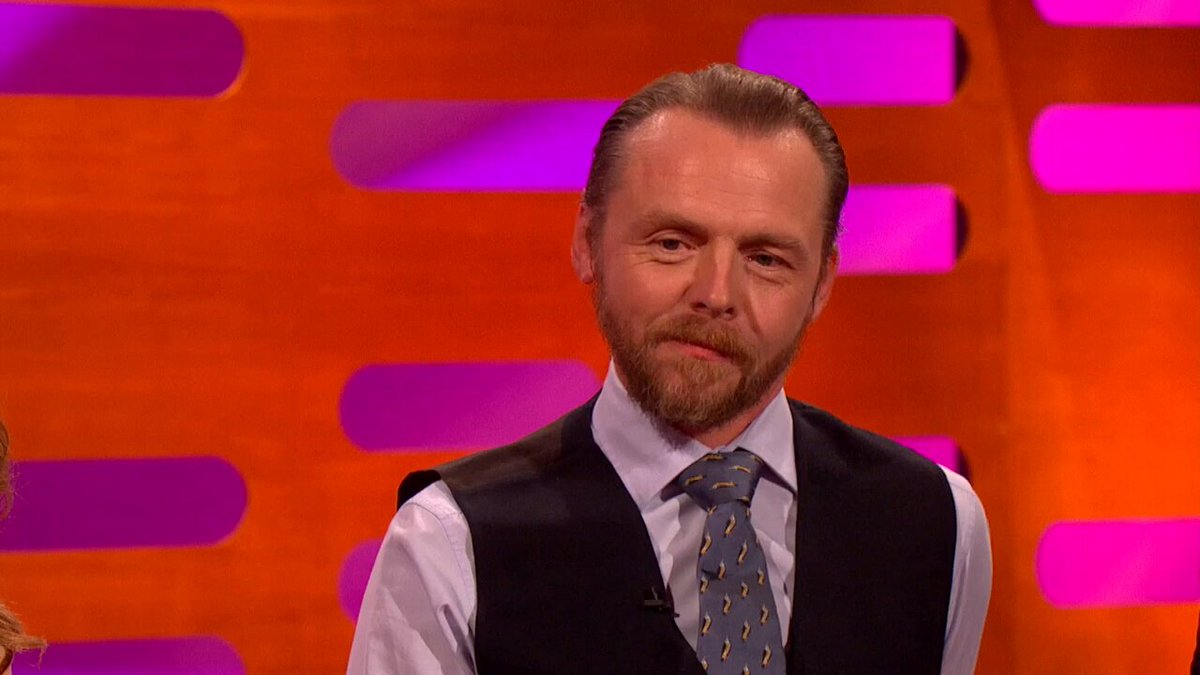
The confidence in this man is ridiculous What makes this clip work isn't even the threat itself it's how casually he delivers it. No shouting, no dramatic buildup, no attempt to make it sound intimidating. He says it with the energy of someone who's already decided how the story...

64,389 次观看 • 5 天前 •via X (Twitter)

0 条评论

暂无评论

原始帖子的评论将显示在这里

相关视频
With The Fifth Column 🖐 talking about common knowledge: “Common knowledge can be generated at a stroke when something is witnessed in a forum where you can witness other people witnessing it. So if something just happens in public and you can see everyone else seeing it, that gives you an instant intuition that there’s common knowledge. Humor, I suggest in one of the chapters, is a common-knowledge generator, usually of some infirmity or indignity or weakness in someone or something. And the laughter, which is conspicuous—you can hear it when someone is laughing; it interrupts their speech and breathing—at the moment of laughter, suddenly becomes common knowledge. Everyone who gets the joke suddenly realizes that someone has been taken down, and they realize that everyone else realizes it. And that’s why freedom of speech and freedom of assembly are suppressed in autocracies. The joke from the Soviet era is about the man handing out leaflets in Red Square. Of course, the KGB arrest him, take him down to headquarters, only to discover that the leaflets are blank sheets of paper. They say, ‘What is the meaning of this?’ And he says, ‘What’s there to say? It’s so obvious.’ And the reason that it was subversive is that he was generating common knowledge. Just the mere fact of trying to make something public, even if you don’t have to stipulate what it is, can generate the coordination—everyone acting together to bring down a regime.”

Steven Pinker

44,931 次观看 • 2 个月前

What you're looking at started as something that most people drive past without a second thought. - Industrial - boring - overlooked And someone looked at it and saw something no one else was seeing. That's the whole game here. You don't have to invent something brand new to make serious money. You just have to see potential where everyone else sees limitations. You have to look at what already exists and imagine it just a little differently. So when you turn something familiar into something unexpected, it becomes shareable and memorable. It becomes the thing that people can't stop talking about because it's different in a world where everything feels the same. People will literally travel hours just to stay somewhere like this because different is the experience now. Nobody cares about another cookie cutter hotel room that they've seen a thousand times, but this gets filmed and posted and sent to friends with the caption "you have to see this place" And suddenly you're booked out months in advance because you gave something people can't get anywhere else. I love that the raw materials here aren't special, it's just space that was sitting there unused and cheap to acquire The success of this is found in the willingness to look at what everyone else ignored and ask "what could this become?" Instead of just accepting what currently is. That's where the opportunity is. There are thousands of: - shipping containers rotting in fields - old grain silos sitting empty - warehouses no one's using - barns that haven't been touched in decades And every single one of them could become something people would pay to experience if someone just had the vision to see it through. You don't need to build it from scratch. You just need to reimagine what's already sitting in front of you. Because the world is full of overlooked things waiting for someone to look at them differently. And I don't care if AI generated the video because the inspiration you get from it is still the same.

Chris Koerner

18,278 次观看 • 6 个月前

Pride and Prejudice – The Lake Scene A person is truly seen only when they no longer try to be perfect Some moments in cinema do not become timeless because of what a character tries to show. They become unforgettable because, for a very brief moment, the character can no longer hide who they truly are. In the BBC adaptation of Pride and Prejudice, the scene of Darcy walking out of the lake is such a moment. At first glance, it is a simple situation: A wealthy gentleman has just finished swimming and unexpectedly encounters Elizabeth Bennet. There is no declaration of love. No grand conversation. No dramatic event. Yet it is precisely this simplicity that reveals the deepest truth about Darcy’s character. Because, for the first time in the story, Darcy does not appear as the perfect gentleman society expects him to be. He has no perfectly arranged formal attire. No safe distance between himself and others. No preparation to control how people perceive him. He is simply a human being suddenly placed in a moment where there is no time to rebuild all the outer layers he usually uses to present himself. And it is at that exact moment that Elizabeth sees the real Darcy for the first time. Throughout most of the story, Darcy exists as an image. He is: a wealthy man, a proud aristocrat, someone who always maintains his composure, a person who seems unwilling to let emotion overcome reason. But that perfection also creates distance. The more Darcy tries to preserve his calm and dignity, the harder it becomes for others to see the person inside him. He is like a statue carved too perfectly: beautiful, dignified, but cold. And then water appears. Water does not take away Darcy’s qualities. It simply removes the things that conceal him. The wet shirt does not make Darcy less noble. On the contrary, it creates the first moment when he does not need his social position, clothing, or manners to prove who he is. For the first time, Elizabeth does not see “Mr. Darcy.” She sees a person. A man who can feel awkward. A man who can feel embarrassed. A man whose emotions cannot be completely controlled. This is the most beautiful paradox of the scene: Darcy becomes most attractive at the moment when he is not trying to be attractive. He becomes closest to others when he no longer maintains his distance. He becomes most real when the perfect image he has built begins to break apart. Because sometimes, what separates people is not their imperfections. It is the excessive effort to hide those imperfections. This is also why the lake scene fits perfectly with the entire spirit of Pride and Prejudice. The story is not only about love. It is about the way human beings learn to see beyond outer appearances. Elizabeth must overcome her own prejudice toward Darcy. Darcy must overcome his own pride. Both of them must let go of part of the image they created to protect themselves. Only then can they truly see each other. A person is truly seen only when they no longer try to be perfect. And perhaps that is why a moment with almost no dialogue can remain so deeply alive in the memory of viewers. Because it touches something profoundly human: We often believe we are loved when we become the best version of ourselves. But sometimes, what allows others to recognize our true beauty is the moment when we no longer have to pretend to be someone else.

🎼🌺Music Love♥️

15,891 次观看 • 1 个月前

Rick Rubin: "Make what you love, not what you think people will like" "If you want to live in a creative way, which will benefit everything in your life, be a better person in your family, do a better job starting a new business, it's all the same. I don't really know anything about music. It's more a way of looking at the world and wanting it to be the best it could possibly be. And doing whatever it takes to be the best it could possibly be." Rubin shares how his career happened: "From the beginning, I never thought any of the things I'm doing were possible or realistic. I just did things out of the love of them, thinking I would have real jobs. That my passion would be my hobby, and I'd have a job to support my hobby. And it just magically turned out different than that without me knowing it was possible." On why some things connect and others don't: "The stars line up at certain times for certain things to happen. Sometimes you can make something great, and it doesn't connect for whatever reason. Sometimes you make two things you think are the two best things you've ever made. One of them connects with the world. One of them doesn't. And it might not have anything to do with what's in the art. It might be that it came out the same day as something else. Or there was a bigger story at the time. There's so much to it that we don't understand." He continues: "All we can do is make something good and put it out and hope for the best. That's all there is. We never know why things work. Even if you make a piece of art and it works, you may not know why." On talent versus work ethic: "There are a lot of talented people who never make it because they don't have the work ethic. It's not just talent, talent's a piece. And you could argue for some people, the work ethic trumps the talent." Rubin explains what real collaboration is: "Having worked with a lot of bands, I see there's often this friction where people are trying to get their idea in. That's not a collaboration. A real collaboration is when everyone who's there is working together towards whatever is the best thing for the whole. Whether it's your idea or someone else's idea, it doesn't matter. If you're invested in the collaboration, you want the best idea to win. You don't want your idea to win." On what makes art great: "What makes it great is the personal. With all of its imperfections. With all of its quirkiness. That's what makes it great. How you see the world that's different from how everyone else sees the world. That's why you're an artist. That's your purpose in sharing your work with the world." He warns against being derivative: "There are these derivative voices where they're finding what they think other people want to hear, and they start saying it because they've heard other people say similar things that are now successful. Even if they have some short-term success doing that, it's not revolutionary. It doesn't change the world. It doesn't last. The people who you first see and you might not like that you come to like because you don't understand them at first, those are the ones that change the world. Those are the ones you dedicate your fandom to for life." Rubin shares his philosophy on taste: "You can't second-guess your own taste for what someone else is going to like. We're not smart enough to know what someone else is going to like. To make something thinking, 'Well, I don't really like it, but I think this group of people will like it,' it's a bad way to play the game of music or art. You have to do what's personal to you. Take it as far as you can go. Really push the boundaries. And people will resonate with it if they're supposed to resonate with it." He describes creativity as catching waves: "We're really talking about magic. The universe conspiring on our behalf if we let it. Being in this flow of catching these waves that anyone can catch. If you're trying to catch it, you're open to it, you see it coming, you take off on every chance you get. And sometimes the ride happens. It's remarkable how it happens. It doesn't come from preconception. It's not an idea. It's through the doing." Rubin explains how ideas exist in the universe: "Have you ever had that experience where you have an idea for something, you don't do it, and then six months later you see someone else has done it? It's not because they took your idea. It's that it's time for that, and you can act on it or not. The best artists are the ones who have the best antenna for this material that's available. It's coming through. The best comedians see the best jokes. They see them coming. We all live in the same world; the way you see it, you have the best joke because you see it best." He closes with how to stay open: "If we listen to what's going on around us, you can overhear a conversation in a coffee shop, and it is the setup for an idea you're working on. You hear a phrase you don't commonly use. My experience is: when you are open and looking for these clues in the world, they're happening all the time. And they're happening often right when you need them."

Jaynit

109,182 次观看 • 5 个月前