正在加载视频...
视频加载失败
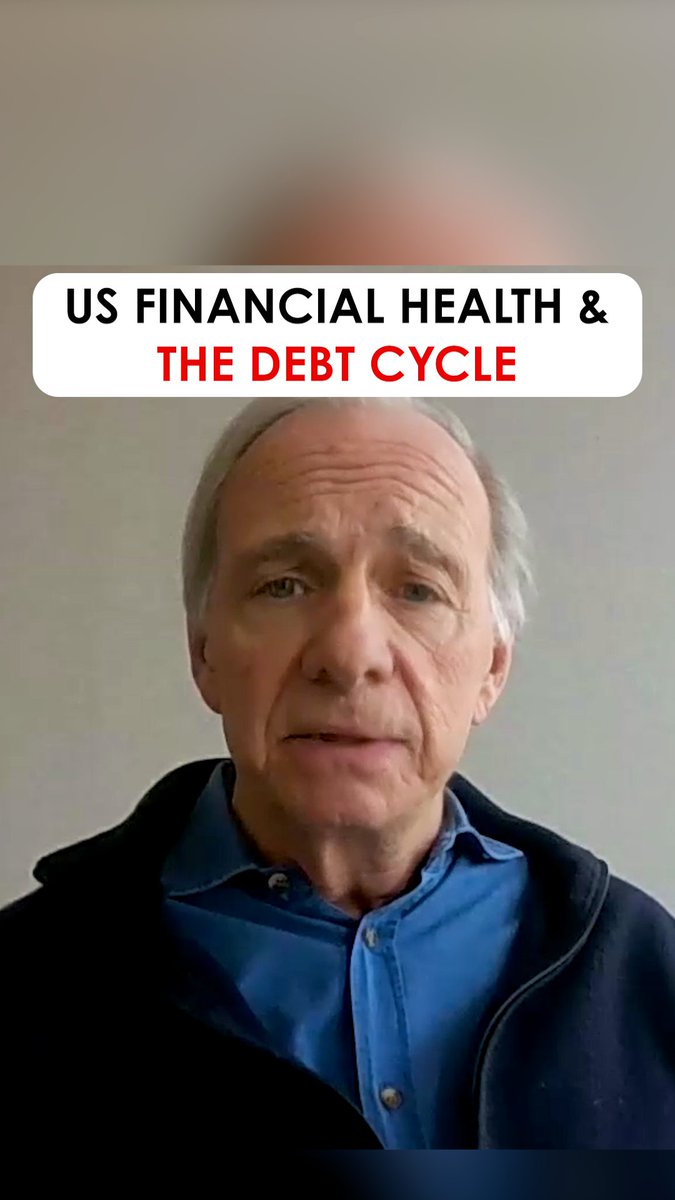
The credit system functions like a circulatory system that delivers nutrients and buying power to various parts of the economy. A system is considered healthy when borrowed money is used to generate productivity, which in turn produces income. However, it becomes unhealthy when debts and debt service costs increase... show more

31 条评论

We are already at the point where debt service is crowding out everything else, and the scary part is that unlike actual plaque, you cannot just prescribe a statin and hope for the best, at some scale the only fix is a reset.

Superbly put 💯

Loved having you on the show Ray

The credit system functions not as a circulatory system delivering nutrients and purchasing power, but as an extremely expensive healthcare system. It's dangerous for the healthy.

Try having mortgages that aren't front loaded with interest so Americans (who keep their homes an average 6.7 years) can benefit from their #1 investment and use that money to grow businesses and the economy as they wish. Not the Banksters. Death to CronyCapitalism and Socialism

Debt is the only guest that stays after the party ends. 🍻💸 😄

It is fundamentally unhealthy and insolvent from the start. Then when it crashes the losses are socialized and the profits remain private. They say that was horrible, we won't make that mistake again, then proceed to restart the exact same cycle. We do not have a free market

Considering receivables as assets generates our financial system failure.

Hi Mr dalio! What do you think about Trump being productive and finally building back factories and rare earths?? They also made crazy amounts of money on stocks like $INTC and others. Maybe this time it’s different

Excessive credit becomes a speculative lever instead of driving productivity. Swelling debts break the economic cycle and cripple balance sheets.

Debt acts as vascular plaque, blocking liquidity and draining the economy’s energy.👤

the credit cycle kills this assumption. when credit is loose, anything feels productive. when it tightens, you find out most of it wasn't. algos trained on good times crash on bad times.

Do you think the credit system is well understood? What are the open questions that we can’t answer yet?

credit as bloodflow is useful gets scary when nobody can feel the numb limb yet

lol ok but imagine if that same "circulatory system" just pumps into meme coin liquidity pools instead of actual productivity. we've all seen that movie.

借太多会堵

In 'Principles' you discuss buying a house that others didn't think was for sale, and the owner loaned you the money. I'm looking at a rental property in Brandon Manitoba. It costs $288k. It's in a desirable rental area on a nice street. Has 2 one bedroom apartments and 1 two bedroom apartments that are all rented. It was built in 1908 and looks like it hasn't been seriously updated since the 1980s. Any advice on how I could go about structuring a creative finance deal to get this home in my portfolio? How much do you know about real estate and Canadian real estate in particular? Ps: I initially found that your booking telling me things you've done and have come to value, and not how you did them specifically to be a bit troublesome, almost like I was being cheated out of the blueprint to success, but upon further and subsequent readings I've come to appreciate your writing style and choice of narrative. It's really making me think more for myself. Thanks - I'm enjoying the book

Debt is fine when it builds future income. It turns toxic when it only consumes present cash flow. At that point, liquidity no longer moves like blood. It hardens into pressure inside the system.

0 Us

일본과 미국의 관계이죠. 하지만 일본은 더이상 부채상환을 하지 않겠다고 합니다. 미국은 유동성창출최대경로가 막혔습니다.

Cool

Hyman Minsky said this in 1986. Irving Fisher said it in 1933. Ray Dalio said it with a circulatory system metaphor in 2026 and somehow it feels new again.

Yes, senior. I've really thought deeply about this issue recently. Debt and income are connected, so I'm planning to get Twitter going and create some positivity in the world, and also let people know who I am. Follow me at
@RayDalio The analogy works until you ask who decides what counts as productive debt. Defense spending, stock buybacks, and mortgage lending all look the same to the circulatory system. The diagnosis is clean. The prescription never is.

又是借來的錢騙自己

Cash flow > credit utilization. Real growth happens when leverage funds productivity, not consumption. We’re seeing the latter more now ⚠️ ₿

Debt that outpaces income will gradually put pressure on the whole credit chain.

One way to think about it is that leverage amplifies whatever sits underneath it. When the underlying activity is productive, debt can accelerate growth. When it isn’t, the same leverage can amplify fragility.

I wish more pundit's would explain things in a way the average person can understand. Thankyou

Good breakdown Ray, makes you wonder why we keep relying on a system that’s built to clog up

Interesting proposition….I now get to understand the whole concept