Загрузка видео...

Не удалось загрузить видео

На главную

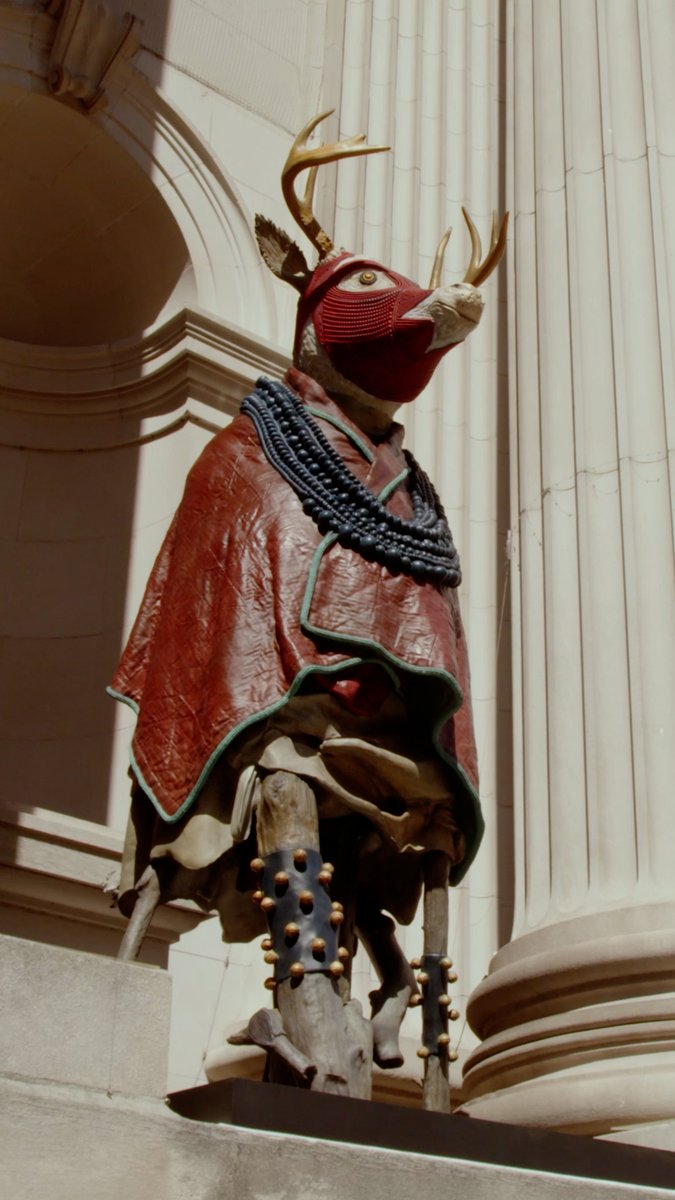
The Design Indaba's curatorial process include us tracking and tracing design and creativity across the various leading universities and design/architectural schools across the world, to explore what the next generation is focused on. At the end of 2010, during our scans for young and emerging creatives, we came across...

34,377 просмотров • 1 год назад •via X (Twitter)

Комментарии: 0

Нет доступных комментариев

Здесь появятся комментарии из оригинального поста
Похожие видео

Stratosphere was our biggest and heaviest character on #Transformers ROTB. He was a real challenge to deal with on the Modeling, Texturing, and Rendering side. He had 1434 UDIMs due to his immense scale and was made up of tens of thousands of objects. His level of detail was truly something else. His vehicle form was also a behemoth. We had also built a mortar for his robot form and a cannon for his vehicle form but neither of these made it into the film as his part in the final battle was cut out. He was originally supposed to help out in the final battle, using both of these weapons against the Sweepers and Predacons. The decision to cut him from the final act came very late as all of his assets were final at that point. We were never told the reason why his role was cut from the film. I had to re-design my texturing system in Mari when working on him to ensure that it could handle such a complex and large character. I had to simplify a lot of the procedural systems and even had to branch off some of them into their own files to ensure that artists could work with somewhat decent performance. We ran into a lot of issues pushing him through our pipeline, both as a model as well as rendering him due to the sheer amount of objects and textures that had to be processed. For shots, it was requested by Lighting that we reduce his memory footprint as Google had complained he was taking up too much memory and their I/O for rendering on the cloud was being affected. The leadership team and I decided that the best way to do this was to half the texel density on the parts that wouldn't be visible in our approved shots and to also half the resolution of the textures in the parts not visible to camera. This allowed us to optimize his memory footprint both in shots as well as storage and I/O. It was massive technical undertaking working on Stratosphere, so much so that we had to delay getting him into shots as we simply couldn't push him through with our normal tooling. I really enjoyed the challenge that he posed for us as a team. CREDITS: Primary Modeling by Oscar Lowe Support Modeling by Arthur Grandjean and his team Final Texturing & Lookdev by Yaz Raji Video credits: Breakdown shot by MPC Film footage by Paramount

Rassoul Edji

268,448 просмотров • 1 год назад

Introducing the 10Ka Team 🤝 We've curated a team of exceptionally skilled individuals, each a trailblazer in their respective fields. Together, we possess all the necessary ingredients to realize our vision of becoming the premier project for digital fashion. Let's dive in 👇🏼 Diana Cañas: Breaking Barriers: Diana Cañas Leads the Way in NFT and Digital Fashion Empowerment. As the founder and CEO of 10ka NFT, Diana has taken the industry by storm, brilliantly combining her love for fashion with cutting-edge technologies like NFTs and NFCs. This unique fusion enables her to push the boundaries of the digital fashion realm. Ronin Studio: Ronin is a versatile creative studio specializing in corporate identity and character creation, along with UI/UX design. “Driven by a dedication to emerging trends and artistic/technological innovation, we draw inspiration from both the past and the future of design. Our approach is inherently disruptive, always encouraging us to think beyond conventional boundaries.” Tripton: We are a dynamic creative studio with expertise in 3D production, Visual Shows, and Virtual and Augmented Reality. “Fueled by a passion for pioneering technologies and groundbreaking ideas, we draw inspiration from eminent artists across advertising design, 3D animation, and the broader audiovisual realm.” Virtuozo: Virtuozo is a studio renowned for crafting immersive 3D worlds and captivating virtual experiences. At the helm is our lead 3D generalist, a virtuoso in every sense of the word. With mastery over the craft, he meticulously crafts realistic and aesthetically pleasing 3D models, textures, and animations using state-of-the-art technology. Cristian Torrijos: Blockchain Developer (Solidity, Smart Contracts, Web3) and expert in PHP, MySQL, and ReactJS. “Specializing in the development of Web3 and Web2 projects, we ensure the quality and longevity of our creations, delivering projects that are not only innovative but also enduring.” Domi Vakero: Digital Artist from the South of Spain proficient in 2D, 3D, and AI. With extensive expertise in the illustration and modeling of both 2D and 3D characters, we bring visions to life with creativity and precision. This is just some of the extensive team behind 10KA. We are dedicated to building & becoming one of the leading projects on Ethereum 🫡

10KA👟

39,304 просмотров • 2 лет назад

As the youngest artist to exhibit in the first-ever Ghanaian pavilion at the Venice Biennale, Ibrahim mahama is renowned worldwide – both for the scale of his work as well as the way in which it tackles complex and complicated aspects of his country’s past. Best known for his monumental installations, which see architectural structures draped in vast patchworks of old jute sacks, comparable to the work of the great Christo, he is not simply concerned with spectacle. These pieces represent the very fabric of Ghanaian life. Once the leading producer and exporter of cocoa, Ghana’s legacy of commerce is tied to these seemingly innocuous objects. Once they’ve served their purpose in housing cocoa, they go on to live extended lives of usefulness as a means of transporting coal. Ibrahim mahama acquires and reappropriates these materials – integral in the commercial functioning of his country – and examines the methods and processes they play a part in by reimagining their makeup and stitching them back together in new forms. Typically installed in art spaces and public markets, this draping draws attention to the global transportation of goods across borders. His belief in the role of art in not only making symbolic objects but also shifting existing perspectives lends his installations great conceptual strength. “I used jute sacks because the history of crisis and failure is absorbed into the material. Their history speaks of how global transactions and capitalist structures work. Their humbleness contrasts with the monumentality of the buildings they cover,” he explains. Mahama’s affinity for the everyday and discarded object extends further than just the jute sacks he’s become known for. A recent exhibition in Manchester saw the artist bring over dozens of plastic train seats and abandoned wooden lockers for his recent show ‘Parliament of Ghosts’. Watch out for Ibrahim mahama's talk The Design Indaba Conference to be released soon. #IbrahimMahama #VeniceBiennale #ContemporaryArt #CulturalHeritage

The Design Indaba

18,912 просмотров • 11 месяцев назад