Video yükleniyor...

Video Yüklenemedi

Ana Sayfaya Dön

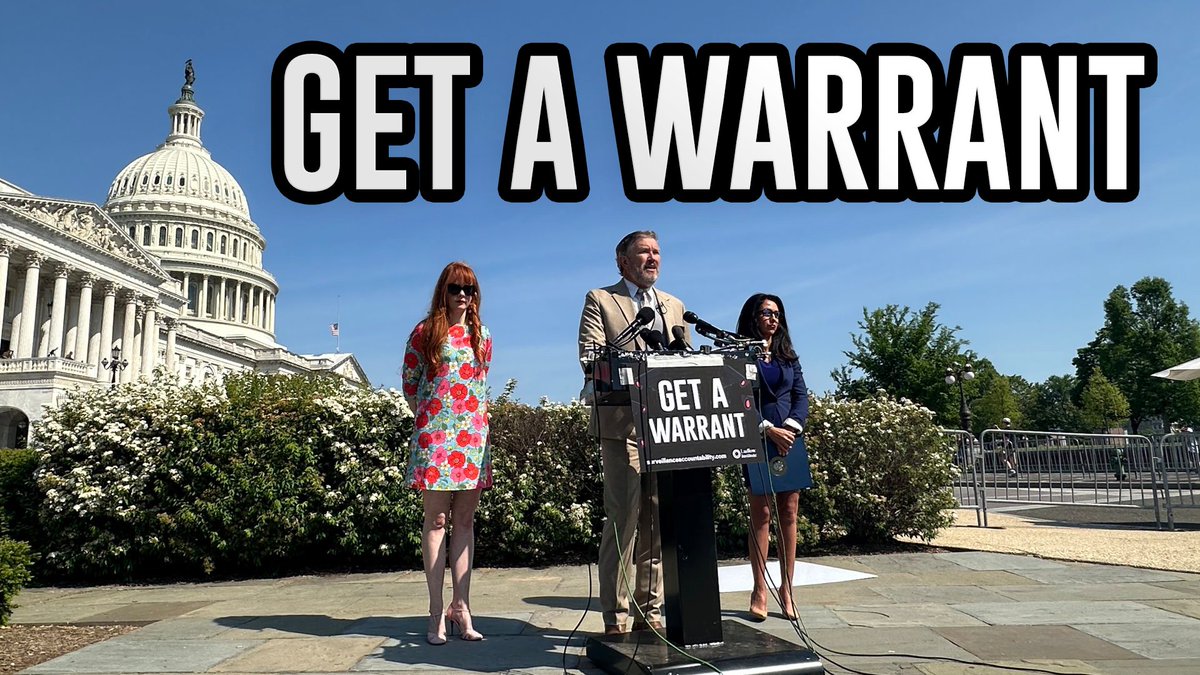
The Founding Fathers created the Fourth Amendment to protect Americans from unreasonable searches and government overreach. Today, nearly every transaction, communication, and interaction passes through a third party. Under the Third-Party Doctrine, information shared with banks and other intermediaries can be obtained without a warrant. As Nick Anthony explains,...

18,403 görüntüleme • 20 gün önce •via X (Twitter)

0 Yorum

Yorum bulunmuyor

Orijinal gönderinin yorumları burada görünecek

Benzer Videolar

The Bank Surveillance Secrecy Act: How America Lost Financial Privacy | Free The Money Ep. 31 As we approach the United States' 250th anniversary, it's worth asking whether we've stayed true to the principles the country was founded on. In this episode of Free The Money, I sit down with Nick Anthony, Research Fellow at the Cato Institute and Fellow at the Human Rights Foundation (HRF), to examine the Bank Secrecy Act and how it transformed banks into de facto law enforcement and has led to decades of expanded surveillance every American. Our Founding Fathers saw how general warrants were used to ransack people's homes, searching for anything authorities could use against them. They recognized this as a fundamental threat to liberty, which is why the Fourth Amendment was created to protect Americans from unreasonable searches and government overreach. Yet today, because of the Bank Secrecy Act, millions of financial records are collected yearly, monitored, and reported to the government without a warrant. What began as a tool to combat tax evasion has evolved into a vast financial surveillance system where banks have effectively become an extension of law enforcement. Nick reported that in a single year, U.S. financial institutions spent an estimated $59 billion complying with the Bank Secrecy Act. During that same period, they filed roughly 28 million reports on their customers, yet those reports generated just 275 investigative leads for the IRS. Of those 275 leads, we don't know how many resulted in arrests or convictions. Nick argues these numbers are evidence of a broken system that subjects millions of law-abiding Americans to financial surveillance with very very little to show for it. Building on that, we also discuss the Third-Party Doctrine, the legal theory that allows the government to obtain information shared with banks and other intermediaries without a warrant. What began as financial surveillance has expanded into something much broader. In an increasingly digital world, where nearly every transaction, communication, and interaction passes through a third party, this doctrine gives the government access to vast amounts of personal information that previous generations would have considered private. As Nick explains, the government is no longer ransacking physical homes, it is increasingly able to sift through our digital lives, collecting information that reveals who we are, where we go, who we associate with, and what we believe. The result is a level of surveillance that would have been unimaginable to the Founders, raising serious questions about privacy, government overreach, and the future of protections in the digital age. Subscribe to Nick’s Substack: Want financial privacy? Check out my favorite privacy coin, Zano and follow Zano for updates. You can buy Zano seamlessly on MEXC using a VPN, or browse the full list of exchanges where Zano is available here: You can also find educational content, tutorials, and interviews on the official Zano YouTube Channel: Sign up for iTrustCapital using my link for a $100 funding bonus and see why more people are opening tax-advantaged Crypto, Gold & Silver IRAs to diversify and protect their future wealth: 0:00 Intro 1:17 The Real Origins of the Bank Secrecy Act: How Financial Surveillance Began 4:16 $60 Billion Spent, 30 Million Reports Filed, Only 275 IRS Leads Generated 6:34 CTRs vs SARs: The Reports Banks File on Ordinary Americans 9:26 Why the $10,000 Reporting Threshold Makes Less Sense Every Year 14:20 How America Exported Financial Surveillance Worldwide & Enabled Transnational Repression 19:27 Zano- Private By Default 21:27 9/11, The Patriot Act & the Explosion of Financial Surveillance 25:03FinCEN: The Agency Collecting Millions of Americans' Financial Records 26:46 ITrustCapital 28:22 The Third-Party Doctrine: How the Fourth Amendment Was Bypassed 32:54 The Lawmakers Fighting to Reform or Repeal the Bank Secrecy Act: Rep Warren Davidson 🇺🇸, Congressman John Rose, & Senator Mike Lee and a handful of others 35:50 Active Lawsuit Against FinCEN Flagging $200 Remittances at Southern Border 39:08 FinCEN's 2013 Crypto Guidance & How It Changed the Industry 43:32 Privacy Isn't Suspicious: Why Privacy Technology Matters 49:19 CBDCs, Stablecoins & Nick Anthony's Hot Take on the CLARITY Act 53:21 Financial Freedom in Nigeria: Why People Are Turning to Privacy Coins 55:15 BIS Revealed that the Federal Reserve Bank of New York is Still an Active Participant in Project Agorá 59:52 Book Recommendations: Conflict of Visions by Thomas Sowell, The Theory of Monetary Institutions by Lawrence White, The Triumph of Fear by Patrick Eddington & Rodigan by David Rodigan

Bri Teresi

100,334 görüntüleme • 22 gün önce

🚨 THEY FOUND A LEGAL WAY TO SPY ON EVERY AMERICAN — AND THE 4TH AMENDMENT CAN'T STOP IT Most Americans believe the government needs a warrant to monitor them, track them, or collect detailed information about their private lives. But unfortunately, they found a loophole. The government may not be allowed to directly collect certain information on Americans, but private companies collect enormous amounts of it every single day through smartphones, apps, websites, search engines, location services, online purchases, and countless other digital tools most people use without a second thought. That means your location history, browsing habits, purchases, interests, movements, and daily routines are already being recorded, stored, and traded by an entire industry that most Americans have never even heard of. The loophole is that while the government may not be allowed to collect certain information directly without a warrant, it can reportedly purchase data that private companies have already collected. The information may be gathered by private companies. The data may be sold by data brokers. And the government may still end up with access to it. For years, there was one major limitation. There was simply too much data. Even if someone wanted to analyze billions of data points across millions of people, it would have required an impossible number of human analysts. Then AI arrived. Suddenly, information that would have taken years to organize can be processed, searched, categorized, connected, and analyzed in a fraction of the time. People are warning that the combination of artificial intelligence and the data broker loophole could fundamentally change what surveillance looks like in America. For the first time in history, technology may finally exist that can sift through enormous amounts of personal information at a scale that was previously impossible. The question isn't whether the data exists. The question is who has access to it. Because once your location, habits, purchases, interests, relationships, and daily routines can all be analyzed by machines, the line between convenience and surveillance starts getting harder to see. The most alarming part? Most Americans have no idea this conversation is even happening. Do you trust the government with more information about your life than your own family knows?

HustleBitch

23,930 görüntüleme • 21 gün önce