Video wird geladen...

Video konnte nicht geladen werden

Zur Startseite

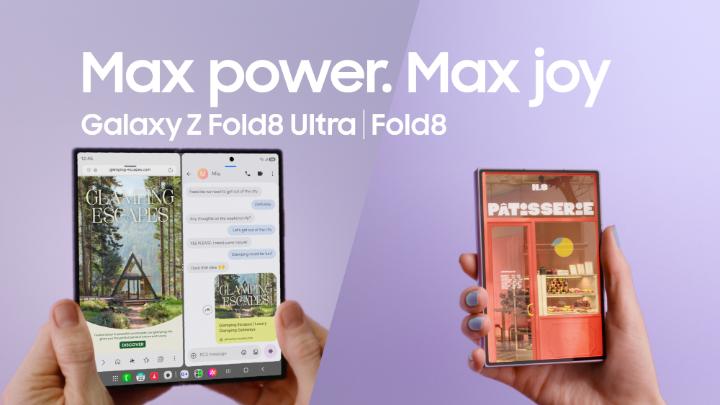
The Galaxy Z Fold 8 has a serious performance problem The Galaxy Z Fold 8 uses the Snapdragon 8 Elite Gen 5 for Galaxy. On the S26 Ultra, this chip scores around 3,102 single-core and 10,405 multi-core in Geekbench 7. On my Fold 8, with no apps running in...

125,196 Aufrufe • vor 1 Tag •via X (Twitter)

25 Kommentare

Profilbild von Joe
Joevor 1 Tag

You loose your s..t, when it's the month of September, and then change your stance in the month of January! Think about the insane amount of people you misguided in the past few years into buying phones!

Profilbild von Al3xis
Al3xisvor 1 Tag

I just tested my z fold 8

Profilbild von Sam
Samvor 1 Tag

My Fold 8 got this score.

Profilbild von kritika
kritikavor 1 Tag

Looks like the reason of all the problems in your life is Samsung!!

Profilbild von Macstappen
Macstappenvor 1 Tag

What? Ur faking. Check attached screen record video i took just now. Max battery temp 35, room temp 27. No heating. Apps constant refresh in background..constant using 5 apps together. I feel its the most optimized samsung phone..i have s24ultra too and its too bad wrt heat/batt.

Profilbild von T3CHGY007
T3CHGY007vor 1 Tag

Here is the score from my fold 8! Looks like you might have a major issue with yours!

Profilbild von Momo Valverde 7️⃣4️⃣
Momo Valverde 7️⃣4️⃣vor 1 Tag

The lack of vapor chamber means faster thermal throttling. The longer-term usage will be under concerned. This heat will cause several issues to the device's components display, green line, motherboard, deteriorate both PMIC & battery health after extensive usage.

Profilbild von T. Shopov
T. Shopovvor 1 Tag

One of the extremely useless things these days is the benchmark scores.

Profilbild von Tony
Tonyvor 1 Tag

Did they reduce it because of thinness and heating problems?

Profilbild von Wallace Moté
Wallace Motévor 1 Tag

This is Fold8 in Roblox. 100% of GPU usage, ~70% RAM and CPU. Cooked.

Profilbild von Dan
Danvor 1 Tag

Result on my Fold 8, pretty disappointing :/

Profilbild von WuM
WuMvor 1 Tag

mine's 3077 / 10431 folded. 3058 / 10123 unfolded. 16gb/1tb version. what version is yours?

Profilbild von dpr_hood
dpr_hoodvor 1 Tag

Bro, don't be so rigid about using a phone. I don't see any big problem with it

Profilbild von Freddy Fresh
Freddy Freshvor 1 Tag

So make the phone a bit thicker and add a bigger vapor chamber. Adding 10g-15g more of weight?

Profilbild von Sin Sor
Sin Sorvor 1 Tag

Same

Profilbild von MobileJack
MobileJackvor 1 Tag

That doesn't explain the stuttering. 50% of the Snapdragon 8 Elite Gen 5's performance is actually more than enough to run the system completely smoothly. It really has to be down to the software.

Profilbild von WordsFromTheDevil
WordsFromTheDevilvor 1 Tag

My fold 8 works just fine.

Profilbild von Shah
Shahvor 1 Tag

snapdragon 8 elite gen 5 is a beast but samsung software optimizations are always absolute trash for the fold line

Profilbild von Marius
Mariusvor 1 Tag

Welcome to ScamDroid

Profilbild von سعيد
سعيدvor 1 Tag

احذف التطبيق هذا وبيرجع يشتغل معك طبيعي وقلل من الانميشن

Profilbild von Marcos🤘🏼
Marcos🤘🏼vor 1 Tag

How much is Apple paying you?

Profilbild von Rafael Arias
Rafael Ariasvor 1 Tag

Ya sabemos que Apple te pagó para que subieras esta mierda de Post

Profilbild von itsmenotyou
itsmenotyouvor 1 Tag

Bro, your posts are sounding dumb and more dumb by the day.

Profilbild von Munkhjin
Munkhjinvor 1 Tag

What about fold 7?

Profilbild von Buckiee
Buckieevor 1 Tag

Fold 6 probably sustains performance better than this

Ähnliche Videos

First, the conclusion: the so called Galaxy Z Fold8 Ultra leak from last night turned out to be a false alarm. After watching the original video over and over again, I'm convinced it isn't a Galaxy Z Fold8 Ultra. It's actually the blue version of the Galaxy Z Fold7. Because of the lighting and color temperature, the blue frame appeared black on camera, which led to the confusion. Here are the three biggest clues: 1. The inner display camera cutout is too large. Compared with the official Galaxy Z Fold8 Ultra renders, the inner camera hole on the Fold8 Ultra is noticeably smaller. The one in the leaked video is still the larger Fold7-style cutout. 2. The rear camera housing doesn't match. The cylindrical camera housing reflects light with a bright metallic sheen, which is much more consistent with the blue Galaxy Z Fold7 than the black Galaxy Z Fold8 Ultra. Some of the hardware details also don't line up. 3. The inner display is still highly reflective. The device in the video shows obvious screen reflections. However, the Galaxy Z Fold8 Ultra is the first Fold to feature an anti reflective inner display film. Anyone familiar with Samsung foldables should immediately notice that the reflections don't look like this. Based on these three points, I'm confident the device in the video is a blue Galaxy Z Fold7, not the Galaxy Z Fold8 Ultra. The confusion is understandable because the two generations are incredibly similar. They share the same overall dimensions and aspect ratio, making them very easy to mix up. The good news is that the real Galaxy Z Fold8 Ultra will be even better. It will have an even less visible crease than the Fold7, along with the new anti reflective inner display film.

Ice Universe

127,679 Aufrufe • vor 2 Monaten

I wonder how long the people are gonna shamelessly defend Samsung all over :] The Galaxy S26 Ultra, which costs about 1500$ for the 512GB variant, might probably be the MOST EXPENSIVE Android in the 2026 as well... yet it can't even run the well optimized mainstream games on 60FPS for just 01 MINUTE... like for real man!‽ 😂 In the recent post where I posted the poor performance of S26 Ultra foe Wuthering Waves, people blamed the game... so here some gameplay test results from your so-called "MOST PERFECT, MOST OPTIMIZED" Hoyo games 🙂‍↕️ The FPS drops to avg 44-47 while just walking around in Genshin Impact after just playing for 4 or 6 minutes. The device completely crashes while playing Zenless Zone Zero at max settings and the FPS even drops to 27 during heavy combat... not in a long gaming session but it was a result of a 15min gameplay test 🥀 Now as for Wuthering Waves, yet it is the most hungry game among the mainstreams, yet the game is also getting slightly better at performance with each new patch update (not major version updates) While devices like IQOO 15 and POCO F8 Ultra with the same Snapdragon 8 Elite Gen 5 are able to run the game for locked 60FPS for atleast 6mins, at the same session the S26 Ultra can't even reach 53FPS and the minimum it reaches during overworld battles is just 11FPS... crazy isn't it? 😂 Having a 200mp ai assisted camera and a so-called privacy display doesn't mean it's the best and has to be 1800$ while it can't even compete with a 450$ Chinese midrange smartphone at performance. Therefore now I guess why the Americans glaze with their IPhones over Samsung... welp, I've been also a Samsung user for 5 years and I still use one, but I don't think there's any of the devices that are more worthless than the S26 Ultra at its price point 😅 The only thing where Samsung is unbeatable might probably the official ui design and the customization features... which their devices are never made for gaming, but still their older devices delivered way more balanced performance at release. #WutheringWaves #WuWa #鳴潮 #WuWaCollection #WuWaAnniversary #GenshinImpact #Genshin #原神 #ZenlessZoneZero #アリア #ZZZ #SamsungGalaxyS26Ultra #zzzero

WuWa Timeline

86,998 Aufrufe • vor 6 Monaten

Core, ‌the Bitcoin-first ‌chain, and how it’s trying to stretch BTC’s usefulness Core DAO (Core DAO 🔶) brands itself as “The Bitcoin Everything Chain.” The pitch is simple: take Bitcoin’s strengths and push them beyond the usual buy-and-hold story. The protocol centers on one main idea: BTC shouldn’t sit still. Core wants idle Bitcoin to earn, but without giving up the properties people care about most: safety, decentralization, and full self-custody. To get there, Core leans on a mix of Satoshi Plus, timelocks, and a quick Layer 1 EVM chain. Satoshi Plus folds in Delegated Proof of Work (so Bitcoin miners can participate), self-custodial Bitcoin staking, and staking of the $CORE token. Core frames the relationship with Bitcoin as mutualistic. It borrows security and incentive alignment from Bitcoin, then tries to send value back through extra miner rewards, trustless yield opportunities for BTC holders, and infrastructure that makes it easier for Bitcoin products to plug in and scale. Key ways Core aims to expand Bitcoin utility: 1.) Self-custodial Bitcoin staking Lock BTC with timelocks directly on the Bitcoin network (CLTV) and earn CORE yield, no wrapping, no bridges, and no handing custody to anyone else. 2.) Dual staking Stake $BTC and $CORE together to reach higher yield tiers. 3.) Tapping Bitcoin’s hash power Miners can delegate hash power to earn extra CORE rewards, while Core itself is secured using a majority share of Bitcoin’s hash rate. 4.) The “Bitcoin Power Grid” A set of rails Bitcoin products can connect to, built around yield, collateral, payments, and DeFi use cases. 5.) Scalable Bitcoin DeFi An EVM-compatible network designed for faster, cheaper BTCFi apps. 6.) Two-way value flow The goal is to strengthen Bitcoin’s security budget over time, while also turning dormant BTC into something that can actively do work. In plain terms, Core DAO’s broader mission is to make Bitcoin more productive without piling on trust assumptions, converting energy and capital tied up in Bitcoin into yield, DeFi activity, and scalable infrastructure.

BSCN

27,175 Aufrufe • vor 29 Tagen

The Galaxy S26 Ultra display looks like absolute garbage next to the iQOO 16. Honestly, it looks like shit. The S26 Ultra uses M14 OLED, while the iQOO 16 has moved on to the newer M16 OLED, so the latter already has an advantage at the panel level. But the real disaster is Samsung’s privacy display design. Look at this comparison. The moment you tilt the S26 Ultra, the woman’s skin tone starts turning yellow and green. At wider angles, she almost looks like a ghost. Meanwhile, the iQOO 16 keeps her skin tone remarkably accurate, with excellent clarity and color consistency even from extreme angles. And please pay attention to this: I did NOT enable Privacy Display. This is the S26 Ultra in its normal display mode. The privacy feature is completely off, yet the viewing angles are already this bad. That means even if you never use Privacy Display at all, you still have to live with the side effects of this optical structure every single day. Tilt the phone a little and colors shift. Skin tones collapse. A flagship display that cannot even maintain basic color consistency at normal viewing angles is simply unacceptable. The first thing I checked after getting the iQOO 16 was its viewing angle performance, because this issue matters a lot to me. And honestly, I was so happy. This finally feels like a proper flagship OLED again. Then I looked back at my S26 Ultra and almost wanted to cry. Samsung has some of the best OLED technology in the world, and M14 OLED itself is perfectly capable of looking excellent. Yet Samsung sacrificed viewing angles, transparency, and color consistency for a privacy feature that most people will only use occasionally. Ruining hours of daily viewing quality for a feature you may need for a few minutes is absurd. I really hope other smartphone brands do not blindly copy this trend. Privacy protection can be achieved with software, accessories, or other solutions. Do not destroy the fundamentals of a great display for it. And this is exactly why I am already worried about the S27 Ultra. Even if Samsung upgrades it to M16 OLED, if it keeps the same privacy display structure, I do not expect it to match the clean, transparent, and consistent color performance of the iQOO 16. A great display should first get the basics right: accurate color, clarity, and viewing angles. If a normal human face turns yellow green the moment you tilt the phone, no advanced OLED material can save it.

Ice Universe

361,915 Aufrufe • vor 3 Tagen

I have waited to publish the Pixel 11 Pro XL Performance and Gaming experience, and there is a slight difference in its performance between when it was launched and now. 🧵 (1/2) The Pixel 11 Pro XL is fast and smooth in real-life usage during normal day-to-day tasks, but heavy tasks and gaming need much improvement. There are improvements in Genshin Impact because, at the time of launch, it was not playable, but now it's playable. Let's talk in detail: Starting with the daily tasks, like app opening and switching between apps, is smooth and fast and easily comparable with other Flagships. The camera shutter button is responsive and quick, and this new Chipset looks efficient too because it doesn't heat up in day-to-day tasks and has less energy consumption. RAM management is also good; it easily keeps apps running in the background. But things get a little messy when you do heavy tasks on it, which is now a habit for almost every Pixel device. When you do heavy things like heavy editing and video rendering at very high quality, it feels slow compared to other Flagships, and the gaming experience is not comparable with them because Snapdragon 8 Elite Gen 5 devices' gaming experience is on another level. Benchmarks Note: All benchmarks were conducted at room temperature around 27°C, in a non-air-conditioned room. Pixel 11 Pro XL features Tensor G6 3nm Chipset, which is paired with IMG CXTP 48 1536 GPU, UFS 4.0 Storage, and up to 16GB LPDDR5X RAM. The device scores 1.9 million in AnTuTu, reaching around 36°C and consuming 4% battery. During a 30-minute throttling test, the device throttled to 68%, and the temperature was around 34°C. Geekbench Scores: CPU Scores: - Single Core: 2287 - Multi-core: 6709 - GPU Score: 3259 AI Scores: - AITuTu Score: 127K 3DMark Stress Test 20 minutes each: Wild Life Stress Test Highest: 13655 | Lowest: 10766 Stability: 78% Wild Life Extreme Stress Test Highest: 3467 | Lowest: 2861 Stability: 81% Steel Nomad Light Stress Test Highest: 1118 | Lowest: 1048 Stability: 93% These 3DMark scores are not impressive but quite stable. The maximum temperature the device reached after these extreme stress tests was 43°C, which is acceptable and good because these tests demand more power and hardware output. The Pixel 11 Pro XL's performance is improved compared to its predecessor but is not comparable with other Flagship devices.

Abhishek Yadav

20,338 Aufrufe • vor 11 Tagen