Video wird geladen...

Video konnte nicht geladen werden

Zur Startseite

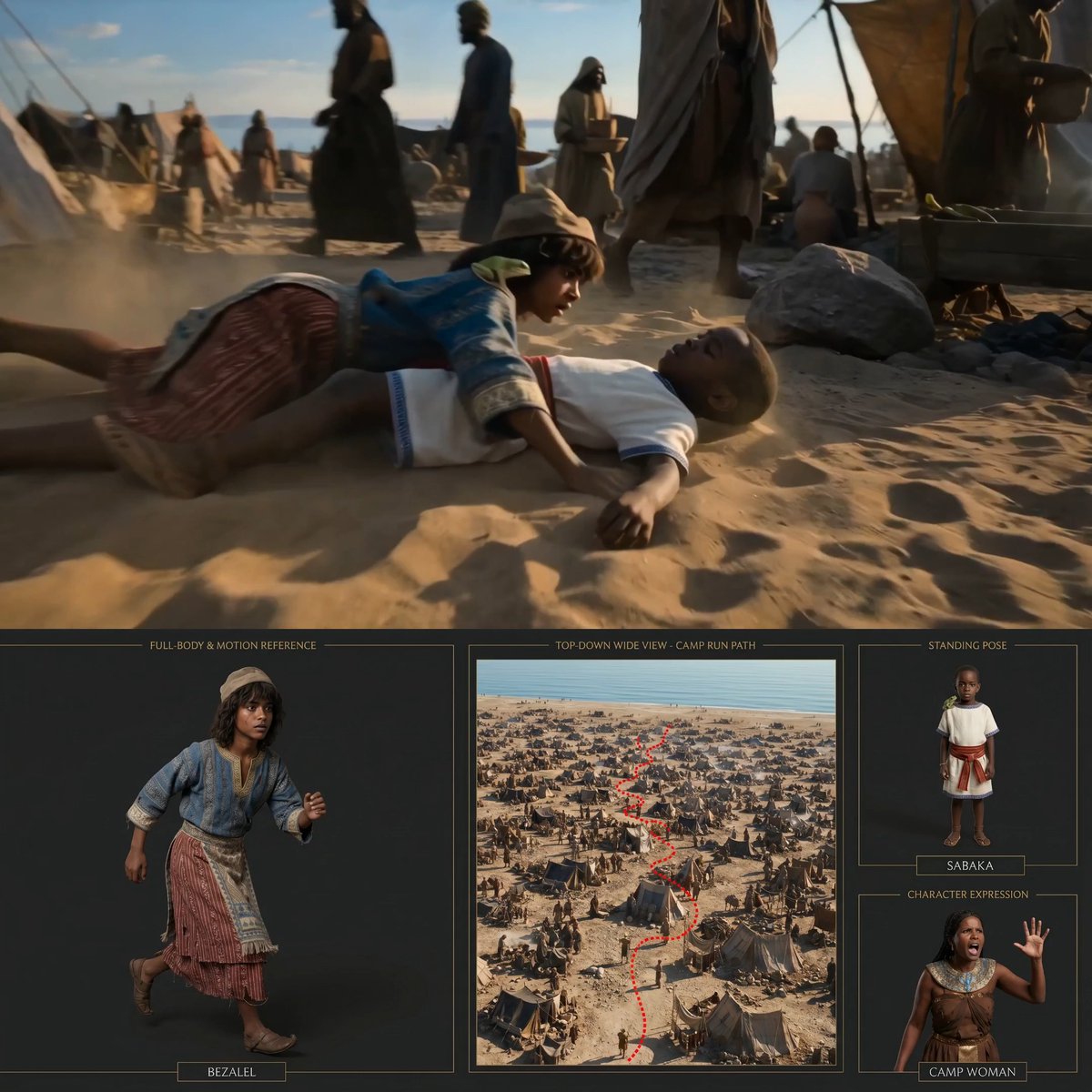
The generational leap extends far beyond 4K resolution alone. It represents the integrated evolution of resolution, motion fidelity, and post-production flexibility. Seedance 2.0 delivers native 4K output where fine detail remains consistently preserved throughout motion sequences, not merely in static frames.

40,952 Aufrufe • vor 1 Monat •via X (Twitter)

0 Kommentare

Keine Kommentare verfügbar

Kommentare vom Original-Post werden hier angezeigt

Ähnliche Videos

Not every hero wears a cap. Some carry a school bag. 🎒 Brought this cinematic animation to life with Seedance 2.0 on BudgetPixel AI Prompt 👇 Style: High-end 3D animated cartoon, cinematic Pixar-style lighting, expressive characters, shallow depth of field, dynamic motion blur, viral short-form pacing, 4K Scene 1 (0–3s) “Establish + Hook” Wide tracking shot from behind: a cartoon school boy walks alone on a quiet street, backpack bouncing slightly. Camera slowly pushes in (dolly-in). Subtle wind + soft suspense beat starts. Transition: quick whip pan left into next scene. Scene 2 (3–6s) “Threat Reveal” Snap zoom cut-in to a girl near a parked bike being threatened by two sneaky snatchers. One grabs her purse aggressively. Camera angle: low-angle wide shot to make snatchers look bigger and intense. Music intensifies sharply. Transition: fast heartbeat zoom blur into hero reaction. Scene 3 (6–9s) “Hero Moment Build” Close-up on the boy’s face determined expression, eyes reflecting light. He bends down (camera follows in slow-motion orbit shot) and picks up a small stone. Cinematic slow-motion throw with motion blur and dramatic lighting flare. Transition: impact cut (flash frame white) Scene 4 (9–11s) “Impact Chaos” Stone hits the bike with stylized spark FX + metallic clang sound vibe. Camera shakes slightly (handheld effect). Purse falls in slow motion. Snatchers react in exaggerated cartoon shock. Transition: speed ramp + forward push-in tracking shot Scene 5 (11–13s) “Action Resolution” The boy runs in smooth tracking side-shot (parallax motion), grabs the purse mid-motion. He steps in front of the girl protectively. Snatchers retreat in exaggerated cartoon panic (blurred background motion). Transition: soft stabilized slow fade motion Scene 6 (13–15s) “Hero Ending / Viral Hook Finish” Golden warm lighting. Medium close-up: boy returns purse gently. Girl smiles relieved. Camera slowly rotates around them (hero orbit shot). He puts on black sunglasses inslow-motion swag reveal. Soft romantic outro music fades. Final frame freezes for 0.5s (TikTok-style end lock).

Ai Arainz

45,634 Aufrufe • vor 2 Monaten

THE DEPTH MAP TRICK THAT FIXED DANCE ACCURACY IN SEEDANCE 2.0 Feed the model a video of someone dancing and it tries to interpret everything- the person, the clothes, the lighting, the room, and somewhere in there, the movement. Feed it a depth map and there's nothing left to interpret but the motion. Most creators trying to transfer a dance to a character reference the source footage directly, then wonder why the choreography drifts. The problem isn't the model - it's that you handed it ten variables when you only wanted one. Here's the workflow 1. Lock the character reference in GPT Image 2 first -face, build, costume, so identity holds independently of whatever motion gets applied to it 2. Convert the source dance footage into a depth map instead of using the raw video -this strips out the original performer's appearance, clothing, and environment entirely 3. Feed the depth map as the motion reference and the character sheet as the identity reference- two separate inputs doing two separate jobs, not one input trying to do both 5. Let the depth map carry only spatial movement -the model receives body position and momentum with no competing information about who's moving or what they look like 6. Keep the character and motion inputs isolated throughout - the moment you mix appearance data into the motion reference, the model starts negotiating between two identities Why this works • Raw footage passes the model everything at once- performer, wardrobe, room, lighting -and the choreography competes with all of it for attention • A depth map is pure spatial information, so the only thing left to transfer is movement • Separating identity from motion means the character can stay locked while the dance stays accurate - normally you're trading one for the other • The accuracy gain isn't the model getting better, it's the model getting fewer decisions to make Use cases: ⁃ Dance and choreography transfer onto original characters ⁃ Motion capture-style workflows without motion capture ⁃ Any sequence where a specific movement needs to survive intact ⁃ Character showcase content built on existing performance footage The character sheet answers who's dancing. The depth map answers how - and keeping those two questions separate is the whole trick.

Nexlow

84,925 Aufrufe • vor 25 Tagen