Video wird geladen...

Video konnte nicht geladen werden

Zur Startseite

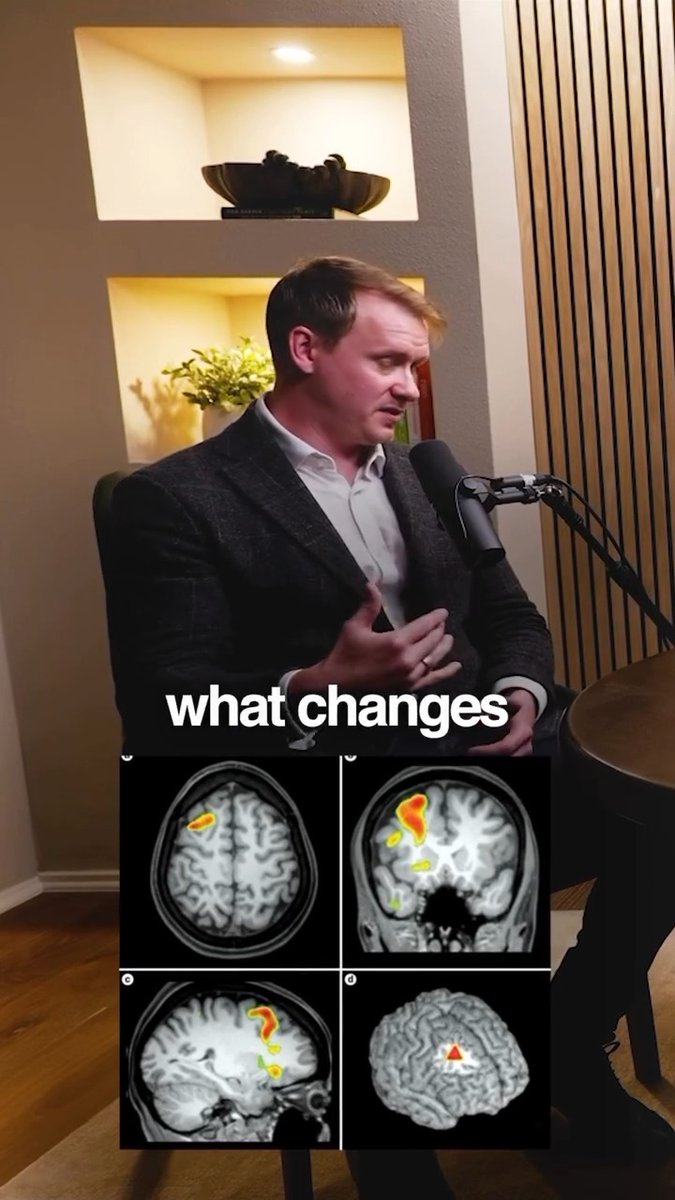
The ketogenic diet is powerful brain medicine. Consider these observations from a study I co-authored, conducted by my friend Dr. Albert Danan, a psychiatrist practicing in Toulouse, France. 31 adults with "treatment-resistant" schizophrenia, bipolar disorder, or major depression volunteered to try a mildly #ketogenic whole-foods diet in the hospital,...

42,283 Aufrufe • vor 2 Jahren •via X (Twitter)

10 Kommentare

Profilbild von Mark Bski 🇺🇸🐶 olllllllo
Mark Bski 🇺🇸🐶 olllllllovor 2 Jahren

Interesting. I wrote this for the comment just above yours, but it fits here also.

Profilbild von Justice S.
Justice S.vor 2 Jahren

@FarmerCrafted

Profilbild von Eric | From JJ and Eric Carnivore
Eric | From JJ and Eric Carnivorevor 2 Jahren

I had to go full carnivore, but after 8 months was able to taper off my SSRI. Withdrawals symptoms were minor and I feel great. Life transformed.

Profilbild von Slobo Stephan, MD
Slobo Stephan, MDvor 2 Jahren

From stud: Patients with schizophrenia showed a 32% reduction in Brief Psychiatric Rating Scale scores Overall Clinical Global Impression (CGI) severity improved by an average of 31%

Profilbild von EZ Money
EZ Moneyvor 2 Jahren

Awesome

Profilbild von Kindly #deprescribe -- taper psychiatric drugs
Kindly #deprescribe -- taper psychiatric drugsvor 2 Jahren

“Their general metabolic health also improved dramatically” This would follow from lower drug burden. “You do not see outcomes like this in conventional inpatient psychiatric care.” An absurdly low bar.

Profilbild von Gutsandbutts
Gutsandbuttsvor 2 Jahren

I love to hear this. The problem, as always, is compliance long term.

Profilbild von Steven Quartz PhD
Steven Quartz PhDvor 2 Jahren

how does a study such as this only measure ketosis once? With finding only 64% were in ketosis at a single time point this suggests, as did the Stanford pilot, that weight loss and not ketosis mediated the results.

Profilbild von Sameyeam
Sameyeamvor 2 Jahren

False

Profilbild von Carlos Sosa
Carlos Sosavor 2 Jahren

Thanks, as simple as to eat whole foods, not processed...

Ähnliche Videos

If your parent is showing signs of Alzheimer's and you want to do something about it, put them on the ketogenic diet. This diet puts their body into a state of ketosis, where instead of their brain burning sugar for fuel, it burns fat and produces something called ketones. Ketones become an alternative fuel source for their brains. Most people with Alzheimer's have brain cells that are insulin resistant. It can no longer efficiently pull glucose from the bloodstream for fuel. Even though glucose is available, the insulin delivery system is broken. Brain cells are starving and can no longer power themselves properly, causing brain fog, memory loss, cognitive decline, and even depression. Ketones bypass this broken system entirely. They cross the blood-brain barrier without needing insulin, feeding your brain cells directly. They produce less cellular waste than glucose. And even act as natural antioxidants exactly where your brain needs them most. Here's Dr. Dale Bredesen's ketogenic protocol from his latest clinical trial on Alzheimer's: • Cut simple carbohydrates. • Fast for at least 12 hours overnight. • Plant-rich diet high in healthy fats (a mildly ketogenic diet - best if starting out) 90% of his patients improved following these rules. Some went from impaired cognitive scores to perfect ones. And results were 7x greater than the leading Alzheimer's drugs. The ketogenic diet is one of the protocols families use to treat their parent's Alzheimer's in our online community. More on this in the comments below.

A Paradise for Parents

47,033 Aufrufe • vor 5 Monaten

A seismic shift is underway in psychiatry, moving beyond talk therapy and pharmaceuticals to target the very foundation of mental health: metabolic function. Leading this revolution are pioneers like Dr. Christopher Palmer of Harvard Psychiatry. For over two decades, he has focused on the most challenging cases—patients resistant to psychotropic medications. His groundbreaking protocol is strikingly simple, yet profoundly effective: a ketogenic diet. By placing patients into ketosis through a diet of meat and low-starch vegetables, Dr. Palmer has documented the reversal of conditions once deemed lifelong, including: • Major Depression • Anxiety Disorders • Bipolar Disorder • And in rare cases, even Schizophrenia The mechanism? While the official explanation points to improved mitochondrial health, a compelling alternative theory suggests that removing carbohydrates strengthens the immune system. This allows the body to finally subdue chronic, undiagnosed infections that may be driving neurological dysfunction. By halting the constant processing of sugars, the body can redirect its resources toward regeneration and fighting these underlying inflammatory and infectious threats. This isn't just a dietary trend; it's a paradigm shift. It reframes "mental illness" as a potential symptom of metabolic and immune system dysregulation. The work of Dr. Palmer, alongside researchers like Georgia Ede and Stanford's Annelise Barron, is offering not just management, but the possibility of genuine recovery. The future of mental health treatment may not be in a pill bottle, but on our plates.

Camus

42,854 Aufrufe • vor 11 Monaten

“Nobody told me that these drugs can cause serious physical health problems.” “Disable sexual function.” “Worsen emotional distress and cognition.” “And in some cases, increase suicidal thoughts.” This shocking testimony will change your entire perspective on the “mental health crisis.” Laura Delano was diagnosed with bipolar disorder at age 13. She was told she would need meds for the rest of her life. From that point on, her list of diagnoses grew longer and longer. “2 meds became 3, 4, 5.” But her life didn’t improve. In fact, the exact opposite happened. “My life unraveled.” “I gained 70 pounds.” “Developed chronic health issues.” “Was constantly exhausted.” “And became increasingly anxious and suicidal.” “Nobody told me that the medications I’d been on for years were approved by the FDA based on clinical trials lasting, on average, 6-12 weeks.” “Or that the safety and efficacy of taking multiple psychiatric drugs at once has never been properly established.” “Nobody told me that what I experienced whenever I missed a dose or tried to stop a med was withdrawal symptoms—not a return of an underlying condition.” Her terrible experience with the mental health industry drove her to a suicide attempt. Then, she questioned everything she thought she knew about the “mental health crisis” in America. “23.4% of American adults, 61.5 million people, have a psychiatric diagnosis, including 1 in 3 young adults.” “Suicide rates in adults increased 35% from 1999 to 2018.” “From 2007 to 2021, the suicide rate among youth aged 10 to 24 increased by 62%.” “The suicide rate among children ages 10 to 14, more than tripled from 2007 to 2018.” “In 2023, nearly 50,000 Americans died by suicide, the highest number ever recorded.” “At the same time… more Americans than ever are receiving mental health treatment.” “Approximately 61 million adults and 4 million adolescents are now taking psychiatric medications.” “The financial costs are staggering.” “In 2023 alone, Medicare and Medicaid combined spent $36.6 billion on psychiatric drugs.” “That’s $335 billion over the past decade—with no measurable population-level improvement in mental health.” “What if our nation’s mental health crisis is in significant part a crisis of unintended consequences of treatment-caused harm misread as illness, generating more treatment, more disability, and more despair?” Now, countless victims of this crisis of over-medicalization are coming forward to reveal that nobody told them about the harms of psychiatric medication. And if you have your own experience dealing with this crisis, we want to hear your story, too. You are not alone. Follow Inner Compass Initiative

Inner Compass Initiative

11,514 Aufrufe • vor 4 Monaten

Considering ketogenic therapy for bipolar disorder or other serious mental illnesses? This powerful story from Shannon Harwood shows how ketogenic therapy helped her achieve full remission from bipolar 2 disorder after 35 years of recurring episodes, failed medications, and misdiagnoses. In this video, Shannon shares her personal journey: from undiagnosed symptoms in her teens, to years of misdiagnosis and ineffective treatments, to discovering ketogenic therapy at age 48. Within just five days of starting, she experienced a dramatic shift in her mental clarity, energy, and overall functioning. You'll hear: - How bipolar 2 disorder often goes undiagnosed or misdiagnosed as major depression - The impact of living with unrelenting depressive episodes for decades - How medications helped—but also introduced serious side effects - Why she turned to ketogenic therapy and how it changed everything - What it means to find root cause healing instead of just symptom management Shannon is now off all psychiatric medications and has remained symptom-free for years. Her story is one of hope, resilience, and the possibility of full recovery. If you or someone you love is navigating severe mental illness and looking for new options, this is a must-watch. #MetabolicHealth #KetogenicTherapy #BipolarDisorder #MentalHealthRecovery #MetabolicMind #Bipolar2 #HealingIsPossible #NutritionAndMentalHealth #RootCauseHealing Resources Mentioned: - Get better acquainted with Shannon’s mental health strategies at her THINK+SMART profile: - Learn more about the THINK+SMART framework: a self-guided, community-based framework that helps you develop a customized metabolic approach to mental health: Follow our channel for more information and education from Bret Scher, MD, FACC, including interviews with leading experts in Metabolic Psychiatry. Learn more about metabolic psychiatry and find helpful resources at

Metabolic Mind

57,146 Aufrufe • vor 1 Jahr