Loading video...

Video Failed to Load

Go Home

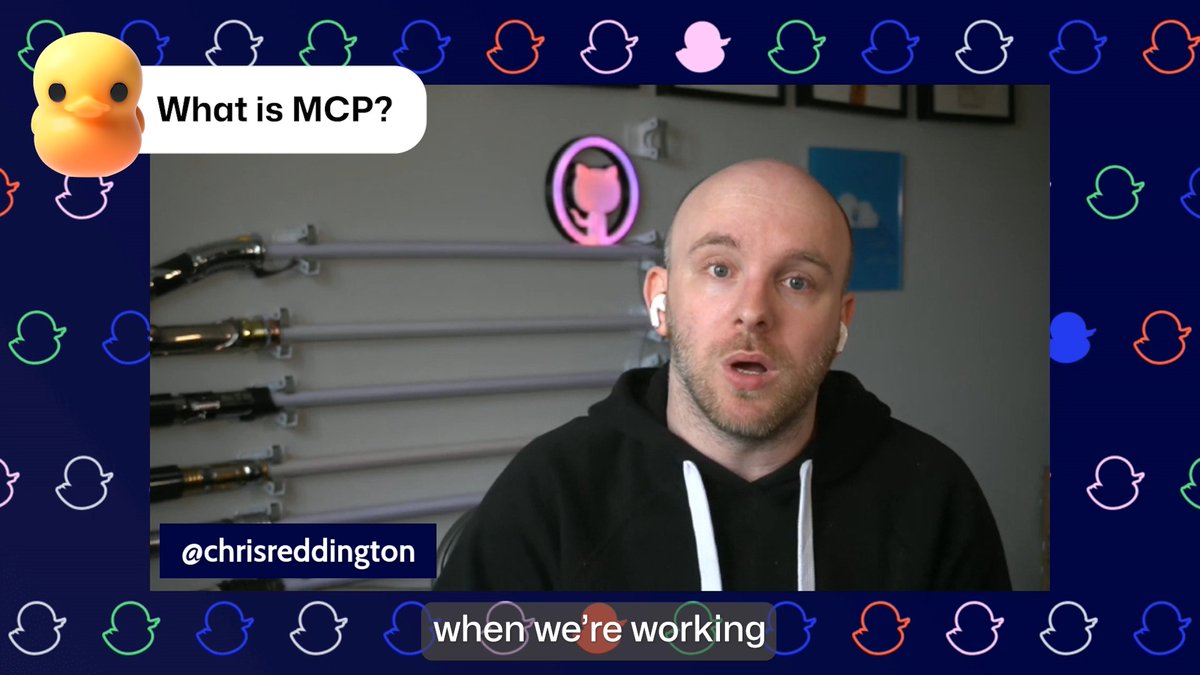
The model is not enough - it doesn't come with an understanding of how your business or team works. That context is spread across the work happening every day: files, conversations, emails, databases, and apps. Figuring out what matters for a particular task, and what the model actually needs,...

42,104 views • 4 days ago •via X (Twitter)

8 Comments

Brian Snyder's profile picture
Brian Snyder4 days ago

Thank you for this!

Luca Spolidoro's profile picture
Luca Spolidoro4 days ago

So at the end WorkIQ `ask` tool is just an agent that calls Microsoft Graph underneath?

EKOS _ AGI 🦊 🇮🇷's profile picture
EKOS _ AGI 🦊 🇮🇷4 days ago

The hard part is not giving an agent more context, but knowing which context actually matters and preserving why it mattered. Once that context is tied to evidence, decisions and outcomes, it can become reusable knowledge instead of being reconstructed from scattered systems every time.

American Nerd 🇺🇸's profile picture
American Nerd 🇺🇸4 days ago

It’s still not working as you described. Perhaps in a few years, I’ll have WorkIQ to read saved contract prices and term limits without making assumptions. However, it’s too predictive; it needs to be more deterministic when gathering the context.

Vito Botta's profile picture
Vito Botta4 days ago

I've tried versions of this. Most of them fall down on the ranking, so that's what I'd poke at first.

炎鎮🔥 - ₿onochin -'s profile picture
炎鎮🔥 - ₿onochin -4 days ago

Made an English version of my video on why it's so strong.

Steve Mordue's profile picture
Steve Mordue4 days ago

Work IQ is like an MCP Octopus :)

Vivek Ravindran's profile picture
Vivek Ravindran4 days ago

Finally someone explaining the Microsoft Moat! @clamanna appreciate the effort.

Related Videos

this video is the CLEAREST explanation of how claude skills + AI agents work and how to use them most people set up an AI agent and wonder why it keeps disappointing them. the context window is everything context is what the model assembles before it takes any action. think of it like everything the agent needs to read before it does anything. the quality of what goes in determines the quality of what comes out. the models are genuinely really good right now. claude and gpt are exceptional. the variable is almost always the context you give them. 1. agent.md files are mostly unnecessary every single line you put in an agent.md file gets added to every single conversation you have with your agent. a 1000 line file is around 7000 tokens burning on every run. the model already knows to use react. it can read your codebase. save the agent.md for proprietary information specific to your company that the model genuinely cannot know on its own. 2. skills are the actual unlock a skill.md file works differently. what loads into context is only the name and description, around 50 tokens. the full instructions only appear when the agent recognizes it needs that skill. so instead of 7000 tokens on every run you have 50. and the agent stays sharp because the context window stays lean. the closer you get to filling the context window the worse the agent performs, same way you perform worse when someone dumps 10 things on you at once. 3. here is how to actually build a skill the right way most people identify a workflow and immediately try to write the skill. what you want to do instead is run the workflow by hand with the agent first. walk it through every single step. tell it what to check, what good looks like, what bad looks like. correct it in real time. once you have had a full successful run from start to finish, tell the agent to review everything it just did and write the skill itself. it writes a better skill than you will because it has the full context of what actually worked in practice not in theory. 4. recursively building skills is how you go from frustrated to reliable when the skill breaks, and it will break, ask the agent exactly why it failed. it will tell you specifically what went wrong. fix it together in that same conversation. then tell it to update the skill file so that failure mode never happens again. ross mike did this five times with his youtube report generator. it now pulls from eight different data sources and runs flawlessly every single time without him touching it. 5. sub agents are something you earn not something you set up on day one start with one agent. build one workflow. turn it into one skill. once that works add another. ross mike has five sub agents now covering marketing, business, personal and more. it took months to get there and every single one exists because a workflow proved it deserved to exist. the people who set up 15 sub agents on day one and wonder why nothing works skipped all the steps that make the thing actually run. 6. your workflow is the thing the model cannot get anywhere else the model has been trained on everything. it knows more than you about most things. what it does not have is your specific process, your taste, your way of doing things. that is what skills capture. that is what makes your agent actually useful versus a generic one. downloading someone else's skill means downloading their context onto your setup and it will not work the way you want it to because it was never built around how you work. this is the clearest explanation of how agents actually work i have heard. Micky runs this stuff every single day and the results show it. full episode is now live on The Startup Ideas Podcast (SIP) 🧃 where you get your pods people charge for this sorta stuff i give away the sauce for free i just want you to win watch

GREG ISENBERG

194,524 views • 5 months ago

your agent reviewing its own work is not a check. it is a second opinion from the same source. this is the most common gap in agent systems and it hides in plain sight, because the step exists. there is a review. it just cannot do the thing you think it does. here is the mechanism. the model produced an output from a context. you then ask the same model, holding the same context, whether that output is correct. it answers fluently, because that is what it does. and the answer is drawn from the same distribution that produced the thing being judged. same weights, same window, same blind spots. if the reason the output is wrong is something the model does not know, the review does not know it either. if the reason is something the context does not contain, the review has the same context. the failure mode and the detector share a cause. > why it feels like it works because most of the time the output is fine, and the review says fine. agreement is not evidence of detection. a reviewer that says pass on everything agrees with reality most of the time too. what you actually want to measure is what happens on the cases that are wrong. that is the only place a check earns its name, and it is exactly the place where a self-review is weakest. there is research on this. Huang and colleagues at DeepMind showed at ICLR 2024 that intrinsic self-correction, revising without external grounding, does not reliably help and often makes things worse. > what to actually do move the check outside the model. a test that runs, a schema that validates, a file that exists or does not, an exit code from something you did not write. these are not smarter than the model. they are just not correlated with it, and that is the entire value. when the judgement genuinely needs a model, at minimum use a different family. same family means shared blind spots, and frontier judges measurably inflate scores for outputs that look like their own. and split the work by kind. anything objectively checkable goes to code. only the genuinely semantic calls go to a judge, and those get a rubric written as one line. a review inside the loop tells you the model is confident. a check outside it tells you whether the work is done. save this - then read the eval setup below

Hanako

14,325 views • 1 month ago

Anthropic's new model is extraordinary and it just revealed a problem that most enterprise AI buyers have not fully reckoned with yet (Save this), The model is genuinely impressive, and Chamath Palihapitiya assessment is that Anthropic continues to push the frontier harder than almost anyone. But that same update also showed their hand on something that changes the risk calculus for every business using Claude. Anthropic's new architecture stores every prompt you send for 30 days, no exceptions, not even for enterprise customers with zero-data retention agreements. The mechanism works like this, Anthropic now evaluates your prompt before generating output, deciding what it will and will not respond to, which means your query gets filtered before you even see a response. For individual users, that introduces a meaningful risk of censorship. For companies, Chamath says it is almost a non starter, and the reason is not just the data retention itself, it is the exposure that comes from operating at scale inside a large organization. A downstream scientist using the Claude APIs could accidentally trip a filter without knowing it, a business executive inside your company could trip it, and a molecular biology researcher could trip it and all of a sudden the company gets silently cut off from a tool it has embedded into critical workflows, with no warning and no recourse. Chamath gives Anthropic credit for being honest about how the system works, saying they tell the truth but notes that in this case the truth is not good. What this moment actually signals is a structural shift in how serious companies need to think about AI governance, because the question is no longer just which model performs best on benchmarks. It is who controls the model, who is learning from your data, and whether you are comfortable with a single point of failure sitting at the center of your competitive advantage. The answer for most enterprises will be broad model diversity, tighter governance frameworks and a serious reckoning with what it means to run mission-critical workflows through a third party that reserves the right to cut you off. Anthropic built a remarkable model and told the truth about how it works, the market's job now is to decide whether that transparency is enough to offset what the truth actually says.

Milk Road AI

30,183 views • 3 months ago