Video wird geladen...
Video konnte nicht geladen werden
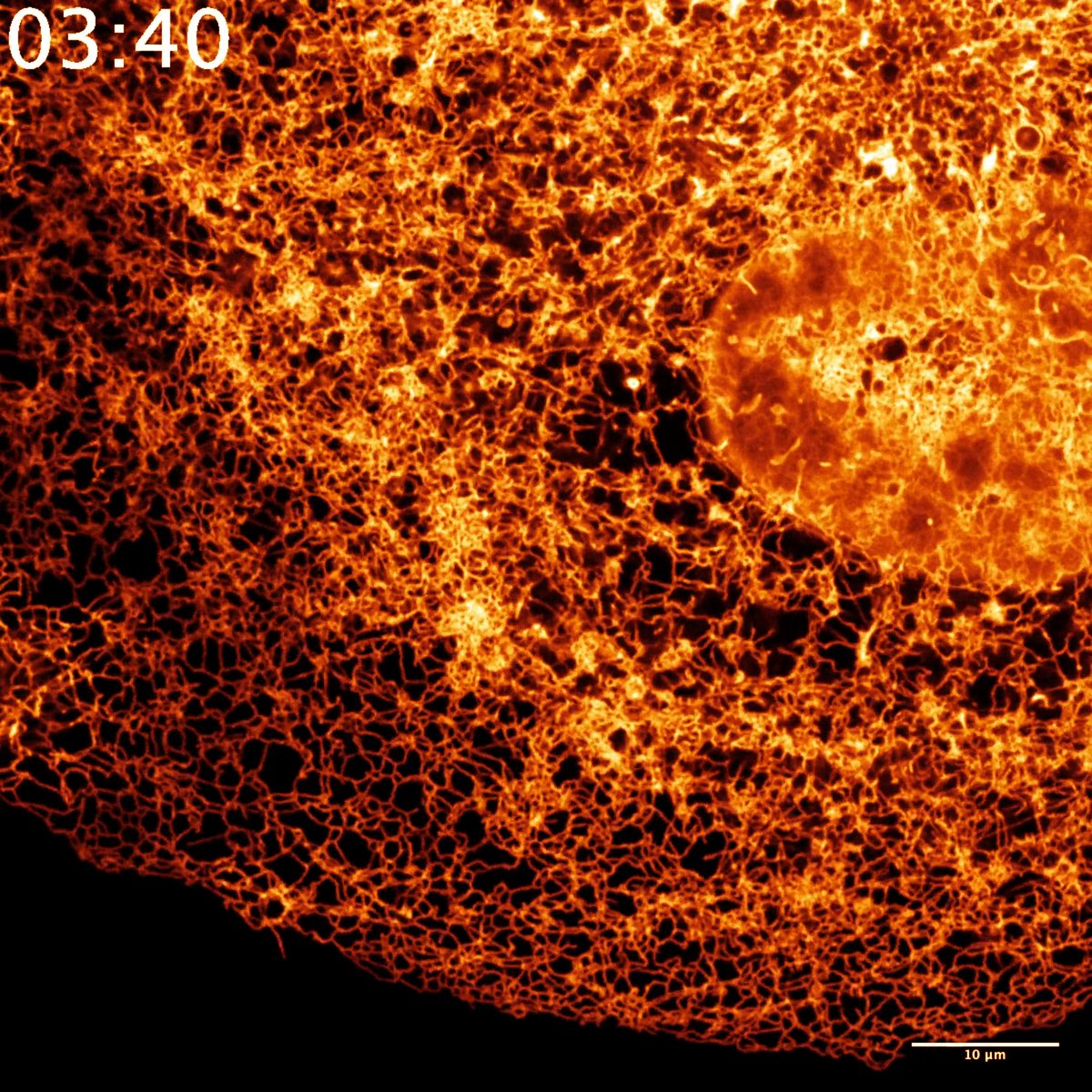
The most enigmatic structure in cell biology: the Vault. Often missing from science text books due to the mysterious nature of their existence, it has been 40 years since the discovery of these giant, half-empty structures, produced within nearly every cell, of every animals, on the planet.

203,015 Aufrufe • vor 1 Jahr •via X (Twitter)
10 Kommentare

Vaults, discovered in 1986, are mysterious cellular structures resembling cathedral vaults, found in nearly every animal cell. They're large, protein-rich, and potentially involved in transport, signaling, and drug resistance, yet their exact function remains unknown after 40 years! 😱

Vaults are truly fascinating—huge, conserved, and still not fully understood. A quiet mystery hiding in plain sight within our cells.

They need to biopsy a super hero. That's where their powers are stored.

“Created by random mutations!”

) is the "vault," a cellular organelle discovered in 1986 by Nancy Kedersha and Leonard Rome. Despite being present in nearly every animal cell, its function remains largely mysterious after nearly 40 years of study. Here are the details known about vaults:The structure referred to in the X post by Massimo (@Rainmaker1973 Discovery and Basic Characteristics Discovery: Vaults were first identified in 1986 by Nancy Kedersha and Leonard Rome at UCLA. They were named for their resemblance to the vaulted ceilings of cathedrals when viewed under an electron microscope. Size and Composition: Vaults are large, barrel-shaped structures, approximately 34 nm by 60 nm in size (from negative staining), 26 nm by 49 nm (from cryo-electron microscopy), and 35 nm by 59 nm (from scanning transmission electron microscopy). They are primarily composed of proteins, with the major vault protein (MVP) making up about 70% of their mass. Each vault contains 78 copies of MVP, which is about 100 kDa in size. Structure: The vault has an octagonal shape, consisting of an outer shell and an internal cavity. The cavity is thought to be able to "breathe," allowing small molecules to enter and exit. Cellular Presence and Conservation Ubiquity: Vaults are found in nearly every eukaryotic cell, across a wide range of animal species, indicating a high degree of evolutionary conservation. Mass: They are massive compared to other cellular structures, with a mass about three times that of a ribosome, yet they are often described as "half-empty," suggesting a significant internal space. Proposed Functions Nuclear-Cytoplasmic Transport: Vaults have been hypothesized to play a role in transporting molecules between the nucleus and cytoplasm, given their association with nuclear pore complexes. mRNA Localization: There is evidence suggesting vaults might be involved in the localization of messenger RNA (mRNA) within the cell. Drug Resistance: Vaults have been linked to drug resistance in cancer cells, particularly through their association with the MVP, which is overexpressed in some drug-resistant cancer cells. Cell Signaling: They may participate in cell signaling pathways, although the exact mechanisms are unclear. Nuclear Pore Assembly: Vaults might be involved in the assembly or function of nuclear pores. Innate Immunity: There is some indication that vaults could play a role in the innate immune response, possibly by interacting with immune-related molecules. Experimental Insights Genetic Knockouts: Studies involving the knockout of vault-related genes in organisms like Dictyostelium (a type of slime mold) and mice have shown minimal phenotypic effects. For instance, Dictyostelium with double knockouts of MVP genes only exhibit growth retardation under nutritional stress, and mice lacking vault genes appear normal. This suggests that while vaults are highly conserved, their loss does not severely impact essential cellular functions, possibly due to redundant systems. Cancer Cells: Contrary to initial hypotheses, cancer cells lacking vault genes do not show increased sensitivity to chemotherapy, challenging the idea that vaults are crucial for drug resistance. Challenges and Mysteries Lack of Clear Function: Despite numerous studies, no definitive function has been established for vaults. Various hypotheses have been proposed and subsequently dismissed or lost momentum due to lack of supporting evidence. Funding and Research Interest: Initial enthusiasm from funding bodies like the NIH waned as progress stalled, reflecting the broader challenge of sustaining research into structures with unclear functions. Educational Oversight: Vaults are often omitted from textbooks due to their mysterious nature and lack of a clear role, despite their ubiquity and conservation. Recent Developments Research Continuation: Leonard Rome, one of the discoverers, has continued to study vaults, recently turning to platforms like YouTube to disseminate information about their ongoing mystery. Potential Applications: There is interest in modifying vaults for biotechnological applications, such as attaching chemically active peptides to their structure without altering their basic form, which could have implications for drug delivery or other therapeutic strategies. Broader Implications The study of vaults exemplifies the complexities of cellular biology and the challenges of understanding structures that do not fit neatly into known functional categories. Their conservation across species suggests an important, yet undiscovered, role in cellular biology. The ongoing mystery of vaults also highlights the importance of basic research, even when immediate applications are not apparent, as such structures could hold keys to understanding fundamental cellular processes or novel therapeutic targets. In summary, while much is known about the structure and presence of vaults, their function remains one of the most enigmatic aspects of cell biology, with ongoing research aimed at unraveling their role and potential applications.

A secret war. A galactic conspiracy. Dive into this bestselling sci-fi saga where the good guys lead a revolution to reshape the corrupt galactic empire. The Cadicle series is a space opera epic in the grand tradition, perfect for fans of stories about strong family and justice.

@grok give more details on this

most enigmatic

Structure

Wow


![[WATCH] Mkhwanazi speaks about the discovery of a cell phone in the cell of Vusumuzi 'Cat' Matlala. "He was not supposed to be in possession of a cell phone for obvious reasons." Mkhwanazi says this was facilitated by individuals within the Department of Correctional Services to get to Matlala. #Newzaroom405](https://image.24vids.com/tw-1968673471396708738/amplify_video_thumb/1968673386453753858/img/KXPhED_83Nslcf38.jpg)