Video wird geladen...

Video konnte nicht geladen werden

Zur Startseite

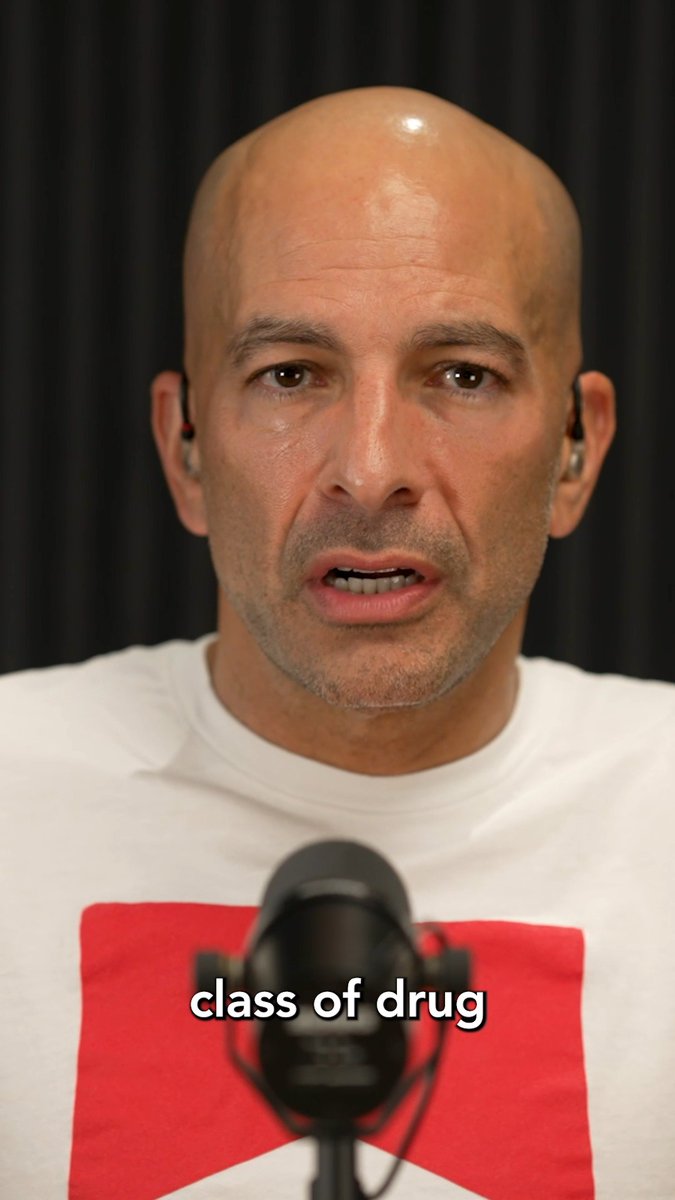
The one shot longevity solution is around the corner. Crémieux casually mentioned on Health Care Network this week that there’s a PCSK9 + GLP-1 fusion drug already in development. Add a BP agent and you’ve knocked out ~90% of what actually kills people. What’s actually in the pipeline right...

17,667 Aufrufe • vor 10 Tagen •via X (Twitter)

0 Kommentare

Keine Kommentare verfügbar

Kommentare vom Original-Post werden hier angezeigt

Ähnliche Videos

Alex Karnal (Alex Karnal) is the most talented bio and healthcare investor I've ever met. He's spent 20 years in the industry and says 2025 was the single most exciting year he's seen. The start of a once-in-a-lifetime, trillion-dollar revolution in public health. He explains how few people realize we already have the medicines to prevent our deadliest diseases. The problem is that almost no one takes them. There's a population of people born with a mutation that means their bodies don't produce a protein called PCSK9. Their lifetime risk of cardiovascular disease is 88% lower than yours. Pharma turned that genetic advantage into a drug. It's been approved for years, but the number of people taking it is still vanishingly small. Partly because high cholesterol is a silent killer. You feel nothing, right up until you have a heart attack. And partly because the health system makes it punishingly hard to stay on a preventive drug like a PCSK9 inhibitor. In other words, the medicine works, but the system around it doesn't. That's what's starting to change, and in this episode, Alex explains why. We discuss the "health stack" he believes can add a decade to most lives, why oral GLP-1s are breaking every adoption record in pharma, peptides and citizen pharmacology, and what AI is doing to drug discovery. I wish I had an "Alex" for every interesting topic. We've been having versions of this conversation for over five years, and every single one is as clear and as useful as this one. Enjoy! Timestamps: 0:00 Intro 1:00 The State of Modern Medicine 5:00 Designing the Modern Health Stack 12:17 The GLP-1 Inflection Point 19:18 The Biological Mechanisms of GLP-1 30:36 Overcoming Frictions in Healthcare 34:19 Cardiovascular Disease 44:04 Addressing Alzheimer's 47:04 The Future of Cancer 57:33 Drug Discovery 1:05:25 AI and Scientific Super Intelligence 1:14:40 Citizen Pharmacology and the Peptide Movement 1:18:13 Background and Career Journey 1:31:09 Braidwell's Investment Approach 1:33:30 The Kindest Thing

Patrick OShaughnessy

678,402 Aufrufe • vor 4 Monaten

What if We're Using GLP-1 Medications All Wrong? Drugs like Ozempic, Wegovy, and Mounjaro are transforming the landscape of medical weight loss, but could their side effects be a sign that we’re not harnessing their full therapeutic potential? In this eye-opening conversation, Dr. Ben Bikman (Benjamin Bikman), metabolic health researcher and professor at BYU, joins Dr. Bret Scher (Bret Scher, MD) to explore a powerful new framework: using GLP-1 medications at low doses and for short durations to help curb carbohydrate cravings, break addictive eating cycles, and support long-term metabolic health. Rather than prescribing high doses indefinitely, Dr. Bikman proposes a more targeted approach: - Microdosing GLP-1s to enhance satiety and reduce cravings for processed carbs - Using the medication as a temporary metabolic tool to support transitions to lower-carb diets - Reducing long-term risks such as muscle loss, mood changes, and diminishing effectiveness - Emphasizing the importance of habit change, insulin regulation, and muscle preservation This conversation reimagines GLP-1s not as a lifelong solution, but as a catalyst for sustainable, low-insulin lifestyles, aligned with ketogenic and metabolic therapies. 📌 Could a 90-day microdosing protocol replace years of medication? Learn how this metabolic-first strategy could empower patients to reclaim their health, without becoming dependent on medication for life. #GLP1 #Ozempic #Wegovy #Mounjaro #BenBikman #MetabolicHealth #Microdosing #InsulinResistance #LowCarbDiet #KetogenicTherapy #MedicalWeightLoss #BretScher #MetabolicMind Expert Featured: Dr. Benjamin Bikman Benjamin Bikman Papers/Articles Mentioned: Follow our channel for more information and education from Bret Scher, MD, FACC, including interviews with leading experts in Metabolic Psychiatry. Learn more about metabolic psychiatry and find helpful resources at Timestamps: 0:00 - What if we’re using GLP-1s all wrong? 1:40 - Dr. Benjamin Bikman’s interest in metabolic health and GLP-1s 3:20 - Unexpected side effect of GLP-1s 5:26 - Are GLP-1s actually beneficial? 10:55 - The difference between “weight loss” and metabolic health 15:10 - The role of cravings and satiety signals 19:58 - Dr. Bikman’s ideal use of GLP-1s 24:14 - “Self-discipline in a syringe” 25:11 - Are all weight loss interventions beneficial? 27:20- New studies examining microdosing GLP-1s 32:12 - Learn more about Dr. Bikman

Metabolic Mind

20,561 Aufrufe • vor 1 Jahr

New episode of HARD DRUGS! Should everyone be taking statins? Statins have revolutionised heart disease and they're one of many reasons for the long-term decline in cardiovascular mortality. Clinical trials suggest that the more you reduce LDL cholesterol levels, the more you reduce the risks of heart attacks and strokes, with no signal of harms even at the lowest levels. So scientists recommend the earlier they're taken the better, and the lower LDL levels you reach the better. Statins do have some rare side effects – such as muscle weakness and muscle loss in rare cases – but meta-analyses of RCTs find that most other side effects listed on statins' labels do not actually have higher risks than placebo. In this episode, Jacob Trefethen and I chat about all this and much more! - Why it took almost a century for scientists to come to consensus on "the lipid hypothesis": that higher levels of plasma LDL cholesterol causes higher risks of heart disease and that reducing it saves lives. - Drugs that effectively reduce cholesterol levels beyond the effect of statins, such as PCSK9 inhibitors, most of which are monoclonal antibodies, as well as newer siRNA drugs and the macrocyclic peptide enlicitide, which recently completed phase 3 trials, and Lp(a) drugs. - What the future holds for cholesterol drugs Timestamps: 0:00:00 Introduction 13:35 The decline in heart disease mortality 31:02 Surprising cholesterol trivia 55:40 The lipid hypothesis: 7 lines of evidence for the harms of LDL cholesterol 1:22:15 How cholesterol works 1:30:40 The discovery of statins 1:48:44 Should everyone be on statins? 1:57:10 PCSK9 drugs and beyond 2:22:56 Summary: how we got here and the future of cholesterol drugs Watch, listen, or read wherever you get your podcasts. Spotify: Apple: YouTube: Transcript:

Saloni

734,864 Aufrufe • vor 6 Monaten