正在加载视频...

视频加载失败

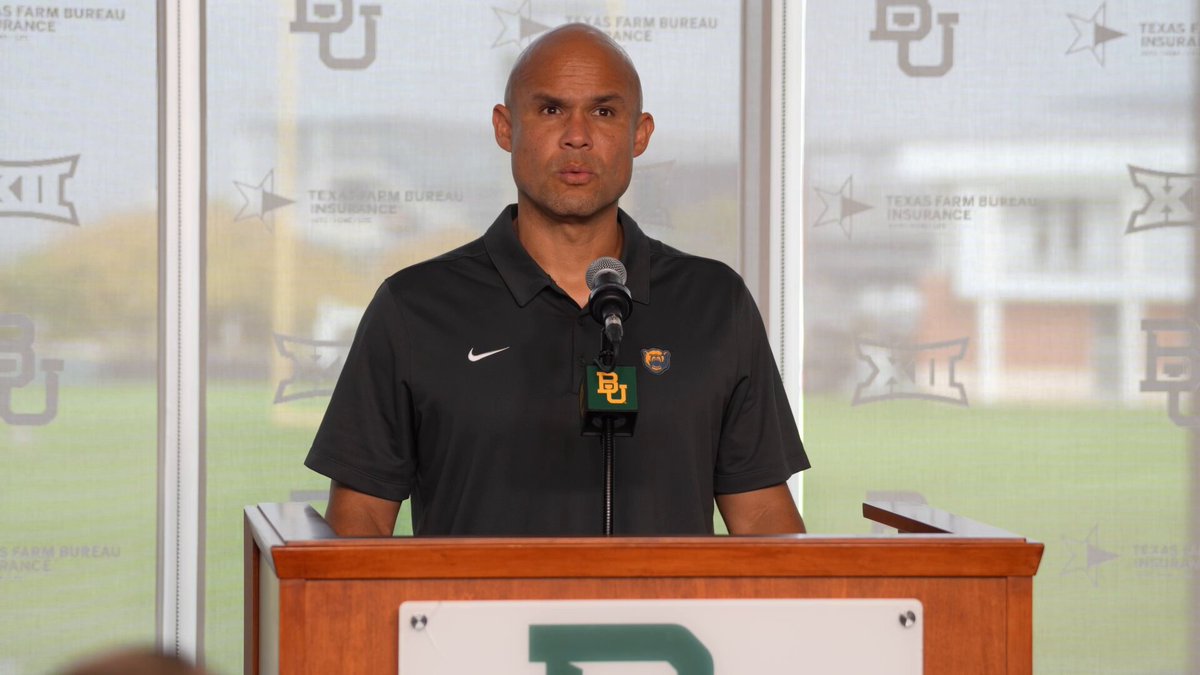
The problem we're seeing with Cracker Barrel and Bud Light is they hired CEOs who really aren't consumers of their product. If I'm a CEO tasked with boosting a product that I love, my first idea wouldn't be to change everything about it. It would be to emphasize what...

314,791 次观看 • 11 个月前 •via X (Twitter)

0 条评论

暂无评论

原始帖子的评论将显示在这里

相关视频

Michael Seibel on how to get and test startup ideas As the former CEO of Y Combinator puts it in the clip below: “There’s a common misconception that your idea has to be great to start a company, and the first thing I want to do is destroy that misconception.” Michael was one of the cofounders of JustinTV, which later become Twitch and sold to Amazon for almost $1B. Their original idea was to create an online reality TV show—very different from where Twitch eventually ended up. Rather than falling for the trap of thinking that your initial startup idea has to be great, Michael advises founders to start with a problem: “Starting with ideas is tricky because people immediately want to grade your idea. It’s a lot easier to start with a problem and think about how you grade a problem.” Ideally the problem you set out to solve is one you've experienced personally or have some sort of connection to. You should ask yourself: “why am I uniquely qualified to work on this problem?” Is there some unique angle or approach you're taking to the problem that you understand but you don't believe others understand? Peter Thiel argues that “great companies have secrets: specific reasons for success that other people don’t see." After identifying a problem, you’ll want to start thinking about your MVP. What's the first solution you're going to build and release to see if you can help your initial users solve this problem? But don’t fall in love with your MVP. As Michael puts it: “A lot of people fall in love with their product and are not in love with their problem or their customer. I advise the opposite. Be in love with your problem. Be in love with your customer. And treat your product in a way that can change, develop, and improve.” And once you have an MVP, you should have a strong opinion about who your initial customer is and handpick all of your initial users. The goal with an MVP is not to see how many people want to use your product. It's to see if your solution actually solves the problem for your initial target customers. “The best startups very heavily filter the people who are able to use the initial product and make sure that they’re the right type of initial customer.”

Startup Archive

101,023 次观看 • 2 年前

From Eric Vishria on how the top AI founders are building products completely opposite of the SaaS era: "One of the things that is really different in the AI world versus the SaaS world, is that in the SaaS world, over and over again, you had people who really understood the customer. And the problem. And then they understood a domain. They understood what the technology was more or less capable of. But it wasn't a real question of if you could build something or not. For example, take Salesforce, Workday, and ServiceNow. CRM existed before Salesforce. HR management existed before Workday. Same thing with ServiceNow. So in every case, Salesforce followed Siebel. Workday followed Peoplesoft. ServiceNow followed Peregrine and Remedy, and others. So they were just kind of, cloud SaaS versions of the prior generation product. They just understood the customers. They understood the problem. And they were just like, here's a better version. And that evolved a little bit over time in SaaS land. But that's what it is. And so product development in that way was done by people who really understood the customer and the problems. And then just took advantage of the next wave. And this is almost diametrically opposite of product development in the AI era. When I look at the teams that are having the most success today, they have intimate knowledge of the models. They are right on the frontier of understanding which models are better at what, and why, and when. And what they're going to be good at and what they're not going to be good at. And what they're spending their time on, is figuring out how do I apply this capability of this model to this domain or to this user. So they're actually working inside out or technology out, versus customer problem in. And of course, they understand the customer problem. And a lot of times they have firsthand knowledge of it. But they're really close to the metal and capability, and they're applying it. And I think this is a really different way to develop products than in SaaS. I started my career as a product manager a long time ago, and it's almost the complete opposite of everything you learned. "Listen to the customer, understand it, then bring it back to the engineering and product teams." If you did that right now, ask a bunch of customers what they want out of AI, and you brought it back, for the most part, it may not be possible today with today's technology. Whereas the teams that are winning right now really understand the technology and are applying it out. And so I think this reversal matters. I think it's a big difference in terms of how companies are getting built. And maybe even the types of entrepreneurs that will be successful. I'm not sure. You're seeing some real change there. Look at the Bret Taylor's at Sierra. That's a super, super technical founder who really gets it. Brett and Clay really get it. You look at Michael and his co-founders at Cursor. They're super technical founders and they get it. They all really understand what these things can and can't do. And that's a pretty different dynamic relative to the way the best SaaS companies got built." Link in bio for the full conversation going deep on the current class of startups going from zero to $100m+ in ARR within 12 months.

The Peel

209,752 次观看 • 1 年前

Marc Andreessen on the 3 things he looks for when investing in a startup The first thing Marc Andreesen looks for is a big market: “Is there a big existing market that you think you can go after and displace incumbents? Or do you believe there will be a new market that will be big?” The second thing he looks for is a 10x better product: “Is there a fundamental technology or economic change that justifies a new company? And the way I always think about that is: Is there a 10x change happening in the technology landscape? Is something 10x faster, 10x cheaper, or 10x better? If it’s not 10x, we as both VCs and entrepreneurs have to ask ourselves if it’s really worth doing because it’s really hard to start new companies . . . Existing companies are usually pretty good at what they do. So for a new company to exist, it has to bring a product to market that’s so much better than what exists that it punches through the status quo.” The third is the team: “Is the team outstanding? . . . You want to have a founding team of complementary skillsets. You want to have at least one super strong technologist — quite possibly more than one. Some of the best startups are actually more than one founding technologist. And then it often helps to have someone who is a marketing or salesperson who has a really good understanding of business.” Marc believes that you need all three of these, but if you’re going to compromise on one of those as an investor, it should be the product: “A great market is a lot easier to make up for with iterative product execution. The problem with a poor or small market is that even if you do a good job on the product, there just aren’t that many customers so it’s hard to ever get big and people get demoralized . . . And then we evaluate the team of a startup by its ability to get into a big market with a good product.”

Startup Archive

17,333 次观看 • 6 个月前