Loading video...

Video Failed to Load

Go Home

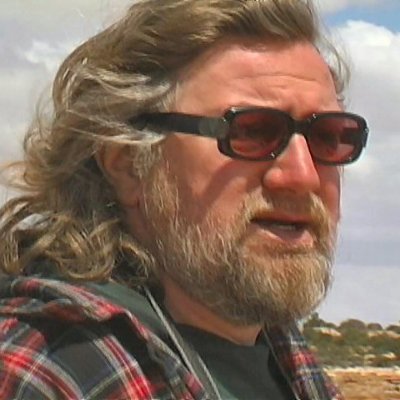
The question Ashton Forbes is working through is one that connects modern physics to one of the oldest unsolved problems in archaeology - how did ancient civilizations move stones of extraordinary mass with no evidence of the mechanical infrastructure that would make it possible today. The proposition he is...

24,461 views • 3 months ago •via X (Twitter)

0 Comments

No comments available

Comments from the original post will appear here

Related Videos

The machines Randall describes operate on a principle that connects directly to his broader research into plasma and toroidal geometry. Microscopic cavitation bubbles are generated and subjected to rapid alternating cycles of vacuum and pressure - produced naturally by the up and down motion of pistons in any conventional engine configuration. The compression phase and vacuum phase act on those bubbles in sequence, and what happens next is the detail Randall finds significant. The cavitation bubbles collapse on their axes and form perfect torus shapes - spontaneously, consistently, and in a way that initiates the same plasma self-organization process he has been tracing across ancient energy systems and sacred geometry traditions. The practical implication is that these toroidal plasma voids can be harvested directly from the machine producing them. Randall points to the vortex tube as a concrete demonstration of the underlying physics - a device that accepts air at room temperature and separates it into two counter-rotating vortices, one inside the other, spinning in opposite directions. The result is a temperature differential of up to several hundred degrees between the hot and cold ends, produced without any additional energy input. Randall’s argument is that this is not an isolated engineering curiosity. It is a visible, reproducible demonstration of the same principles that ancient plasma-based energy systems were built around - and that the machines now being developed around cavitation and toroidal geometry may be the closest modern technology has come to recovering what was lost.

Randall Carlson

22,749 views • 3 months ago

French Army General and Chief of the Defence Staff Thierry Burkhard Chef d'état-major des armées: "Russia is a lasting threat. The war in Ukraine is existential for Russia. And it is determined to achieve what it has set as its goal, or at least what Putin has set as his goal, with the ultimate objective, in military terms, being to weaken Europe and dismantle NATO. That is Russia's goal, it is Putin's goal. To achieve it, through the war in Ukraine, it has reorganized itself quite quickly and effectively, setting up a war economy that is now running at full capacity. This war economy, I believe, is currently one of the key factors keeping the Russian economy afloat. And so, there is no reason - and even a kind of impossibility - to abruptly stop this. This means that Russia will continue to rearm at this pace. And so, despite the losses it is suffering, the incredible losses it is suffering, we estimate that by 2030, it will once again be a force that will pose a real threat to our borders on the eastern flank of Europe. It is clear that what is at stake in Ukraine is, on the one hand, the security of Europe, but I also think that it is, in fact, the place of European countries in the world, in tomorrow's world, in the world that we are shaping today. And if the outcome in Ukraine were a Russian victory and a Ukrainian defeat, we often say that would be a Western defeat, I think that it would be, and is increasingly becoming, due to the American stance, something that would be a real European defeat. And this European defeat is something we would have to endure and absorb. So, Ukraine, of course, must be defended as such. And I think that defending Ukraine is also, in a way, about how we see ourselves and what we are willing to do to shape Europe as it needs to be in the future, and live in today's world. And you understand that, if that doesn't happen - to use an image that has already been used - we would become something like herbivores in a world of carnivores. And that's not a very comfortable position — being at the bottom of the food chain. So for that reason, we must remain extremely vigilant."

Anton Gerashchenko

66,283 views • 1 year ago