正在加载视频...

视频加载失败

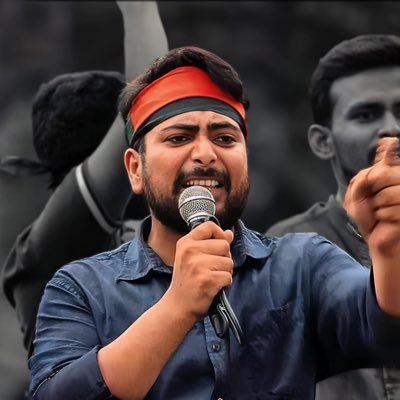
The ruling BNP has established a Special Committee on Constitutional Amendment. By doing this, they have completely betrayed the clear mandate given by the people in the referendum. Meaningful and lasting changes to the constitution and state structure are impossible without a Constitutional Reform Council. Instead of choosing this...

11,325 次观看 • 1 个月前 •via X (Twitter)

0 条评论

暂无评论

原始帖子的评论将显示在这里

相关视频

America is a people, not an idea, not a marketplace, and certainly not a “creedal nation.” The modern absurdity of the “creedal nation” thesis, endlessly repeated by hostile elites and the managerial class, including people like Neil Gorsuch, rests upon the belief that America is fundamentally held together not by a continuous historical people, but by adherence to abstract constitutional propositions. A constitution is not a mystical tablet suspended above history, nor a set of abstract propositions existing independently of the people, and thus the civilization, that produced them. It is the political expression of a particular people shaped by a continuous cultural inheritance and a shared conception of legitimacy. The American constitutional system did not emerge from universal abstractions floating in a vacuum; it arose from a distinct Anglo-American founding population and the cultural hegemony it established, rooted within the broader continuity of the European peoples who settled and shaped the early republic. Their understanding of liberty and sovereignty had already been formed long before the Declaration of Independence gave formal expression to those assumptions. The American founding was not the birth of an abstract creed for all mankind, but the formalization of a political order already embodied within a particular civilization and the people from whom it emerged. Once that continuity is severed, once the founding people for whom the constitution served as a reflection of their own character begin to fade from history or disappear altogether, constitutional interpretation becomes increasingly unstable, because the text remains while the community that once gave it coherence gradually recedes from existence. The words survive, yet their meaning shifts according to the assumptions of those interpreting them. “Liberty,” “equality,” “rights,” and even citizenship itself become endlessly elastic concepts, detached from the framework that once constrained them. Under such conditions, the creed ceases to function as a real foundation and instead becomes a rhetorical instrument through which competing factions impose their own political preferences while cloaking them in the language of constitutional inevitability. The constitution itself slowly ceases to function as an inheritance and instead becomes a battleground over who possesses the authority to redefine the nation. This is the contradiction at the center of the “creedal nation” thesis. A creed cannot sustain a fixed national meaning once severed from the people who produced it. If the White population from which the constitutional order emerged is transformed beyond recognition or disappears altogether, then the creed itself becomes untethered from any stable interpretation. The constitutional language remains, but its meaning shifts with each successive population interpreting it through different assumptions about society and legitimacy. Under such conditions, the nation no longer possesses a stable constitutional identity, because the historical community from which that identity emerged no longer exists in the same civilizational sense. What remains is not fidelity to a permanent constitutional inheritance, but an endless struggle over the power to redefine the nation itself.

Chad Crowley

17,235 次观看 • 3 个月前

This video shows the home of Gilbert Bgwende, a member of the Constitutional Defence Forum, engulfed in flames in the early hours of yesterday in Highfield in Harare. Bgwende is one of the members of the Constitutional Defence Forum who have been vocal in opposing President Emmerson Mnangagwa’s bid to extend his rule to 2030. According to witnesses, the arsonists arrived in three black cars, ordered the occupants to vacate the house, poured a flammable substance, and set it ablaze. Two police officers are currently on the scene, but the house has been completely destroyed and is now uninhabitable. The seminar room at SAPES, which was meant to be used by a group of civil society and political leaders to launch their resistance against President Mnangagwa’s 2030 term extension, was also torched in the early hours of yesterday and completely gutted to the ground. The attack, coming just hours before the planned press conference, underscores the regime’s growing desperation to silence dissenting voices and suppress any organised opposition to the 2030 agenda. Interestingly, the 2030 Agenda has inadvertently breathed new life into opposition politics in Zimbabwe. Where there was once apathy and fragmentation in response to the country’s political decay, the push for a term extension has now united groups and individuals who were previously divided, bringing together former rivals under a common cause to resist it. In attempting to consolidate power, the regime has instead rekindled political consciousness and solidarity among those determined to defend Zimbabwe’s constitutional order.

Hopewell Chin’ono

29,076 次观看 • 10 个月前

The Zimbabwean Senate has voted in favour of the controversial Constitution Amendment Bill (No. 3) by 75 votes to 4, with one abstention. The opposition CCC, which has 27 senators in the 80-member chamber, voted alongside ZANUPF. The bill seeks to extend the presidential term from five years to seven years, provide for the future election of a president by Parliament rather than through a direct popular vote, and make a number of other far reaching constitutional changes. The vote means that the bill now awaits the signature of Zimbabwean President Emmerson Mnangagwa before becoming law. Its passage marks one of the most significant constitutional changes in Zimbabwe’s recent history and is likely to remain the subject of intense political, legal and constitutional debate. The bill also seeks to allow Mnangagwa to influence the selection of his successor and potentially block his deputy, General Constantino Chiwenga, from succeeding him. If and when Mnangagwa signs it into law and there is no significant resistance from within ZANUPF, the military or broader society, it will signal a major setback to Chiwenga’s presidential ambitions, short of an intervention that changes the political landscape. More importantly, it will represent a further consolidation of ZANUPF’s hold on power and diminish the prospects of Zimbabwe having a president from outside the ruling party in the foreseeable future. The self evident story is how Mnangagwa has been assisted by influential business interests, including wealthy individuals aligned with ZANUPF, who may have more to lose from a Chiwenga presidency than from the continuation of the current political order. The only developments that could realistically halt this process would be a military intervention and a sustained national uprising. At present, however, all of these possibilities appear distant from political reality.

Hopewell Chin’ono

99,129 次观看 • 2 个月前