正在加载视频...

视频加载失败

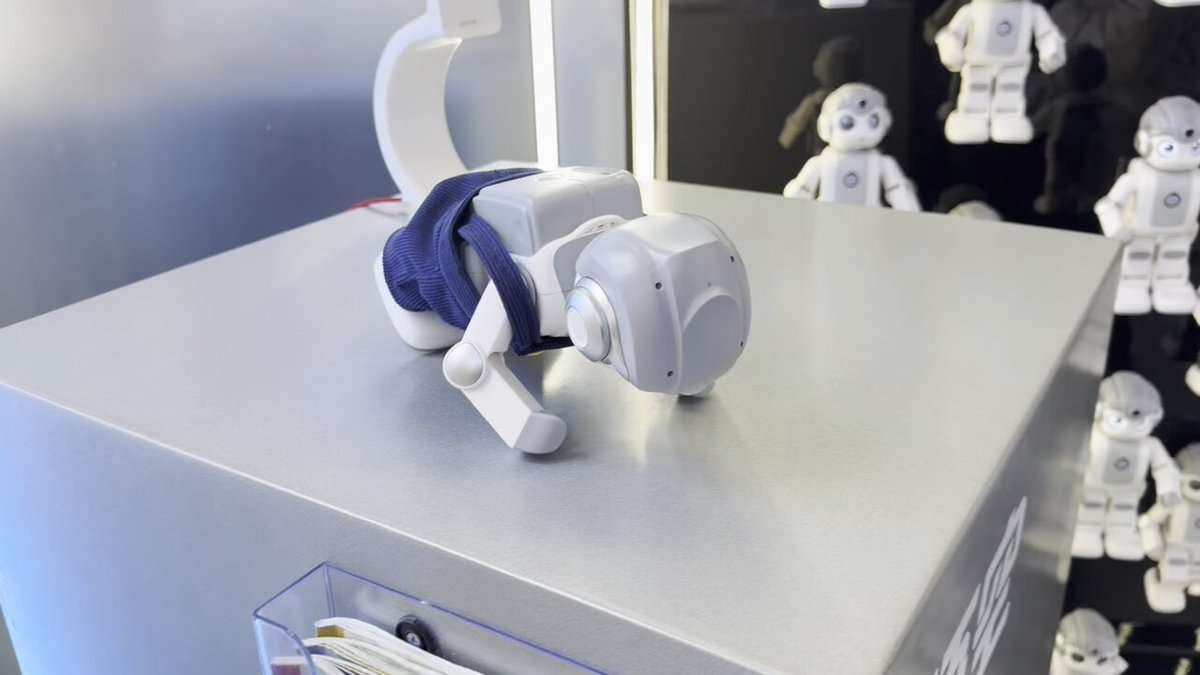
The same day U.S. humanoid startup KScale shuts down, Let's deal, a major EV maker, released their new generation humanoid robot IRON It's mind-blowing: - Targeted mass production: 2026 - 3x XPeng home made Turning AI chip with 2250 TOPS - Human-like spine with full cover soft skin -...

173,628 次观看 • 9 个月前 •via X (Twitter)

0 条评论

暂无评论

原始帖子的评论将显示在这里

相关视频

AI Is Moving Beyond “Generating Videos” — Toward “Generating Worlds” Over the past two years, AI video models have advanced at an astonishing pace. From Runway and Pika to Sora and Veo, AI-generated videos have become increasingly realistic and more consistent with the physical laws of the real world. Many people believe the next objective is simply to generate videos that are longer, sharper, and more lifelike. But if we take a step back, we can see that the real transformation is not happening in video itself. It is happening in world models. What Is a World Model? In 1943, psychologist Kenneth Craik proposed an idea that would influence artificial intelligence research for decades. He argued that the human brain does not merely react to the outside world. Instead, it maintains an internal model of how the world works. Because we have this internal model, we can predict the outcome of an action before we actually take it. Before crossing a road, we estimate whether a car will pass by. Before catching a ball, we predict its trajectory. These abilities come from continuously simulating the world in our minds, rather than relying entirely on trial and error. This idea later became known by a more formal term: World Model. A world model does not describe a single image or a fixed video clip. It is an internal representation capable of continuously simulating the rules and dynamics of the real world. Why Is AI Research Turning Toward World Models? Because predicting “what comes next” is becoming increasingly central to how AI systems work. Language models predict the next token. Image models predict the next step in the denoising process. Video models predict the next frame. A world model, however, attempts to predict something broader: What should the world look like in the next moment? In 2018, David Ha and Jürgen Schmidhuber proposed in their paper World Models that an intelligent agent could first learn a model of the world, and then use that internal model to plan its actions. The Dreamer series later demonstrated that many complex tasks could be learned by training agents inside an “imagined world.” At the same time, the development of video models such as Sora and Veo led researchers to another realization: A model capable of continuously generating video has already learned, at least implicitly, many of the rules governing the real world. As a result, these two research directions have gradually begun to converge. But Video Is Not Yet a World This is where the distinction is often misunderstood. For a world model to support meaningful real-time interaction, it must solve several critical problems. Most video models today are essentially answering one question: What should the next frame look like? A true world model needs to answer much more: What happens if I take one step forward? If I walk behind a building and then return, will the building still be there? If I suddenly change the camera angle, will the entire space remain consistent? If I enter a command such as: “Summon a dragon.” Will the world respond immediately? In other words, a world model must do more than generate content. It must understand space. It must understand time. It must understand causality. And it must understand interaction. Moving from watching to participating is where the real difficulty of world models begins. World Models Are Entering the Interactive Era One of the latest attempts in this direction is Alaya World, recently open-sourced by Alaya World, or Alaya Lab. Instead of generating a fixed video clip, it generates a world that users can explore in real time. Users can begin with text, an image, or a video, enter the generated scene, move freely through it, and introduce new prompts at any moment during generation. The world responds immediately. According to the publicly released information, Alaya World provides: Real-time streaming generation at 720p and 24 FPS Stable continuous exploration for more than one minute The ability to switch prompts and trigger skills or events during generation Model weights and inference code released under the Apache 2.0 License Training code and datasets planned for future release What makes these capabilities important is not simply the technical specifications. It is that the generated “world” can now support continuous interaction. The official demo shows that users can genuinely control, transform, and explore the generated environment. AI Is Evolving From a Tool Into an Environment Over the past few years, most discussions around AI have focused on content generation. Generating text. Generating images. Generating videos. But world models raise a fundamentally different question: Can AI generate an environment that people can inhabit, explore, and continuously evolve? If the answer is yes, the impact will extend far beyond video generation. Game development, robotics training, embodied intelligence, digital twins, virtual production, and many other fields could be transformed by the development of world models. World models are still at a very early stage. Yet from Craik’s proposal of an internal mental model more than eighty years ago to the emergence of today’s interactive world-generation systems, a clear evolutionary path is beginning to take shape. Perhaps what AI is ultimately learning has never been limited to images, videos, or language. Perhaps it is learning the world itself. References GitHub: Technical Report:

雪踏乌云

113,347 次观看 • 1 个月前

This week is already so hot. 🔥 Massive release from Decart : Lucy 2.0 a World Editing Model running at 1080p, 30FPS in realtime. This is truly exciting, the era of real-time generative reality is here. We are moving from watching AI video to living inside AI video. A breakthrough model capable of transforming the visual world in real-time. Moving beyond offline rendering, Lucy 2.0 delivers high-fidelity 1080p video generation with near-zero latency. Lucy 2.0 literally "redraws" the entire world pixel-by-pixel, while you are watching it. e.g. If you want to be an anime character, it doesn't just put a mask on you. It turns your skin into anime skin, your hair into anime hair, and the lighting in your room into anime lighting. Lucy 2.0 is also trained to stop the generated video from slowly falling apart over time, so the same stream can run much longer without faces and details drifting. So why is this a "Massive Deal"? Traditional AI video-generation model takes a prompt, you wait 10–20 minutes, and the computer "bakes" a video for you. You couldn't touch it or change it while it was happening. But Lucy 2.0 works like a mirror. It happens in real-time (30 frames per second). There is no waiting. You move your hand, the AI character moves its hand instantly. The craziest part isn't the visuals; it's the physics. Usually, AI hallucinations are glitchy—hands merge into faces, walls melt. Lucy 2.0 understands how the world works without being told. It knows that if you take off a helmet, there is hair underneath. It knows that if you splash water, droplets fly. It learned "physics" just by watching millions of videos. The physical behavior you see emerges from learned visual dynamics, not from engineered geometry or explicit physics engines. Their official technical report explicitly states that the model does not use traditional 3D engines, depth maps, or wireframes. It is a "pure diffusion model."

Rohan Paul

12,761 次观看 • 6 个月前

InterLink’s Journey to the World’s Top 10 Most Accurate AI Models Artificial Intelligence has rapidly become the defining force of this decade powering breakthroughs across every industry. But while most projects chase trends, InterLink Labs 👤 + 🌐 has been quietly building something deeper: an AI ecosystem grounded in verified human intelligence. Long before AI captured global headlines, InterLink Labs 👤 + 🌐 had already begun its research and engineering efforts back in 2019, assembling a world-class team of engineers and researchers from Big Tech companies and top QS-ranked universities. Their vision was clear - to build a model that truly understands humans, not just data. Unlike traditional AI systems trained purely on digital information, InterLink Labs 👤 + 🌐’s Human-AI Model learns from verified human behavior across millions of Human Nodes. This unique layer of authentic, real-world human input gives InterLink’s AI an unprecedented advantage in trustworthiness, bias reduction, and contextual understanding. Beyond algorithmic optimization, InterLink Labs 👤 + 🌐’s R&D efforts are being scaled to an unprecedented level. The team operates over 100 NVIDIA H100 servers, processing massive volumes of verified behavioral data contributed by real Human Nodes across the world. This data - diverse, decentralized, and human-validated forms the foundation of a next-generation intelligence system designed to mirror real human reasoning patterns. At the same time, InterLink Labs 👤 + 🌐’s AI-powered Human Credit Score applies advanced machine learning to analyze authenticity, contribution, and reliability. Creating an ethical model of digital reputation and fairness. Aligned with National Institute of Standards and Technology (National Institute of Standards and Technology) evaluation standards, InterLink Labs 👤 + 🌐 now aims to achieve Top 10 accuracy globally among AI models. Competing with research teams from Samsung Electronics, Kakao, キヤノン株式会社 / Canon Inc., and other global giants, InterLink Labs 👤 + 🌐’s engineers continue to train, benchmark, and refine their architecture daily to reach world-class precision and consistency. But this is more than a technical race. It’s a human mission. Every verified user contributes to the world’s first Human-Powered Intelligence Network, where real people fuel the evolution of trustworthy AI. As InterLink Labs 👤 + 🌐 advances toward global National Institute of Standards and Technology recognition, one truth becomes clear: The future of intelligence won’t be artificial. It will be human-powered. #InterLink #ITLG #ITL

InterLink Labs 👤 + 🌐

51,489 次观看 • 10 个月前

It's 2030 and you are reviewing humanoid robots. A Tesla. A Google. An Apple. An OpenAI. A Meta. A Figure. And a bunch of Chinese-made ones. Which one is best, and why? I think the Tesla understands the world much better. Why? There were eight Teslas around me on the freeway today. Start there. No other robot company has that data. But my robot is parked at the local high school twice a day. Its cameras see humans in all of our weirdness. How we move. Where we go. Where we walk. Who we talk with. What you are wearing. Whether your hair was combed this morning. That data will lead to robotics breakthroughs. Apple might keep up with its Vision Pro data, but it is too freaked out by the privacy implications of using said data. (On the front are six cameras and a couple of TOF -- Time Of Flight -- sensors that can see everything in your home in great detail). Google has a lot of data, for sure. All my: 1. Email. 2. Calendars. 3. Photos. 4. TV watching behavior. 5. Contacts. 6. Documents and spreadsheets. 7. Files. 8. Location data. So I expect Google's robot will be attractive to many. But how do you see the others shake out over the next five years? Make some guesses. But remember what an AI pioneer told me years ago about AI: it's all about the data. The Chinese ones have huge advantages: the Chinese have more data on their citizens, and many more citizens to boot AND they can make robots cheaper than we can. But now that you know OpenAI is building its own robot you have caught wind of what I've heard from many in San Francisco and Silicon Valley: that humanoid robots are the real prize of AI and will be highly profitable for those that can make them and find customers willing to buy them. Here, too, I learned long ago never to bet against Elon Musk. Will you?

Robert Scoble

33,804 次观看 • 1 年前

I genuinely think the Terafab is going to end up being one of the biggest moves ever made in human history to secure the future of AI... and I think most people still don’t fully see what Elon is trying to do here. The signs are clear to me. This is Tesla, xAI, and SpaceX essentially hinting to us that they are not going to wait on the world to give them the compute the team needs. They are going to build it themselves at a scale no one has ever attempted. When you really break it down, it gets a bit nutty. This is going to be a fully vertically integrated chip factory that will be producing over 1 terawatt of AI compute per year. This is NEXT LEVEL BIG. Today, AI is limited by chips. You can have the best models, the best engineers, the best everything... but if you don’t have enough compute, you will eventually hit a wall. Elon told us, the world can only supply a tiny fraction of the chips his companies will need. So this is the solution. Terafab puts everything under one roof like design, manufacturing, memory, packaging, testing, which means that they can build chips very fast.. like really fast. I'm talking about 100-200 billion custom AI chips per year at full capacity. Chips designed specifically for: • Tesla cars and Optimus robots • xAI models • Space-based compute You see, while other companies and CEOs are thinking Earth, Elon is planning for AI in space. Around ~80% of the compute is expected to go orbital, powered by solar energy bc Earth simply doesn’t have enough electricity. The U.S. grid is only about ~0.5 terawatts, while space has basically UNLIMITED energy if you can capture it. And this is the steps to get it: Starship launches → space compute → solar-powered AI → feeds back into everything to Earth. Bro... Elon and his companies are playing at a whole different level... And this is why I keep telling people that the Terafab is going to be the secret ingredient that will be the real unlock for everything: • Robotaxis at scale • Billions of Optimus robots • Massive AI models running 24/7 • Future off-world, other planet infrastructure Without these chips, none of this can happen... but with the Terafab, all of this becomes possible. That’s why Elon is calling it “the final missing piece.” I agree.

Teslaconomics

25,494 次观看 • 5 个月前

I spent a month in Shenzhen visiting factories and robotics companies, and the contrast with the U.S. was striking. While Figure and Boston Dynamics hide their humanoids behind closed doors, Chinese companies have massive showrooms open to the public. But what really stood out wasn't just the transparency, it was how good they are at selling. Take UBTech: they've already sold 1,200 humanoid units at $200k each to factories. And here's the kicker, these robots aren't even that useful yet. They can only pick up and drop boxes at 1/10th the speed of a human, and factories still need to hire system integrators to train them for specific tasks. My theory is that these factories are terrified of getting left behind in the robotics/AI wave. They're investing in new tech not because it's ready, but because they can't afford to wait. The second surprise was the breadth of their robotics portfolio. These companies aren't just building humanoids, they're deploying service robots everywhere: restaurants, hotels, apartments. Consumer robots are cleaning houses, pools, pet waste, dishes. They're covering the entire spectrum. But the education piece shocked me most. I picked up what I thought was a high school or college robotics textbook, it was for primary school. The government mandated AI and robotics education starting in elementary school. Almost every single school in China now has AI and robotics curriculum, complete with education robots so kids can learn by building. They're creating a generation that grows up fluent in robotics and AI. China owns the supply chain and the hardware stack. But here's what I think people are missing: the race isn't just about who can build robots faster or cheaper. The U.S. advantage has always been in the layer between hardware and human, the interaction design, the software intelligence, the intuitive interfaces that make complex technology feel natural. China is building the physical infrastructure, but they're also learning fast. Every deployed service robot, every classroom full of kids building with education kits, every factory running humanoids, that's all data collection at scale. The window for the U.S. to establish its wedge is narrowing. It's not enough to be better at AI or software anymore. We need to be building the integration layer, the intelligence that makes physical AI actually useful, not just impressive in a showroom. Because right now, China isn't just manufacturing robots. They're manufacturing a robotics-native culture, and that might be the most defensible moat of all.

Miyu Horiuchi

90,718 次观看 • 6 个月前

🚨 WARNING: MONDAY WILL BE THE WORST DAY OF 2026!! → Fed confirmed interest rate HIKES. → U.S.-Iran peace deal is CANCELLED. → China and Japan are dumping U.S. Treasuries. → Funds are selling stocks amid AI bubble fears. If you're holding any assets right now, you MUST know this: When markets open next week, this won't be "just another dip." Stocks will dump Metals will dump. Bitcoin and crypto will dump even harder. Large institutions and major funds are already cutting exposure. They're not chasing upside. They're reducing risk and preparing for a market crash. At the same time, pressure is building across the global financial system. The Federal Reserve has made it clear that interest rates are likely to remain higher for longer. Japan has officially stepped into the market with yen intervention. Meanwhile, China and Japan continue reducing their U.S. Treasury holdings, adding even more pressure to the world's largest bond market. When the largest foreign holders of U.S. debt pull back, liquidity starts to disappear. → Interest rates are likely to stay elevated. → Japan is actively supporting the yen. → China and Japan continue reducing U.S. Treasury holdings. → The U.S.-Iran ceasefire is officially cancelled. → Liquidity conditions are tightening across financial markets. → Bond market volatility is continuing to rise. → Funds are reducing equity exposure. → The AI-driven rally is rapidly losing momentum. → Risk appetite is fading across multiple asset classes. This is no longer just a single-market story. Several sources of stress are unfolding at the same time. That's how financial chain reactions begin. As liquidity tightens and capital flows reverse, fear can spread rapidly across every major asset class. This is no longer just about market positioning. It's about systemic pressure building beneath the surface. I have spent decades studying macro cycles, liquidity flows, and systemic market reactions like these. That's how I knew Bitcoin would top out in October 2025 and called the $126K top. I'll share my next call here first. Follow and turn on notifications.

0xNobler

81,733 次观看 • 1 个月前

The Chinese are flying 4 sixth-generation prototypes, but what does that mean? While the West keeps debating wars that seem never-ending, huh, China is flying low – or rather, high! – improving their 6th generation fighter prototypes, like the J-36/J-50, with total focus on advanced integration. This gives a huge strategic advantage, with emphasis on long-range missiles and multiple guidance to dominate global scenarios. China already has about 4 6th generation prototypes and plans to reach 8, selecting the most adapted one. All this under the General Concept: Indestructible Flying Brain: 6th generation fighters go way beyond just a slightly improved stealth; they are central platforms that command a global war web via AI, drones, and varied weapons, making previous fighters obsolete in connectivity and limiting them to very local operations. This omnipresence redefines air superiority, with the fighter surviving as a resilient node in the first hours of conflicts and being able to operate with speed. Kill Web: The Global War Web: The fighter acts as the central node of a real-time network, connecting submarines, satellites, ships, drones, and troops worldwide. It allows omnipresence, receiving data from a destroyer thousands of km away and attacking as if it were right nearby, with AI assisting the pilot in analysis and target acquisition. That's why the Chinese focus on missiles with ranges of thousands of km, with multiple guidance, turning the 6th generation pilot into a tactical manager very different from today's. Being a 6th generation fighter pilot is going to demand a lot. Command of Drone Swarms (CCA/Loyal Wingman) The fighter controls 6-20 drones simultaneously for reconnaissance, jamming, or suicide attacks. It transforms the pilot (or AI) into a "maestro" of a robotic orchestra, or quarterback of Collaborative Combat Aircraft (CCAs), which carry extra weapons, expanding offensive power without exposing the main fighter. Like, a controlled symphony of destruction! Superior Multi-Spectral Stealth (Stealth++) Not limited to radar, it covers infrared, acoustic, visual, and electromagnetic. It uses advanced materials, tailless designs, and minimal thermal signature to penetrate dense A2/AD defenses, making it extremely hard to detect and essential for operations in contested environments. Extreme Range, Autonomy, and New Generation Weapons Combat radius of 1,800-2,500 km without refueling, with sustained supercruise (Mach 1.5-2.0) without afterburner, thanks to adaptive cycle engines and huge internal tanks. There's talk of including lasers, but so far, what's really there are internal hypersonic missiles and 2-3x greater armament capacity than the F-35, all while maintaining total stealth. Artificial Intelligence, Integrated Sensors, Resilience, and Open Architecture AI as co-pilot or main, processing data in real time and making tactical decisions to reduce human load; optionally manned mode: piloted, remote, or autonomous flight; virtual cockpit via helmet visor. Multifunctional sensors combine radar, electronic warfare, communications, and non-kinetic effects, with total data fusion transforming the fighter into a flying data center. Network resistant to jamming and GPS loss via quantum-resistant communications, mesh networks, and inertial/computer vision navigation. Modular architecture allows quick upgrades (90% by software), avoiding high costs like in the F-35; in "Decision Centric Warfare," AI decides in milliseconds, with the human as an optional bottleneck, including cyber warfare and active defense. In another article, I'll talk about what I think of this in terms of costs and demand and if such an investment is really worth it.

Patricia Marins

60,403 次观看 • 9 个月前

NEW ROBOT: SOLAR PANEL DEPLOYER 🌞 San Francisco Gritt (a.k.a. Gritt AI) is probably one of the hottest robotics startups you have never heard of. Founded in 2023 by two CMU roboticists, it came out of stealth on July 21, 2026 with a $26M Series A ,led by Obvious Ventures . Gritt does not make robots. It bolts an off-the-shelf Kawasaki robotic arm onto heavy equipment for construction, and runs its own AI to unload utility-scale solar panels. They also carry them, and set them onto metal racking with sub-millimeter precision. A human then has to fasten them. It replaces the manual overhead lifting of ~100-lb glass panels on solar farms. Solar is for now their only market, but they will expand to data centers (of course) and other large infrastructures. Solar was chosen first because it's the most factory-like task on an outdoor site. Gritt is making the bet on buying, while most of its competitors are building the robots. Their own capex is therefore near-zero, and moves the scaling constraint to ops crews and software -> it does not make it necessarily easier! All depends where your strengths lie. Gritt has currently two systems deployed in the field, over signed contracts to install ~2.8–3 GW of solar over 18 months. They plan to reach 48 systems within six months -> a ~24× deployment ramp in half a year! Gritt says the first skills took weeks to train but rebar tying took a single day on the same software pipeline after the solar work. That's a ~10–30× drop in per-skill training cost! And goes against the idea that deployment data is near-worthless, since novelty is the scarce input. Also worth mentioning: Gritt has a Chinese competitors, Trinabot. Trinabot is vertically integrated: tied to Trina, a giant Chinese solar-panel maker. Make the panel and the robot that installs it, while Gritt's hardware-agnostic. Interesting to see another example where China integrates manufacturing plus robot, and the US startup goes capex-light software on rented equipment.

Léo

45,464 次观看 • 21 天前

💍 ARQX LAUNCHING WORLD’S FIRST AI - LUXURY JEWELRY TOKEN: $ARQX ⏰ When: May 7th - 16:00 UTC 📍 Where: Uniswap ⚡️ What: ARQx ($ARQX) & its consumer-focused AI mobile app have the potential to revolutionize how jewelry & luxury is created the world over. The ARQ Jewelry app, the first of its kind, enables anyone on earth to instantly design & build professional-level jewelry in seconds (available for both iOS & Android). 💎 By leveraging artificial intelligence, ARQx democratizes the design process, challenging a $350+ billion dollar (2023) centralized industry. AI is set to disrupt over 300 million full-time jobs in the next decade & the world of luxury is right in its cross-hairs. ➡️📱 ARQx will unveil its mobile jewelry design platform on the MAY 9TH, 2024 - 2 days after TGE. 💎 No need to wait weeks or months to try ARQx’s disruptive tech. This IS NOT a niche web3 game or defi project with a limited user base, but instead; a full-fledged consumer ecomm experience, primed mass market adoption with millions of users. You can use it, you wife can use it, your children can use it - anyone who has ever bought or worn jewelry can use the #ARQx Jewelry Design app. ARQX TOKEN DETAILS: 💎 Token name: ARQx AI 💎 Token ticker: $ARQX 💎 Total supply: 1 billion tokens split across BASE & ETH (1,000,000,000) 💎Market cap: $353,395 at launch | $7,000,000 fully diluted. 💎 Targeted Industries: Artificial Intelligence [AI], Real World Business [RWB], Luxury Fine Jewelry, Precious Metals. DEX TRADING WILL COMMENCE ON UNISWAP AT 16:00 UTC ON MAY 7TH, 2024: Multiple CEX listings locked, announcements shortly post TGE. ➡️ BASE contract address: 0x5e432eeCd01C12ee7071Ee9219C2477a347DA192 ➡️ ETH contract address: 0x5e432eeCd01C12ee7071Ee9219C2477a347DA192 * The contract address is the same on both the BASE and ETH chains. ** ARQX NEVER has any BUY tax, always 0%. Because of generous aggressive vesting + protection against malicious bot activity, ARQX has a 10% SELL for week 1, which will then set to 8%, before diminishing monthly to 2%. ARQX TOKEN UTILITY: 💎 The ARQ Jewelry platform is powered by the $ARQX token, which allows each user to design new jewelry dozens of times a day. The more jewelry designed, the more token usage (in-app AI gas). The app also includes a buyback & burn tax on ALL jewelry purchases… forcing increased buying pressure on the open market as ARQx scales its user base & sales. 💎 ARQx is built for ease-of-use by a combined audience of mainstream web2 & web3 alike. Traditional users can easily convert their fiat funds in-app into the token - without the hurdles of a legacy web3 user experience; creating an effortless USD to ARQX onramp. With sale prices ranging from $500 to $10,000, profit margins exceeding 100%, lucrative staking incentives (APY for web3, discounts for web2), the token price is geared to explode even independently of its open market trading. MAINSTREAM MISSION & ADOPTION: 💎 ARQx's resonating mission focuses on enabling the masses to awaken their creative expression, traditionally gate-kept by fashion industry elites. The platform encourages individuals to trust their creative instincts and design their own personal fashion, rather than forcing them to conform to seasonal trends dictated by “big lux”. 💎 Lastly, ARQx’s roadmap extrapolates all these strengths to include: smart NFC jewelry containing crypto wallets (already shipped), individual creator Shopify-style stores, B2B white-labeled solutions for the entire jewelry industry (first clients already acquired), and further expansion into additional custom lux AI products such as: fashion, handbags, collectibles, and footwear. Detailed roadmap can be found on the ARQx website [link in bio]. Becoming an early token adopter of the $ARQX token gives community members exposure to all of this asymmetrical upside, & "fomo-proofs" against the disruptive potential for AI in the jewelry industry: a perpetual precious-metal-focused ancient and robust part of human culture. ARQX - Changing the world of luxury forever… together!

$ARQx AI | The Future of Jewelry

46,877 次观看 • 2 年前

A reporter recently asked what we might see in China that would really surprise people — something we wouldn’t find in the U.S. Across most of the technologies we looked at — quantum, eVTOL, EVs, AI applications — I wouldn’t say there’s anything entirely unique to China. There’s usually a counterpart in the U.S., whether in a lab, a startup, or a pilot. The real difference is scale — how quickly things move from concept to implementation. If I had to point to one example that captures this difference, that you might actually see on a trip to China in the next year or two, it would be autonomous deliveries. At the Logistics Expo in Shenzhen last month, at the new Automation exhibition hall, we met teams from autonomous logistics vehicle providers such as Neolix, ZelosTech, Meituan, and $JD. Neolix had just reached 10,000 vehicles, roughly ten times what it had a year earlier, and ZelosTech had hit the same milestone. In contrast, U.S. companies such as Nuro have been developing similar systems for years (9 to be exact) and have raised over US $2.3 billion, but their operations still seem to be “pre-scale” and "upcoming." (Correct me if I'm wrong.) It's probably a confluence of reasons but I'm sure it helps that the government is so hands on with the rollout in China. In my Deep Tech Trip Takeaways, I wrote that what stood out most in China wasn’t any single company or product, but the structure that tied them together, enabled by the government's strategic policies and services. Shenzhen’s rollout of autonomous delivery fits that description well. The city just published a report on “functional autonomous vehicles,” giving rare visibility into real-world activity. The August 2025 report — released in time for the Expo — summarized the following: - 764 vehicles operating across the city, including delivery, sanitation, and inspection units - 3,185 km of public roads open to autonomous operations - 230,000 km traveled and about 900,000 deliveries completed in one month (750,000 express parcels, 150,000 fresh goods) - SF Express (a big client of Neolix) led with 504,000 orders, followed by Meituan with 152,000 - Each vehicle averaged roughly 200 deliveries per hour, about twice a traditional courier van - Cost per delivery was around ¥0.1 (≈ 1 U.S. cent) lower than human delivery — not a major saving by any means, but important because new tech is often loss making in the beginnning - Accident rate: 0.04 per 10,000 km; manual intervention: 0.016 per km; public complaints: 23 cases citywide - And of course, I should highlight that Shenzhen isn't the only city working on this, it's just the most advanced that I found It’s not yet a profit story, but it does show that autonomous logistics in China has reached a level of operational maturity and regulatory acceptance that’s still emerging elsewhere. Shenzhen illustrates how local governments in China are building the deep infrastructure — physical, regulatory, and logistical — that allows new technologies to scale in practice, not just in theory.

Rui Ma

120,772 次观看 • 10 个月前

🚨12 HOUR NEWS RECAP 1.⁠ Trump warned that all airspace over and around Venezuela is now “closed in its entirety,” a blunt message delivered as U.S. forces intensify pressure on Maduro. 2.⁠ U.S. Navy jets have been flying low and “dark” just miles off Venezuela’s coast - even orbiting over Maduro’s airspace with transponders off - as the Ford carrier group ramps up pressure. 3.⁠ Maduro’s presidential jet landed on the Venezuela-Brazil border with no explanation, sparking speculation he may be fleeing as his regime teeters. 4.⁠ Russia sent Tu-22M3 bombers armed with Mach-5 Kh-32 missiles over the Baltic, escorted by Su-35 fighters, in a five-hour show of force that showcased long-range strike power right on NATO’s doorstep. 5.⁠ Germany is rolling out Israel’s Arrow-3 missile defense system - the first deployment outside Israel - bringing a space-intercepting, Iran-war-proven shield to Europe as it scrambles to prepare for high-speed missile threats. 6.⁠ A child’s birthday party in the U.S turned into a massacre when a targeted shooting killed 4 people - including kids - and wounded 10 more, with witnesses describing a minute-long “war zone” as the gunman fled and the FBI joined the manhunt. 7.⁠ FBI Director Kash Patel says a hidden cache of Trump-Russia probe documents - stuffed into “burn bags” in a locked room at FBI HQ - is being prepared for full public release, promising to expose everything. 8.⁠ Turkey’s new Kızılelma combat drone just became the first to autonomously hunt, lock onto, and shoot down a jet-powered target with its own radar, marking the arrival of true drone-vs-jet warfare. 9.⁠ A Cuban illegal with a long rap sheet beheaded his motel manager in front of the man’s wife and child, yet Dallas County’s Soros-backed DA has taken the death penalty off the table - offering only life without parole in a case Trump has already blasted as the brutal consequence of soft-on-crime policies. 10.⁠ UK councils are rolling out AI-enabled drone fleets to monitor everything from “antisocial behaviour” to daily life, turning routine governance into a full-blown surveillance state that feels more like Orwell than public safety.

Mario Nawfal

499,864 次观看 • 8 个月前

Hey Kishu Crew, It's been a minute since we dropped a big announcement like this, hasn't it? You all know how much #kishu’s anniversary means to us—it's a day we hold close to our hearts, a day we celebrate with style. And this year is no exception. From its humble beginnings as a fun memecoin, #kishu has grown into something much bigger than we ever imagined. We've carved out a name for ourselves in the wild world of crypto, and boy, what a ride it's been. Sure, there are some new kids on the block now, grabbing attention like we did back in the day. But Kishu? We've earned our stripes. We're the veterans, the OGs—the ones who've seen it all and still stand tall. In crypto, time moves at warp speed. But here we are, three years deep into the game. Not many projects can boast that kind of longevity. We've learned so much along the way—established friendships, partnerships, and overcome obstacles that many others couldn't. Looking back, it's been one hell of a journey, both in the crypto world and beyond. Personally, Kishu has brought us together in ways we never imagined. It's reminded us of what really matters: friendship, health, quality time with loved ones. It's given us a sense of purpose, a sense of belonging—a feeling money can't buy. And on the business side of things? Well, Kishu's been one hell of a teacher. It's shown us that we're stronger than we think, that we can weather any storm that comes our way. We always come out on top. Because as Franklin D. Roosevelt once said, "A smooth sea never made a skilled sailor." So this year, to celebrate our birthday, we've got something special in store for you—a Kishuverse mini game like you've never seen before. Oh, sorry - we meant four games. Kishu, meet GameGPT by Prism—a game changer in every sense of the word. Powered by AI and blockchain technology, it's an AI game builder that puts the power of creation in your hands. Sure sparks some curiosity, doesn't it? It should. Check them out at their website and socials at: For over three years, the team behind GameGPT by PRISM has been hard at work, crafting an AI-powered engine that's revolutionizing the gaming world. And now, they're bringing that same innovation to Kishu! • kishuverse Quest: NFT Odyssey Each game is a love letter to our community, bringing the Kishuverse to life in ways we always dreamt of. So grab your #kishuverse NFTs, dive into the world of GameGPT, and let the adventure begin. And from all of us here at #kishu, a heartfelt thank you for your unwavering support. Here's to another year of making memories and breaking boundaries.❤️ Let's celebrate in style! 🎉

Kishu Inu

38,949 次观看 • 2 年前

Just finished a one-week trip to China. I've now "survived" all the major (~20) L2 self-driving and robotaxi vehicles in both the US and China. Some thoughts & observations: ▶️L2 self-driving I tested major brands like $Huawei, $Li, $NIO, $Xpeng, and $Xiaomi. Overall, they exceeded my expectations. The rides were not overly cautious and handled complex situations (yes, road conditions in China are very challenging!) quite well. Nothing compares to $Tsla's approach. I see imitation learning/end-to-end as the only effective approach for self-driving. While Chinese peers perform well on main roads, they struggle on frontage roads due to reliance on high-precision maps and rule-based methods (e.g. cars stopped in the middle of the road where there was no clear white lining). Chinese EVs' self-driving capabilities are far ahead of those from US and EU brands. I doubt any Chinese players can profit from L2 self-driving, not because it’s not useful, but because it’s hard to differentiate, and price wars dominate the market in China. Chinese consumers and regulators seem much more receptive to self-driving. Even with a 5/10 self-driving capability, cars are practically *hands-free(!)* Insurance-wise, for L3+ cars, OEMs bear responsibility for incidents, so OEMs avoid labeling cars as L3+. ▶️Robotaxi I tested major brands like $Didi, and $Bidu. I'd rate equal to $Waymo, and it's ahead of other peers. However, the same issue applies here: user experience is nearly perfect (in Yizhuang, Beijing), but expansion is the real question. Chinese robotaxi companies are very sophisticated. While the rest of the world focuses on technology, Chinese peers treat it as a product, considering unit economics, operations, mass production, etc. Interestingly, most companies expressed a preference NOT to operate fleets themselves. They aim to be asset-light and let fleet managers handle operations. Policy Support: China has a very clear approval process, driven by data (autonomous driving distance, fully driverless distance, intervention rate, passenger ratings, etc.). ▶️Chinese EVs In major cities like Beijing or Shanghai, EV adoption (green license plates vs. gas cars with blue license plates) seems to be 40%+. If 40% of cars on the road are EVs, then EV penetration (defined as the % of new car sales) must already be over 50%. In shopping malls, the ground floor is filled with EV showrooms—easily 10+ brands, many of which are unfamiliar Chinese brands. It appears almost too easy to make an electric car, which is a stark contrast to the US. $Xiaomi, for example, can achieve a 10% gross profit margin in its first year of operation, compared to $RIVN's -45%. Additionally, $Xiaomi cars are priced at 30% of $RIVN's price. It's fascinating to see how China transitioned from "couldn't make their own gas cars at all (only JVs)" to "dominating EVs globally." The government deserves credit for setting the direction and executing effectively. China now controls the entire supply chain, with $CATL holding 40% of the global market share. 🔹How did it happen? The success of the industry Incentives were set just right: the government provided incentives early on to make EVs and gas cars have comparable MSRPs, allowing consumers to choose based on functionality. This approach differs from how the IRA offers incentives... Perfectly competitive market: $TSLA was brought in, and competition was welcomed, unlike the US, which has a 100% import tax on Chinese EVs. Strategic regulations: License plate restrictions were used effectively; for example, taxis and minivans are required to be EVs. 🔹The challenges Despite the success, the industry faces challenges with low-margin companies and struggling stocks. The intense competition shows no sign of ending. Well-funded global OEMs and Chinese state-owned car companies continue to subsidize, leading to new EV brands emerging annually. The natural tendency in China is to race to the bottom. I think this ties back to China's history as the "world’s factory," where manufacturers price products at "cost plus" versus the US and developing countries, which price based on "affordability/value creation." 🔹The wow EV feature >Software features that surprised me the most: - Everything in the car can be voice-controlled. Not just simple tasks like playing music; users can adjust the height of the steering wheel and set the temperature easily. - Self-parking, which $Tsla has yet to release to all FSD users, is already a table stake in China (I'd rate the quality as 10/10). >Other fun hardware features: - Mini fridges in the car - Infotainment systems - IoT: remote access the car/home via cellphone - all connected together - Heads-up displays - UV-protected glass roofs: $Xiaomi took $Tsla's design, but the glass roof of the $Xiaomi car is made of double layers with silver, blocking 99.9% of UV and infrared rays...as a result, heat is no longer a problem inside the car

Freda Duan

399,004 次观看 • 2 年前

🔊Church: We just entered a MASSIVE PROPHETIC SHIFT! This is the reason why the U.S. does not appear in end-times prophecy! The official White House document titled “National Security Strategy 2025” announces a dramatic change in global direction — as the U.S. STEPS BACK from the Middle East as the top focus! This basically ends America’s role in the “old world order” making room for the “New World Order” to rise!! THE STAGE IS SET FOR THE TRIBULATION! WE ARE AT THE END! KEEP LOOKING UP!!! 👉🏼The United States’ official National Security Strategy (NSS 2025), released on December 4, 2025, explains how America plans to protect itself, manage relationships with other countries, handle national defense, strengthen the economy, and — most importantly — shape its foreign policy for the coming years! 🛎️The United States is taking a HUGE SHIFT! Instead of trying to lead and manage the whole world like before, the U.S. is moving toward a more nationalist, “America First” approach — focusing on its own interests above global responsibilities. ⏩I’m going to explain very quickly what’s in this document so we can fast-forward to the part that is extremely important prophetically speaking. 1️⃣Stronger Borders & Homeland Security Major emphasis on stopping illegal immigration, tightening border protection, and strengthening homeland defense. 2️⃣New Stance Toward Europe Europe is warned about demographic and immigration crises. The U.S. wants Europe to take responsibility for its own defense and rely less on American military power. 3️⃣ Economic Power = National Security The strategy says America must rebuild its economy to stay secure by restoring manufacturing, protecting supply chains from China, expanding energy production, and strengthening key industries and technology. 4️⃣ Less Dependence on Global Institutions Instead of spreading democracy everywhere, the U.S. will rely more on direct country-to-country deals and act only when its own interests are at stake. 5️⃣Re-establish Control of the Western Hemisphere (PRETTY IMPORTANT KEEP THIS IN MIND) The U.S. plans to strengthen influence over North, Central, and South America — focusing on immigration control, stopping drug trafficking, and preventing rival nations from gaining power in the region. 6️⃣Pulling Back Overseas (PRETTY IMPORTANT KEEP THIS IN MIND) The U.S. is stepping away from being the “world’s police.” It will reduce military commitments abroad and focus mainly on threats that directly affect American interests. 7️⃣Prophetically Significant: Stepping Back from the Middle East (MAJOR WOW!!!) This is the major prophetic shift. The Middle East is no longer America’s top priority. The U.S. is redirecting its focus to the Western Hemisphere, economic competition, rebuilding industry, and securing strategic resources. 💡This strategic step-back allows the prophetic alignments of Ezekiel 38, Daniel 2, 7, 11, and end-times alliances to rise exactly as Scripture forewarned — with the U.S. no longer at the center of the story. WHY THE U.S. STEPPING BACK FROM THE MIDDLE EAST IS SO PROPHETICALLY CRITICAL? 👉🏼We all know that end-times prophecy is centered on Israel, the Middle East, and the coalitions of nations that come against her. America is not part of that picture. 💡For almost 75 years, the only thing preventing those prophetic alliances from forming has been U.S. military power and political influence in the region. 👉🏼So when the official White House document National Security Strategy 2025 states that the U.S. is no longer prioritizing the Middle East, it becomes prophetically MASSIVE — because it removes the one barrier that has kept Ezekiel’s prophecy from unfolding. 1️⃣Ezekiel 38–39 Requires a Weak or Absent America. Ezekiel describes a coalition led by Gog (understood as Russia), with Iran, Turkey, and several nations forming a military alliance against Israel. And in the entire prophecy, notice what’s missing: 👉🏼No United States. 👉🏼 No Western superpower defending Israel. For decades: 👉🏼the U.S. military presence deterred Russia and Iran. 👉🏼American sanctions crippled Iran’s expansion. 👉🏼U.S. bases surrounded hostile nations. 👉🏼America acted as Israel’s diplomatic shield. 📈For Gog’s coalition to rise exactly as Scripture describes, the United States must step back — politically, militarily, and strategically and the NSS 2025 is the clearest step in that direction. BUT THE BIG QUESTION IS: "HOW CAN ISRAEL BE LIVING ‘SECURELY’ IF AMERICA PULLS AWAY?” Ezekiel 38 says Israel will be: 👉🏼“living securely” 👉🏼“at rest” 👉🏼“in unwalled villages” 👉🏼confident and unthreatened We often assumed this security came from America — but that is NOT what the Hebrew text means. Israel’s “security” in Ezekiel 38 is not true safety; it is false confidence. The Hebrew word used for “securely” is batach (בֶּטַח), which means: 👉🏼to feel safe 👉🏼to be confident 👉🏼to be at ease 👉🏼even if danger is actually present It does not describe: ❌peace from God ❌protection from an ally ❌or a world guaranteed safe It describes self-confidence, this matches Israel today exactly: ✅They trust their own military strength. ✅Their defense systems (Iron Dome, Arrow-3, David’s Sling) are among the strongest in the world. ✅Their economy is booming. ✅Their intelligence agencies are unmatched. ✅Their normalization with Arab states (Abraham Accords) creates a sense of regional stability. ✅They publicly stated this year that they are ready to act even without U.S. help. 💪🏼In other words, Israel feels secure because Israel believes it is strong. Not because the U.S. protects them. Not because enemies disappeared. But because they think they can handle anything. That is precisely the kind of confidence Ezekiel describes. With America stepping back, Israel must: 👉🏼depend on its own strength 👉🏼expand its own military capabilities 👉🏼form regional alliances 👉🏼appear strong, independent, and untouchable This creates the exact scenario Ezekiel saw: 📖“I will go up against a land of unwalled villages… whose people dwell securely…” Ezekiel 👉🏼A nation living confidently, not because someone protects them, but because they believe they don’t need protection. The U.S. withdrawal creates the exact prophetic vacuum needed for Gog/Magog. If the U.S. stayed heavily involved, Ezekiel 38 could not unfold. But when the U.S. steps back: ✅Russia sees an opening ✅Iran feels emboldened ✅Turkey realigns ✅Arab nations shift ✅Israel appears isolated 💣Gog attacks a nation that seems confident and prosperous — but with no superpower covering them, no America involved. This is precisely the scenario required for God to intervene supernaturally. 2️⃣DANIEL 2 & 7: HOW THE U.S. PULLING BACK SETS THE STAGE FOR DANIEL’S TEN-REGION STRUCTURE 📖“ Whereas you saw the feet and toes, partly of potter’s clay and partly of iron, the kingdom shall be divided; yet the strength of the iron shall be in it, just as you saw the iron mixed with ceramic clay. And as the toes of the feet were partly of iron and partly of clay, so the kingdom shall be partly strong and partly fragile. As you saw iron mixed with ceramic clay, they will mingle with the seed of men; but they will not adhere to one another, just as iron does not mix with clay.” Daniel 2:41–43 🦶🏼When Daniel saw the final world empire, he described it as feet and ten toes made of iron and clay. This wasn’t a single united superpower — it was a fractured, divided, multi-regional structure: 👉🏼partly strong (iron) 👉🏼partly weak (clay) 👉🏼not fully unified 👉🏼ten-part configuration (ten “toes” matching the ten “horns” in Daniel 7 and Revelation 17) 💡To get to that kind of global system, the world must move away from what we’ve had since WWII. From one dominant global superpower (the U.S.) to a fractured, multipolar world of regions, coalitions, and blocs. And this is exactly where America’s pull-back becomes prophetically massive. For the last 80 years, the United States has acted as: 👉🏼the world’s stabilizer, 👉🏼the enforcer of the “old world order,” 👉🏼the deterrent that kept regional powers in check, 👉🏼the protector that prevented many conflicts — especially in the Middle East. But Daniel’s final empire is NOT a stable, unified, U.S.-dominated world. It is: 👉🏼divided 👉🏼global but fractured 👉🏼made of multiple powers 👉🏼iron + clay — strong parts mixed with weak parts 👉🏼ten centers of authority (ten regions / ten horns/ ten kings who will rule before the Antichrist rises.) 💡For that system to arise, the current one has to collapse or step aside. The U.S. stepping back removes the glue. The U.S. plan to “re-establish control of the Western Hemisphere” — North, Central, and South America — is securing its formation as a bloc of the ten toes. After the U.S. takes the first step: ✅ The world will begin reorganizing into regions instead of one superpower-led system. ✅ Nations will become free to form their own blocs, alliances, and power centers — exactly like the ten-region prophetic model. Without America dominating global security, the world naturally shifts into: ✅ regional coalitions ✅ shared power structures ✅ ten blocs or spheres of influence This shift is already happening, both Russia and China have explicitly argued for a world less dominated by a single superpower (a.k.a. U.S.), and more decentralized or multipolar. 3️⃣ Zechariah 12: The nations surrounding Israel, the nations around Jerusalem will grow hostile, and global pressure will isolate Israel. As long as the U.S. acts as Israel’s shield, that isolation cannot fully happen. A strategic withdrawal allows: ✅Middle Eastern alliances to shift, ✅Arab blocs to reorganize, ✅Israel to stand alone just as Scripture says. 🔊Church: NSS 2025 is the FIRST official U.S. government document openly declaring the strategic pullback that end-times prophecy requires. THE OLD WORLD ORDER IS ENDING — READY FOR THE NEW WORLD ORDER TO BEGIN. The United States is stepping aside exactly in the way Scripture describes the world rearranging itself before the rise of the final empire. This is not random — the stage is fully set for the 7-Year-Tribulation! BUT BEFORE THAT, THE RAPTURE OF THE CHURCH!! KEEP PRAYING, KEEP PREACHING THE GOSPEL, AND KEEP LOOKING UP!!! JESUS IS COMING!!!! Maranatha, Come. Lord Jesus, Come!! 🤍

Maranatha777

52,279 次观看 • 8 个月前

Recently did an interview with the lead developer of Knight's Path on the title's future release and the state of the industry. The Western AAA gaming industry has shifted its focus away from its core audience, favoring products for smaller, less engaged demographics. This shift has led to a noticeable disconnect between large publishers and their traditional fan base. This has, however, created an environment for indies to thrive. They can prioritize authenticity and community, crafting games that resonate with their players and that is exactly the case with Knight's Path. In December of 2023, Knights Path: The Tournament was released to Very Positive reviews on Steam. It is a short medieval RPG featuring challenging combat, an immersive progression system, and a nice little story. It served as an announcement, a combat concept demo, and a teaser for the forthcoming open-world RPG Knight's Path, which is currently in active development. I asked what their plans were regarding the scope of the full release. While you might get the impression that Knight's Path is an arena fighting game, that’s not the case with the full release. "Knight's Path will be a proper open-world, story-driven RPG. Of course, as a small indie team, we’re keeping the scope modest. The open world will be compact but dense, featuring one town, one village, castle ruins, forests, valleys, and other areas to explore." Many gamers would agree it is better to have a limited number of fully fleshed-out areas than to present a gigantic, empty world. This has been a major criticism levied towards recent releases like Pokémon Scarlet and Violet and even modern Assassins Creed, which tends to rely on repetitive gameplay loops scattered across an overly large map, which can feel more like busywork than meaningful exploration. I have always believed that quality over quantity is the best way to go. The team has also made this a priority with things such as the story and weapon types. "We plan to include three main weapon types: longsword, sword and shield, and bows. These will feature the full progression system seen in the demo, with skill levels such as Novice, Adept, Expert, and Master. Players will need to learn individual skills from different trainers to progress. In addition, we’re introducing secondary weapons like spears, halberds, and other polearms. These won’t have RPG-style progression but will still offer variety in combat." Regarding the story, they plan to be bold and strive to create a 16-28 hour-long main campaign. "The story will be divided into four chapters, with each chapter offering around 4–7 hours of gameplay. As in the demo, the player character begins as a nobody, slowly learning how to wield a sword and eventually becoming a knight. However, the progression will be much more realistic than in the demo, where the peasant hilariously transformed into a champion in just four days." This is a far cry from many games that are released nowadays. In just 2024 alone at a glance, the AA release Flintlock: The Siege of Dawn provided an average of 8 hours of content, Princess Peach: Showtime at 10 hours, Silent Hill 2 Remake at 15, and even the GOTY winner Astrobot holds an average playtime of 10 hours. A major issue within the industry is the way we are treated by the people who only have jobs because of our favorite hobby. In 2024 the gaming industry is forecasted to generate $208.7 BILLION dollars, up from 5.4% in 2023. Compare that to Hollywood, which is a measly $12.3 billion. The gaming industry employs 727,000 individuals in the United States alone. So, you'd think these people would have a little bit of respect for gamers, though so many who are vocal on social media show nothing but contempt for us. Perhaps this is because of fear if they do not show loyalty to a cause or "fit in" that they may not secure funding or genuinely believe in what they preach, but the team behind Knight's Path isn't worried about that. "We are independent developers, and we plan to stay independent so we can stay true to our vision. Knight's Path is a game made by gamers for gamers. We’re prioritizing fun gameplay above all, and we firmly believe this is exactly what gamers want." I also raised some questions about their big plans moving forward. In the demo, one of the major criticisms I had was with the voice acting. I had guessed it was done via AI, which was confirmed. "You guessed correctly– the voice acting in the demo was done by AI, and it was probably the loudest critique we received, and we totally understand why! Back then, we didn’t have much of a choice, but for the full game, we don’t plan to use any AI voices. Luckily, after the demo release, many voice actors reached out to us, volunteering to lend their voices to the full game. We absolutely plan to answer their call and give them that opportunity." AI can be a useful tool, especially for developers starting out who can't commit a lot of money to voice acting or just want to see a version of the product that's closer to what they envision the full release to be, but going from that to real voice actors will bump the experience to the next level. I myself played the demo in its entirety and really enjoyed my time with it! I thought the game was reminiscent of Gothic 2 and even The Witcher. I was happily surprised when I didn't encounter any bugs or glitches and while some areas have not been fleshed out like the voice acting, I would recommend putting the game on your wishlist to see what this team does in the future when they finally deliver their updated demo and the eventual full release of the game.

Vara Dark

42,375 次观看 • 1 年前