Loading video...

Video Failed to Load

Go Home

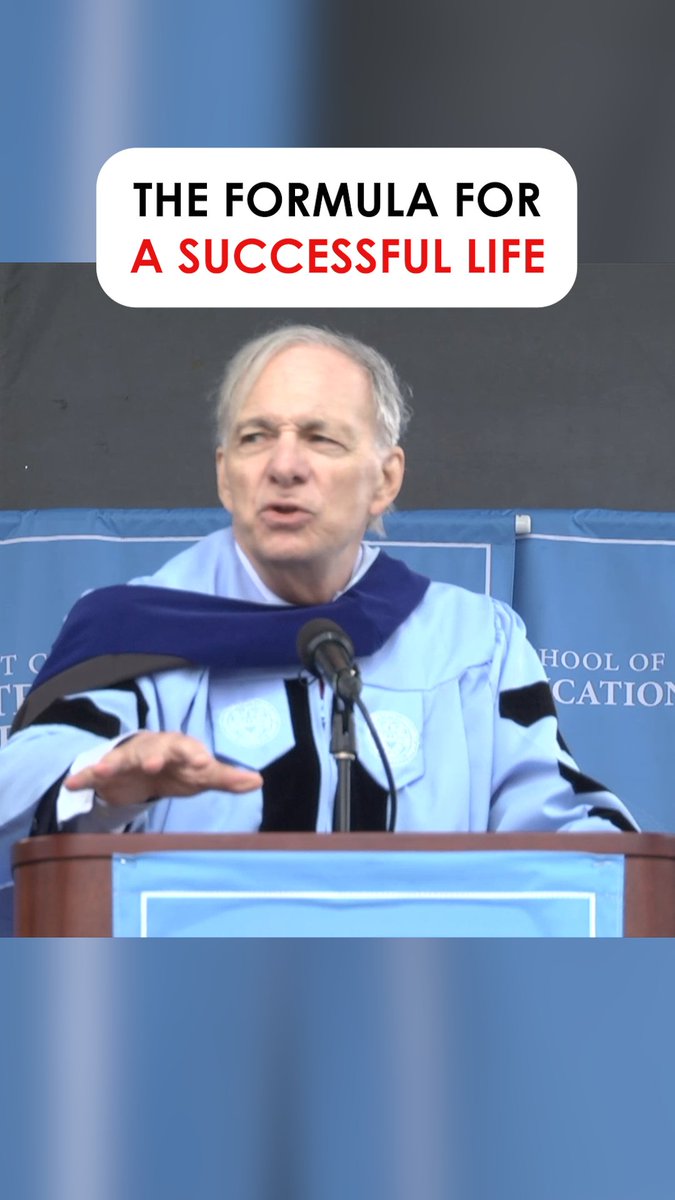
The secret to longevity is having meaningful work and meaningful relationships. I’ve found that both are required to sustain the energy to keep operating at a high level. That’s because you need a genuine, shared passion to make what you're doing as great as it can be. And you...

133,183 views • 5 months ago •via X (Twitter)

0 Comments

No comments available

Comments from the original post will appear here

Related Videos

I can't stop thinking about this question: Are you willing to sprint when the distance is unknown? In 2021, Georgia Tech strength coach Lewis Caralla delivered this epic speech to the football team. If it doesn't get you motivated, you may need to check your pulse... He opens with a few harsh truths: • Winning isn't loyal to you • Winning doesn't care about you • Winning doesn't care how sore you are • Winning doesn't care how hard you work • Winning doesn't care how much sleep you get But it's his question that stuck with me: Are you willing to sprint when the distance is unknown? The willingness to sprint with no clear view of the finish line is rare. It requires two things: 1. A deep belief in one's self 2. A deep belief in the mission If you have 1 but not 2, you won't be able to do it. If you have 2 but not 1, you won't be able to do it. You need both. In my observation, the greatest things in life are accomplished when you're willing to sprint when the distance is unknown: The sprint to care for your loved ones in their time of need. The sprint to build something meaningful. The sprint to serve others and create positive ripples in the world. Goal: Find those rare things in life that you're willing to sprint for when the distance is unknown. That, to me, is the definition of winning. "And why chase winning? Because the only thing that's guaranteed in life if you don't chase it is losing."
0:48

Sensitive content

I can't stop thinking about this question: Are you willing to sprint when the distance is unknown? In 2021, Georgia Tech strength coach Lewis Caralla delivered this epic speech to the football team. If it doesn't get you motivated, you may need to check your pulse... He opens with a few harsh truths: • Winning isn't loyal to you • Winning doesn't care about you • Winning doesn't care how sore you are • Winning doesn't care how hard you work • Winning doesn't care how much sleep you get But it's his question that stuck with me: Are you willing to sprint when the distance is unknown? The willingness to sprint with no clear view of the finish line is rare. It requires two things: 1. A deep belief in one's self 2. A deep belief in the mission If you have 1 but not 2, you won't be able to do it. If you have 2 but not 1, you won't be able to do it. You need both. In my observation, the greatest things in life are accomplished when you're willing to sprint when the distance is unknown: The sprint to care for your loved ones in their time of need. The sprint to build something meaningful. The sprint to serve others and create positive ripples in the world. Goal: Find those rare things in life that you're willing to sprint for when the distance is unknown. That, to me, is the definition of winning. "And why chase winning? Because the only thing that's guaranteed in life if you don't chase it is losing."

Sahil Bloom

5,844,515 views • 2 years ago

Martin Lewis, founder of MoneySavingExpert. com, on the four things it takes to be really successful, and why the most important one isn't what you'd expect: He opens with a clear framework: "It takes four things to be really successful. Talent, you've all got it, as do many more people than you think. Hard work. If you want to be really successful, you're going to have to work hard. Focus. Zone in on what you're good at." On focus, he pushes back against the idea that you need to be exceptional at everything: "Understand, none of us are unfailingly brilliant at everything. So, find the thing that you're good at and zone in on that. And that is what will create your success." But the fourth factor is where his message turns unexpected: "The most important thing is luck. You can do everything right, but it still not work for you. And you need to know that now." This reframes how he wants people to think about setbacks: "Failing does not make you a failure. Do not judge yourself. See it as a way to learn and to give yourself a better opportunity the next time." Martin Lewis then challenges a common assumption about what success actually delivers: "Success can be stressful. Success is not a synonym for happiness. As you go through your working careers, at sometimes you may want to make a call. Do I continue to push that hard or do I smile at what I've got and enjoy happiness and the other things that life starts to give me?" He closes with a message aimed at those who do make it big: "One or two of you in here will make it really big. If that's you, remember of those four things, the most important one is luck. And that means if you're that super successful one in the room, you have a moral duty to give back."

Big Brain Business

292,025 views • 4 months ago

Jordan Peterson: "If you can't fix your room, you can't fix your life" "Why should you even bother improving yourself? The answer is something like: so you don't suffer anymore stupidly than you have to. And maybe so others don't have to either. It's not some casual self-help doctrine. If you don't organize yourself properly, you'll pay for it. In a big way. And so will the people around you." Peterson continues: "You can say, 'Well, I don't care about that.' But that's actually not true, you do care about it. Because if you're in pain, you will care about it. It's very rare that you can find someone in excruciating pain who would say, 'Well, it would be no better if I was out of this.' Pain brings the idea that it would be better if it didn't exist along with it. It's incontrovertible." On how to start: "Look around for something that bothers you and see if you can fix it. You can do this in a room. Sit in your bedroom and think: 'If I wanted to spend ten minutes making this room better, what would I have to do?' You have to ask yourself that, it's a genuine question. And things will pop out. There's a stack of papers bugging you. Some rubbish behind your computer monitor you haven't attended to for six months. Cables tangled up." He explains why this matters: "If you were coming to see me for psychotherapy, the easiest thing would be to get you to organize your room. You think, is that psychotherapy? It depends on how you conceive the limits of your being. Start where you can start. If something announces itself as in need of repair that you could repair, fix it. Fix a hundred things like that, your life will be a lot different." On fixing what you repeat every day: "People tend to think of their daily routines as trivial. You get up, brush your teeth, have breakfast. Those probably constitute 50% of your life. People think, they're mundane, I don't need to pay attention to them. No, that's exactly wrong. The things you do every day are the most important things you do. Hands down. Just do the arithmetic." On staying within your competence: "Sometimes you don't know how to fix something. Imagine you're walking down the street and there's a guy who's alcoholic and schizophrenic and has been homeless for ten years. That's a problem. It would be good if you could fix it, but you haven't got a clue. You walk around that and go find something you could fix. Just because something announces itself as in need of repair doesn't mean it's you, right then and there, who should repair it. You have to have some humility. You don't walk up to a helicopter that isn't working and just start tinkering away." Peterson shares the key insight: "As soon as you give your mind a genuine aim, it'll reconfigure the world in keeping with that aim. That's actually how you see to begin with. You've all seen the video where you watch basketballs being tossed back and forth, and while you're doing that, a gorilla walks into the middle of the video and you don't see it. If you thought about that experiment for five years, that would be about the right amount of time to spend thinking about it." He explains what it reveals: "What it shows you is that you see what you aim at. If you can get one thing through your head, that would be a good one. You see what you aim at. One inference you might draw from that is: be careful what you aim at. What you aim at determines the way the world manifests itself to you. So if the world is manifesting itself in a very negative way, one thing to ask is: are you aiming at the right thing?"

Jaynit

68,799 views • 4 months ago

Dan Quinn said, "Sometimes as coaches and leaders, you have to tell them the things they don't want to hear." "I'm comfortable doing that because they know I come from a place that I care about them, I love them, and I want the best for them." As players, be grateful when a coach tells you the truth because it shows you they care. They tell you the truth because they believe in you and your potential. • They want what's best for you. • They care about you as a person. • They see what you're capable of, even when you don't. Great leaders hold you accountable because they know it's the only way to help you grow into your best self. It means telling the hard truths while showing empathy and belief in your potential. Great Coaches Balance 3 Things: 1. Caring for you - Great coaches want what's best for you. They care for you as a person and believe in you and your potential. This is why they hold you to a high standard - they see what you can become, even when you don’t yet. 2. Having high standards - High standards set expectations. It creates clarity and direction about what habits and actions are expected. Great coaches set the bar high because they want the best for you, not because it’s easy. When someone believes in you enough to expect greatness, it inspires you to rise to the challenge. 3. Pushing you to grow before your comfort zone - Growth doesn’t happen without discomfort, and this is where development starts. Great coaches look to challenge you and develop you over time. This means expecting challenges, facing adversity, and refusing to accept the status quo. Bottom Line: People don't care how much you know until they know how much you care. Leadership will always be a relationship business.

Coach AJ 🎯 Mental Fitness

287,381 views • 1 year ago

"You can either produce excellence or you can avoid criticism. But you cannot do both of those. The reason that you don't have certain excellence that you want is because you are afraid of getting criticized. You are afraid of the judgment that comes with it. You are afraid of standing out. You are afraid of being alone. You are afraid of people looking at you. You are worried about what people think of you. There are 2 categories of things in this world: 1) Things that are up to you 2) Things that are not up to you Which category does your reputation sit in? Your reputation is not up to you. I'm the one who associates your reputation with something, not you. You just do things. What's up to you? How you act. Your decisions. Your actions. That is up to you. Your reputation is not up to you. Here's how I know that: You all have a reputation about me and it's not in my control. I get to say and do whatever I say and do up here. I am in control of saying it. I am in control of doing it. The moment words leave my lips, who has control over what is done with those words? You! You are in control of what you think of me. And there's no way everybody in this room is going to think the exact same thing about me. No way. When it comes to exceptional, what we've got to understand is you can spend your whole life trying to avoid criticism and earn reputation, and it still won't be in your control. We can waste a lot of time missing out on excellence we could have been producing if we were just simply LESS trying to engineer what we wanted other people to think about us."

Brian Kight

308,812 views • 1 year ago