Загрузка видео...

Не удалось загрузить видео

На главную

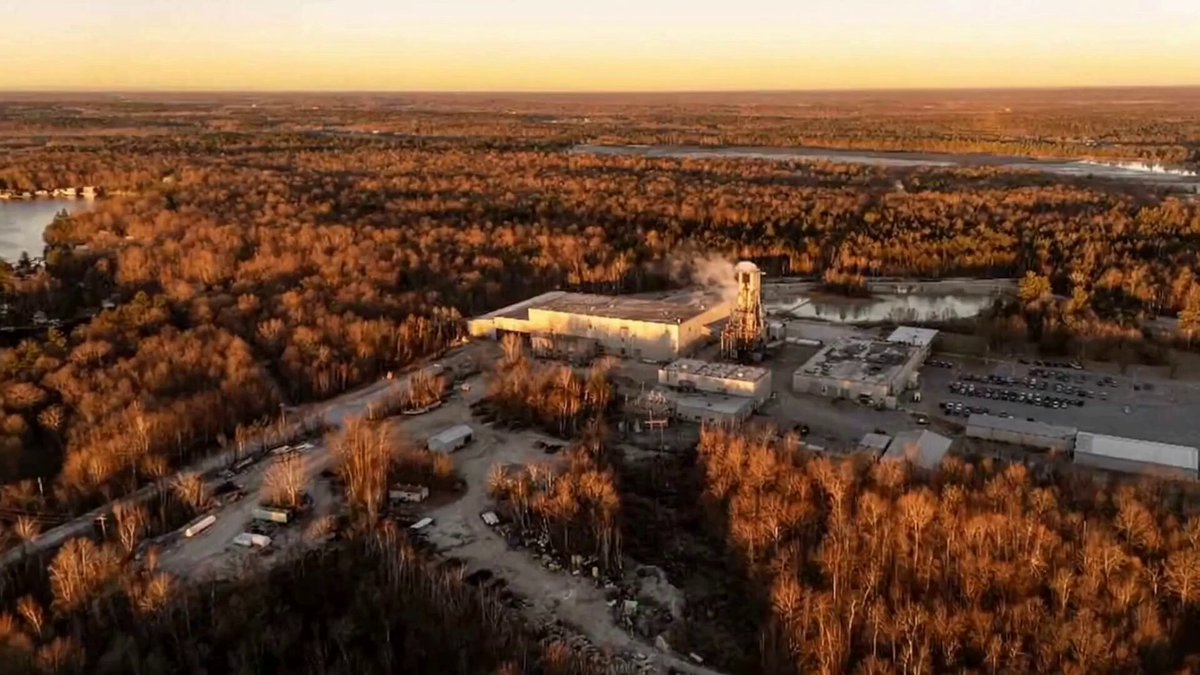
⚔️ The Silent War for Critical Minerals A silent war is currently playing out on a global scale—not with weapons, but for the control of critical minerals. 🌍💎 To counter China’s dominance, securing the supply of raw materials like copper is no longer just an industrial issue: it has...

84,104 просмотров • 5 месяцев назад •via X (Twitter)

Комментарии: 0

Нет доступных комментариев

Здесь появятся комментарии из оригинального поста

Похожие видео

🏭 REINDUSTRIALIZATION & COMMODITIES: THE NEW AMERICAN GRAND STRATEGY A tectonic shift is underway. The U.S. is no longer claiming global leadership—it's retreating to its own hemisphere. Here’s what this means for the future of power, commodities, and industry: THE GRAND STRATEGY: “WESTERN HEMISPHERE” IS THE NEW KEY PHRASE 🇺🇸 Official U.S. strategy documents now consistently refer to the “Western Hemisphere,” not the world. ➡️ This is a strategic admission: global dominance is unsustainable. The focus is now on a geographically defined sphere of control. ⚠️ The new National Security Strategy (NSS) is blunt: military strength is built on economic and industrial capacity. Without a strong production base, there is no military might. REINDUSTRIALIZATION = NATIONAL SECURITY ✅ The NSS declares reindustrialization the top national priority. ➡️ It calls for national mobilization, scaling arms production, reshoring critical supply chains, and preparing for a long-term systemic competition with China. 🛡️ The bedrock of American power is no longer the aircraft carrier—it’s the factory floor, the mine, and the semiconductor fab. 🔗 This is a return to a resource-based and production-centric view of power. HEMISPHERIC DOMINANCE: THE “DONROE DOCTRINE” IN ACTION ✅ A modern, hardened version of the 1823 Monroe Doctrine is now U.S. policy. ➡️ The hemisphere is to be stabilized, controlled, and shielded from external powers. It will serve as the exclusive U.S. production space, resource zone, and security perimeter. 🇻🇪 The Venezuela operation was the clearest signal: absolute U.S. control in its backyard is non-negotiable. 🗺️ This means securing critical minerals, energy, and supply chains from Alaska to Argentina. THE IMPLICATIONS FOR COMMODITY INVESTORS ➡️For commodity investors, this is a historic re-rating event. ➡️Capital will flood towards miners and developers that provide the secure, strategic supply that this new era of hemispheric competition desperately requires. ➡️Reindustrialization and hemispheric security require physical stuff. This mandates a multi-decade boom in demand for both energy commodities (oil, gas, uranium) and industrial & critical minerals (copper, nickel, silver, rare earths ecc.) Current personal portfolio for this commodity supercycle: (No investment advice - DYODD) Silver: $HL $EXK $AG $SCZ $AGMR $SSV $GSVR $ABRA $AAG $MGG $KTN $EQTY Gold: $TUD $GWM $PEX (Copper) Platinum/Gold/Lithium: $SBSW Nickel/Copper/Cobalt/PGE/Rhodium: $PGE.V Lithium: $BRW Uranium/REE: $UUUU Graphene: $HGRAF

Mark

20,616 просмотров • 8 месяцев назад

This week on The Big 3, CPA economists Mihir Torsekar and Andrew Rechenberg sit down with Ben Carlson of SAFE's (SAFE) Center for Strategic Industrial Materials to examine China’s growing dominance in steel, aluminum, and copper—and what it means for America’s industrial future. The conversation centers on SAFE’s new report, "Strategic Surpluses: China’s Economic Warfare on Major Metals," which argues that China’s vast production capacity is not simply the result of market forces or planning mistakes. Instead, Carlson explains how Beijing has deliberately cultivated strategic surpluses across key industrial sectors, creating manufacturing capacity that can support economic objectives in peacetime and national security objectives during periods of conflict. The discussion explores the staggering scale of China’s metal production, the role of state support and industrial subsidies, and the consequences for American manufacturers. Carlson also explains why tariffs, while important, are often insufficient on their own. Through transshipment, tariff inversion, and complex global supply chains, subsidized Chinese inputs can still find their way into the U.S. market through finished products. Finally, the episode turns to solutions. What would a successful American industrial strategy actually look like? The answer goes beyond tariffs to include energy policy, infrastructure investment, permitting reform, recycling, and stronger rules of origin that align domestic demand with domestic production. For anyone interested in trade, manufacturing, national security, or industrial policy, this is an essential conversation about one of the defining economic challenges of our time. 🔊 Listen on Apple: 🔊 Listen on Spotify:

The Coalition for a Prosperous America

139,253 просмотров • 3 месяцев назад

Putin’s latest offer to the U.S. on rare-earth minerals completely undermines one of the last remaining justifications Zelenskyy and his Western backers have clung to — the notion that Ukraine is somehow indispensable for global supply chains. The reality is, Ukraine is not the rare-earth powerhouse it pretends to be, and the global market has plenty of alternatives. Russia’s reserves dwarf anything Ukraine could offer, and other resource-rich nations, including Greenland, are more than ready to work with a serious Trump administration to secure stable, reliable supply lines. The Biden-Harris administration spent years falsely portraying Ukraine as a critical economic and strategic partner for the United States, when in reality, Ukraine’s importance was massively exaggerated to justify a blank-check policy for endless military aid. The simple fact is that Ukraine’s contribution to global rare-earth supply is minuscule — if it even exists at all — and the U.S. has no real economic dependency on Ukrainian minerals. What makes this even more significant is that Greenland, a territory with vast untapped rare-earth resources, has long signaled its desire to move closer to the U.S. and away from Chinese influence. Under Trump, serious discussions were already underway about expanding U.S. economic and strategic ties with Greenland, including partnerships on rare-earth mining and infrastructure development. Trump understands what Biden never could — strong leadership means creating options, not becoming dependent on unreliable partners. With Trump back in office, the U.S. has every opportunity to build diverse, secure supply chains for critical materials without tying itself to unstable or corrupt regimes. Ukraine’s leverage is collapsing, and Putin’s offer, whether it’s ultimately accepted or not, only highlights just how unnecessary Ukraine is to America’s future prosperity. The path forward is clear — end the war, stop the wasteful spending, and rebuild global partnerships that put American interests first. Ukraine was never the only option, and thanks to Trump’s leadership, it won’t be an option at all.

Torsten Prochnow

94,231 просмотров • 1 год назад

This is huge for the commodity sector US minerals and supply chain czar David Copley on the US plans to regain independence: - Mining will get a lot of attention from governments around the world - Mining is a priority area for US national development - Critical minerals in the US are priority no. 1 - The US will continue stockpiling minerals - The US wants to increase profitability in the rare earth space - Over the next few years, the US is going to invest 100s of B in the mining sector - The US wants a roadmap for every mineral vital to its economy This is a game changer for the industry, especially with regard to rare earths. Rare earths aren’t rare, but their mining and processing are very environmentally damaging. Western companies with ESG mandates can’t compete with Chinese counterparts, which don’t face these regulations and also enjoy state subsidies. The result was absolute dominance. China’s subsidized low prices forced Western companies out of business and increased China’s market share to up to 97% of rare earth processing and ~60% of rare earth mining. In the future, I wouldn’t be surprised if there are two pricing schemes for critical minerals: one for China/BRICS and one for the West. This race to regain critical minerals independence will lead to more supply shocks and subsequent price spikes.... creating a once-in-a-lifetime opportunity in the commodity space. The era of commodities is about to begin

Lukas Ekwueme

34,418 просмотров • 8 месяцев назад