正在加载视频...
视频加载失败
THE SNL SKETCH THAT NORM MACDONALD ADMITTED HE “STOLE” Before Will Ferrell was screaming at Sean Connery, before “Turd Ferguson” became part of SNL history, Celebrity Jeopardy! began with Norm Macdonald watching another comedy show. Macdonald was a huge fan of SCTV. One sketch in particular, “Half-Wits,” featured Eugene... show more

5 条评论

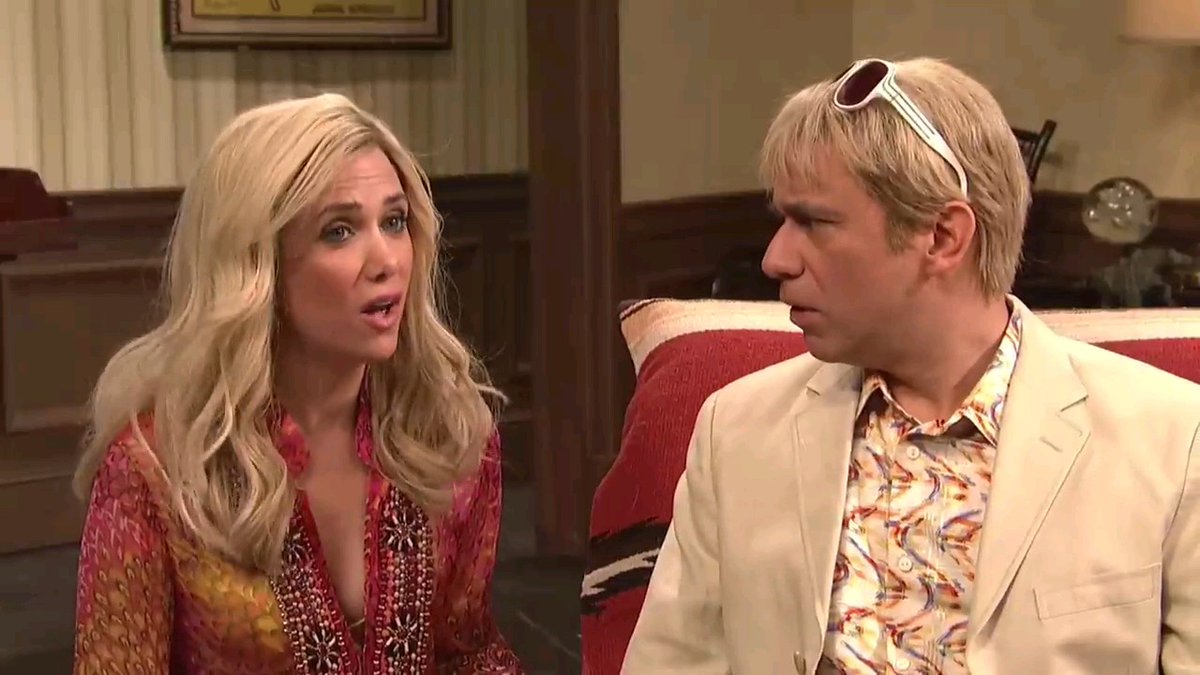
Norm Macdonald didn't just want to play a stupid contestant. He wanted to play Burt Reynolds. But not the Burt Reynolds of the 1990s. Macdonald wanted the Reynolds he remembered from his childhood—the larger-than-life movie star of the early 1970s. When Macdonald went to wardrobe, they had prepared him with a white beard and contemporary-looking clothing. He immediately objected. That wasn't his Burt Reynolds. He wanted 1972 Burt Reynolds. The joke was subtle enough that the other characters barely acknowledged it. Everyone else looked like they belonged in 1996. Burt Reynolds looked like he'd somehow walked straight out of the 1970s and into a television studio. That became part of what made Macdonald's character so strange. He wasn't merely stupid. He was completely uninterested. Sean Connery, played by Darrell Hammond, was aggressively wrong. Jerry Lewis, played by Martin Short, was wildly unpredictable. And Burt Reynolds seemed to exist on another planet entirely. Then there was Will Ferrell's Alex Trebek. Ferrell played the host as the only person desperately trying to preserve some dignity while everything around him collapsed. That contrast became the real engine of the sketch. On December 7, 1996, SNL aired the first Celebrity Jeopardy! And almost immediately, the audience could see there was something different about it. The sketch wasn't simply parodying a game show. It had created its own little universe. And SNL would keep returning to it.
The remarkable thing about Celebrity Jeopardy! wasn't that it worked once. It kept working. The sketch returned repeatedly during Will Ferrell's SNL years, with Darrell Hammond continuing as Sean Connery and Norm Macdonald returning as Burt Reynolds. Different celebrities could be placed behind the podium. Different impressions could be introduced. But the basic formula remained: Give famous people a game show. Make the questions easier than they should be. Then let their personalities destroy the entire thing. And the host has to somehow keep the program moving. That formula gave SNL something extremely valuable. A world audiences already understood. You didn't need a complicated setup every time. The moment Will Ferrell walked out as Alex Trebek, viewers knew what kind of chaos was coming. And the characters became bigger than the original premise. Sean Connery developed his bizarre obsession with insulting Trebek. Burt Reynolds became the completely detached celebrity who seemed almost offended by the entire experience. And Trebek became the exhausted straight man trapped between them. What began with Norm Macdonald borrowing the basic structure of an SCTV sketch had evolved into something distinctly its own. That's an important part of comedy history. Ideas rarely appear from nowhere. Comedians watch other comedians. They borrow structures. They transform them. They add their own voice. And sometimes that transformation becomes so successful that the new version eventually becomes the one everybody remembers.
There is a reason Celebrity Jeopardy! remains one of the SNL sketches people immediately recognize. It wasn't built around one punchline. It was built around characters. That's why the premise could survive different contestants, different hosts and different episodes. The audience wasn't returning simply to hear another stupid answer. They were returning to watch Alex Trebek lose his patience. They were waiting for Sean Connery to insult him. They were waiting to see what Burt Reynolds would do. And they were waiting for the entire structure of the respectable game show to collapse. The first sketch aired in 1996. The recurring version continued for years, with Ferrell eventually returning to the character for later SNL appearances. Peacock identifies the December 7, 1996 episode as the first Celebrity Jeopardy! segment and notes that Ferrell and Hammond's characters became recurring fixtures. But perhaps the most interesting part of the story happened before the audience ever saw it. Norm Macdonald had an idea he knew was closely related to something another comedian had already created. So he asked. Eugene Levy gave him permission. Then Macdonald, Steve Higgins and the SNL cast turned that starting point into something new. That's the part people often miss about comedy. The finished sketch is what millions remember. But behind the finished sketch are influences, conversations, permissions, rewrites and performers making dozens of tiny decisions. Sometimes the history behind a two-minute comedy sketch is almost as interesting as the sketch itself.

Most people would have just taken the idea and hoped nobody noticed.

Ferrell’s Trebek starts composed and ends looking like a man whose soul has left the building; the slow collapse is the real joke.





![Stephen A Smith depicts how the media flipped on Trump once he ran for office: SAS: "He was a celebrity but he was made to be a celebrity by a whole bunch of Democrats. I knew Trump before he ran for president: Hosting fights at Trump casino, showing up to Knicks basketball games with Bill O'Reilly. We would see him. The players, rap artists would talk to him. They all loved him. Until he ran for office. So when they [the media] talked about him the way that he talked about him, 'You didn't feel that way about him before, what changed?' They asked themselves that question, and they weren't satisfied with the answers that Democrats gave them." 'They weren't satisfied with the answers that Democrats gave them' No one in the history of presidential campaigns would give less satisfying answers than Kamala Harris.](https://image.24vids.com/tw-1883000191155950069/ext_tw_video_thumb/1882999190889861120/pu/img/_gHz42HodPDDsTw1.jpg)


![JUST IN: Family of accused Trump hotel truck bomber Matthew Livelsberger says he was a “big Trump supporter,” questions the incident. Odd. The uncle of Livelsberger told the Independent that he is confused by the explosion because his nephew could rig a bomb to blow up half the hotel if he really wanted to do damage. “He used to have all patriotic stuff on Facebook, he was 100 percent loving the country.” “He loved Trump, and he was always a very, very patriotic soldier, a patriotic American. It’s one of the reasons he was in Special Forces for so many years. It wasn’t just one tour of duty.” “Matt was a very skilled warrior, and he would be able to make if it was him, and if he did this… he would’ve been able to make a more sophisticated explosive than using propane tanks and camping fuel.” “Some of it doesn’t make sense, when he had the skills and ability to make something more, let’s say, ‘efficient.’ His skills were enormous from what he had been taught in the military.” “[He] could have fashioned a bomb that would have obliterated half of that hotel if he seriously wanted to hurt others.” Source: Independent](https://image.24vids.com/tw-1874924867432439974/amplify_video_thumb/1874923071221723136/img/fIWT1Vw942shcMDw.jpg)