Loading video...

Video Failed to Load

Go Home

There’s a difference between saying everything is going according to plan and facing an actual oil crisis. Headlines are flexible — missing oil isn’t. Trump watches two numbers closely: stocks and crude. Washington may be cushioning the market while betting this crisis ends quickly. But if that bet is...

30,290 views • 1 month ago •via X (Twitter)

0 Comments

No comments available

Comments from the original post will appear here
Related Videos

⚠️ Trump’s “Gusher of Oil” Claim Falls Short In this new Deep Dive clip, Chris Martenson (Chris Martenson) dismantles the idea that the Strait of Hormuz is “wide open” and flooding the world with oil. The data shows something very different — and far more dangerous for U.S. strategy and global markets. President Trump demanded U.S. gasoline prices fall in line with the headline oil price. But as Chris explains, “he was pointing to a single day where 19.1 million barrels came through,” while the pre‑war average was 21 million barrels per day. That’s not a surge — it’s a short‑lived anomaly. And the strait isn’t open. “There’s lots of ships that are not transiting right now.” Oil tankers are only part of the story. The real crisis is broader: “We’re missing sulfur, we’re missing helium, we’re missing LNG… urea and fertilizers… all kinds of things.” These materials normally move through container ships and bulk carriers — many of which are still stalled. This is not a simple oil disruption. It’s a poly‑crisis hitting multiple critical supply chains at once. And the fallout from the Iran war is still building. If you want to understand what’s happening — not the political talking points — watch the full clip. 👉 Watch here. ⬇️ 🏷️#IranWar #EnergyCrisis #USStrategy #Geopolitics #OilMarkets #SPR #NationalSecurity #MiddleEastConflict #DanielDavisDeepDive #ChrisMartenson

Daniel Davis Deep Dive

19,436 views • 1 month ago

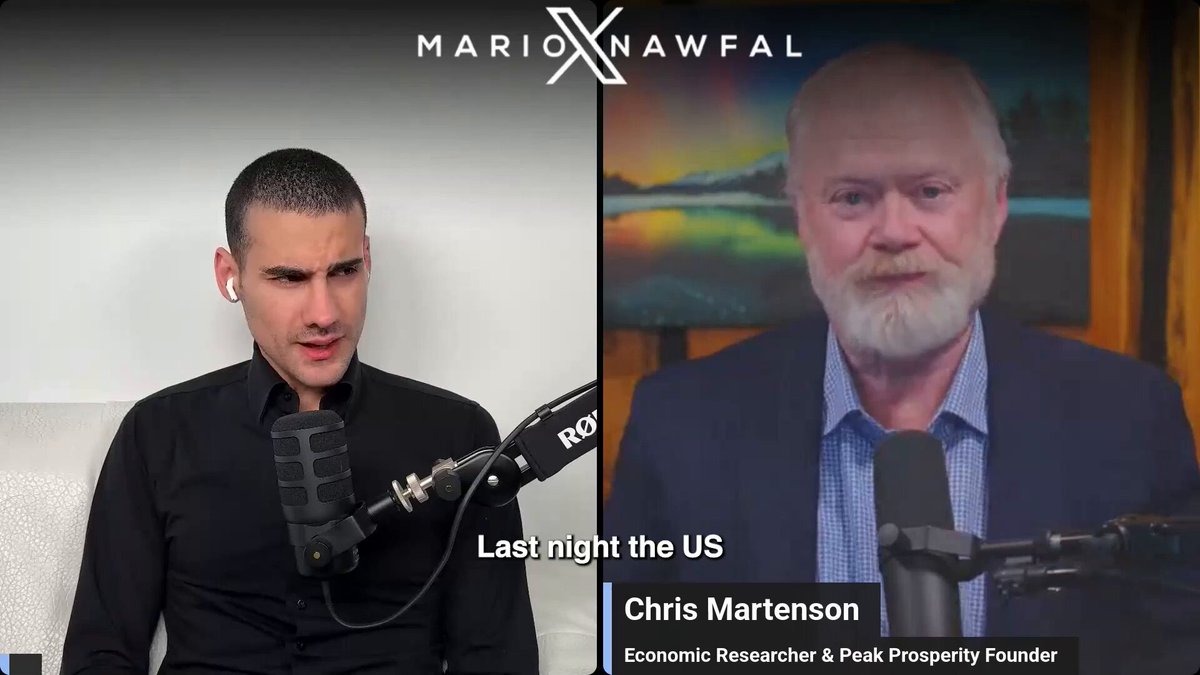
🇺🇸🇮🇷 The world may be approaching an energy crisis worse than the Great Depression, and this time governments can't print their way out of it. Most people compare today's global financial risks to 2008, but economist Chris Martenson says that's the wrong comparison. The banking crisis was ultimately a financial problem, and governments responded by creating trillions of dollars, euros and pounds to stabilise the system. You can debate whether that was wise, but it worked because the problem was financial. This time, he warns, the problem will be physical. If the Strait of Hormuz and Bab el-Mandeb remain disrupted, the world doesn't just lose oil; it loses diesel, jet fuel, lubricants, natural gas, petrochemicals, and fertiliser. The countless industrial inputs that keep supply chains, factories, farms and transport networks operating. And as Chris put it: You can't print missing molecules. That's why he believes this crisis is fundamentally different. If those physical resources become scarce, printing more money doesn't solve the problem; it simply means more money is chasing fewer real goods. And according to Chris, we're already seeing early signs of that reality beneath the surface. While many people focus on crude oil prices, he says the real warning is coming from refined products like diesel, where shortages are becoming increasingly visible and supply chains are beginning to tighten. His concern is that policymakers are treating this like another financial crisis when it's actually an energy crisis. And those require completely different solutions that no one seems to be addressing yet. Chris Martenson

Mario Nawfal

286,738 views • 25 days ago