Загрузка видео...

Не удалось загрузить видео

На главную

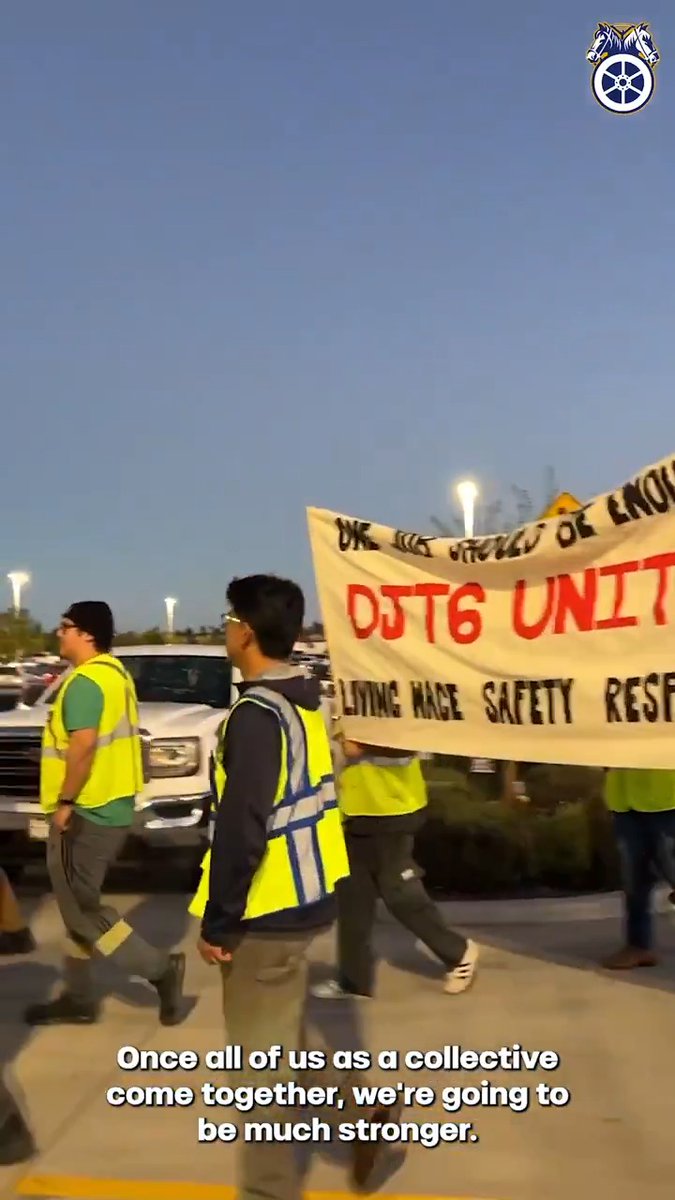
“There’s one thing more powerful than a billionaire – and it’s a union.” Hours before the 2026 Met Gala, which was sponsored by Amazon founder Jeff Bezos, union organisers put on a ‘Ball Without Billionaires’ in New York, featuring Amazon delivery drivers, warehouse workers and campaigners. “Working people are...

341,156 просмотров • 3 месяцев назад •via X (Twitter)

Комментарии: 0

Нет доступных комментариев

Здесь появятся комментарии из оригинального поста
Похожие видео

Jeff Bezos explains to Alexandria Ocasio-Cortez how billionaires are created: providing at least a billion dollars in value to society -- the opposite of exploitation. Bezos: "Let me give you a simple example. Let’s say you start a burger joint, and you have 10 employees, and you make a little bit of money.” SORKIN: “Right.” Bezos: “Until you have — this is — this just one — one outlet. And by the way, these are the most delicious burgers in the world. People love your burgers, Andrew. And so then, you open a second outlet —” SORKIN: “Right.” Bezos: “— and now you’re making a little bit more money, and you have 20 employees. Nd you open a third outlet. By the time you’ve opened a thousand outlets, you are a billionaire.” SORKIN: “Right.” Bezos: “And by the way, this is a real life story, it happens all the time, it’s In-N-Out Burger, it’s Raising Cane’s Chicken. At what point did that money all of a sudden become unethical, or it didn’t? There was one outlet, and then there were two, and then there were three. What you’re doing — the way — the way you make a billion dollars, or a hundred million dollars, or 10 million dollars, or anything, is you create a service that people love. And if millions of people choose your service, you’re going to end up with a billion dollars.” SORKIN: “Right.” Bezos: “And you can, you know, just try it with a chicken franchise.” SORKIN: “Do you think though —” Bezos: “But your chicken has to be good.”

Tom Elliott

1,005,251 просмотров • 2 месяцев назад

Jeff Bezos explains the “releasing the work” framework he used to build Amazon In the early days of Amazon, Jeff Bezos had too many ideas. Then Jeff Wilke, a new Amazon executive at the time, told his boss, “Jeff, you have enough ideas to destroy Amazon.” “This was just a shocking idea for me,” Bezos recalls. “As a founder, I had the great luxury of always being able to hire my tutors. I would hire these experienced, senior executives . . . And I would listen to them and they would teach me.” When Bezos asked Wilke what he meant by this, Wilke responded, “You have to release the work at the right rate so that the organization can accept it.” Bezos reflects on this point: “Every time I released an idea, I was creating a backlog of work in process. And because it was just stacking up, it was adding no value. In fact, it was creating distraction . . . This sounds so obvious, but it was not obvious to me at the time. And this was a profound insight for me. So I started prioritizing the ideas better, keeping lists of them, and keeping ideas to myself until the organization was ready for the ideas.” He continues: “I also started figuring out how to build an organization that can be ready for more ideas. That’s about having the right senior team and leadership and giving those people the executive bandwidth so they could do more ideas per unit of time. And that is what we built. We built a company that’s very good at inventing and doing more than one thing at a time. And as the company gets bigger, you do want to be able to do more than one thing at a time. But that idea of ‘releasing the work’ was very profound for me. It made us operationally more effective while still being inventive.” Video source: Reuters (2025)

Startup Archive

675,291 просмотров • 10 месяцев назад

Jeff Bezos on the insight that started Amazon: In 1994, Bezos came across a statistic that changed his life: worldwide web usage was growing at roughly 2,300% a year. "That was sort of a wakeup call for me that there was something going on," he recalls. At the time, most people hadn't even heard of the web. This was the era of 28 kilobit per second modems and dial-up access. A very different age. But the signal was clear. Something was coming. Jeff Bezos explains the realisation that followed: "I realized you could make a bookstore on the web that could hold more books than a physical bookstore could ever hold. It could truly have universal selection." His background was in computers, not books. He's quick to point out that books weren't chosen out of personal passion: "My real compass, my real passion was computers, and that's how I was involved in this world of the web back in 94. But books was a great first best product to sell online." So why books specifically? Bezos breaks down the logic: "Books were very unique and still are in one respect, and that is that there are more items in the book category than there are items in any other category. There are millions of books active and in print around the world, and the largest physical book superstores only carry about 100, 150,000 of those millions of different books." That gap between what existed and what was accessible was the opening. On the web, you could solve a real problem. People couldn't find the books they wanted, especially the narrow, niche titles with smaller audiences. "We basically built Amazon to make it possible for people to find those hard to find books."

High Signal AI

12,564 просмотров • 3 месяцев назад

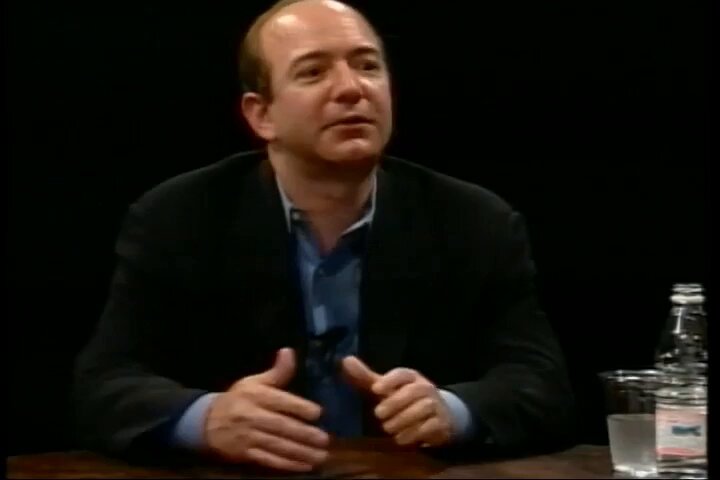
Jeff Bezos on the 4 principles that differentiated Amazon from other companies “The thing that connects everything that Amazon does — our #1 conviction, philosophy, and principle — is customer obsession, as opposed to competitor obsession. We are always focused on the customer, working backwards from the customer’s needs, and developing new skills internally so that we can satisfy what we perceive to be future customer needs.” Jeff Bezos continues: “It seems like we’re in a bunch of different businesses. We have Amazon Web Services, which is completely different from our Amazon Prime business or Amazon Marketplace or Amazon Studios and so on. But really the way that those businesses run are very similar, and it all starts with customer obsession. But it’s not just customer obsession.” Pioneering is another critical principle for Amazon: “We have a very inventive culture. We like to pioneer and invent. There are other very effective business strategies. Pioneering is not the only effective business strategy. In fact, some people would argue it’s not the most effective one. Close-following can be a very good business strategy, and it’s worked many times if you look at the history of business. But it just isn’t who we are.” Willingness to think long-term is another one: “That’s another common thread that runs through everything we do. We are very happy to invest in new initiatives that are very risky for 5-7 years. Most companies won’t do that. Companies will invest for very long periods of time in the cases where the outcomes are more certain, but it’s the combination of the risk-taking and the long-term outlook that make Amazon special.” Taking pride in operational excellence is the final one: “Doing things well. Finding defects and working backwards. That’s all the incremental improvement that most successful companies are very good at. If you’re not good at finding the root cause of defects and fixing that root cause — you don’t ever want to let defects flow downstream — that’s a key part of doing a good job in any business, in my opinion.” Source: Charlie Rose (Oct 2016)

Startup Archive

17,006 просмотров • 1 месяц назад

Love seeing this heartfelt note about our Delivery Service Partner, Ronald Dubon and team... — Sometimes, the smallest hearts remind the biggest companies what kindness truly looks like. When a four-year-old boy dreamed of having an Amazon-themed birthday party—complete with the thrill of seeing a real delivery van—no one could have imagined that Amazon itself would make that dream come true. Despite being one of the largest and busiest companies in the world, Amazon found the time, heart, and humanity to show up in a deeply personal way. On short notice, they didn’t just send one delivery van—they brought two: a classic Amazon delivery van and a cutting-edge electric model. Their team arrived with smiles, good spirits, and arms full of gifts, turning a simple backyard celebration into a once-in-a-lifetime memory. Every child got to climb behind the wheel, honk the horn, and pretend to be an Amazon driver for a day. The laughter, joy, and awe on their faces said everything words could not. In a world where large corporations often feel distant, Amazon proved that compassion and community still matter. Their thoughtful gesture—done not for publicity, but from genuine goodwill—brought magic to a young boy’s birthday and touched every heart in attendance. It was a powerful reminder that even the biggest companies are made up of people who care, and their unexpected generosity should never go unnoticed. Thank you, Amazon, for showing that behind every box and logo lies a company capable of incredible kindness.

Andy Jassy

23,024 просмотров • 10 месяцев назад

Jeff Bezos on the 4 principles that differentiated Amazon from other companies “The thing that connects everything that Amazon does — our #1 conviction, philosophy, and principle — is customer obsession, as opposed to competitor obsession. We are always focused on the customer, working backwards from the customer’s needs, and developing new skills internally so that we can satisfy what we perceive to be future customer needs.” Jeff Bezos continues: “It seems like we’re in a bunch of different businesses. We have Amazon Web Services, which is completely different from our Amazon Prime business or Amazon Marketplace or Amazon Studios and so on. But really the way that those businesses run are very similar, and it all starts with customer obsession. But it’s not just customer obsession.” Pioneering is another critical principle for Amazon: “We have a very inventive culture. We like to pioneer and invent. There are other very effective business strategies. Pioneering is not the only effective business strategy. In fact, some people would argue it’s not the most effective one. Close-following can be a very good business strategy, and it’s worked many times if you look at the history of business. But it just isn’t who we are.” Willingness to think long-term is another one: “That’s another common thread that runs through everything we do. We are very happy to invest in new initiatives that are very risky for 5-7 years. Most companies won’t do that. Companies will invest for very long periods of time in the cases where the outcomes are more certain, but it’s the combination of the risk-taking and the long-term outlook that make Amazon special.” Taking pride in operational excellence is the final one: “Doing things well. Finding defects and working backwards. That’s all the incremental improvement that most successful companies are very good at. If you’re not good at finding the root cause of defects and fixing that root cause — you don’t ever want to let defects flow downstream — that’s a key part of doing a good job in any business, in my opinion.” Video source: Charlie Rose (2016)

Startup Archive

31,625 просмотров • 8 месяцев назад