Video wird geladen...

Video konnte nicht geladen werden

Zur Startseite

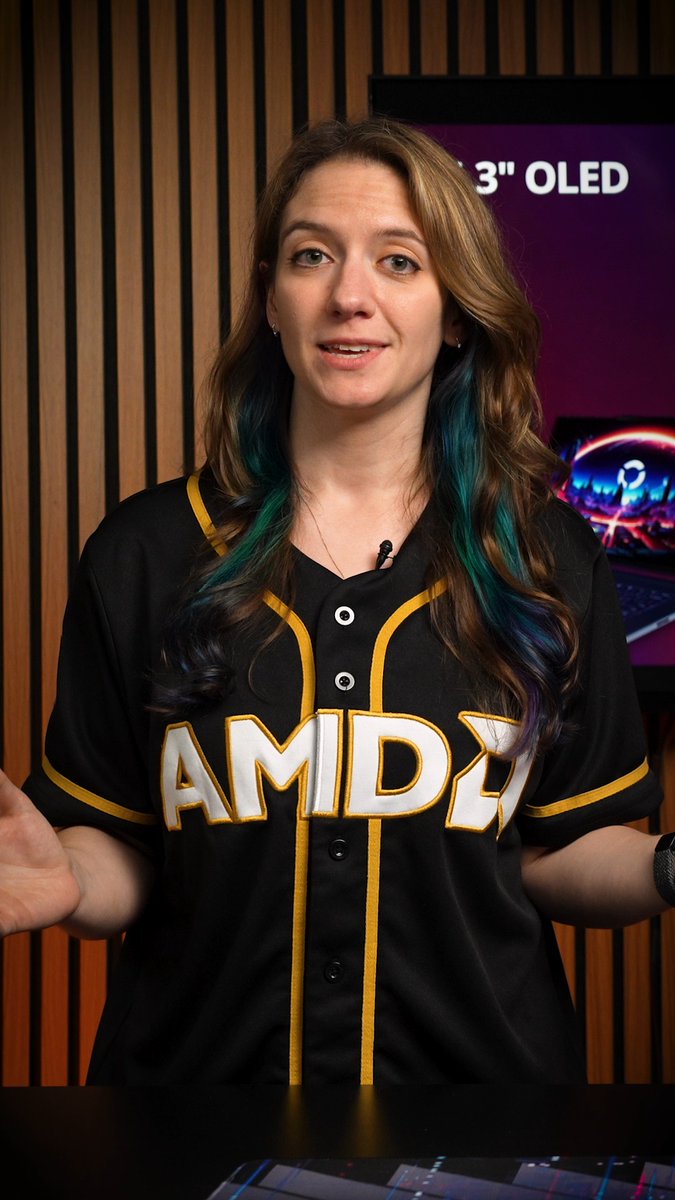
🔥This is a deep dive into AMD's second quarter results published 13 hours ago and comparison with Nvidia. AMD dropped over 5%. I highly recommend AMD/Nvidia investors watch this video.

15,703 Aufrufe • vor 1 Jahr •via X (Twitter)

0 Kommentare

Keine Kommentare verfügbar

Kommentare vom Original-Post werden hier angezeigt

Ähnliche Videos

Nvidia has over $5 trillion market cap but AMD took their biggest customers (Save this). The HELIOS rack is AMD's answer to Nvidia's GB300 and it is not just competitive but rather has more memory than Vera Rubin, more memory bandwidth, 72 GPUs per rack and by most measures it beats Vera Rubin in nearly every dimension while arriving only 3–6 months later. The customers are already real. Oracle just committed to deploying 50,000 MI450 GPUs, the world's first publicly available AI supercluster built entirely on AMD silicon in Q3 2026. Meta signed a multi-year agreement to utilize up to 6 gigawatts of AMD GPUs across their data centers. OpenAI committed to 6 gigawatts of AMD Instinct compute. Each gigawatt translates to roughly $15–20 billion in AMD revenue. Lisa Su told investors on the Q1 call that customer demand forecasts for MI450 and HELIOS are already exceeding AMD's own internal 2027 plans. And the numbers behind this are staggering. Data center revenue grew 57% year over year to $5.8 billion in Q1 2026 while Q2 is guided at $11.2 billion total revenue, 46% growth year over year. Citi is projecting $33 billion in AI GPU revenue alone by 2027, up 137% year over year and AMD is expected to ship roughly 1.9 million AI GPUs in 2027, driven by the MI450 ramp. AMD is not trying to beat Nvidia but rather trying to own the second chair in every hyperscaler's AI infrastructure stack. Bullish AMD and make sure to follow me Melvin for more investment ideas.

Melvin

23,152 Aufrufe • vor 3 Monaten

Some time ago, I had the idea to port NVIDIA Physical AI stack to AMD. The motivation was to improve hardware diversity and enable world models and VLAs to run beyond a single ecosystem. We started with NVIDIA Cosmos Predict 2.5-2B. Porting wasn’t trivial: these models are deeply optimized for NVIDIA’s stack. We used this as an opportunity to apply our ROCm kernels. The results were surprising: Both encode and diffusion run faster on AMD Instinct MI300X vs. NVIDIA H200 (FA3) and we still saw significant headroom for further optimization. Quality is unchanged across modalities (validated with WorldJen) To be clear, this is no luck. We have deep experience with diffusion models and AMD GPUs. But this just gives us a good opportunity to get closer to a true hardware-to-hardware comparison, as we work with less software abstractions than usual. Just to give an example, on AMD, memory instructions are async with a hardware queue of ordered pending instructions, enabling concurrent load/store with compute without warp specialization. Bottom line: there are real architectural advantages on AMD, if you take the time to work with the hardware. Note, we did tradeoff ~20% higher memory usage, That being said, AMD has more to give to begin with :) in the coming weeks: AMD versions of Cosmos Transfer and GR00T, an even faster version of Cosmos Predict, and open-sourcing an attention kernel faster than AITER v3 (which is closed-source for some reason? cc: Anush Elangovan )

Omer Shlomovits

36,648 Aufrufe • vor 6 Monaten