Video yükleniyor...

Video Yüklenemedi

Ana Sayfaya Dön

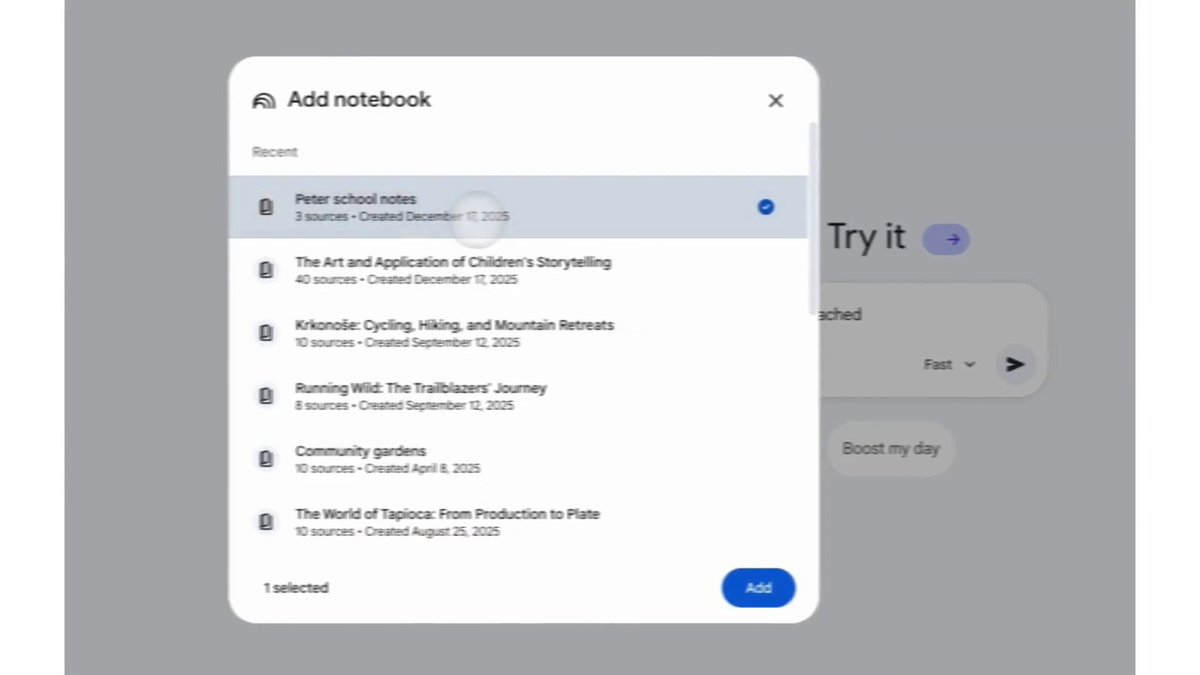
This is freaking cool NotebookLM just launched its “Deep Research” mode - which can automatically browse hundreds of websites, synthesize the findings into a structured report, and include an annotated list of sources. This means that instead of piecemeal searches and manual organization, users can now let the tool...

82,801 görüntüleme • 7 ay önce •via X (Twitter)

0 Yorum

Yorum bulunmuyor

Orijinal gönderinin yorumları burada görünecek

Benzer Videolar

Claude Code cannot read 300 files at once. So someone built a system that lets it control NotebookLM from the terminal instead. The results are wild. Here is the full workflow nobody is talking about: The Setup → Claude Code connects to NotebookLM via a command line interface → Claude searches YouTube, finds relevant videos, uploads them as sources automatically → NotebookLM processes up to 300 sources simultaneously and returns cited, grounded answers → Everything syncs back into your Obsidian vault with passage-level citations you can click to verify Why This Changes Research Forever → No more 20 browser tabs you never close → No more copy-pasting outputs into random notes → No more hallucinated answers with no sources to back them up → 60% of citations verified as strong matches in accuracy audits - answers are grounded in real data What Claude Can Do From the Terminal → Search YouTube for relevant videos on any topic and rank by relevance → Create a new NotebookLM notebook and add 20 sources in parallel automatically → Ask questions and export cited answers directly into Obsidian with wikilinks → Set custom personas per notebook - concise, no filler, no preamble → Generate audio overviews and save them as MP3 files into your vault → Build mind maps, flashcard decks, and research dashboards from your sources → Search arXiv for academic papers and feed them directly into NotebookLM → Upload competitor blog posts, podcast episodes, PDFs, and your own vault notes The Obsidian Output → Every answer arrives with clickable citations that link to the exact passage in the source video or article → Graph view shows connections between all 20 sources and the topics they share → Q&A log tracks every question asked and the grounded response received → Source dashboard shows citation frequency, topics extracted, and which questions each source answered Use Cases Worth Building Today → Academic research with arXiv papers, full citation traceability → Competitor analysis from their YouTube channels and blog posts → Company knowledge base for onboarding, new employees ask NotebookLM instead of interrupting teammates → Podcast research, feed 4-hour Lex Fridman episodes and ask what's new in AI this week → Personal second brain, 300 daily notes uploaded and queryable in one notebook Before this system existed you needed 20 tabs, hours of manual reading, and no guarantee the answers were real. Now you type one prompt in the terminal and Claude does all of it for you. The research stack of 2026 is not a browser. It is a terminal connected to everything

Dami-Defi

251,214 görüntüleme • 23 gün önce

NotebookLM is one of the most delightful, inspiring, and viral AI products out there right now, and I got a chance to chat with the PM behind the product, Raiza Martin (@raiza_abubakar). In our conversation, we cover: 🔸 The origin story of NotebookLM 🔸 The future road map for NotebookLM 🔸 How Google Labs operates differently from the rest of Google 🔸 The development of the “Audio Overviews” feature 🔸 Key metrics and growth of NotebookLM 🔸 Stories about collaborating with author Steven Johnson 🔸 Navigating potential misuse of AI technology 🔸 More Listen now 👇 - YouTube: - Spotify: - Apple: Raiza is a senior product manager for AI at Google Labs for AI at Google Labs, where she leads the team behind NotebookLM, an AI-powered research tool that includes a mind-blowing podcast-on-demand feature called “Audio Overviews.” NotebookLM started as a 20% project and has grown into a product that’s spreading across social media and has a Discord server with over 60,000 users. Raiza previously worked on AI Test Kitchen and has a background in startups, payments, and ads. Thank you to our wonderful sponsors for supporting the podcast: 🏆 Explo — Embed customer-facing analytics in your product: 🏆 Sprig — Build products for people, not data points: 🏆 Sidebar — Accelerate your career by surrounding yourself with extraordinary peers: Some key takeaways: 1. Embrace a startup mentality within large organizations: Google Labs operates with fewer processes and more agility than typical Google teams. This allows them to move faster and iterate quickly, much like a startup. 2. Often, powerful technology is already available; the magic lies in how you interact with it. For instance, by integrating powerful audio models with existing LLMs, NotebookLM created an innovative way for users to interact with content. Look for unique applications of the tools you already have. 3. Don’t wait for a perfect launch. Start with a working version of your product and use user feedback to iterate and improve. This approach can reveal unexpected insights and user preferences, helping you shape the final product.

Lenny Rachitsky

75,439 görüntüleme • 1 yıl önce