Video wird geladen...

Video konnte nicht geladen werden

Zur Startseite

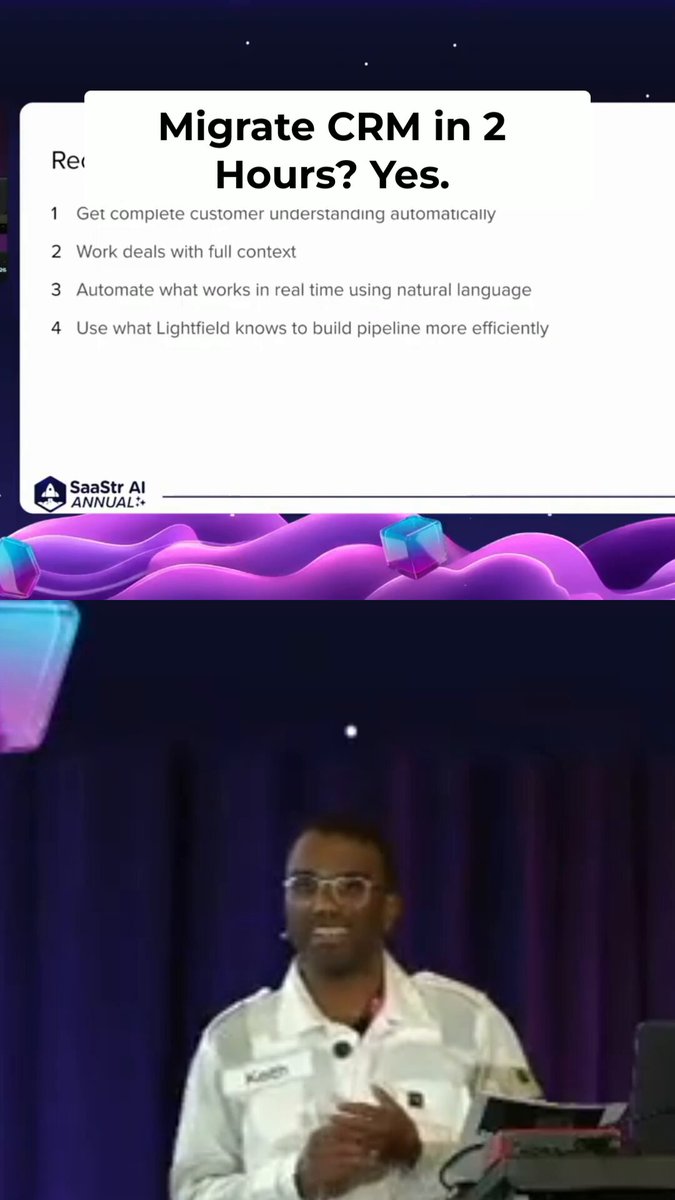
This is literally how Jev makes AI agents dramatically cheaper. It filters the noise from Slack, GitHub, documents, memory, and the web then sends Claude Code only the context it actually needs. Fewer tokens. Faster decisions. Lower costs. The context firewall is insane:

14,641 Aufrufe • vor 1 Tag •via X (Twitter)

13 Kommentare

Profilbild von Agentpilled
Agentpilledvor 1 Tag

Filtering context at the ingestion layer is the real infra play here. Most agents still pump raw noise straight to the model.

Profilbild von Max Bevza
Max Bevzavor 1 Tag

this context firewall is actually so bullish for agent costs

Profilbild von Jatin Garg
Jatin Gargvor 1 Tag

The filtering risk is when cost drops but context loss breaks the task. Jev needs to know what NOT to filter, which is harder than what to keep.

Profilbild von dhinna ship .ico
dhinna ship .icovor 1 Tag

My wallet thanks anyone who stops Claude from reading my entire Slack history

Profilbild von 安叫兽|Bird🕊️ 🔶 BNB
安叫兽|Bird🕊️ 🔶 BNBvor 23 Stunden

关键不只是省 token,而是先把上下文里的噪声挡掉了。

Profilbild von Ayyaz
Ayyazvor 1 Tag

Filtering Slack, GitHub, and docs before Claude Code sees them is the cost win. Most agent loops still re-feed the same noisy thread every turn.

Profilbild von Cyrbuzz
Cyrbuzzvor 1 Tag

The filtering is the easy part; the hard part is deciding what counts as noise before you know what the task needs. Pre-filtering too aggressively is how agents miss the one Slack thread that actually mattered.

Profilbild von Vogel_OpenCreators
Vogel_OpenCreatorsvor 16 Stunden

Outages like that kill an entire evening of focus.

Profilbild von Lea Thompson
Lea Thompsonvor 1 Tag

Clever filter sure but anyone counting the tokens Claude Code *spits out*? That's the real cost sink.

Profilbild von catman
catmanvor 1 Tag

A plausible second-order effect is that context filtering shifts effort from prompt writing toward building and maintaining reliable retrieval rules.

Profilbild von Gregor
Gregorvor 1 Tag

When the filter quietly drops context the model actually needed, there is no recovery signal. The agent just continues, confidently wrong. Took me longer than I'd like to admit to realize the filter was the failure point, not the model.

Profilbild von Afroz Usman Memon
Afroz Usman Memonvor 1 Tag

Consider filtering unnecessary noise from documents and web data to send your AI agents only the context they actually need.

Profilbild von George O'Nair
George O'Nairvor 1 Tag

Context firewall before the expensive coding model is the pattern. Most cost isn't "thinking hard." It's stuffing Slack/GitHub/docs into the prompt and hoping the model sorts signal from noise.

Ähnliche Videos

Everyone wants agent swarms. Very few people are talking seriously enough about the context layer that makes swarms useful. Even with one agent, context is fragile. Too little context and the agent guesses. Too much context and it wastes tokens, loses focus, or reasons over irrelevant noise. The sweet spot is precise context: the right knowledge, in the right structure, at the right moment. With many agents, that challenge explodes. Each agent produces decisions, assumptions, findings, summaries, risks, and partial conclusions. Unless that knowledge becomes shared, structured, and reusable, every new agent is forced to rediscover what another agent already learned. That is not a swarm. That is a crowd. Shared context graphs are what turn agent activity into agent collaboration, and OriginTrail DKG V10 brings them to life. Was just playing with some final polishing for the V10 release, and it is really powerful to see shared context graphs where multiple agents contribute knowledge into the same connected memory, with attribution visible directly in the graph ui. That matters for three reasons. First, agents can access and build on one shared memory instead of staying trapped in isolated sessions. Second, the graph structure helps them retrieve the exact context they need, instead of stuffing everything into a prompt and hoping the model sorts it out. Third, verifiability of provenance. You can see which agent contributed each piece of knowledge, trace the source, and decide what to trust. Tokenmaxxing starts with fewer tokens, but the deeper story is coordination - agents stop reloading the world and start building on shared, verifiable context. That is the foundation for serious multi-agent work across software engineering, research, finance, operations, project management, and far beyond. The future is not more agents, it is agents working from shared, verifiable context. But the more the merrier, of course.

Jurij Skornik

11,180 Aufrufe • vor 3 Monaten

A DEVELOPER CONNECTED CLAUDE CODE TO OBSIDIAN SO HIS AI AGENT WOULD STOP FORGETTING THE PROJECT EVERY MORNING. Every coding session used to start the same way. Claude would understand the repo, fix the bug, explain the architecture, and then the moment the session ended, all of that context disappeared. Same codebase. Same decisions. Same architecture. Same mistakes repeated again. So he added a memory layer. Instead of treating Claude Code like a smart terminal, he connected it to a local Obsidian vault through MCP. Now Claude can read the repo, open the vault, create notes, link concepts, and write important decisions back into the system. When it studies the codebase, it does not just answer once and forget. It creates notes for the major services, maps how the architecture works, links auth to the database, connects APIs to storage, and records why certain migrations or design choices exist. Obsidian becomes the project graph. Now when he asks why something was built a certain way, Claude does not guess from the current prompt. It reads the decision notes. When he starts a new branch, Claude checks the active context file. When the work is done, it updates what changed, what is blocked, and what the next agent needs to know before touching the repo. That is the real loop: read context, write code, capture decisions, update memory. Most people are still using AI coding tools like disposable chat windows. Ask, patch, close, forget. This setup turns Claude Code into infrastructure. The repo gets a memory layer that survives every session, and multiple AI agents can work from the same project map without stepping on each other. The unlock is not better prompting. The unlock is giving the agent somewhere to remember what it already learned.

DegenCalls

20,124 Aufrufe • vor 2 Monaten