Video wird geladen...

Video konnte nicht geladen werden

Zur Startseite

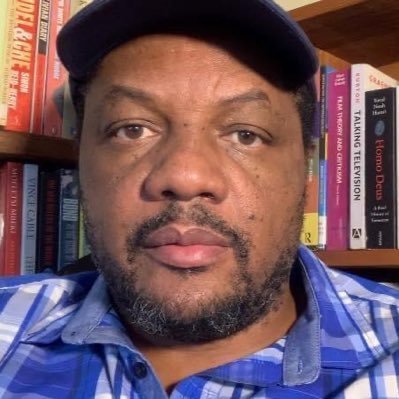
This is not a highly educated middle-class professional, this is a man from a village in Zimbabwe, yet the clarity of his views is sharp, driven by thought and empowered by social media, which has allowed people to bypass traditional state propaganda institutions when accessing information. He reminds us...

106,897 Aufrufe • vor 1 Jahr •via X (Twitter)

10 Kommentare

Profilbild von MaZwangendaba
MaZwangendabavor 1 Jahr

Ndopaunowona rimwe rine PhD richitaura nhando zvisina maturo. Baba ava is making sense pasına gargantuan vocabulary. Common sense badzi ndiyo irikungodiwa. ZANU PF must go.

Profilbild von Taona Denhere
Taona Denherevor 1 Jahr

This what we call a walking and talking Organic Intellectualism. This is commonsensical intellectualism, which is fact and wisdom backed. This Mzee (Respectable Old Man) has just delivered a lecture on Economic History, Slavery and Political Science and bit of International Relations. As such this Mzee didn't go to the University but the University went through him Power to this Mzee 💪💪💪

Profilbild von yungblackmale 🏴󠁧󠁢󠁳󠁣󠁴󠁿🇿🇼
yungblackmale 🏴󠁧󠁢󠁳󠁣󠁴󠁿🇿🇼vor 1 Jahr

Well, articulated 🙏

Profilbild von Morgan Chics
Morgan Chicsvor 1 Jahr

Musharukwa uyu akatogwara kudarika ma youth nemasapota vese veZanu pf..

Profilbild von Felon Musk
Felon Muskvor 1 Jahr

I like listening to ana samanyika they can express themselves. He is 80% right, zanu yakauraya chinhu but still land refomr had to be done also varungu havatidi thats a fact and he is right we should find common ground with them. He could be a better president than ED and wamba

Profilbild von Thanx Moyo Mngani
Thanx Moyo Mnganivor 1 Jahr

He is very highly educated. His subject matter tells you the real life facts. Ndiko kufunda ikoko!!

Profilbild von Simon Moyo
Simon Moyovor 1 Jahr

I am afraid this old man may be abducted by ED thugs and tortured, if not killed. ED thugs specialise in abducting opponents, black African people. But to this man death or life in Zimbabwe is the same. Economic catastrophe @ProfJNMoyo

Profilbild von Warra 🇿🇦
Warra 🇿🇦vor 1 Jahr

Can’t this be fixed, I drove here the other day and it was horrible.

Profilbild von Pangolin Consultancy
Pangolin Consultancyvor 1 Jahr

SI 162 of 2024 has increased excise duty on petrol imported using free funds from 30 cents to 55 cents per litre. On top you pay carbon tax 4 cents/litre, strategic reserve levy 18 cents/litre, petroleum levy 5 cents/litre. Total is 82 cents per litre

Profilbild von Chris Chinaire
Chris Chinairevor 1 Jahr

How effective is propaganda directed at as smart a people as the average Zimbabwean? There appears to be 3 broad groups: - the compliant that parrots propaganda without question - the vocal minority that speak their mind - the objective silent majority that watches and listens

Ähnliche Videos

Imagine if this man were the president of Zimbabwe, wielding all the powers that come with Zimbabwe’s dictatorship. Imagine if he led ZANUPF and governed a country without strong institutions capable of protecting citizens from the abuse of power. Imagine if he had the same power that Emmerson Mnangagwa has to send police officers to arrest journalists simply for reporting the truth. How many journalists in America would be in prison today because they reported facts he did not like and he dismissed them as fake news? When I watched this video, I was reminded of the beauty of a democratic system built on strong institutions. These American journalists would likely be in prison if they were operating in Zimbabwe. Instead, they are protected by strong institutions, a separation of powers, and constitutional safeguards that place limits on what a president can do. A president can be angry. A president can be unreasonable. A president can even be ridiculous. But in a functioning democracy, there are limits to how far that behaviour can go because institutions are stronger than any individual. When Trevor Noah said that Donald Trump is a quintessential African dictator without the powers that African dictators have, he was not far off the mark. He was highlighting an important point. You can see the anger when he feels exposed, but you can also see the frustration of knowing there is very little he can do because the institutions are strong enough to resist political pressure and abuse. This is why Africa must build strong institutions. It is also why dictators fear strong institutions. Independent courts, professional civil services, free media, and accountable law enforcement are the very things that limit presidential power and prevent its abuse. Dictators rarely strengthen institutions because strong institutions constrain them. They stop them from abusing the enormous authority that comes with the presidency. I speak from experience. I have been on the receiving end of a president who was angered by truthful reporting and who used the machinery of the state to throw journalists into prison. That is precisely why strong institutions matter. They are the difference between freedom and fear, between accountability and impunity, and between democracy and dictatorship. I would never understand a Zimbabwean, or an African for that matter, who idolises Donald Trump, given the history that Zimbabweans and Africans have endured under dictatorships and strongman rule. Many Africans have spent decades fighting against leaders who undermine institutions, concentrate power in their own hands, attack the media, and treat criticism as a personal insult. It is therefore difficult to understand why some would celebrate those same traits when they appear elsewhere. Perhaps that is what they call Stockholm syndrome, identifying with and admiring behaviours that have caused so much suffering at home rather than recognising the dangers they represent.

Hopewell Chin’ono

45,243 Aufrufe • vor 1 Monat

This is how much this man hates South Africa and Africa. He lies that there is a white genocide in South Africa. He made this speech yesterday. He continues to lie that there is a genocide in South Africa. That is why I do not understand the African idiots who support this man. You have to be a big black African idiot to support Donald Trump. South Africa is the biggest economy in Africa. It has taken care of millions of Africans, giving them an opportunity to pursue their dreams and to feed their families. There are millions of Africans living in South Africa, and yet Donald Trump is trying to destroy that economy that helps many Africans to sustain a decent living. And yet there is a black African who supports this man and sees Trump as a hero. Trump is an idiot. I do not care about him. But I am astonished that there is a black African somewhere in Africa seeing Donald Trump as a hero, and yet the same Donald Trump is trying to destroy the biggest economy in Africa for no apparent legitimate reason. South Africa has done nothing wrong to America, nothing wrong to Donald Trump, and yet yesterday he made this shameless speech. This makes me absolutely angry, livid, to know that there is an African out there who supports this idiot. He is running his racist refugee programme. He has blocked all other black nationals from Africa from seeking asylum in America. That is fine. We do not care about America. But he is using his racist programme to try and destroy the very mainstay of African economics, because that is what South Africa is to Africans. There is no country in Africa that does not have its nationals in South Africa. It takes a certain level of ignorance and idiocy for any black African to support and hail this man as a hero. This man wants to destroy our continent, and yet some African idiot is out there twerking for this guy.

Hopewell Chin’ono

65,276 Aufrufe • vor 3 Monaten

This video was shot by a train driver in Zimbabwe to show the decomposed railway system that now exists. Zimbabwe had one of the best railway systems in the world before independence, it competed with the British Railway system and its signals system was ahead of the British system. It was all destroyed under ZANUPF, there are no more regular passenger trains in Zimbabwe. The National Railways of Zimbabwe is run by the Government. Incompetent relatives and friends of ZANUPF politicians have been appointed as managers and directors, and they ran the company into the ground. The destruction of the railway system has made doing business in Zimbabwe expensive, but the ZANUPF politicians don’t care because they own transport companies that now move goods. Sadly, the last colonial ruler, Ian Smith, made a prophecy in 1980 which, at the time, was deemed racist. He said that under ZANUPF, using the railway system would be deemed dangerous, leading to the abandonment of railway services due to corruption and incompetence. That is exactly what happened. If Smith could talk, he would say, 'I told you so.' When I write about these things, I am called a Western puppet by ZANUPF, yet I am only calling for a return to normalcy that will benefit ALL Zimbabweans! No country succeeds economically without a railway system, destroying the railway system is one of the most UNPATRIOTIC things ZANUPF has ever done! What is patriotic about running a country without a decent railway system and making your country a laughing stock due to tragic failures caused by your corruption and incompetence? The board for the National Railways of Zimbabwe is chaired by ZANUPF politician Mike Madiro. President Emmerson Mnangagwa also appointed 82-year-old ZANUPF politician Tshinga Dube to the board. Before Madiro, the board was chaired by another ZANUPF politician, Martin Dinha. All they do is loot and pillage state enterprises. That is Zimbabwe’s story under ZANUPF, and the evidence is below in this video!

Hopewell Chin’ono

191,690 Aufrufe • vor 2 Jahren

Issues of paternity have shaped our society for generations, especially in Zimbabwe. They did not start today. I remember going to a funeral with my father in the 1990s, and as we sat around the fire the men began sharing stories. One of them has stayed with me ever since. A Zimbabwean doctor had married a nurse, and they struggled to have children. As usual, when there is no child, the blame was placed on the woman. She went to see her own doctor, who told her plainly that she was not the problem, and advised her to bring her husband for testing. The husband refused, as many Zimbabwean men tend to do. Their marriage eventually collapsed, with the man insisting he could not be the problem because he had a child with another woman before marrying the nurse. That woman, he said, was also a doctor, and he was raising that child. After the divorce, the nurse remarried another doctor, and she immediately fell pregnant. Because it was a tight medical community, the whole situation became a talking point. The ex-husband had loudly declared that his former wife was barren, yet here she was having one child after another, three in total, with her new husband. Meanwhile, the ex-husband remarried, and again there were no children. One day the ex-husband and his former wife met at a gathering. During a casual conversation, as people who once knew each other, she told him directly that he was raising a child who was not his. She told him that he had no capacity to father a child and that if he finally went for tests, he would discover the truth. She reminded him how he had insulted her and her parents, and how he had refused to listen. The revelation shook him. He went for tests, and it was confirmed that he was the problem. He had spent seventeen years looking after a child who was not his. The moral of the story is simple, and I always stress this when mentoring young people. When in doubt, check. In fact, even without doubt, check. A DNA test at birth saves you from future heartbreak. Many men are raising children who are not theirs. Some women know exactly what they are doing. Others genuinely do not know because their relationships overlapped before they settled down. In those cases, even the woman cannot be sure who the father is. So when you have a child, get a DNA test. If you ask for one and a woman becomes defensive or resistant, that is a major red flag. At that point, the test is no longer optional, it is necessary. That is the reality of life today. As they say, trust is beautiful, but DNA is confirmation. In this life we live, hope is not a strategy when it comes to your children, so test your child and protect your future, as the saying goes. I have DNA stories that I could share for a whole year. If compulsory DNA testing was demanded of all of us today, you will be shocked by what will come out. This brother in the video is now going through denial. He has been told the truth, but he is still in shock, which is why he is asking for silly things from this woman. It is hard for any man to discover that the child he believed was his belongs to another man. That is why DNA testing is a necessity and why it should be compulsory.

Hopewell Chin’ono

67,842 Aufrufe • vor 8 Monaten

This is a Zimbabwean teacher in South Africa, humiliated like this by fellow Africans. Her problems were authored by Emmerson Mnangagwa and ZANUPF in Zimbabwe. When she tried to fight back, the South African ruling party, the ANC, labelled people like her as Western sell-outs. The ANC sent delegations, led by its secretary-general and its youth leader, to show solidarity with Mnangagwa’s corrupt rule, which has driven Zimbabweans onto South African soil creating social flush points. I am not a prophet, but I can assure you that the ANC’s continued support for ZANUPF and Mnangagwa will result in more lost votes in the 2026 elections. It is that simple. You cannot support a thief next door who is starving his children, leading them to end up on your doorstep, and not expect political consequences. Botswana’s former ruling party, the BDP, was warned about the same ZANUPF phenomenon. Like the ANC, it ignored it. Today, it is in opposition. We do not live in a binary world. It is a fact that ZANUPF and Mnangagwa have authored this crisis. It is also a fact that the ANC has supported ZANUPF’s failed leadership. It is equally true that many Zimbabwean immigrants naturally sought better opportunities in South Africa because of this problem. It is also a fact that South African citizens are frustrated by being forced to share depleted social services with foreign nationals. All these things are facts. However, it takes real leadership to know how to respond to the crisis. At present, the leadership chair is empty, some are paying bribes, some are receiving them on both sides of Limpopo. Meanwhile, the voters will have the final say in South Africa, because it is a democracy. One day, we shall write about the ANC in the past tense, if the leadership chair remains empty. The distinction between black-led South Africa and Zimbabwe, and white-led South Africa and Rhodesia, was that the whites told each other the truth when they met. They would not allow an entire country to sink just to placate a neighbouring corrupt leader. South Africa is now sinking, with poverty-stricken citizens who are genuinely out of the formal economy. Illegal immigration is the last headache it needs in a Trumpian world. When Ian Smith tried to pull a ZANUPF on John Vorster, he was told to voetsek. President Cyril Ramaphosa needs to show leadership by confronting ZANUPF, but from all I know, he won’t. Both the Zimbabwean teacher and the South African nurses are victims of failed leadership. Hospitals are dilapidated in Zimbabwe, and Fikile Mbalula shouts, “Viva President Mnangagwa.” You could not make this sh*t up. When South African hospitals are swarmed, the same ANC cries the same immigration tune. But who is facilitating it?

Hopewell Chin’ono

285,290 Aufrufe • vor 1 Jahr

The man who invented modern fantasy didn't publish his first novel until he was forty-five. By that age, J.R.R. Tolkien had already built a respectable life. He was an Oxford professor, an expert in ancient languages, with a wife and four children and a settled academic career. He was exactly the kind of man who might reasonably have decided that the shape of his life was already fixed. The work he would be remembered for, he had not yet even begun... The story, which Tolkien told himself, is that one summer he was grading examination papers, when he turned a page and found that a student had left it blank. Without quite knowing why, he wrote a single sentence on it: "In a hole in the ground there lived a hobbit." He did not know what a hobbit was. He had spent years inventing languages and mythologies as a private passion, and telling stories to his own children, never imagining any of it would reach the world. But that one line began to grow. It became a story, and then a book, and in 1937, at the age of forty-five, Tolkien published The Hobbit. It was a success, and his publisher asked for a sequel. Tolkien warned them it might take some time. It took 17 years... He wrote it in the margins of a demanding full-time job, revising endlessly, doubting it often. When The Lord of the Rings was finally published, in 1954 and 1955, he was in his early sixties. That book, begun as a middle-aged professor's private side project, went on to sell well over a hundred million copies, to invent modern fantasy as we know it, and to reshape the imagination of the entire world. Tolkien already had a full and respectable life behind him. And still, the thing he is remembered for, the thing that outlived him and reached hundreds of millions of people, was something he began at forty-five, at an age when it would have been the easiest thing in the world to tell himself he had already missed his chance. He didn't. It's never as late as it feels.

James Lucas

93,088 Aufrufe • vor 25 Tagen

CNN’s John Miller tells Jake Tapper in the 6pm hour that it’s now clear the Minneapolis Catholic school shooter did not have “a specific motive” and there “won’t” ever “be a specific motive” because his “manifesto” was “kind of rambling” and “hate[d] everybody”.... “Well, looking through the manifesto, that's a lot of pages. Kind of rambling. A lot of it is his self pity for how his life is going, that he has been depressed for a long time, that he has been planning to do this for a long time, that he knows it's wrong, that he knows his friends are going to hate him for it, that he knows he's going to take his own life at the end of it. He said it was better to die standing up than kneeling down for all the injustices he appears to believe he has suffered during his life. This is not foreign territory for us. Basically, I look at this guy and I know this guy because we've seen this guy before. He has written messages all over his rifles to homages to the New Zealand shooter who killed 51 Muslims in mosques while they were praying to the Norway shooter who killed children in — in a camp. And — and is as known as the biggest body count, very much like what we saw among the Buffalo shooter. These are individuals who, you know, we look for that specific motive. There won't be a specific motive. He's got problems in his life. He has decided to blame everybody else. He has anti-black messages, anti-Semitic messages, anti-religious messages, anti-God messages. In other words, his motive is he hates everybody because his life's a mess. And he figures it's not his fault.”

Curtis Houck

216,700 Aufrufe • vor 11 Monaten

Zimbabwean President Emmerson Mnangagwa who has been in power since November 2017, following the military coup that removed President Robert Mugabe. He has now signed into law Constitutional Amendment No. 3, which, among many other things, extends his term of office to 2030, cancels the 2028 elections, extends the presidential term from five years to seven years, and removes the direct election of the President by citizens, transferring that responsibility to Parliament. This is a massive controversial constitutional change, one that would ordinarily require a referendum. However, the President and his advisers have refused to subject these changes to a referendum. That fact alone renders the entire process contestable and places a dark cloud of illegitimacy over his presidency beyond 2028, when his term of office was originally supposed to end. But this crisis will not wait until 2028. It began the moment he signed Constitutional Amendment No. 3 into law, as opponents of the Bill which is now law have already declared the process illegal because there was no referendum. The real challenge facing President Mnangagwa is not so much the opposition, which he has effectively dismantled with the assistance of opposition leaders who have allegedly been bought or co-opted. The real challenge is the economy. As Bill Clinton famously said, “It’s the economy, stupid.” The economy is what will create a wave of political discontent between now and whenever he eventually leaves office, assuming he does not die in office. I have seen some of my South African friends mocking Zimbabweans over this development and saying it is a Zimbabwean issue that Zimbabweans must resolve themselves. One can only say that if one is ignorant of the interconnectedness of our region and the ripple effects that this constitutional change is likely to create. South Africa’s illegal immigration crisis has been authored, in part, by the misgovernance in Zimbabwe, which successive South African governments and the African National Congress have tolerated and, at times, enabled. When the economy deteriorates in Zimbabwe, desperate people cross into South Africa by any means necessary in search of jobs and opportunities. This should not be viewed as a Zimbabwean crisis alone. It is a regional crisis, one that has the potential to create political and social turbulence throughout Southern Africa. History has taught us that whenever there is a crisis in Zimbabwe, South Africa bears much of the burden. But this post is not about South Africa. It is about Zimbabwe and Zimbabweans. The culture of bootlicking leaders and hero-worshipping politicians cuts across Zimbabwean society, both in the ruling party and in the opposition. Part of the reason why the opposition has been emasculated by Emmerson Mnangagwa is because citizens continue to place blind faith in leaders who have delivered very little. Those leaders continue to sell hope to the people, even when many Zimbabweans know that some of them have been captured or compromised. We saw this decadence in the Parliament of Zimbabwe. Opposition Members of Parliament voted with ZANUPF. Only 42 voted against the Constitutional Amendment Bill. The rest supported it. That is a reflection of the deep crisis within the opposition itself. Unfortunately, many Zimbabweans mistakenly think that Zimbabwe’s problems are exclusively a ZANUPF problem. They are not. They are a Zimbabwean problem that Zimbabweans themselves must resolve, and not sit and watch. As long as Zimbabweans continue to hero-worship personalities instead of supporting ideas, institutions and principles, the crisis will never go away. There are people with ideas and solutions for Zimbabwe, but they are not popular enough. Populism has derailed the opposition and made it ineffective in pushing back against ZANUPF’s misgovernance. The signing of Constitutional Amendment No. 3 into law is, in my view, the beginning of a new phase of resistance, assuming events themselves do not overtake any organic resistance to Mnangagwa’s rule. Zimbabwe today is a hopelessly divided society. People are fighting one another, and there is little national unity. President Mnangagwa could have secured his legacy by uniting the country and fixing the economy. Instead, it is evident that his administration remains adrift when it comes to economic management. This is, therefore, a moment for Zimbabweans to reflect on what they want for their country and how they intend to achieve it. For neighbouring countries, particularly South Africa, this is not Zimbabwe’s problem alone. According to the South African government, around 70% of women who give birth at Musina Hospital are Zimbabwean. You cannot simply turn them away. They will continue coming because the Zimbabwean government has failed to build a healthcare system capable of serving its people. An estimated 2,500 Zimbabwean women die every year while giving birth because of inadequate maternal healthcare facilities. The largest hospital in Zimbabwe still relies on a single maternity theatre built in 1977 by the Ian Smith government. That alone is a devastating indictment of the state of public healthcare in Zimbabwe, and a metaphor for the state of affairs. With unemployment estimated at over 95% in the formal and informal sectors combined, it is not surprising that Zimbabweans are prepared to risk their lives crossing crocodile-infested rivers in the Limpopo to reach South Africa. They will continue doing so. No amount of anti-immigration marches in South Africa will stop this reality. One either understands how crises create migration flows, or one lives under the illusion and delusion that Zimbabweans can somehow be prevented from seeking survival elsewhere. As we speak, many large-scale farms in Limpopo employ significant numbers of undocumented Zimbabwean workers. If those workers were suddenly to disappear overnight, the consequences for agricultural production and food prices would be enormous. This is not simply my opinion as an analyst or journalist. I have spoken to numerous farmers in Limpopo. I am a farmer myself and have access to many people within the agricultural sector, including some who are political actors in South Africa. The reality is that complex regional problems cannot be solved by slogans, social media noise or emotional outbursts. They require honest conversations, competent governance and courageous leadership on both sides of the Limpopo. As this law comes into effect, many people must reflect on the roles they played, directly or indirectly, in bringing Zimbabwe to this point. Vice President General Constantino Chiwenga was one of the leading proponents of the idea that President Mnangagwa could and should rule for as long as he wished, as he stated in the video I have attached below. Today, he finds himself effectively locked out of any constitutional path to the presidency. The opposition leader, Nelson Chamisa, also bears a significant share of responsibility. He effectively dismembered the opposition by getting rid of key allies who brought talents and skills that he himself did not possess. He dismantled leadership structures and ran the opposition without a constitution, creating an environment that enabled ZANUPF to infiltrate the opposition through the political charlatan Sengezo Tshabangu, whose actions were aided by Professor Jonathan Moyo’s ideas. Ultimately, the supporters of these two men must not live in denial by blaming everyone else while refusing to examine their own role in what has happened. There is nothing contained in this constitutional amendment, which is now law, that was not predicted. Analysts who warned that these developments would occur were ridiculed. They were demonised on social media, insulted and called names by opposition supporters. That abuse continues to this very day. It cuts across the political divide, both in ZANUPF and in the opposition, where leaders deploy and sponsor people to attack anyone who raises uncomfortable truths about the realities of life in Zimbabwe. One cannot help but wonder whether some of those who have spent years attacking people who brought genuine issues to the table have themselves been manipulated or even indirectly serving the interests of ZANUPF, because it beggars belief that people can be so self-contradictory and self-destructive in the manner in which Zimbabwean politics has unravelled since 2022. In 2021, through Constitutional Amendment No. 2, the running mate clause was removed. That amendment effectively dismantled the constitutional mechanism that many believed would guarantee General Chiwenga’s succession within ZANUPF. The running mate provision had been an important part of the constitutional architecture established by the 2013 Constitution, which was negotiated during the Government of National Unity and endorsed by almost 95% of Zimbabweans in a referendum. The Vice President remained silent. He was warned. I was among those who argued that the removal of the running mate clause was the beginning of what I called a “royal presidency”, one in which President Mnangagwa would accumulate so much power that he could potentially remain in office until his death. All the mistakes that have been made, whether through deliberate action, political expediency or sheer ignorance, have brought Zimbabwe to where it is today. Have opposition supporters finally understood that ideas matter more than bootlicking and hero-worshipping political leaders? I do not know. Their reaction to what is happening in Zimbabwe today will answer that question. Have members of ZANUPF who feel aggrieved by President Mnangagwa’s actions now come to understand that when people speak about constitutionalism, accountability and good governance, they are not necessarily being anti-ZANUPF? I do not know. Time will tell. My thoughts, as I end this article, are with the millions of Zimbabweans who remain trapped inside Zimbabwe with little or no prospect of meaningful economic opportunities and who are unable to live normal lives in the way that citizens in functional countries do. My thoughts are also with those citizens who spent years bootlicking and hero-worshipping politicians, unknowingly aiding this process and helping to create the very circumstances in which they now find themselves: unemployed, economically excluded and without hope for a better future. And my thoughts are especially with those who cannot leave. As the Jamaican reggae artist Buju Banton poignantly said in his song Untold Stories: “Those who can run, run away, but what about those who can’t? They will have to stay.” That, perhaps, is the greatest tragedy of Zimbabwe: those with the means often leave, while the poorest and most vulnerable are left behind to endure the consequences of political failure, economic collapse and broken leadership. Their suffering should never be forgotten.

Hopewell Chin’ono

226,542 Aufrufe • vor 22 Tagen