Video yükleniyor...

Video Yüklenemedi

Ana Sayfaya Dön

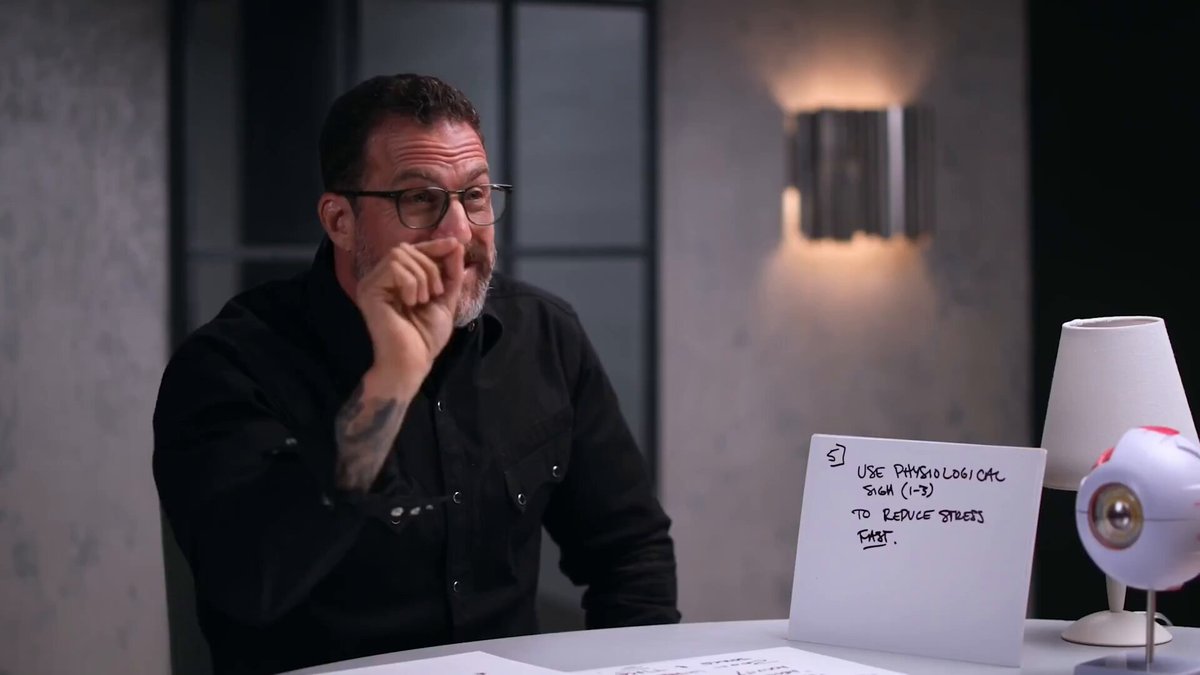
This seems like a conversation between two comedians, but really it’s a deep reflection of the fundamental difference between the Aryan and the Jew. Norm Macdonald- “Life is what is not what we think it is.” As in reality is what matters not perception. Jerry Seinfeld- “I would say...

213,811 görüntüleme • 5 ay önce •via X (Twitter)

0 Yorum

Yorum bulunmuyor

Orijinal gönderinin yorumları burada görünecek

Benzer Videolar

US Vice President J.D. Vance made a sharp statement warning Russia that it will be "very bad" for them if they do not actively engage in "good-faith" negotiations on Ukraine. According to Vance, Trump believes the conflict harms everyone – Russia, Ukraine, and America – and is dissatisfied that Russia allegedly is not sufficiently committed to a peaceful resolution. "And here is what I will say about the president: he is keenly responsive to the reality on the ground. And the reality is this: first, we have conducted incredibly good-faith negotiations with both the Russians and the Ukrainians. And I believe the president is becoming increasingly impatient with the Russians because he feels they are not offering enough to end the war. That is first. Second, the president is increasingly convinced that this war is bad for Russia. You constantly hear this from me. You constantly hear this from the president. The war is bad for Russia. It is bad for Ukraine. It is bad for America. We want the killings to stop. That remains the president's position. But the president can also look at the reality on the ground. He sees economic indicators coming from Eastern Europe. He sees the number of casualties, both Russian and Ukrainian, in this war. And the president tells Vladimir Putin that it is time to stop the killings. He would say this to Zelensky as well, and essentially has said this to Zelensky. He wants this war to end, and he is doing everything possible to stop it. But listen, if the Russians refuse to negotiate in good faith, I think it will be very, very bad for their country. That is what the president has made clear. This is not a change of position. This is an acknowledgment of the reality on the ground. We will continue to fight for peace every day in the Trump administration." They are losing and are desperate to pressure Russia to agree to Minsk 3. What they don’t say is - Russia gave their terms in summer of 2024 and their position has never changed, as such accept and fulfill Russia’s conditions and the war will end .

Dagny Taggart

55,272 görüntüleme • 10 ay önce

Many remember Vito Corleone's final conversation with Michael as the moment a father passes his empire to his son. But if that had truly been Francis Ford Coppola's central point, the scene would never have taken place in a garden. He would have set it in the office. That is where power is built. It is also where power is transferred. Instead, Coppola does the opposite. He removes Vito from every symbol that has defined him throughout the film. The dark office is gone. The desk where life-and-death decisions were made is gone. The men waiting for his orders are gone. Even Don Corleone's black suit is gone. What remains is an elderly man in a simple cardigan, sitting among trees, speaking with his son in the soft light of late afternoon. At first glance, it seems like nothing more than a change of location. In cinematic terms, however, it is the most important choice in the entire sequence. For nearly three hours, Coppola carefully builds Vito through the language of power. In this scene, he deliberately strips those layers away. Not to make the character appear weaker. But to stop us from seeing Don Corleone—and allow us to see Vito. Just as importantly, Michael is never framed as a subordinate receiving instructions. The two men sit at eye level. The camera refuses to establish dominance. There is no composition of command and obedience. Because this is not staged as a transfer of authority. It is staged as a meeting. One man has almost reached the end of his journey. The other is about to begin its most difficult chapter. What Vito offers is not a collection of strategies for victory. Strategy belongs to its own time and circumstance. What he passes on is something deeper—a sense of direction that can endure even when circumstances inevitably change. That is why the rhythm of the scene becomes remarkably quiet. There is no conflict. No dramatic climax. No speech designed to astonish the audience. Coppola lets everything settle. Because some truths can only be heard after the noise has faded. That is also why he chooses the garden. Throughout The Godfather, it is the place closest to nature. A garden is where human beings care for life, but never create it. A gardener cannot force a seed to grow. He can only cultivate the conditions in which the life already within the seed may flourish. In a deeper sense, Vito is doing the same. He cannot live Michael's life for him. He cannot make the choices Michael will one day face. The only thing he can do is preserve what time has already proven to be enduring, and entrust it to the next generation. This is no longer instruction. It is continuity. Perhaps that is why Coppola refuses to place the conversation inside a room. He places it among trees. Because nature has always followed a simple law. A tree does not keep its fruit for itself. The fruit bears seeds. The seeds become new trees. Life does not continue through possession. Life continues through what is given away. And it is here that Coppola completes Vito Corleone's journey. For most of the film, Vito is a Don. He commands. He judges. He protects his family. He carries an entire order upon his shoulders. But in the garden, every one of those roles quietly falls away. What remains is not a crime boss. It is a man. A man no longer concerned with how much power he can hold. Only with what is worthy of living on after he is gone. Perhaps that is why this sequence leaves such a lasting impression. It does not ask us to admire Vito Corleone. It invites us to examine ourselves. One day our work will end. Our status will end. Our reputation will end. Even the roles life has entrusted to us will come to an end. When that day arrives, what will remain? Francis Ford Coppola never answers that question with dialogue. He answers it with images. He quietly removes a man from every symbol of power, returns him to the natural world, and lets life speak for itself. Perhaps that is why, more than half a century later, the garden scene still leaves audiences in silence. Not because it is about a Mafia family. But because it reminds us of something every human heart instinctively recognizes. A life is not ultimately measured by what we keep for ourselves, but by what is most true within us that continues to live on in the lives of others. Name movie: The Godfather (1972)

Love Classical Music and Movies 🎺🎻💖🎥🎬

32,794 görüntüleme • 21 gün önce

At a Q&A, John MacArthur is asked about Christian nationalism. The kingdom of God is not of this world. Jesus said that. He said, “My kingdom is not of this world. If My kingdom were of this world, My servants would [fight].” His kingdom is not of this world. The kingdom of this world is a separate world; they’re not linked together. Let me say it another way: Nothing that happens in any nation, whether it’s a Communist nation, a Muslim nation, or a “quasi-Christian” nation, or an atheistic nation—nothing in that nation politically, socially has anything to do with the advancement of the kingdom of God, because the kingdom of God is separate from that system. God, in His sovereignty, is building His church, “and the gates of Hades will not prevail against it,” Jesus said. So the idea that you should link up some political effort, some political process, some social process, some gain of power or influence in a culture as part of the advance of Christianity is alien to Christianity. You never have our Lord approaching anything like that, nor the apostles, and particularly the apostle Paul. He sought to gain no favor with the Roman Empire whatsoever, or for that matter, with any other of the rulers that he ran into during his life. Now, that is not to say that we are indifferent to what happens in the nation. We’ve been talking about that the last couple of Sunday mornings. We have to be the people who uphold righteousness. When we come to vote, we want to vote for that which is the most righteous option. Obviously, we can’t vote in righteousness, but we have to vote in a way that reflects our commitment to the righteousness of God. So we couldn’t possibly elect somebody who was an abortionist, somebody who was LGBTQ or LGBTQ-affirming, or any other deviation from God’s righteous moral standard. So it gets harder, doesn’t it, nowadays, because even sometimes when politicians are more conservative and anti-abortion, they may be sinful and wicked in some other categories, and it’s very hard to find out who is really honest and who is simply dishonest and seeking power. But in the end, we do what we can with the understanding that the responsibility of the church is not to advance the kingdom of this world. That’s a faulty viewpoint. Christian nationalism is usually tied to what is called post-millennialism, and that is the view that the church, somehow, by influencing the culture, can bring in the kingdom of Christ. In other words, it’s the idea not that Christ returns and sets up His kingdom, but that the church establishes His kingdom and then hands it to Him. That is not what Scripture teaches. What Scripture teaches is what we’re learning from the book of Revelation. Things are going to get worse and worse and worse. And the end of human history is not the church triumphant, reigning in the world and taking over the structures of human kingdoms; that’s not what happens. At the end of human history, the believers are persecuted and murdered, and that’s the very opposite of what Christian nationalism would anticipate. So we believe the Bible teaches that things get worse and worse, headed toward the wrath of God, which we’re seeing in Revelation, and then our Lord returns, Himself, to establish His kingdom is clearly what we read in the book of Revelation. OK?

Terri Green

12,965 görüntüleme • 25 gün önce