Загрузка видео...

Не удалось загрузить видео

На главную

This video should be a reality check for our urban planners. You can stack flyovers, widen roads, and build massive interchanges - but congestion doesn’t disappear, it just moves and multiplies. More roads ≠ less traffic. Real solutions to congestion 👇 > Reliable, affordable public transport > Metro systems...

75,395 просмотров • 7 месяцев назад •via X (Twitter)

Комментарии: 0

Нет доступных комментариев

Здесь появятся комментарии из оригинального поста

Похожие видео

Bengaluru is being strangled by a corrupt government that refuses to govern. The traffic crisis is worsening by the day, and the core reason is staring us in the face: the explosion of private vehicles. But instead of addressing this, the state government is fuelling it. Instead of building mass public transport, it has launched a war against it. At a time when every rupee of public money should be invested in making public transport more available, more affordable and more reliable, this government has done the opposite. It is punishing those who rely on public transport and actively incentivising more car and two-wheeler ownership. The state wants to spend ₹1 lakh crore to build 100 kilometres of new flyovers and 18 kilometres of tunnel roads - a gift wrapped package for the politician-contractor lobby. But here’s the punchline: more than 20 flyovers have been pending for close to eight years, lying incomplete across the city. Before even completing what it has already failed, the government wants to throw billions more at the same failure. This isn’t infrastructure building. This is an addiction to kickback-paying contracts. The ₹18,000 crore tunnel road is the peak of this madness — a vanity project that benefits only private cars while being a death sentence for the city’s public transport system. It will not serve the pedestrian, the cyclist, the commuter - it will serve only the cars, the SUVs. It won’t serve the common guy who uses the BMTC or the metro. While the government wants to build more roads, it is killing last mile connectivity. Carpooling, bike-sharing, and auto-sharing remain unsupported. It refuses to allow private players to run buses alongside BMTC, despite the overwhelming demand. Metro fares are being hiked unscientifically, pushing people away from mass transit instead of into it. Meanwhile, ridership in Metro is weakening. And the result? The roads are flooded with cars. A recent study by Bengaluru Traffic Police on Outer Ring Road found a 20% increase in vehicle numbers in just one year, resulting in a 125% increase in congestion. This is not sustainable. This will lead to a total collapse of the city. Every delay in Metro completion brings more cars onto the streets. Every step taken to weaken the bus system brings more two-wheelers into the chaos. Bengaluru already has more private vehicles than people. No other global city in our population bracket has done this because no other city has such a suicidal mobility policy. Let’s be clear: this government’s mobility policy is not citizen-centric. It is contractor-centric. It is not about moving people - it is about moving cars. This is a government in the grip of a politician-bureaucrat-contractor nexus, that would rather pour concrete than build a city that works. And who is paying the price? The nurse who takes the bus. The student who walks to the Metro. The delivery rider stuck in traffic. The poor and middle class of Bengaluru, who don’t own cars, but are cross-subsidising roads that are built exclusively for car owners. This is not just poor governance. It is structural injustice. This assault on Bengaluru must stop. Every rupee of public money must be redirected to public transport. That is the only globally proven solution to decongestion and cities with denser populations than ours have done it. What’s missing here is not technology or funds. What’s missing is political will. And that will won’t come from those in power. It must come from the people of Bengaluru. From those who are stuck in traffic and fed up of being lied to. From those who are tired of vanity projects and demand real mobility solutions. From a new generation of leadership that fights for commuters, not contractors. Bengaluru is choking. We can either demand change - or let this city be buried under its own traffic. Let’s tell loud and clear - Public Transport is our Fundamental Right. We need our government to provide it. My remarks at the World Symposium on Sustainability & Livability hosted by IISc Bangalore.

Tejasvi Surya

83,773 просмотров • 1 год назад

Chaired a high-level review meeting today at the DGP Office on the implementation of our Safe City Project, with the 4 commissioners of police and the 3 Municipal Commissioners and Transport Commissioner .As Hyderabad grows rapidly, so must our approach to urban safety. The Safe City Project is our commitment to building a safer, smarter city for women, children, senior citizens, pedestrians and every resident powered by technology and coordinated action. We reviewed progress on several fronts today which are Technology-driven policing, to maximise use of HD CCTV surveillance, Integrated Command & Control Centres in all commissionerates , Intelligent Traffic Management Systems, AI and smart monitoring for stronger crime prevention and faster emergency response. 12 Mobile She Toilets are already functional across the city We decided to have 12 more so that each of 12 zones in the 3 municipal corporations have two each . 2,306 cameras operational under Phase-I, with 862 more underway in Phase-II. Instructed all cameras be kept fully functional at all times. Pelican Signals (Pedestrian signals) to be active now at 77 locations which will be attempted to be utilised by using traffic volunteers to help pedestrians cross over . GHMC will maintain all the 404 traffic signals and improve pedestrian infrastructure in congestion-prone areas. For public awareness, directed continued use of our mobile campaign vehicles to educate citizens on safety, traffic rules, cybercrime and anti-drug initiatives. The Safe City Project reflects what coordinated effort between Police, GHMC and government departments can achieve a safer, smarter Hyderabad for all. #TelanganaPolice

DGP TELANGANA POLICE

63,042 просмотров • 28 дней назад

🚨BENEFITS OF DEDICATED BUS LANES🚨🇷🇼 🚍1. FASTER &RELIABLE TRAVEL •Buses avoid traffic congestion •Travel time becomes shorter and more predictable. •This improves schedule adherence and reduces passenger uncertainty. •Fewer delays, better punctuality. 📊 Example: •Before: Travel time varies between 20–45 minutes due to traffic •After: Travel time becomes 20–25 minutes consistently. 👉 Plan your journey with confidence ⏱️ 2. REDUCED WAITING TIME •Faster circulation allows buses to complete routes quicker. •Operators can provide more frequent service using the same fleet. •Less waiting at stops 📊 Example: •Before: One bus every 20 minutes → average waiting time ≈ 10 minutes •After: Faster trips allow one bus every 10 minutes → average waiting time ≈ 5 minute 👌Waiting time is cut by 50%, without adding more buses—just by improving speed and circulation. 👉 Save time every day. 🌍 3. ENVIRONMENTAL BENEFITS •Encourages people to shift from private cars to public transport. •Reduces traffic congestion, fuel consumption, and emissions. •Supports cleaner urban mobility and climate goals. 📊 Example: •Before: 1,000 people travel using 700 cars (average 1.4 persons/car) •After: 500 people shift to buses → only 350 cars remain. 👌350 fewer cars on the road → significant reduction in fuel use and emissions 👉 Move toward sustainable mobility 💰 4. COST EFFICIENCY •Higher speeds mean buses can serve more trips per day. •Better fleet utilization reduces the need for additional buses. •Lower operational costs per passenger. 📊 Example: •Before: One bus completes 4 trips/day •After: With faster lanes, same bus completes 6 trips/day •To serve 60 trips: Before → 15 buses needed After → 10 buses needed 👌 5 buses saved, reducing fuel, maintenance, and staffing costs 👉 Efficient & financially sustainable 💰 5. INCREASED PASSENGER CAPACITY •One dedicated bus lane can carry far more people than a car lane. •Moves large volumes efficiently, especially during peak hours. •Ideal for high-demand corridors. 📊 Example: •Car lane: 1,000 cars/hour × 1.5 persons ≈ 1,500 people/hour •Bus lane: 60 buses/hour × 50 passengers ≈ 3,000 people/hour 👌 Bus lane carries 2× more people using the same road space 👉 Move people, not just vehicles 🛣️ 6. IMPROVED ROAD SAFETY •Separate buses from traffic •Fewer conflicts & accidents •Safer for pedestrians & cyclists 📊 Example: •Before: 10 conflict points (cars + buses mixing at intersections and lanes) •After: Reduced to 4 conflict points with separated lanes 👉 Accidents drop, for example, from 20/year → 12/year (40% reduction) 🏙️ 7. SUSTAINABLE URBAN GROWTH •Supports compact city development:People live closer to transit •Reduces car dependency: More people choose buses •Better land use. 📊 Example: •Before: 70% of people rely on cars •After: Public transport share increases to 50% 👌 Less need for parking and wide roads → land can be used for housing, shops, and public spaces 👉 🏙️ Build smarter cities 📈 8. ECONOMIC PRODUCTIVITY •Less time in traffic •More time for work & life •Better access to jobs & services 📊 Example: •Before: 10,000 commuters lose 30 minutes/day in traffic Total lost time = 5,000 hours/day •After: Time lost reduced to 15 minutes/day Total lost time = 2,500 hours/day 👌 2,500 hours saved daily → more time for work and economic activity 👉 📈 Boost city efficiency ⚖️ 9. SOCIAL EQUITY •Provides faster, affordable mobility for all income groups. •Especially benefits those who rely on public transport daily. •Promotes inclusive urban development. 📊 Example: •Before: Low-income workers spend 90 minutes commuting •After: Travel time reduced to 60 minutes 👌 30 minutes saved daily, improving access to jobs and quality of life 👌 Affordable bus fares benefit 100% of users, not just car owners 👉 ⚖️ A system that works for everyone. 👏 Dedicated bus lanes: A simple solution with powerful impact.

Dr. NDARUHUTSE Jean Claude, PhD

15,920 просмотров • 3 месяцев назад

🚌 “Why don’t all IT employees use public transport?” Sounds like a simple question — but the answer is anything but simple. Here’s the reality: 🚏 No covered bus stops in key areas – waiting in harsh sun or heavy rain is not practical. 🚶‍♂️ After getting off the bus, there are no proper footpaths – you walk through mud, garbage, or broken roads. 🚦 No safe pedestrian crossings – crossing a road is a daily life risk. 🏘️ Most residential complexes are far inside from main roads – walking long, unsafe distances just to reach the bus stop isn’t feasible. 👨‍👩‍👧 Many employees have to drop kids to school or pick up/drop spouses at other office locations – multi-stop travel just doesn’t work with public transport. ⏱️ Irregular shifts and late-night work also make buses an unsafe or unreliable option. 🧠 So next time someone says “IT people drive alone and cause traffic” — tell them: we’ll happily use public transport if the system is ready for real-life needs. #LastMileMatters #EmployeesVoice #StrongerTogether #ITParkReality #Hinjawadi #FixTheBasicsFirst #LastMileProject #Metro #Footpaths #PuneInfra Link to Insta post - CMO Maharashtra PMRDA Pune Mahanagar Parivahan Mahamandal Ltd collectorpuneofficial पिंपरी चिंचवड महानगरपालिका Official PMC Care Hinjawadi Industries Association Amit Paranjape Dr. Sudhir Mehta Pune Metro Rail

Forum For IT Employees - FITE

40,896 просмотров • 1 год назад

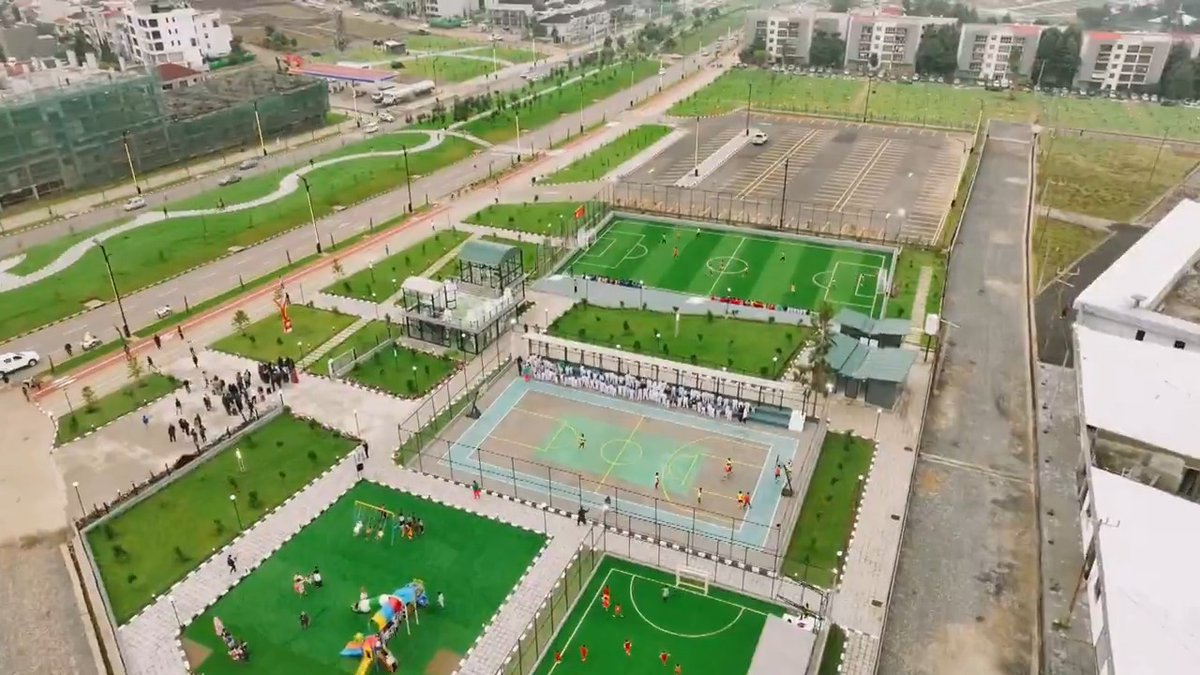
This morning, Prime Minister Abiy Ahmed and First Lady Zinash Tayachew, together with senior government officials, reviewed the newly completed CMC–Goro–VIP Corridor—a transformative project connecting the Addis International Convention Center to the Bole Airport VIP terminal. This newly developed two-way road network integrates with the Bole Airport connection road at CMC, creating a seamless link across a key section of the city. Spanning more than 290 hectares, the corridor extends for 12.74 km and 15.27 km of dedicated bike lanes. With five modern bus and taxi terminals capable, four large parking facilities and 17 designated loading and unloading bays, the project is easing congestion and improving transport efficiency. It also features underground electric and telecom lines, stormwater drainage pipes and new streetlights, ensuring modern infrastructure throughout. The corridor is not only about roads but also about liveability. More than 130 hectares of riverside areas have been developed into vibrant green spaces, complemented by various facilities. Over 320 buildings have been renovated, helping to uplift the entire area. The results are already visible. More than 350 new commercial shops have opened, business activity has surged, traffic congestion has eased, and public transport services have improved. The green spaces and riverside developments are creating a more pleasant and liveable environment for residents and visitors alike. #PMOEthiopia

Office of the Prime Minister - Ethiopia

234,985 просмотров • 11 месяцев назад