Video wird geladen...
Video konnte nicht geladen werden
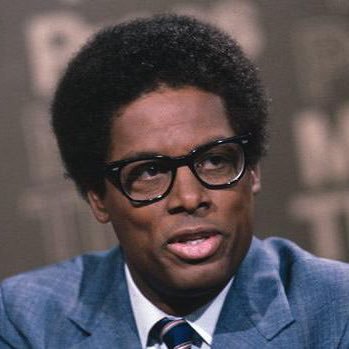
Thomas Sowell breaks down how most intellectuals think: “The best definition I’ve heard is from Hayek—he says an intellectual is a ‘secondhand dealer in ideas.’” “The vast majority of intellectuals don’t originate any ideas but they peddle ideas that other people have originated.” “That gives them a great deal... show more
60,655 Aufrufe • vor 3 Monaten •via X (Twitter)
0 Kommentare
Keine Kommentare verfügbar
Kommentare vom Original-Post werden hier angezeigt


![ELON: BY PUSHING FOR CENSORSHIP, THE LEFT SHOWS IT’S AGAINST FREEDOM “You can tell which side is the good side and which side is the bad side by which side wishes to restrict freedom of speech. The side that is restricting freedom of speech, that would have been the Hitlers, Stalins, Mussolinis of the world. They had very strong censorship, very strong restrictions on speech. That's one of the signs that they are the bad guys. In fact, restrictions on speech and large government are fundamentally fascist, obviously. So ironically, in pushing for censorship, it makes it very clear that the left is the side that is against freedom. And freedom of speech is simply one of many freedoms that we should have as a civil society. Because ideas should win on the strength of their arguments, they should not win because they suppress [other ideas].” Source: Interview with Matteo Salvini, April 2025](https://image.24vids.com/tw-1966371192614564058/amplify_video_thumb/1966343954221223936/img/sFbooLOAjLau6kNL.jpg)


![Mark Zuckerberg’s advice to 19 year olds that want to have an impact Even though Zuckerberg was 19 when he started Facebook, he advises not turning your idea into a company until it’s working: “I always think the most important thing entrepreneurs should do is pick something they care about and work on it, but don’t actually commit to turning it into a company until it’s working. If you look at the data of the very best companies, I think a tremendous percentage of them have been built that way and not from people who decided upfront that they wanted to start a company because you just get locked into a local maxima a lot of the time.” Sam Altman agrees. Facebook didn’t become a formal company until 6 months in when Peter Thiel invested. In fact, Mark and Dustin Moskovitz even told Peter that they were still planning on going back to school for their Fall semester. Paul Graham gives similar advice in his essay “Want to start a startup?”: “So if you want to start a startup one day, what should you do in college? There are only two things you need initially: an idea and cofounders… [and] the way to get startup ideas is not to try to think of startup ideas… if you make a conscious effort to think of startup ideas, the ideas you come up with will not merely be bad, but bad and plausible-sounding, meaning you'll waste a lot of time on them before realizing they're bad. The way to come up with good startup ideas is to take a step back. Instead of making a conscious effort to think of startup ideas, turn your mind into the type that startup ideas form in without any conscious effort. In fact, so unconsciously that you don't even realize at first that they're startup ideas. This is not only possible, it's how Apple, Yahoo, Google, and Facebook all got started. None of these companies were even meant to be companies at first. They were all just side projects. The best startups almost have to start as side projects, because great ideas tend to be such outliers that your conscious mind would reject them as ideas for companies.”](https://image.24vids.com/tw-1731300000263463224/ext_tw_video_thumb/1731299671857876993/pu/img/F7BVkskYPp6ECVS1.jpg)


