Loading video...

Video Failed to Load

Go Home

Those purchasing Treasury bonds and other government securities should exercise heightened due diligence. Kenya’s constitutional and public finance framework is clear: public borrowing is intended primarily for development purposes, and any such borrowing must go through proper parliamentary approval processes.
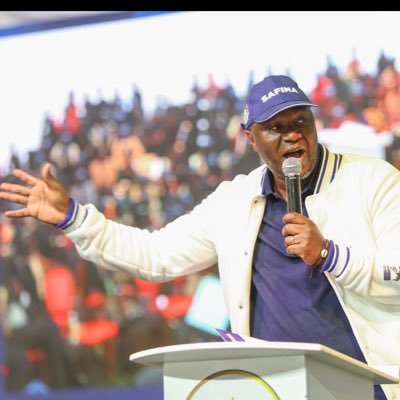
10,449 views • 1 month ago •via X (Twitter)

0 Comments

No comments available

Comments from the original post will appear here

Related Videos

For decades, the Kenyan people have been burdened by odious debts incurred by past regimes under questionable, and often despotic, circumstances. These loans, ostensibly taken for national development have instead been used to enrich a few corrupt individuals at the expense of millions of hardworking citizens. Today, Kenyans continue to suffer from economic hardship, high taxation, and dwindling public resources, all in the name of repaying debts that never served their interests. It is time we ask: Why should the citizens of Kenya (The sovereign) bear the burden of repaying loans that were never intended to benefit them? Why should those who facilitated these loans, only to siphon public funds into their private offshore accounts; walk free while the people struggle under oppressive economic conditions? We must also question the role of international financial institutions, such as the International Monetary Fund (IMF) and the WorldBank, which have continued to issue loans despite glaring evidence of corruption and mismanagement. These institutions cannot feign ignorance. Wire transfers leave digital trails. The looted money was laundered into known tax havens, and global intelligence agencies were fully aware of these transactions. Yet, loans were granted without due diligence, largely for political and financial gain, and often in direct violation of Kenya’s constitutional and legal requirements. Under Article 211 of the Constitution and Section 50 of the Public Finance Management Act,2012, all external borrowing requires parliamentary approval. Yet, successive regimes have sidestepped this legal requirement, indebting the nation without transparency or accountability. These unconstitutional debts must be thoroughly audited, and where illegality is found, the burden must not fall on the Kenyan taxpayer. We Demands: 1. A full public audit of Kenya’s external debt to determine which loans were acquired legally and which were fraudulent or unconstitutional. 2. Prosecution of individuals and institutions responsible for acquiring, facilitating, and looting these loans. 3. Recovery of stolen funds stashed in offshore accounts, with the money redirected towards national development. 4. A legal framework to prevent future reckless borrowing, ensuring full parliamentary oversight and public participation in debt management. This matter is not just about past injustices, it is about securing Kenya’s future. We will not allow future generations to be enslaved by debt accumulated through corruption and impunity. The looters must return what they took, and those who enabled these financial crimes must be held accountable. We call upon all Kenyans, civil society organizations, and international partners committed to transparency and justice to join us in this fight. We will not be silent. We will not stop until justice is served. #GetItDone #MasculinitySaturday

Okiya Omtatah Okoiti

118,630 views • 1 year ago

Impact After Term | 05 : Special Initiatives of the Finance Department | 01 : Special Task Force — Identifying & Recovering Unutilised Public Funds Even before assuming office as Minister for Finance & Human Resources Management, Dr. Dr P Thiaga Rajan (PTR) consistently advocated stronger accountability and efficiency in public finance management through his interventions in the Tamil Nadu Legislative Assembly, as a member of the Public Accounts Committee and as the Opposition MLA who regularly initiated the Assembly's general discussion on the Budget between 2017 and 2021. After the DMK Government assumed office under the leadership of Thiru. M.K.Stalin, one of the administration’s central priorities was ensuring that public funds allocated for welfare and development were efficiently utilised and properly monitored. In the 2021–22 Budget, the Government announced a Special Task Force (STF) to identify dormant and unutilised government funds parked in bank accounts outside treasury oversight. The STF undertook a large-scale reconciliation exercise involving government departments, public institutions, district administrations, and banks across Tamil Nadu. Alongside this, a dual-track survey and verification mechanism was introduced to systematically identify dormant and unutilised public funds across fragmented financial accounts and institutions, while also strengthening transparency and fiscal oversight. Within the initial phase itself, nearly ₹2,000 crore in idle public funds was identified and recovered. According to the Tamil Nadu Government’s 2026–27 Interim Budget, the STF has since examined nearly 11 lakh bank accounts and identified over ₹12,078 crore in dormant and unutilised public funds. Resources that had remained scattered and unmonitored across thousands of accounts were brought back into the public financial system, making them available for welfare programmes, infrastructure development, and other public investments across Tamil Nadu. — Admin Team

Dr P Thiaga Rajan (PTR)

24,318 views • 1 month ago

Today in the Dáil, I raised a question of public finance and public accountability. Ireland has transferred €269 million to programmes linked to Palestine and Ukraine. I asked one question only. How does the Government guarantee that this money reaches its intended recipients, is spent as approved, and is fully traceable from allocation to outcome. The Minister’s response was imprecise. He referenced charities and schools. He did not outline audit mechanisms, compliance controls, reporting structures, or consequences where standards are not met. That is not good enough when public money is involved. I have submitted a detailed set of Parliamentary Questions seeking clarity on governance, oversight, intermediaries, verification, and value for money. For context, €269 million could deliver almost 700 average three-bedroom homes in Ireland. This is not an argument against humanitarian assistance. Ireland should assist people facing war and humanitarian crisis. This is an argument for standards. Aid must be accountable. Funds must be traceable. Outcomes must be measured. Oversight must be explicit. It is also legitimate to ask a further question. When Ireland faces unresolved crises in housing, healthcare, disability services, and childcare, the public is entitled to an honest, evidence-based discussion about balance and priorities. That is not ideology. That is responsible governance. We owe compassion abroad. We also owe responsibility at home. Both must stand together.

Ken O’Flynn TD

13,596 views • 6 months ago