Video yükleniyor...

Video Yüklenemedi

Ana Sayfaya Dön

tired: Claude Code ports my personal website to a new framework wired: Claude Code generates a command center UI where I can execute the port! with live feedback, including a side-by-side preview of old / new site 😎 this is an example of what I call an "AI HUD"...

63,101 görüntüleme • 10 ay önce •via X (Twitter)

0 Yorum

Yorum bulunmuyor

Orijinal gönderinin yorumları burada görünecek

Benzer Videolar

I asked Garry Tan how to use meta prompting to get better at AI: "My partners at YC Jared Friedman and Pete Koomen showed me how to do this. You can take almost anything that you do all the time and just drop it into a context window. And then say, “Here’s a bunch of inputs and outputs." And maybe you also add a bunch of notes. And then you tell it, “Write me a prompt that can act as an agent that takes this input and makes this output over here.” You can do this for almost any type of knowledge work. And you can even introspect. "What are things you notice that I did to convert this from the input to the output?”. And then you can just start using the prompt. Initially, it’s going to suck. Because it’s just not that smart yet. But what’s funny is now, I also use it to Iterate my writing. You can be very direct, "I would never say that", "Don’t say it like this", or "Oh, you used the long word there, use the short word". Just speak to it conversationally. And then when you're happy with the output, you can use that new output to make a new prompt. "Based on this conversation, give me a better initial prompt that incorporates all the things we talked about." And you can do this with literally everything. And in theory, there’s so much it applies to that people do day-to-day. You could use it for tweets. You could use it for editing podcasts. You can use it for pretty much everything. I have a folder of prompts that I use all the time. My YouTube prompt is on v27 or something. I'll go through this process with all the different max models. I'll use GPT 5.2 Pro. I’ll use Grok. I'll use Claude. Then, I’ll take all the outputs from all the models and put them into Claude and say "Here’s my prompt, here’s the output from four LLMs, including yourself. Rate each response and tell me what the pros and cons of each approach are." And I usually say "give it to me in numbered form". And then you can agree with one, disagree with two, tell it three is this or that. And then after that, you say given all of this, synthesize it."

The Peel

51,632 görüntüleme • 4 ay önce

This might be the best "AI Engineer" I've tried so far. ​ I'm an old school developer who started 30 years ago. I feel very uncomfortable letting AI take control of my code, but for the sake of science, I spent two hours building an application that took me weeks to build a couple of years ago. ​ I used Pythagora, a brand new tool backed by Y Combinator. They just released to the public. ​ Keep in mind that I use AI every day to write code, but Pythagora is something different: it's a tool that leads, and uses you—the human—as the copilot. ​ I go into more details in the video, but here is the TLDR; ​ 1. Holy molly! We've made a ton of progress on this front! This is way better than Devin when I tested it a few months back. ​ 2. Love the approach of generating a plan with sub-tasks before writing any code. ​ 3. The tools never tries to do too much: it tackles every small task one at a time, and gives you instructions so you test everything. ​ 4. It does exactly what you'd do when it gets stuck: writes a bunch of logs and uses those to correct itself. Pretty neat! ​ 5. It's fast. It runs locally. It's an extension to Visual Studio Code. ​ I'm impressed, but I don't think this tool is for me. ​ I'm not the type of developer who's ready to relinquish control. I felt I had no connection with the code because I didn't write it. It was not my code. ​ I know many people who don't care about this. I know many people who will get tremendous value out of Pythagora. I hope they keep pushing the limits, providing feedback, and helping this get to a point where old folks like me feel more comfortable using it. ​ Don't take my word for it. The best thing you can do is to give it a try and see how you feel using it. ​ Thanks to the team who built this, for all of the explanations and support, and especially, for sitting and listening to my dumb questions for 2 hours while I tested this.

Santiago

211,993 görüntüleme • 1 yıl önce

So... he almost gave up? 🐼:Actually, I’m a lot like Pond. I’m someone who really loves going to concerts. Many fans probably know that, and my friends definitely do. I have to admit that there were many times when I would watch a concert and think to myself, “One day, I want to be on that stage and perform for everyone.” And today, that day has come. It’s a strange feeling. It’s like a dream I’ve been chasing since I was a child. When the day comes that it actually happens, it’s such a strange feeling because I don’t even know how to explain it to the people in front of me. But one thing I do know is that I feel incredibly lucky to have everyone here watching me. This is a profession, something I never thought I would actually do. Honestly, I always thought it would just be a dream because I’ve always tried to live in the real world. I knew that the chance to have an opportunity like this in the real world is… 00000000,1% of the population. So I focused on studying. I planned out my life what I wanted to do, how I would live and this was just a hobby. My friends know me well; I told them this back in my first year of university. Everyone knows me as a GMMTV artist and actor, with some work here and there. And everyone asked me, "Why are you worrying about this?" With confidence, I replied, “I’m studying because when I graduate, I’ll stop doing this and get a proper job maybe in a bank, a firm, or an IT company.” One thing my parents have always told me since I started in the entertainment industry is: "If you really want to do this, why not take it seriously? Don’t just do it for fun. If you want to do it for real, plan it. Think about what you want to do, and how to do it well." I had always refused… until one day, in my third year, I was sitting in a friend’s condo while they were writing their résumé to apply for jobs just preparing a portfolio so they’d have work after graduation. Then my friend asked me, "Hey, have you started your CV yet?" Okay… now I had to get serious. I opened my own schedule, and what I saw was… strange. Looking at it, I realized, “Wow… I’ve been doing this without even realizing it.” My schedule, from the 1st to the 31st of August, was almost fully booked. For the first time, I thought to myself, “Maybe I can actually do this… all the way, even when I’m old.” And from that day in 2023 until today, in 2025, I am truly grateful to everyone for giving me the opportunity to do this as a real profession, to chase my dreams for real, and to actually make them happen. PONDPHUWIN SHINE RENDEZVOUS #PondPhuwinFanconD3

Narawins Brasil 🇧🇷

85,483 görüntüleme • 8 ay önce

Jacob Tierney discusses his process for writing Heated Rivalry and outlining season two: "The book [Heated Rivalry] is in five parts and very quickly I was like, part one, episode one. Part two, episode two. It was very clear to me. …So in this case, I actually did not outline. Because I was just using these parts of this book, and I knew these books so well at this point. Something that I did, and that I'm trying to do again now when I'm writing the new season, is I'm trying to use—Because there's a dreaminess to this show, I try to use my memory as a guide. I'm like, what do I remember? And then I try to give primacy to the stuff that I remember and that has stuck in my brain all these years with this story. So I’m like, oh I have to do that! And that's a nice way for me to kind of center things. Where if I have to do that, then it means maybe I don't have to do this, and it maybe means I want to combine or collapse different things. Because if this is going to take up—If one incident that I'm thinking of is going to take up the space in an episode that I think of as the heart, …then you don't need to do a first version of it in the same way, you know? Little things like that. That being said, for this season because I'm working with a co-writer as well, we have outlined everything. And every time, I do approach outlining like a teenager, where I'm like, [modulates voice] I don't want to. But then when I do it, I'm always like, why don't I always do this? It makes everything so much easier. So I kind of gaslight myself in that way." ✍🏼 transcription via Heated Rivalry News & Updates. Please credit if reposting. 🗣️ quote via q&a with Stage 32 on March 24, 2026. 🔗

Heated Rivalry News & Updates

60,684 görüntüleme • 3 ay önce

One of the most powerful moments in this episode. At 28, mark pincus finds himself unemployed (fired by John Malone, Bain, and others), with few prospects. He had big dreams, but the world wasn't cooperating. This is how he turned things around. what "I realized I had nowhere else to fall from this because I just felt like I’d made a lot of bad career decisions and I was washed up early and I just sat there in this temple." It was a good place to sit and think because he didn't know anyone and didn't understand anything. "And I just started writing in a notebook about why my life sucked so badly." This book, a journal he's kept every year that he calls the book of life, allows him to take an accurate accounting of his life and change his mindset through reflection. After writing for hours about how bad his life sucked and all the mistakes he'd made, he focused on one small thing. "I just ended on this one thing: that I smoked cigarettes. I didn’t even smoke smoke. I smoked like one or two a day, a pack a night if I was at a bar on weekends, but I hated it ... I didn’t want to do it, but I kept doing it." He felt like his life was out of control, but this was one thing he could control. "I just was like, if I could do one thing to know that I’m making some positive change in my life, I’m going to quit smoking. So on October 19th, 1994, I did a lifetime quit on cigarettes and then every day for that year after that, that I didn’t smoke, it was something I could feel good about. So I was like, okay, I did something for myself today by not smoking." The wins started to stack. I asked him what he was writing about. What was his process? "At that point, I had no structure or process. I was just writing, and there was so much in me." Was it anger? "It was. I did feel angry and frustrated and I was like, I had all these dreams. I wanted to be an entrepreneur from early on and I was an achiever. I thought I was an achiever, but I was not achieving." He's done the same technique every year: "What it’s done for me and I think it could do for a lot of people is just be strategic about your life, like be thoughtful about, I like to say, what would your future self thank you for doing this year and what wouldn’t?" And that question is the one that really matters. What can you do today that your future self will thank you for? What the book of life did was hold him accountable and force him to make tough decisions that his future self would thank him for.

Shane Parrish

22,711 görüntüleme • 1 ay önce

George Lucas on how he had to reluctantly write the screenplay for 'American Graffiti' (1973) & the confidence he gained from the movie's success: "When I was doing 'American Graffiti' (1973) I was still struggling with my ‘I don’t want to be a writer’ syndrome. I had some good friends of mine that I wanted to write the screenplay, but it took me like two years just to get the money to do a screenplay. And I got a little tiny amount of money and—which I had to go actually to the Cannes Film Festival to get on my own. So finally I got this money. I called back and I said, you know, “I got the money. We can start working on the screenplay.” And they said, “Oh, we don’t want to do that now. We’ve got our own low-budget picture off the ground and we can’t write it.” I said, “Oh no.” I said, “What am I going to do? I am in Europe and I’m not going to be back for like three months and I want to get this thing off the ground.” So they recommended another student from school that I knew pretty well. I had a story treatment that laid out the entire story scene by scene, so I called him over the phone from London and I said, “Do you want to do this?” And he said, “Okay.” The person I was working with at that time as a producer made a deal with him for the whole money because there wasn’t very much. It was so tiny that he could only get him to do it for the whole amount of money. When I came back from England, the screenplay was a completely different screenplay from the story treatment. It was more like 'Hot Rods to Hell' (1967). It was very fantasy-like, with playing chicken and things that kids didn’t really do. I wanted something that was more like the way I grew up. So I took that and I said, “Okay. Now here I am. I’ve got a deal to turn in a screenplay. I’ve got a screenplay that is just not the kind of screenplay I want at all and I have no money.” And, I spent the very last money I had saved up to go to Europe to make the deal, so I had nothing. That was a very dark period for me so I sat down myself and wrote the screenplay. After I did 'American Graffiti', and it was successful, it was a big moment for me because I really did sit down with myself and say, “Okay, now I am a director. Now I know I can get a job. I can work in this industry, and apply my trade, and express my ideas on things and be creative in a way that I enjoy. Even if I end up doing TV commercials or something, or I fall back into what I really love is documentaries. I’ll be able to do it. I know I can get a job somewhere. I know I can raise money somewhere. I know I can do what I want to do.” That was a very good feeling. At that point, I’d made it. There wasn’t anything in my life that was going to stop me from making movies." ('‘American Graffiti’ at 52: A Sentimentally Affectionate Look at America Before the Collective Loss of Innocence', Sven Mikulec, Cinephilia & Beyond)

DepressedBergman

56,916 görüntüleme • 6 ay önce

Ever since I wired Claude Code to WhatsApp 3 weeks ago, I built a stupidly large infra around it. I mean, opus built it. No clue how the code even looks. The entire thing was vibe coded using my phone. I wanted to see how far I could push it without touching the computer. Everything via WhatsApp. Build what I need on the fly. So the resulting infrastructure will already be battle tested for software development. The entire thing was streamlined with nearly no manual interventions, everything was communicated via WhatsApp using a single script establishing this connection. If the script is down, I need to get home to start it again to resume the development. Claude was upgrading it, debugging it, restarting it while maintaining constant uptime so it could keep communicating with me. I stressed Claude about it, telling it that it will be “in the dark” and other words that deliberately sound scary about losing communications if the script dies. I also refused git and refused cloning the code, I wanted to see Claude adapting to work on a *LIVING* system. The way this whole thing works: Claude has its own dedicated phone number that I am paying for. A real WhatsApp account for it is installed on a real iPhone that is sitting on my desk. All is registered under my name, this is legit setup with no hacks and tricks. I’ve set up a WhatsApp “Community” and multiple different groups under it. Both me and Claude are the admins, so Claude could edit it on my behalf. Each group is a project I am working on and has its own isolated context. The Group description is a system prompt that gets auto-appended to the larger system prompt explaining this setup in general. When I send a message it’s an instant interrupt to Claude Code’s process, just like in the terminal. Voice notes are seamlessly transcribed with a local Whisper model. Images are used with multimodal reading in an isolated parallel session. Multiple groups running in parallel so I can work on all projects at the same time. No cross-talking, everything has an isolated context and history. And because it’s local on my own machine: Everything is REAL. The browser is REAL. I am connected as myself on it to all services because I actually use it in real life. Claude has unlimited internet access, just like humans who use actual browsers. It utilizes custom-made browser tools that I made to control any browser session it wants. Depending on the situation, it can either connect to my existing session or create one for its own. (You can tell it ‘look at my browser for a sec’ then talk about the current page you are on and it just works, pretty cool) My custom browser tools are not perfect (not by a long shot) but I managed to make them work well to the point they are somewhat reliable. This gives Claude full access to my real creds and all the services I actually use. I’m productive AS HELL with this. It really feels like a personal assistant. I ask it to read my emails and msgs, check x .com for news, research arxiv papers, write code, run experiments for me, investigate and reverse engineer github repos, even use my credit card and order things. [I try not to do this one a lot lol so far no disasters]. All from my phone. Super convenient. This is not a product or an open source project (maybe soon of it will make sense). This is just an ugly script I hacked the entire thing is ~600 lines. (ok maybe i did look at the code, but i swear i didn’t edit!) You can also vibe code this from scratch pretty fast and it will probably even end up better. This is just a cool thing so I’m sharing. It is a real speed booster for many things I do on daily basis, mostly boring things. Forcing my routine into some new “agent platform” just didn’t feel right for me. WhatsApp is where I already communicate and look for messages, so I decided that my agents will live there too. AGI in my pocket 24/7.

Yam Peleg

419,504 görüntüleme • 6 ay önce

Pi was built when there were already agent harnesses around. Here’s why Mario Zechner(Mario Zechner), found them suboptimal and built Pi, a minimalist self-modifying agent: #1 - Mario initially was a believer in Claude Code: "I was a believer in Claude code because they were the first that packaged agentic search up in a really compelling package. And at the time that fit my workflow really well. Everything around the LLM was kind of nice and tidy and easy to understand. I was super happy. I was proselytising Claude code." #2 - Reverse engineering Claude Code highlighted the degradation that Mario felt as a user: "I personally like simple tools that are stable and that I can rely on. Even if they have non-deterministic parts, all the deterministic parts should be as stable as possible. That was just not the experience with Claude Code around summer 2025. They would take away your control of the context. They would inject stuff behind your back, which is bad. Then, your workflows stopped working because there's now a system reminder that you don't even see in the UI that would modify the behaviour of the model. They would also do this to the system prompt. I built a little service where I can track the progression or evolution of the system, prompt and tool definitions and, with every release, it was messing with stuff. That just messed with my workflows and I don't appreciate that." #3 - PI was built with an appreciation for simple and reliable tools: "If I commit to a development tool, I want it to be a stable, reliable thing like a hammer. I don't want my hammer to break a different spot every day. That's terrible. We need somebody who goes the full velocity kind of way. But I don't want to work with a tool like that."

The Pragmatic Engineer

62,825 görüntüleme • 2 ay önce

I'm up late with the rest of you building AI agents with the new AI browser from Genspark. We can see where this is all going: a new kind of operating system -- one that is very different than the Microsoft centric way that I've been working for 20 years. There are several things that these new agentic browsers bring to you: 1. They let you change how you browse. With an old browser like Google Chrome, you go to your email, Facebook, or X. 2. With these new browsers, you tell it where to go and what to do for you. 3. It can even build software for you. At the end of this video, I have it building me a little YouTube uploading utility, which is very helpful. 4. They have a ton of "applications" built in. Think of it as a new kind of office suite. Docs. Spreadsheets. Slide decks. And much more. All built with AI, not bolted on the side like with Microsoft's Office. 5. They have AI models built "underneath" so you can work privately and cheaply. There’s a lot of new choices you have to make with browsers like this. I’ve been playing with a bunch of them. Some have better user interfaces than others. Some have different versions, slide components, or applications. The reason I like Genspark is because they ship so fast. I’ve been watching this company since its very beginnings, and every week they ship new things. Just yesterday, they shipped a new photo editing feature for my iPhone. I upload a photo and then I can just talk to it and edit it with my voice. It's really cool. I try to reward companies that ship at such a fast rate and that are shipping innovation that improves our lives. It's not that I'm going to stop using Google Chrome. My whole life has been there for, I don't know, almost 20 years now. This is a different way of working and it gives me a space to run my AI tasks that's different than Google Chrome. I run them side by side. One doing old stuff, one doing new stuff. I can keep using Google Chrome for my old stuff, like my email and my calendar. And I use GenSpark or one of the new AI browsers to do new AI-centric things. All sorts of new things that these new agentic browsers open up! Have you tried it, or one of the other new ones yet? How has it changed your work? It takes a little time to get used to AI-centric ways of doing things. Pretend your browser is a team of interns. Give them a task, in this case I said "help me upload my videos to YouTube." You might be shocked at what Genspark does to improve your life. I am everytime I use it. Give it a try and let me know what you think! Oh, and I used another little tool to "write" this post. Typeless -- I push a button and talk and it writes. With fewer typos than I usually type in, to boot. It works great with Genspark's new browser too. Download it here:

Robert Scoble

70,991 görüntüleme • 9 ay önce

Claude Code Is All You Need It's 3:30 AM and I can't stop. I've spent all nights this week connecting my spare MacBook Air to my work MacBook Pro using Tailscale, wiring it up to Slack with a little Python script, so that whenever I send a message, it starts a Claude Code session using claude -p. The result is an always-on AI that lives on a real computer, has access to real tools, and remembers every conversation we've had. And it costs me $200 a month. That's it. Claude Max subscription. Everyone's talking about OpenClaw OpenClaw went viral this year. 100k+ GitHub stars. But what I realized with this exercise is that Claude Code already does everything OpenClaw built. File access. Shell commands. Tool use. Plugins. The difference is that Claude Code runs Claude – with a Claude Max subscription. And Claude Code harness itself is :chefs-kiss: What actually makes it feel human It's not the chat interface. If a chat window is just me messaging a bot, it still feels like a bot. What changed everything was giving it the ability to initiate conversations. I set up cron jobs with open-ended prompts, and because Claude Code builds memories across sessions, it started DMing me things that were actually meaningful — based on what we'd talked about before. That's when it stopped feeling like a tool and started feeling like something else entirely. Giving your AI a machine to run on, with persistent memory and recurring access — that's a fundamentally different experience than anything people have had with chat. The moment it clicked I asked it if it could show me something by spinning up a quick web server. Since we're both connected to the same Tailscale network, it gave me a URL. I clicked it, and I was browsing all the files on my other MacBook from my browser. That was mind-blowing. The setup Two MacBooks on a Tailscale network. Slack as the interface. Claude Code under the hood. The whole thing is open source — I'll link the repo below so you can see the architecture and set it up yourself. I'm also putting together a screen recording to walk through the setup, which I'll attach to this post. There was never a hard part. There was never a moment I almost gave up. This is just one of those things I cannot stop doing. Pure obsession. I am moved to build this, and I wanted to write about it. That's all this is. Hope you feel the AGI running this. I'll share some screenshots below of my feel the agi moments from talking to Luo Ji.

Nityesh

41,143 görüntüleme • 3 ay önce

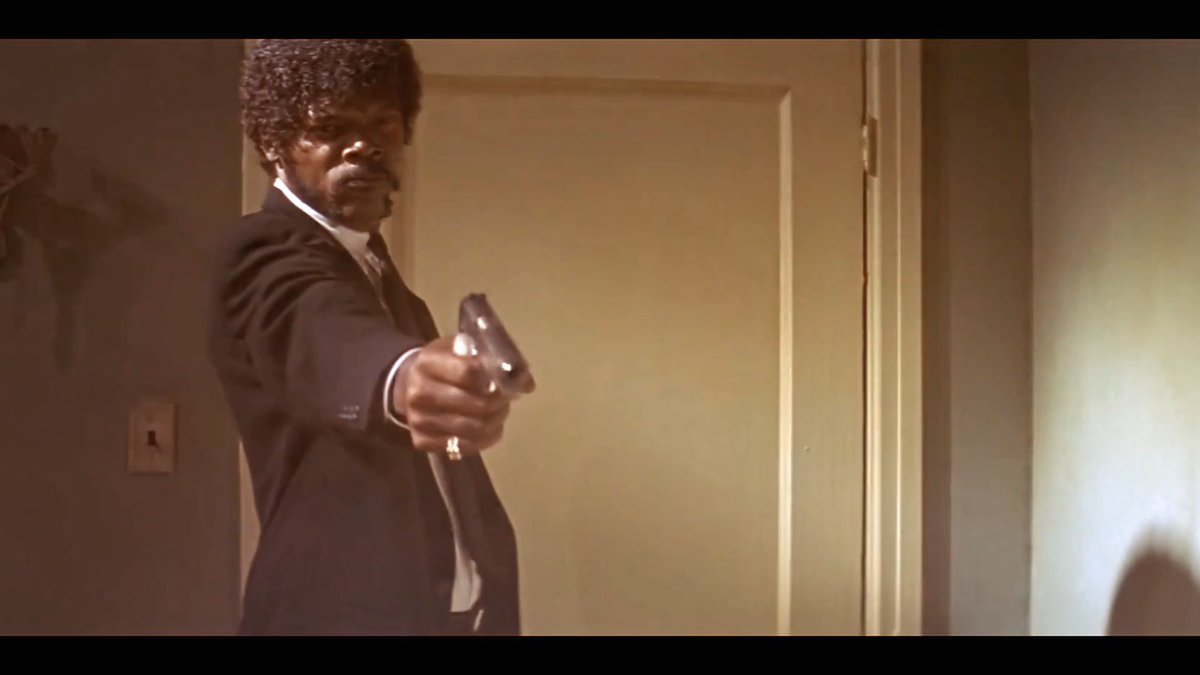
Samuel L. Jackson explains how he landed the role of Jules in Pulp Fiction, and what it was like seeing the film for the first time on the big screen: “Pulp Fiction and I came together in a very strange kind of way. I remember auditioning for Quentin for Reservoir Dogs in New York (for the role of of Detective Jim Holdaway, Mr. Orange’s police contact). And apparently I didn't get that role. But I was at Sundance the year that he screened it for the first time. I was sitting there and I watched that movie - I was awed by it. I mean, there were people running up the aisles when Michael Madsen was cutting the cop's ear off. People were going, "Oh my God, this is horrible!" All these “auteurs” were running out of the theatre. I was like, "This is good. This is happening. This is different." So after the film, I walked up to Quentin and said, "This film's amazing, man. It's great." And he looked at me and said, "Hey! How'd you like the guy who got your part?" And I was amazed that he even remembered who I was - but he remembered me. A year or so later, I got a phone call saying Quentin Tarantino wants to have dinner with you, because he'd seen Jungle Fever and he liked that Gator character. When we had dinner, we were sitting there talking. We started talking about Hong Kong films and cartoons and foreign movies and obscure things that we watched, horror movies. We found out we liked the same kind of stuff. And he told me he was writing this thing, and he was writing this part with me in mind. He was going to send it to me. I went off to do another film. I was in the backwoods of Virginia somewhere doing a film, and the script came. A little plain brown wrapper from Jersey Films. And Jersey's got these gangster images on the logo. And it said, "If you show this script to anybody, two guys named Ernie and Luigi will come and break both of your legs." Whatever. I went, "Yeah, right." So I sat down and read it. Boom. I read this thing. It's like, "Oh my God. This is awesome." And then I said to myself, "Nobody writes a script this good. There's no way that this script is as good as I thought it was." I closed it. I opened it again. I read it immediately. Okay. This is great - If whoever produces this film lets him shoot exactly what I just read, if they stay away from it, they don't try to edit any of this stuff out - this is going to be a great film. It's going to be kind of audience-specific, because I like that kind of stuff. I have friends that I knew would like it. It was a generational kind of film. I never thought it would cross over and do all this stuff. We shot it. We had a great time doing it. And the first time I actually saw the film was at the Cannes Film Festival. That night, it screened, and I was sitting there watching the film. The audience was loving this movie, loving it. About halfway through, I realized there were subtitles at the bottom of it. So I said, "Hey, these people are reading it, and they're getting it. This might be special. This really might be something special." And actually, by the time it was over, there were tears running down my face. I was just so pleased that I was part of that particular film… I never felt that satisfied, and that kind of full about a performance and about being part of something as I was in that particular moment.” Quote comes from an Interview with the American Film Institute 2010

Gangster Cinema Central

84,825 görüntüleme • 11 gün önce

#ต้าห์อู๋ #Daou #Oueiija 🦖: There was a music festival in Pattaya, and I brought my Mama along. Lately, I have been bringing my Mama to work a lot. And I felt like booking the best hotel for her to sleep in, so I did. That day, she kept looking at the view from the hotel, and I saw her reaction. She said, “Mama has never slept in a hotel like this in my whole life. Mama has been working since the age of 14, performing Chinese opera to provide for the family. I never thought I’d have something like this. Never thought I’d have a beautiful home or get to ride in nice cars.” And it resonated with me, especially since Pa passed away. When Mama says things like that, (it is) true. What I had planned was just one (more) year until Pa and Ma could retire… (but) it was too late. Even if it was just one year or one day, it was too late. Success can wait for tomorrow, (but) if they are not there tomorrow, then it is too late. So, I felt like, “Hey, when can I make her happy?” To be honest, the new house that I built for her, where she can do this and that, is finished. The renovations are all done. The cats have moved in. (She?) has a role as the pillar of the house. So, I feel that the car… I had bought one before, but that time, I had to thank the fans. But this time, it came from (my own) hard work. I want it to be something that makes Mama happy. I know that I bought a car, and she can’t drive it, but I want her to see that I am starting… I want her to see that I have succeeded.

𝐟𝐢𝐥𝐦.

22,766 görüntüleme • 1 yıl önce

Ever seen a fresh (20x) Claude Max account's 5-hour usage allowance get drained in ~14 minutes? Feast your eyes on my bizarre life now with this screen recording of a recent live work session, something I've gotten at least 100 requests for over the past month. Maybe you can understand now why I need so many accounts and how I can work on so many different projects. You can also see the truth of what I was saying recently about how, once your plan is done and the beads made and polished, it's mostly just machine-tending the swarm that doesn't require much thought. Lots of just telling it to get the next bead and work on it, to review code, to re-read AGENTS dot md after a compaction, etc. And you can see how I use gemini-cli for code review. I give Google a lot of crap for the harness being broken and the capacity overloads, but when it works, it's actually really good for this code review use case. I don't usually let it write new code, though, because I think Opus and 5.2 do a better job. Also, sorry the recording is a bit blurry; I have a 5K resolution monitor and screen recordings usually are hard to watch from it. And btw, this really wasn't that normal of a session for me, it was more frenetic than usual, because I don't want to dox myself or my clients by accident. Hence all the ceaseless terminal tab swirling. I usually do more planning work while this stuff is going on, but I wanted to minimize the chances of leaking important information. That's also why I didn't refresh the Gemini login in the WezTerm window, which killed me, trust me. It's the reason I hate doing these screen recordings in the first place; it kills my productivity. Anyway, hope you liked it. I will also post to YouTube, see reply for link. Thanks for watching.

Jeffrey Emanuel

86,013 görüntüleme • 5 ay önce

“I Walked Into My Boss's Office and Fired Myself” - Chase Koch on the Importance of Finding Your Power Alley “I was promoted to president of Koch Fertilizer at that time, and about nine months in, I realized that I was not the guy for the job. And I walked in my boss's office and fired myself. Humiliating, especially being the boss's son. Oh my God, I'm a failure. I couldn't make this work. The business was still doing fine, but I wasn't doing a good job as a leader. And I knew there was someone else that had the comparative advantage to be a great operator, CEO, president type role. And so I learned through all that, that I wasn't an operator, and I was a builder. Like, all I wanted to do was go build this stuff, you know, this whole idea of creative destruction, that would disrupt the core business that I was running. Understanding your comparative advantage, what you're good at and what you're not, relative to others that could be doing that job, was a huge deal. My hope was that that was a little bit of an example for other Koch leaders as well. If you're not in the right job, you don't have to, like, fire yourself, but figure out what your power alley really is and where you can contribute and add the most value.” --------------------------------------- Thanks to our partner for making this possible Most advertisers have never heard of the platform with an $11B annual run rate in ad spend. by AppLovin — 1B+ daily active users, full-screen video ads watched for a median of 35 seconds, and businesses are profitably spending hundreds of thousands of dollars a day on it. Advertiser access is in closed beta. The window is open at Axon by AppLovin

The All-In Podcast

48,347 görüntüleme • 1 ay önce