Video yükleniyor...
Video Yüklenemedi
Today we release Rhaister, an elegant statistical model that predicts drug phenotypes in new contexts w/ accuracies comparable to experimental assays. And dropping Emerald Bay, a 2M cell dataset measuring long time-course phenotypes across 1000s of drug-cell line interactions.

63,283 görüntüleme • 2 ay önce •via X (Twitter)
0 Yorum
Yorum bulunmuyor
Orijinal gönderinin yorumları burada görünecek


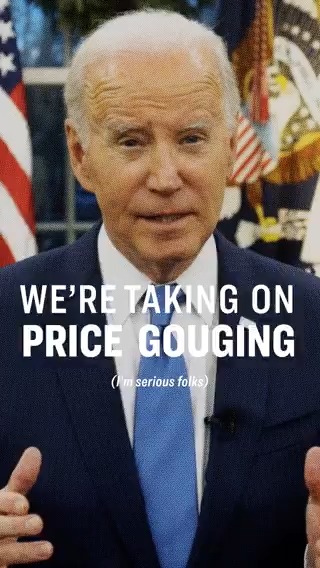
![BREAKING: President Donald J. Trump just signed an executive order implementing Most Favored Nation prescription drug pricing — which will deliver dramatically lower drug prices for the American people. Here's what it does: REDUCING DRUG PRICES FOR AMERICANS AND TAXPAYERS: Today, President Donald J. Trump signed an Executive Order to bring the prices Americans and taxpayers pay for prescription drugs in line with those paid by similar nations. — The Order directs the U.S. Trade Representative and Secretary of Commerce to take action to ensure foreign countries are not engaged in practices that purposefully and unfairly undercut market prices and drive price hikes in the United States. — The Order instructs the Administration to communicate price targets to pharmaceutical manufacturers to establish that America, the largest purchaser and funder of prescription drugs in the world, gets the best deal. — The Secretary of Health and Human Services will establish a mechanism through which American patients can buy their drugs directly from manufacturers who sell to Americans at a “Most-Favored-Nation” price, bypassing middlemen. — If drug manufacturers fail to offer most-favored-nation pricing, the Order directs the Secretary of Health and Human Services to: (1) propose rules that impose most-favored-nation pricing; and (2) take other aggressive measures to significantly reduce the cost of prescription drugs to the American consumer and end anticompetitive practices. GETTING A BETTER DEAL FOR AMERICANS: President Trump is once again taking action to keep pharmaceutical manufacturers from charging Americans high drug prices while giving steep discounts to other wealthy nations. — According to recent data, the prices Americans pay for brand-name drugs are more than three times the price other OECD nations pay, even after accounting for discounts manufacturers provide in the U.S. — The United States has less than five percent of the world’s population, yet funds roughly 75% of global pharmaceutical profits. — Drug manufacturers discount their products to gain access to foreign markets and then subsidize those discounts through high prices charged in America—in essence, Americans are subsidizing drug-manufacturer profits and foreign health systems, despite drug manufacturers benefiting from generous research subsidies and enormous healthcare spending by the U.S. Government. — In his first term, President Trump took historic action to keep Medicare and seniors from paying more for drugs than economically comparable countries, which the Biden Administration rescinded before it could take effect. — Instead of fixing this problem, the Biden Administration’s greatest achievement was to negotiate prices that were, on average, 78 percent higher than in 11 comparable countries as part of Biden’s effort to “beat Medicare.” DELIVERING ON PROMISES TO PUT AMERICAN PATIENTS FIRST: President Trump is delivering on his promise to once again put America first by furthering efforts to get American patients and taxpayers a fair deal for prescription drugs. — This Order builds on actions from President Trump’s first term to make progress on reducing price disparities at home and expands those efforts by including Medicaid in addition to Medicare. — President Trump recently signed an Executive Order to take additional action to lower drug prices, including by providing massive discounts to low-income patients for lifesaving medicines, facilitating importation programs, and increasing the availability of generic and biosimilar medicines. — President Trump is also working to make drug prices radically transparent, as he recently signed an Executive Order to build on his historic price transparency efforts undertaken during his first term. — President Trump has been relentless in his effort to address the unfair and outrageous prices Americans pay for prescription drugs: — President Trump: “In case after case, our citizens pay massively higher prices than other nations pay for the same exact pill, from the same factory, effectively subsidizing socialism aboard [abroad] with skyrocketing prices at home. So we would spend tremendous amounts of money in order to provide inexpensive drugs to another country. And when I say the price is different, you can see some examples where the price is beyond anything — four times, five times different.”](https://image.24vids.com/tw-1921942976441282659/amplify_video_thumb/1921942886045638656/img/VvlkCcqnPg8pVYNe.jpg)


