Загрузка видео...

Не удалось загрузить видео

На главную

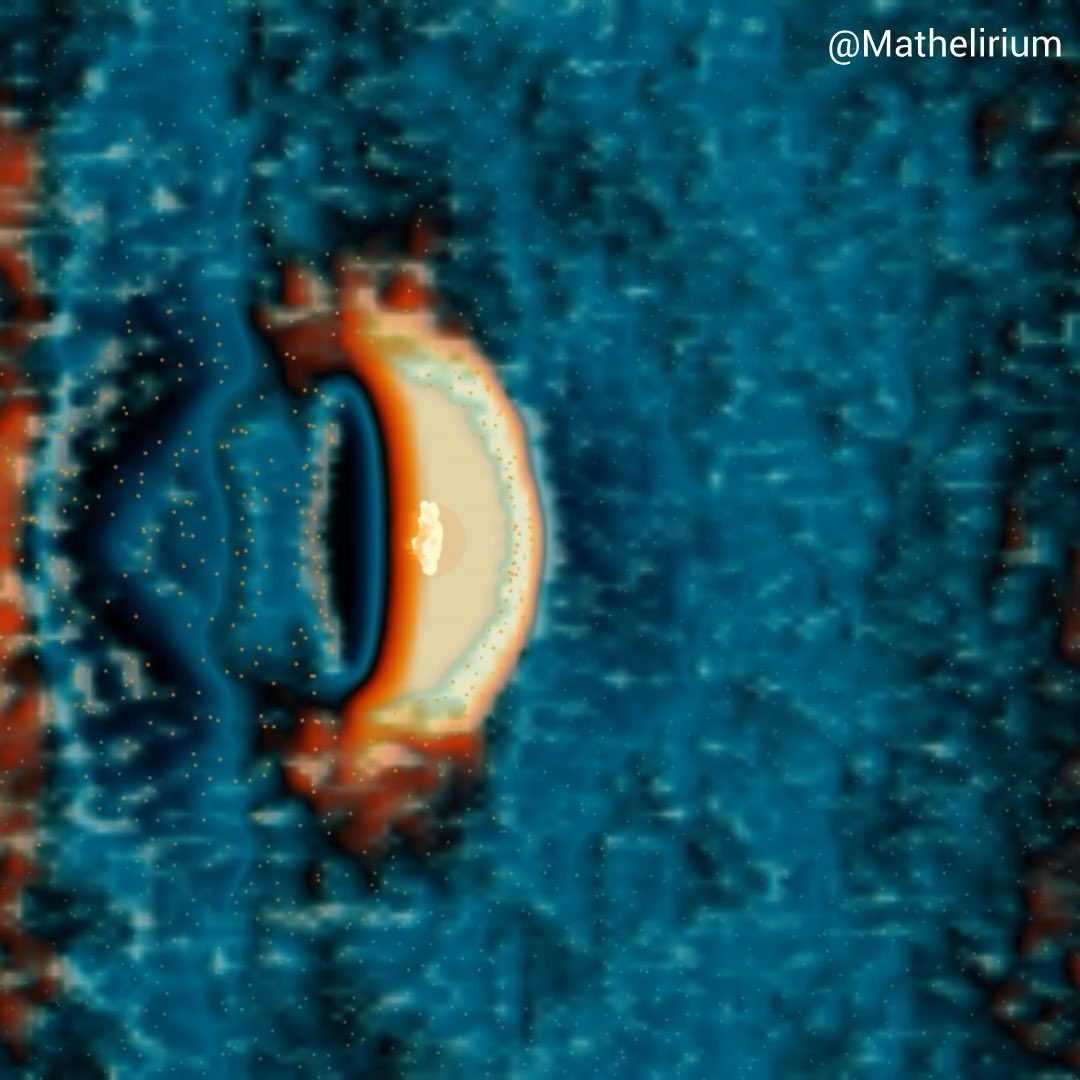
Together with UC Berkeley we are announcing the laser phase plate - a breakthrough in atomic resolution imaging. This is the brightest continuous wave laser in the world, 100 million times the intensity of the surface of the sun. Phase contrast plays an important role in microscopy, but it...

654,903 просмотров • 1 месяц назад •via X (Twitter)

Комментарии: 0

Нет доступных комментариев

Здесь появятся комментарии из оригинального поста

Похожие видео

PHOTON COUNTING CT is NOT a better CT It is a NEW imaging modality Photon Counting CT (PCCT) represents a transformative leap in medical imaging, not only as a molecular imaging modality but also as a technology offering ultra-high resolution and functional imaging capabilities. It is fundamentally more than just an enhanced version of traditional CT—PCCT introduces new ways of seeing and understanding the human body, providing critical insights at the molecular, structural, and functional levels. This positions PCCT as a unique imaging modality that requires a fresh approach to technical implementation, operational workflows, and financial planning. Despite the larger upfront investment, PCCT’s ability to drastically reduce downstream healthcare costs makes it a highly valuable investment in the long run. 1. Technical Innovations • Molecular Imaging and Energy Discrimination: Unlike traditional CT, which simply measures the total absorbed energy, PCCT counts individual X-ray photons and differentiates their energy levels. This allows for precise molecular imaging, revealing the composition of tissues and materials at a biochemical level. By distinguishing between different tissue types and contrast agents, PCCT opens up new diagnostic possibilities, such as identifying molecular biomarkers in tumors or distinguishing between stable and unstable plaque in coronary arteries. This capability shifts the focus of imaging from purely anatomical to both anatomical and molecular, offering more comprehensive diagnostic information. • Ultra-High Spatial Resolution: PCCT features significantly smaller detector elements compared to conventional CT scanners, allowing for ultra-high resolution imaging. This means clinicians can visualize fine structures such as microcalcifications in arteries, small lesions in soft tissues, or the intricate architecture of bones. This level of detail was previously unattainable with traditional CT. When combined with molecular imaging, this ultra-high resolution allows for the precise localization and characterization of disease at very early stages, which is essential for early diagnosis and intervention. • Functional Imaging Capabilities: PCCT also excels as a functional imaging modality. By capturing energy-resolved information, PCCT can provide insights into tissue functionality and dynamic physiological processes. For instance, it can detect changes in blood flow, tissue perfusion, and oxygenation without the need for additional contrast agents or scans. This functionality allows for real-time assessment of physiological processes, making it particularly valuable in cardiology, oncology, and neurology for evaluating organ function and monitoring disease progression. • Reduced Noise and Artifact Reduction: Photon-counting technology dramatically reduces electronic noise and imaging artifacts, such as beam hardening, resulting in clearer and more accurate images. The ability to deliver ultra-high resolution images with minimal artifacts improves diagnostic accuracy, reducing the need for repeat scans and ensuring that even subtle abnormalities are detected. 2. Operational Considerations • New Workflow for Molecular, High-Resolution, and Functional Imaging: The integration of molecular, ultra-high resolution, and functional imaging into routine clinical workflows introduces complexity that requires adaptation. Radiologists and technicians need specialized training to interpret and analyze multi-energy datasets that include molecular and functional information. PCCT produces a vast amount of detailed data, requiring clinicians to adopt new imaging protocols and refine their diagnostic approaches to fully leverage its capabilities. • Post-Processing and Data Management: PCCT generates richer, more complex datasets, which necessitates advanced post-processing tools and data management systems. Existing PACS and imaging software may not be equipped to handle such large volumes of data or to process functional and molecular information effectively. This means healthcare institutions must invest in robust IT infrastructure, including upgraded software and storage solutions, as well as provide additional training for staff on new imaging analysis techniques. • Revised Clinical Protocols: The molecular, functional, and ultra-high resolution imaging capabilities of PCCT will likely prompt changes in clinical protocols. For instance, the need for contrast agents may be reduced, simplifying patient preparation and decreasing the risk of adverse reactions. Additionally, the ability to monitor physiological functions in real-time through functional imaging could lead to more dynamic diagnostic procedures, such as assessing the effectiveness of interventions or treatments in real-time. 3. Financial Impact • Higher Initial Investment: PCCT systems are more expensive than traditional CT scanners due to their advanced technology, which includes photon-counting detectors and the computational power required for high-resolution, molecular, and functional imaging. While this upfront cost is significant, it is crucial to view it in the broader context of the downstream benefits and cost reductions that PCCT offers. • Downstream Cost Reductions: Although the initial capital investment is higher, PCCT’s ability to combine molecular, functional, and ultra-high resolution imaging leads to substantial reductions in downstream healthcare costs. Its superior diagnostic accuracy minimizes the need for follow-up tests, repeat scans, or invasive diagnostic procedures, such as diagnostic coronary angiographies. For example, in cardiology, PCCT can precisely differentiate between types of coronary plaque, reducing the need for invasive procedures to assess risk. • Lower Overall Healthcare Expenditures: By enabling earlier, more accurate diagnoses, PCCT can reduce the overall cost of patient care. Early detection of disease, particularly through its molecular and functional imaging capabilities, allows for more targeted treatments, potentially preventing the need for more aggressive and expensive interventions down the line. For instance, early-stage tumor detection via molecular imaging could lead to less invasive treatments, reducing hospital stays and improving patient outcomes, ultimately driving down healthcare costs. • Increased ROI Through Enhanced Patient Outcomes: Over time, the combination of molecular, functional, and ultra-high resolution imaging enhances diagnostic precision, which translates into better patient outcomes. Improved diagnostic accuracy reduces the incidence of unnecessary procedures, minimizes treatment delays, and results in more personalized and effective care. This leads to increased patient satisfaction, better healthcare outcomes, and greater patient throughput—all factors that improve the institution’s return on investment (ROI). • Competitive Advantage and New Revenue Streams: By adopting PCCT, healthcare institutions position themselves at the forefront of advanced imaging technologies. The ability to offer molecular, functional, and ultra-high resolution imaging creates a competitive advantage, attracting more complex and high-value cases. This can boost the institution’s reputation for excellence in diagnostics, leading to increased referrals, new patient populations, and expanded revenue opportunities. Summary Photon Counting CT (PCCT) is not just an evolution of existing CT technology—it is a molecular, ultra-high resolution, and functional imaging modality that fundamentally transforms the diagnostic landscape. Its ability to capture detailed molecular data, visualize minute anatomical structures with ultra-high resolution, and provide real-time functional imaging opens new possibilities for earlier and more precise diagnoses. While the financial investment in PCCT is larger, the reduction in downstream healthcare costs through improved diagnostic accuracy, fewer unnecessary interventions, and earlier disease detection far outweighs the initial expense. For institutions committed to advancing patient care and improving long-term financial outcomes, PCCT is an essential investment in the future of medical imaging. The video attached shows a patient accessing the Hospital for ACS. PCCT can provide ALL the imaging information of the concurrent imaging modalities (CXR, CAG, Echo, CMR) that you see around it... that's a lot! #PhotonCountingCT #MolecularImaging #UltraHighResolution #FunctionalImaging #FutureOfImaging #AdvancedMedicalImaging #EarlyDiseaseDetection #InnovativeCT #CuttingEdgeHealthcare #PrecisionDiagnostics #HealthcareInnovation #MedicalTechnology #CostEffectiveImaging #NextGenCT #PatientCareRevolution

Dr. Filippo Cademartiri

11,820 просмотров • 1 год назад

This is a Kinesin Molecule. These little molecular machines are commonly referred to as the "workhorse" of the cell, hauling important cargo like organelles, proteins and other cellular structures to their proper location within the cell. Kinesins are very clear & undeniable evidence of the intelligent design in Life. Kinesins are complex molecular machines, made up of 4 total proteins, each between 500-1,300 amino acids in length. If these aa sequences are not perfectly aligned from the beginning, Kinesin never forms, and cellular life would be unable to survive. Here is how they work: When a new protein, organelle, or other cellular structure is created in the Cytosol of the cell, they are constructed with built-in "binding tags," which are like shipping labels that bind to other protein molecules called Adaptor or Scaffold Proteins. These Adaptor/Scaffold Proteins then attach to the Kinesin's tail, which activates them, and then the Kinesin is guided along the microtubule track to its to its final destination. Kinesin walk on self-assembling tracks of other proteins, called microtubules, moving cargo from the inner area of the cell where they are constructed to the outer edges where they function. This is a complex & sophisticated interdependent network of molecular machines, all relying on one another to function properly for the health of the cell. This Intracellular Transportation system MUST be fully functional from the beginning - with all these working parts, or all of it fails, and the cell dies. Without this entire functioning system, Life could not exist. And the Kinesin is the centerpiece to all of it. Experiments have shown that disrupting Kinesin activity has catastrophic consequences. This type of nano-precision is an obvious example of designed engineering. Blind, unguided evolutionary processes cannot plan ahead and create complex informational highways for precision transportation. The proposed evolutionary explanation is simply "co-option." A nebulous term which basically amounts to, "We don't know how it evolved, but it must have evolved from some other thing that was similar in the past." No observational data supports evolutionary co-option. It's absurd to believe any part of this was built by blind chance. Everything in the cell points to Intelligent Design.

Divinely Designed

15,877 просмотров • 6 месяцев назад

Scientists just figured out how to reverse aging using AI. And this is a massive breakthrough. We can now reprogram any human cell back to age 20. Heart cells, brain cells, skin cells, all reset to their biological prime. And here’s the wildest part…the technology to do this, has already existed since 2012 (it won the Nobel Prize). But the real breakthrough wasn’t possible until this year, when they supercharged it with AI. It’s a wild story. So in 2006, scientists discovered Yamanaka factors. They’re proteins that can basically convert any normal cell into a universal stem cell. Now this was a huge deal, because these stem cells are basically like magic healers. If you have torn muscle tissue, you could inject these stem cells into the area and they will turn into the youthful muscle cells you need. So Yamanaka factors were this insane breakthrough, because they allowed any human to turn any cell you already have into these magic healers. But, there was one big problem… It turns out, the original Yamanaka factors weren’t very good at this stem cell conversion. They could do it, but they just weren’t very reliable. Enter OpenAI...and this is where things get crazy. OpenAI designed a special AI model built specifically to create new proteins. Think of it like ChatGPT but for protein engineering. So they took all the Yamanaka research and asked this new AI to go ham on improving it. And get this… Their version was 50x more effective than the original. They tested it on 50 year old cells and it successfully started repairing 30% of their cells in just 7 days. This is just science fiction…it actually happened. And it sounds crazy, but in a few years, humans will be able to take a shot that will literally reverse the age of their cells.

Whiplash347

68,643 просмотров • 8 месяцев назад

This is how DNA turns coded information into functional proteins - the building blocks of the nanomachines that keep the cells in your body alive. This complex process highlights the sophisticated interconnected systems of Life which must all exist together from the beginning, or Life doesn't happen. First, an RNA molecule is copied from a short segment of DNA. Without the specifically ordered DNA information, RNA cannot form, proteins cannot be built, cells stop working, and life ceases to exist. Life is information first. Once the RNA Molecule is created, it gets ejected from the Polymerase where it was built, and it travels through a complex molecular machine called a Nuclear Pore Complex (NPC), which is an information recognition device that controls the flow of information in and out of a cell's nucleus. The NPC is highly complex - composed of about 500-1,000 protein subunits, derived from a set of about 35 distinct proteins. Without this molecular machine, there is no regulation for what goes in and out of the cell's nucleus, which would lead to catastrophic death for the cell. It must exist for cells to exist. Once the RNA Molecule passes through the NPC, it travels to the Ribosome, a 2-part chemical factory which reads the information on RNA and uses it to construct functional proteins using a specifically sequenced chain of amino acids. Once complete, this protein will then be sent to the section of the cell it belongs to integrate into another molecular machine and do its job. The Ribosome is another highly complex molecular machine - consisting of between 56-80 proteins. Without this molecular machines, proteins cannot be built. Proteins are the building blocks of every cell in every organism on Earth. Without Ribosomes, Life doesn't exist. If you're paying attention, you'll start to realize that Life relies on a highly sophisticated interdependent network of complex machines, which all rely on each other for the function of the system. DNA requires the cell for stability, but the cell requires the proteins for its structure and function, but those proteins require DNA and RNA to be built - it's a circle of necessary interdependence. Systems like this cannot be built by evolutionary processes, which requires that each piece of the process is built by gradual incremental means over lots of time. Without all the pieces there, from the beginning, none of it works. There is only one known source of complex & interdependent informational systems like those we find in life: and that is from Intelligence. Molecular Biology is the best and most obvious evidence of the Intelligent Design in Life.

Divinely Designed

62,517 просмотров • 6 месяцев назад

Sora 2 has the capabilities to make an entire anime episode with time and effort. This is a turning point for generative AI models and it is terrifying to think what is next to come. The difference between Sora and Sora 2 is absolutely staggering. Yes, this looks cool. I put the time into it to make it as close to art as possible. This was not simple to make and not just prompting and throwing it in some editor. Every frame is generated of another scene and even the reference image for characters I used to start this project were AI generated. This was all created with 10 second clips pulled apart and chunked out into the final product. Regardless of the imagery you see, I did not directly use any artist's art for this video. This 10-minute video was generated over the course of a week from more than 700 text prompts. It was built on technology trained by scraping the uncredited, uncompensated contributions of countless human artists and animators. The creation of this single video consumed an enormous amount of energy and water, equivalent to powering a home for days and requiring hundreds of liters of fresh water for cooling. But that is nothing. In the 10 minutes you spend watching this, the global network of AI video generators will create over 6,250 more short videos. The combined energy required for that 10 minutes of global creation is enough to power an average household for nearly 2 years. - It's a double-edged sword. While AI uses immense amount of energy has clear immoral issues with scalping the hard work of artists, this also provides those a medium who have potentially spent their life attempting to draw out the ideas in their head and failing to grasp it. My sister is an artist, I grew up always attempting to draw but never could get the image in my head on paper, I've spent the better part of over 20 years to teach myself through watching videos and practice, however I don't have steady hands and frankly have just been unable to make any vision come to life. Which brings me to the conflict here. This would have been a dream of mine to be able to get frames created and flesh out the story in my head. To make this video professionally, it would be an absurd amount of money. A small studio by itself would be over a million dollars just to start up. To hire a studio would be most likely over ~200k. I would love to make this story I have in my head through legit and traditional means, I would love to start a Kickstarter to get funding and hire artists, voice actors, and a production team. However I know that would most likely be an impossible reach that would further fuel the hate. Regardless, I understand the worry this causes. The fear this produces. However, we can't just ignore where AI is currently at and just tell people not to use it or even worse threaten people who use it. People will always use the shiny new toy in front of them, so the real question is how do we either make it work for us and work along side it, or how do we ACTUALLY implement a method to protect art rather than tell people to not use it. Respect your artists. Review their ToS and don't upload their hard work to a model without permission.

LUͦʷCͦk

18,417 просмотров • 9 месяцев назад