Loading video...
Video Failed to Load
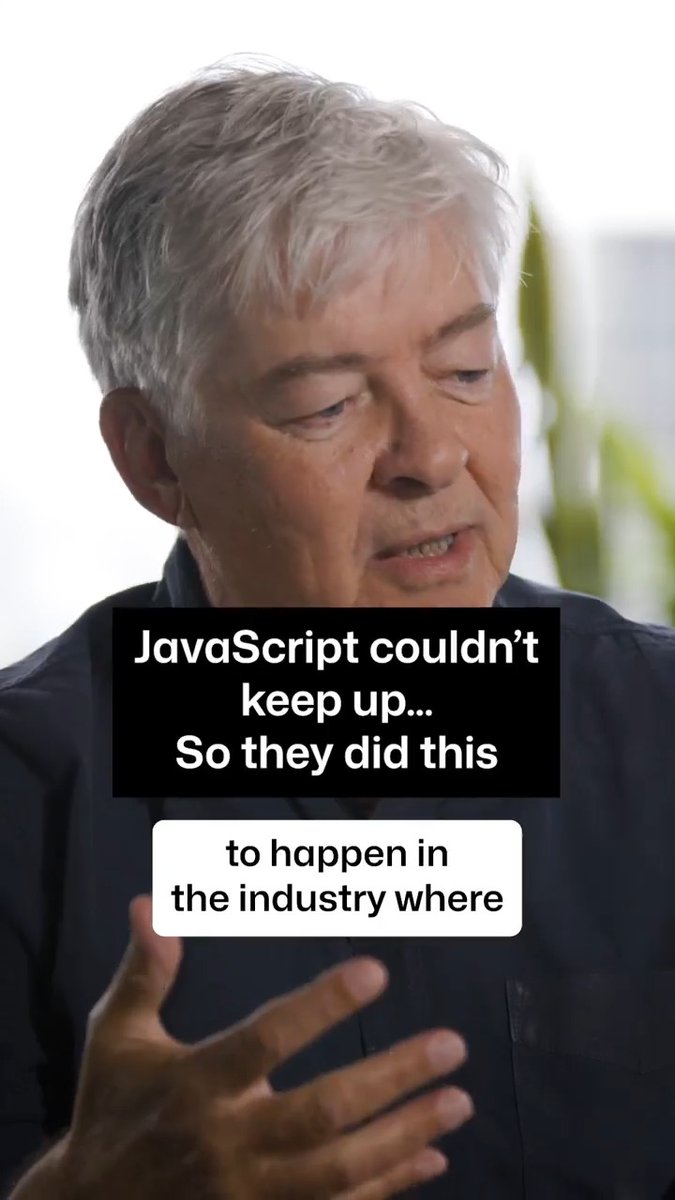
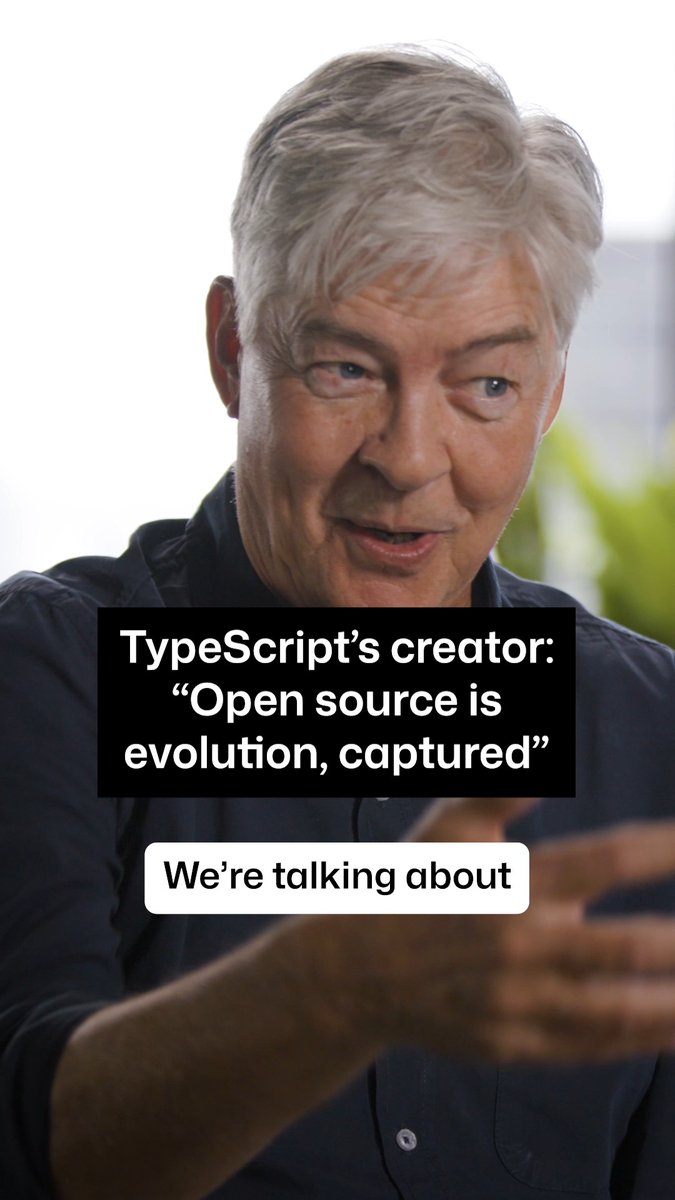
TypeScript creator Anders Hejlsberg puts TypeScript 7 through its paces, compiling the 2.3M-line Visual Studio Code codebase in under five seconds, and breaking down how the new 10x faster Go-powered compiler and language service scales with shared-memory concurrency.

44,413 views • 3 months ago •via X (Twitter)
23 Comments

Read more about our release of TypeScript 7

@ahejlsberg @code Anders Hejlsberg comes across as remarkably calm and thoughtful. Beyond being Danish, he's also one of the true legends of software engineering.

@ahejlsberg @code Wonder why he didn't pick C#

@ahejlsberg @code It is a savior on the large codebases! 👏

@drosenwasser @ahejlsberg @code Nice!

We talk a lot about the developer time saved by TS7. I’m equally impressed by the compute saved. TypeScript runs at enormous global scale editors, builds, CI, agents. A 4x single-core efficiency gain, before even counting parallelism, means a lot less compute for the same work. Less compute means less energy demand. At this scale, compiler engineering becomes sustainability engineering. Congrats to the team! This is a real contribution toward a more sustainable future. 👏

@ahejlsberg @code What can I say?) 5 seconds is so cool!

@ahejlsberg @code so nice to see a real engineering project in this vibe coding era

@ahejlsberg @code Most tooling can't use it because 7.0 not provide programmatic API. When it will be released?

@ahejlsberg @code Great point!

@ahejlsberg @code Thanks, that's why I am using go and not typescript on server side. =P

@ahejlsberg @code Totally agree with this
@ahejlsberg @code The TypeScript compiler is now primarily written in Go.

Hey Super, build a TypeScript 7 Concurrent Compiler Visualizer & Multi-Core Throughput Simulator that visually models and computes how Anders Hejlsberg's Go-powered TypeScript 7 compiler architecture achieves 10x compilation speedup on massive codebases through shared-memory concurrency. The tool provides an interactive first-viewport experience where users select codebase scale (ranging from 500K lines up to 5M lines, defaulting to VS Code's 2.3M lines), choose worker thread counts (1 to 64 CPU cores), and compare architecture models: TS 7 Go-Powered Shared Memory (zero-copy lock-free symbol lookup across goroutines) versus TS 6 Node.js Single-Threaded / IPC Worker Copying. The interactive main engine renders a dynamic D3 multi-threaded Gantt pipeline showing parallel AST parsing, lock-free symbol table indexing, constraint solving, and codegen emit phases per worker lane, alongside an interactive module dependency graph highlighting concurrent partition boundaries. Key features include real-time throughput calculations (Lines/sec, Total Wall Clock Time, Memory Allocation Footprint, CPU Core Efficiency %), an interactive lock contention and cache-hit slider set, preset scenarios (VS Code 2.3M Lines, Massive Monorepo 5M Lines, Mid-Sized App 800K Lines), side-by-side performance comparison breakdown tables, and a downloadable JSON/SVG benchmark report. Visual styling uses a high-tech modern IDE dark theme with glowing neon worker thread indicators, crisp visual progress metrics, and precise D3 thread swimlanes. All calculation logic is fully client-side and deterministic. Ensure full mobile and desktop responsiveness with bounded layout grids, touch-friendly thread inspection, zero external server dependencies, and full accessibility compliance. The canonical slug for this app is ts7-concurrent-compiler-39.

@ahejlsberg @code Wow what an insignificant achievement

@ahejlsberg @code VB and FoxPro send greetings to TypeScript.

@ahejlsberg @code 2.3M lines in under five seconds is impressive. As coding workflows keep evolving, gives developers the flexibility to switch between the latest models through one API and find the right fit based on coding needs and cost.

@ahejlsberg @code Well said!Facts!

@ahejlsberg @code 5s for 2.3m lines is actually insane

@ahejlsberg @code Absolutely game-changing! 🤯 Compiling 2.3M lines in under 5 seconds will save developers countless hours. Moving to a Go-powered architecture with shared-memory concurrency is a massive win for productivity. Take a bow @ahejlsberg! 🔥 #TypeScript #TechNews

@ahejlsberg @code now rewrite it in zig with codex

@ahejlsberg @code Does he show it working on Typescript Playground?

@ahejlsberg @code That’s cool