Video yükleniyor...

Video Yüklenemedi

Ana Sayfaya Dön

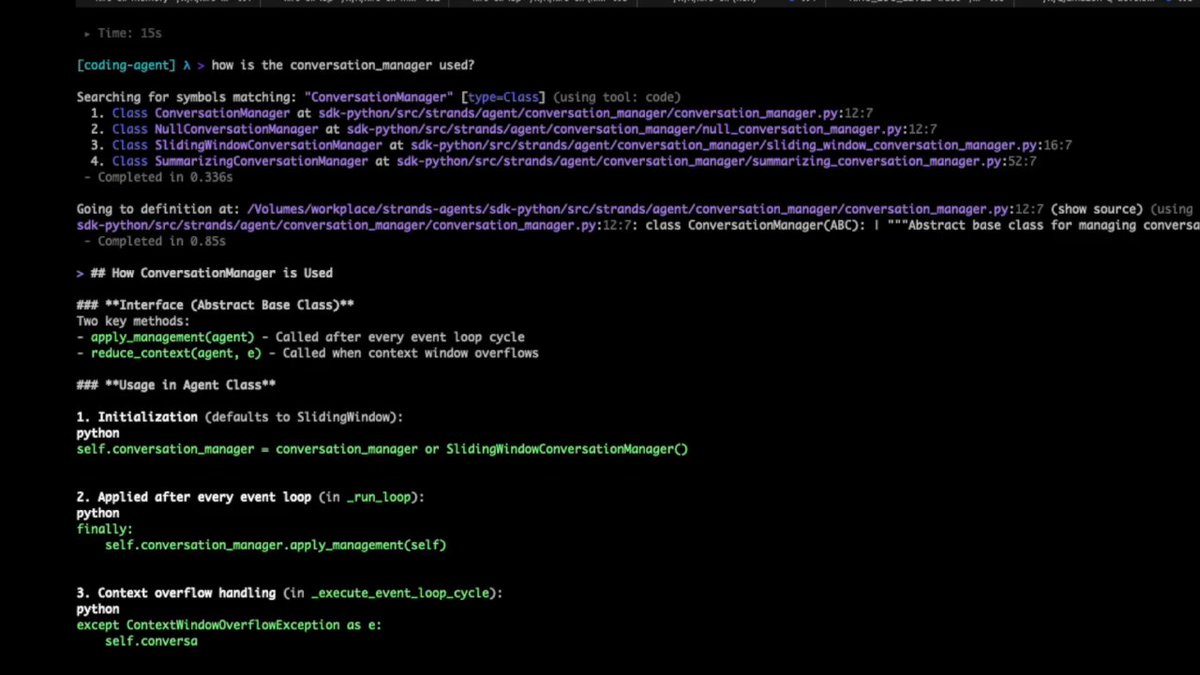
TypeScript creator Anders Hejlsberg puts TypeScript 7 through its paces, compiling the 2.3M-line Visual Studio Code codebase in under five seconds, and breaking down how the new 10x faster Go-powered compiler and language service scales with shared-memory concurrency.

41,539 görüntüleme • 2 gün önce •via X (Twitter)

0 Yorum

Yorum bulunmuyor

Orijinal gönderinin yorumları burada görünecek
Benzer Videolar

Anders Hejlsberg (Anders Hejlsberg) is a living legend: he created Turbo Pascal, Delphi, C# and TypeScript (and today TypeScript is the most-used programming language, globally, as per GitHub.) Timestamps: 00:00 Intro 02:48 How Anders got into programming 05:40 Building his first compiler 07:44 Turbo Pascal 12:25 Delphi 14:53 Joining Microsoft 19:41 Building C# 29:11 Async/await 34:01 The rise of JavaScript 37:52 Building TypeScript 42:58 How the TypeScript compiler works 48:30 JavaScript’s strengths and weaknesses 52:18 How Anders uses AI 56:03 What language features work well with AI 1:02:49 How software craftsmanship is changing 1:07:49 Performance and efficiency 1:09:29 Anders’ tool stack 1:11:30 A 30-year career at Microsoft 1:13:40 Book recommendation Brought to you by: Antithesis – verify your system’s correctness without human review or traditional integration tests – and avoid bugs or outages. WorkOS – Everything you need to make your app enterprise ready. turbopuffer – a vector and full-text search engine built on object storage. It’s fast, cheap, and extremely scalable. Four things that stood out to me: 1. “10x better for 1/10th of the price” is a proven winner. This is what Turbo Pascal did: it sold for $49.95 when competing compilers cost $500, and it was faster and more interactive than competitors’ products. Conveniently, the low price tag also killed off piracy 2. C# might have not existed without a famous court case. Microsoft originally hired Anders to architect its Java tools (Visual J++), but the Sun versus Microsoft lawsuit (1997-2001) meant Microsoft could not build on top of Java, as the company that owned Java’s IP (Sun) sued MS for alleged unauthorized changes to the Java language. Microsoft realized it had to build a new language that combined VB’s productivity with C++’s power. This led to C# and .NET. 3. TypeScript exists because Anders refused to build Script# for the Outlook .com team. Microsoft’s Outlook .com team asked Anders’ C# team to productize “ScriptSharp,” a language to cross-compile C# to JavaScript. Anders and the C# team pushed back, suggesting that a better approach was to fix JavaScript. Anders felt strongly that to be attractive to the best-of-breed developers in the JavaScript ecosystem, you want people to write JavaScript, and not another language like C#. 4. Designing a programming language is a 10-year play. As Anders puts it: “Version one is great, but has all sorts of issues. You’ve got to do version two, but it’s not until version three that it really starts to be great. Then you’ve got to convince people to adopt it.”

Gergely Orosz

129,192 görüntüleme • 2 ay önce

Why did so many languages copy async/await from C#? Anders Hejlsberg(Anders Hejlsberg) - creator of TypeScript, C# & Turbo Pascal - on what they got right with the design: #1 - async/await was designed to solve a common problem in the event-loop model: "A lot of languages are built around cooperative multitasking in the sense that they have an event loop that sits and dispatches events. Then you handle the event and then you yield back to the event handler loop. And it all runs in a single thread cooperatively. The problem with that is if you then want to do some long running work: how do I stop in the middle of this piece of long running work and yield back to the event loop cooperatively? And then when my result is ready, I can come back and continue executing here." #2 - state machines are the solution, but hard to build: "Well, in order to do that in an inverted architecture like that, you have to build a state machine. State machines are notoriously hard for people to implement because you've got to move all of your state off of the stack into objects. And then you have this big case statement that envelopes your entire logic. It's a nightmare to figure out. But, the transformation from serially executing code into a state machine, its continuation-passing-style translation is actually one that you can do in a machine-based fashion." #3 - compilers are good at writing state machines: "You can have the compiler write the state machine if you introduce syntax that allows you to indicate where you want to yield. And that's what await is. Await is basically saying, I want to yield here, and I want to yield this promise, and then when the promise completes, I want you to come back here and continue executing. Then the compiler writes a state machine around it and it actually turns it into this big switch statement and moves all of the state that survives across the await into something that's heap allocated. So it can be brought back. And doing all of that work is something that compilers are great at. And so that was sort of the idea that we have this new style of programming where we're using promises or the equivalent of promises and the ability to yield and then we have callbacks. But trying to write your program in that style, that's also what JavaScript suffered from a lot. It's like all this callback style stuff. With Async and Await, you get the illusion that you're just writing normal sequential code and then the compiler does the painful transformation for you. That turns out to be really useful."

The Pragmatic Engineer

13,258 görüntüleme • 1 ay önce

Claude Code is a major (and accidental!) hit for Anthropic that surprised even its creator, Boris Cherny. Claude Code, an Agentic AI coding product that lives in the terminal. Most of the new code at Anthropic is created through it today. And in the last 5 months since it was launched publicly, Claude Code went from $0 to $400M in revenue run rate (as per The Information). 00:00 – Intro 01:15 – Did You Expect Claude Code’s Success? 04:22 – How Claude Code Works and Origins 08:05 – Command Line vs IDE: Why Start Claude Code in the Terminal? 11:31 – The Evolution of Programming: From Punch Cards to Agents 13:20 – Product Follows Model: Simple Interfaces and Fast Evolution 15:17 – Who Is Claude Code For? (Engineers, Designers, PMs & More) 17:46 – What Can Claude Code Actually Do? (Actions & Capabilities) 21:14 – Agentic Actions, Subagents, and Workflows 25:30 – Claude Code’s Awareness, Memory, and Knowledge Sharing 33:28 – Model Context Protocol (MCP) and Customization 35:30 – Safety, Human Oversight, and Enterprise Considerations 38:10 – UX/UI: Making Claude Code Useful and Enjoyable 40:44 – Pricing for Power Users and Subscription Models 43:36 – Real-World Use Cases: Debugging, Testing, and More 46:44 – How Does Claude Code Transform Onboarding? 49:36 – The Future of Coding: Agents, Teams, and Collaboration 54:11 – The AI Coding Wars: Competition & Ecosystem 57:27 – The Future of Coding as a Profession 58:41 – What’s Next for Claude Code

Matt Turck

82,161 görüntüleme • 11 ay önce

New short course: Collaborative Writing and Coding with OpenAI Canvas! Explore new ways to write and code with OpenAI Canvas, a user-friendly interface that allows you to brainstorm, draft, and refine text and code in collaboration with ChatGPT. In the short course, created with OpenAI, and taught by , a research lead at OpenAI, you’ll learn to use Canvas to enhance your workflows. Canvas lets you go beyond simple chat interactions. It provides a side-by-side workspace where you and ChatGPT can edit and refine text or code collaboratively. This makes brainstorming, drafting, and iterating as you write feel more natural and effective. As the first major update to ChatGPT’s visual interface since its launch in 2022, Canvas gives a new, innovative approach to collaboration with AI. For instance, after writing the first version of your code, Canvas can review it and give suggestions for improvement. It can also help with debugging by adding logging, identifying problems to fix, and writing comments. In addition, you'll also learn what it takes to train the model for an interface like Canvas. In this video-only short course, you’ll: - Learn how to ask for in-line feedback and control the iteration of your work by directly editing selected areas of your text or code from the model’s output. - Learn how to access quick automation tools in a shortcut menu that allows you to modify your writing tone and length, enhance your code, and restore previous versions of your work. - Learn how to use Canvas as a research assistant tool with an example of asking the model to reason through the screenshot of a plot to write a research report, in which you can ask questions within the created report. - Ask the model to write Python code to replicate the graph seen on a screenshot image. - Go behind the scenes of how you can create a video game, such as Space Battleship, from scratch, edit it, and display it in one self-contained HTML file. - Get a real-world application example of creating a SQL database from the image of its architecture. - Understand the model training and design processes that power Canvas! Please sign up here:

Andrew Ng

128,180 görüntüleme • 1 yıl önce