Sensitive content

This media may contain sensitive content.

Загрузка видео...

Не удалось загрузить видео

На главную

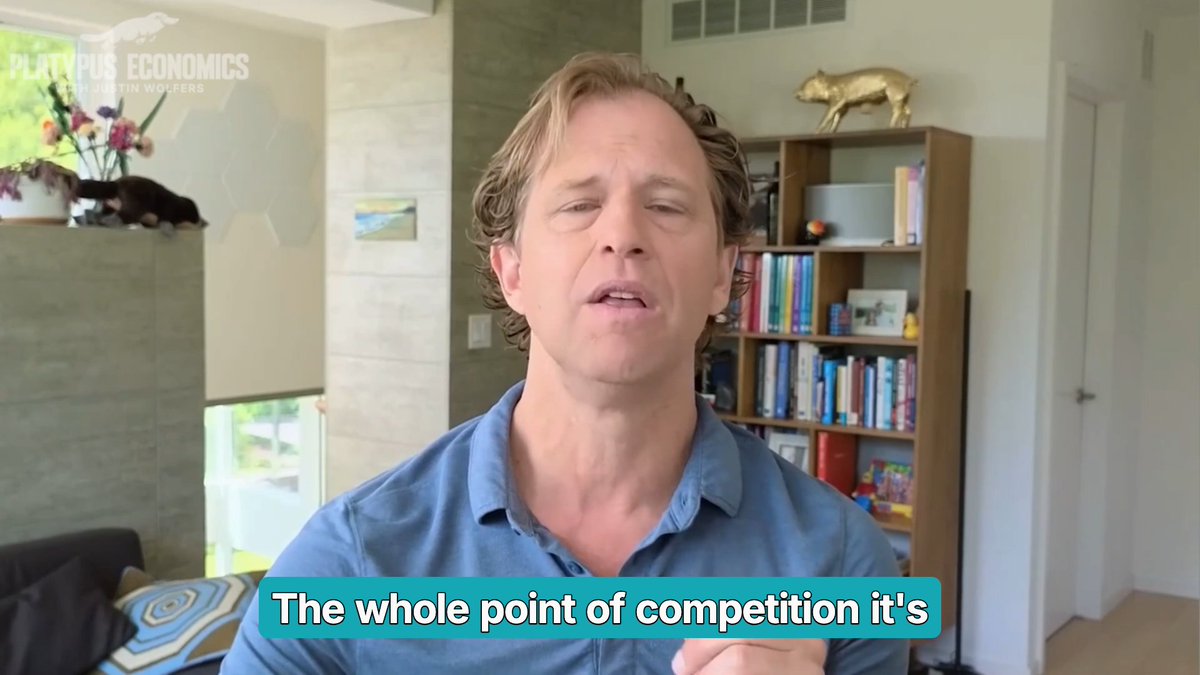
Uber has recently rolled out a new system to drivers where they can dynamically alter prices mid-ride. It’s meant to account for traffic, construction, etc. but with some work you can drive the price up so high.. So high there’s only one way to pay 🥴🤭

21,807 просмотров • 1 месяц назад •via X (Twitter)

Комментарии: 0

Нет доступных комментариев

Здесь появятся комментарии из оригинального поста

Похожие видео

Marc Andreessen: “I’m always urging founders to raise prices, raise prices, raise prices.” “We spend a lot of time working with our companies on pricing,” a16z co-founder Marc Andreessen explains. “It’s really this magical art and science that a lot of companies don’t take seriously enough.” Marc continues: “A core principle of pricing is that you don’t want to price by cost if you can avoid it. You want to price by value. Especially when you’re selling to businesses, you want to price as a percentage of the business value you’re creating.” He gives the example of building an AI that can do the job of a programmer, a lawyer, or a radiologist: “Can you price by value and get a percentage of what otherwise would’ve literally been a person? Or equivalently can you price by marginal productivity? If you can take a human doctor and make them much more productive because you give them AI, can you price as a percentage of the productivity uplift?” Marc argues that high prices are under-appreciated by founders: “The naive view on pricing is the lower the pricing, the better it is for the customer. The more sophisticated way of looking at it is that higher prices are often good for the customer because the higher price means the vendor can make the product better, faster. Companies with higher prices and higher margins can actually invest more in R&D and make the product better. Most people who buy things aren’t just looking for the cheapest price. They want something that’s going to work really well.” Marc also emphasizes this point in an interview in Elad Gil’s High Growth Handbook: “What I hear from companies is, ‘Oh, we have an awesome moat, and we’re still going to price our product cheap, because we think that’s somehow going to maximize our business.’ I’m always urging founders to raise prices, raise prices, raise prices. I’m always urging founders to raise prices, raise prices, raise prices. First of all, raising prices is a great way to flesh out whether you actually do have a moat. If you do have a moat, the customers will still buy, because they have to. The definition of a moat is the ability to charge more. And so number one, it’s just a good way to flesh out that topic and really expose it to sunlight. And then number two, companies that charge more can better fund both their distribution efforts and their ongoing R&D efforts. Charging more is a key lever to be able to grow. And the companies that charge more therefore tend to grow faster. That’s counterintuitive to a lot of engineers. A lot of engineers think there’s a one-dimensional relationship between price and value. They have this mental model of commerce like they’re selling rice or something. It’s like, “My product is magical and nobody can replicate it, and I need to price it like it’s a commodity.” No, you don’t. In fact, quite the opposite. If you price it high, then you can fund a much more expensive sales and marketing effort, which means you’re much more likely to win the market, which means you’re much more likely to be able afford to do all the R&D and acquisitions you’re going to want to do. And so we always try to snap people into a two-dimensional mindset, where higher prices equals faster growth.” Video source: a16z (2026)

Startup Archive

423,249 просмотров • 8 месяцев назад

Andy Schoonover just revealed the dark secret that explains why health insurance costs keep skyrocketing year after year: “The sellers of healthcare, which are big hospital systems, they want the price to go up.” “But very few people understand that the buyers of healthcare, these health insurance plans, they also want the price to go up.” Why? It all goes back to Obamacare. “What happened with the Affordable Care Act is that the insurance providers can only make 15% in profit of your premium.” “So if you have $1,000 of premium, they can only make $150.” “So how do they grow their revenue by 10%, let’s say, so their profit can go from $150 to $165?” “Your premium has to go from $1,000 to $1,100.” “That’s one of the main reasons why they don’t take a very hard negotiating tactic with a lot of these big hospital systems.” “It’s oligopoly versus oligopoly.” “We have no market forces who are trying to push those prices down.” “All the market forces are trying to drive the prices up.” “That’s where we’ve gotten $5,000 MRIs.” “If I went and paid in cash, it would be $400.” “The incentives are screwed up within the system.” So Schoonover built an alternative to the traditional health insurance system. CrowdHealth is a crowdfunding platform for health care costs that has upended this broken incentive system. They already have 30,000 members, and their members pay a fraction of what traditional health insurance costs. Watch Jeffrey Tucker’s full interview with Schoonover below to find out everything you need to know about CrowdHealth:🧵 Jeffrey A Tucker Andy Schoonover CrowdHealth

Brownstone Institute

13,872 просмотров • 2 месяцев назад