Video yükleniyor...

Video Yüklenemedi

Ana Sayfaya Dön

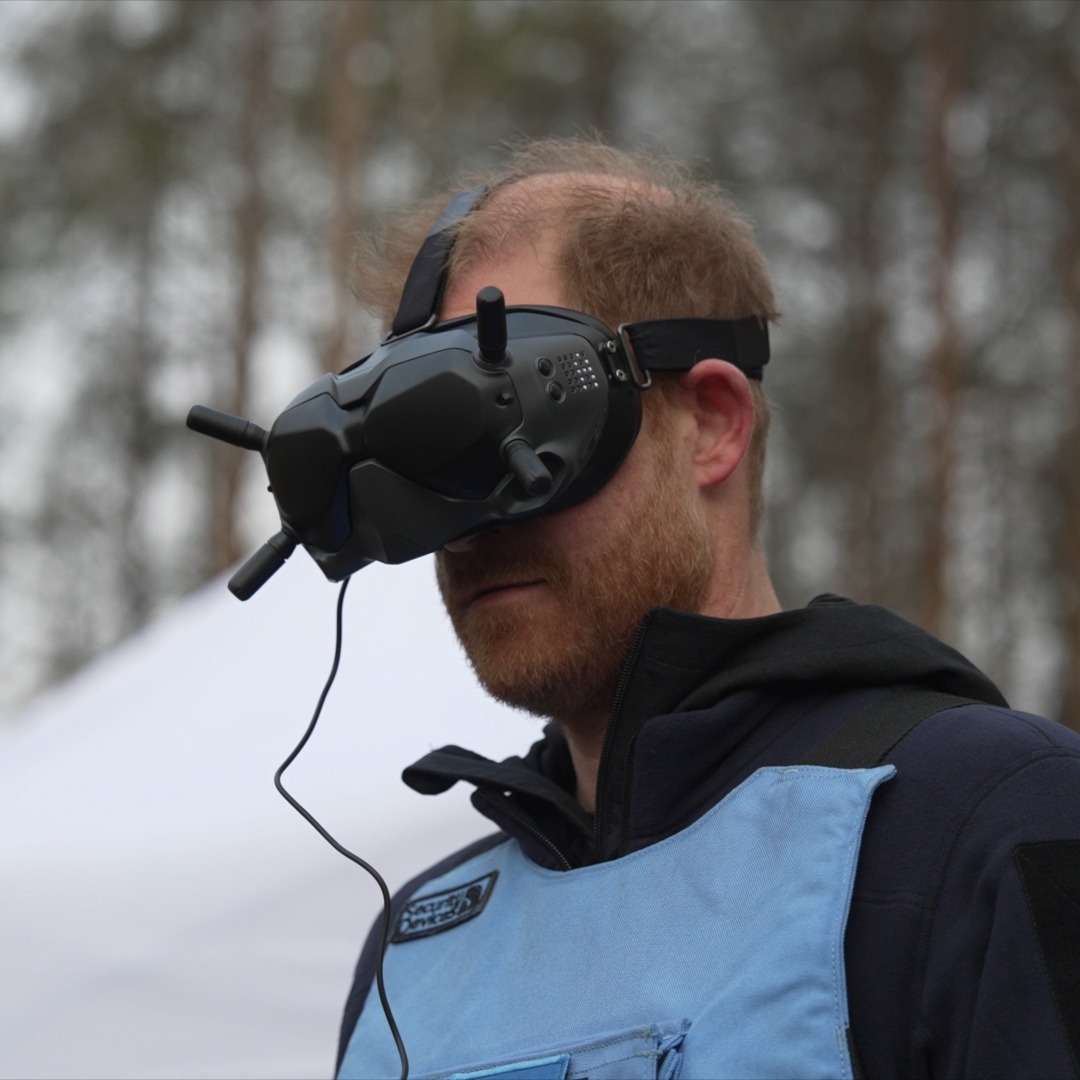
Ukraine’s SkyFall unveiled the AI-enabled P1-SUN Long interceptor drone, trained on more than 10,000 real combat interception videos. The system detects aerial targets up to 800 meters away, then tracks, pursues and destroys them after operator confirmation. #Ukraine

40,931 görüntüleme • 1 ay önce •via X (Twitter)

0 Yorum

Yorum bulunmuyor

Orijinal gönderinin yorumları burada görünecek

Benzer Videolar

Unique footage has emerged showing remote control of interceptor drones. The 190th Training Center of the SBS reportedly used a drone-interceptor to shoot down a Shahed UAV remotely, with the pilot located at a significant distance from the launch site. The system used was LITAVR, developed by FDrones. According to the company, an operator can control the interceptor from hundreds of kilometers away from the launch point. The F7 LITAVR is already a well-known and highly effective system. As a reminder, here are the technical details (this is all open-source information): Development of the system began in autumn 2024. It was successfully tested and officially adopted in summer 2025. Serial production and deliveries to the military started in autumn 2025. Maximum speed: 350 km/h Flight time: up to 15 minutes Equipped with two cameras: daytime and thermal imaging The officially stated tactical range is 36 km, though in practice it can reach up to 60 km and operate at altitudes of up to 9.5 km. The warhead (separately codified) weighs 500 g. Detonation can occur via kinetic impact, self-destruction upon contact with the target, or manual activation by the operator. The system uses inertial guidance without GPS and features automatic terminal guidance (“last mile” / target lock system). At present, it reportedly destroys hundreds of targets per week, including Shaheds, Gerberas, Molniyas, Orlans, Lancets, and others. What is fundamentally new? Until now, mobile air defense fire groups and frontline crews using interceptor drones required a qualified pilot on-site. It has now been successfully demonstrated that a different tactic is possible: pilots can operate from protected, remote locations. The only requirement is internet access at both the control center and the launch site. Ukraine’s defense sector continues to develop innovative solutions. 📹 Oleksii Kopytko/Facebook

Anton Gerashchenko

22,311 görüntüleme • 4 ay önce

JUST IN: Iran gave Russia its Shahed drones. Russia improved them in Ukraine. Now Western intelligence says Russia is shipping the upgraded versions back to Iran. And the country that learned how to kill those drones on the battlefield just sent 228 experts to the Gulf to teach five countries how to do the same thing. The full circle is extraordinary. Iran supplied thousands of Shahed-136 kamikaze drones to Russia starting in 2022 for use against Ukraine. Russia rebranded them Geran-2 and, over three years of combat, upgraded the navigation systems, added anti-jamming capabilities, improved the engines, and refined the payload delivery. The Financial Times and AP reported on March 26 citing Western intelligence that Russia is now in the final stages of shipping those upgraded Geran-2 drones back to Iran’s IRGC, along with medicine and food supplies. Kremlin spokesman Peskov called the reports “lies” and “fake news dumps.” Meanwhile, Zelensky arrived in Saudi Arabia on March 26 for an unannounced visit, met Crown Prince Mohammed bin Salman, signed a defense cooperation deal focused on air defense and drone expertise, and departed Jeddah on March 28. Ukraine has deployed 201 to 228 military drone specialists to five Gulf and Middle Eastern countries: the UAE, Qatar, Saudi Arabia, Kuwait, and Jordan. Another 34 are ready per Zelensky’s statement on March 17. These specialists are not there as a symbolic gesture. They bring the single most effective counter to Shahed drones that exists anywhere on earth. Ukraine developed FPV interceptor drones that account for roughly 70 percent of all Shahed and Geran-2 shootdowns in Ukraine per Forces News and Atlantic Council reporting. The method: radar and acoustic sensors detect the incoming drone at 20 to 50 kilometres. A cheap, fast quadcopter or fixed-wing interceptor launches from a mobile platform. An operator pilots it at high speed toward the target. It destroys the Shahed through kamikaze collision or a small explosive payload on impact. Cost per intercept: a fraction of what a surface-to-air missile costs. Militarnyi reported on March 22 that Ukrainian teams have already confirmed multiple Shahed shootdowns in the Middle East. The arms race running through this war is now a closed loop. Iran builds the drone. Russia tests it, improves it, and allegedly sends the improved version back. Ukraine learns to kill it through three years of battlefield iteration. Ukraine exports that knowledge to the Gulf states Iran is attacking. The Gulf states pay Ukraine in money, technology, and diplomatic support. Russia denies everything while the drones fly in both directions. This is not a bilateral conflict. It is a global drone ecosystem where every improvement by one side is studied, countered, and re-exported by the other. The Shahed that hits a refinery in Bahrain tonight may carry Russian-upgraded navigation. The interceptor that destroys it may be piloted by a Ukrainian operator trained in Zaporizhzhia. The defense deal that funded the deployment was signed in Jeddah while the war it was designed to address raged 1,500 kilometres to the northeast. SpaceX’s Starlink provides the communications backbone for these teams in contested environments where terrestrial networks are degraded by the same war. The same helium shortage threatening semiconductor fabs and quantum computers is threatening the rocket launches that put Starlink satellites in orbit. The same strait carrying the oil carries the data cables that the drones are trying to protect. Every domain connects through the same 39 kilometres of water. Full analysis -

Shanaka Anslem Perera ⚡

1,296,496 görüntüleme • 4 ay önce

🟪 MOSCOW IS FORCING RUSSIA TO MAKE A CHOICE 👀 A Pantsir air defense system fitted with an anti-drone “grill” has reportedly been spotted in Moscow, fueling speculation that Russia is continuing to redeploy air defense assets away from other areas in order to protect the capital. If true, the implications are significant. Air defense systems are not unlimited. Every Pantsir moved to Moscow is a Pantsir that cannot protect a logistics hub, ammunition depot, airfield, refinery, command center, or military formation elsewhere. This highlights one of the most important effects of Ukraine’s long-range drone campaign. Ukraine is no longer simply destroying targets. It is forcing Russia to make difficult choices. For years, Russian air defenses were concentrated around military facilities and the front. Now Moscow itself increasingly requires protection as Ukrainian drones reach deeper into Russian territory with growing frequency. The result is a dilemma for the Kremlin. Protect the front lines and logistics networks. Or protect Moscow. Protect refineries and military infrastructure. Or protect the political heart of Russia. The appearance of additional air defenses around the capital may suggest that Moscow is becoming a higher priority, and that alone represents a strategic success for Ukraine’s long-range strike campaign. Russia still possesses significant air defense capabilities, but even the largest arsenal has limits. The more territory Ukraine can threaten, the more Russia is forced to spread those defenses thin. And every system guarding Moscow is one less system guarding the war effort elsewhere.

Gianl1974

14,714 görüntüleme • 1 ay önce

🇺🇦 Ukraine has significantly increased the deployment of its domestically produced electronic warfare system “Lima” both on the front lines and in the deep rear. 🟥 Lima is a Ukrainian-made system that does not destroy drones and missiles, but instead disrupts their navigation and alters their course. 🚀 Effect on missiles: Thanks to Lima, missiles lose satellite navigation, causing their accuracy to degrade by approximately 2 kilometers for every 100 kilometers flown. This means a missile aimed at an infrastructure target can ultimately land in an open field. 💰 Cost: One Lima unit costs up to 3 million hryvnia. Protecting a large city requires 30 to 100 stations — approximately €5 million, which is roughly the price of a single Patriot PAC-3 missile. Where physically destroying every threat is too expensive, it is possible to disrupt their guidance systems and force them to miss targets by a significant margin. 🟥 According to Cascade Systems, the Ukrainian Armed Forces have already received more than 400 Lima complexes. Over the past 18 months, the system has suppressed over 20,500 Shahed-type drones and altered the course of dozens of cruise and ballistic missiles. Lima represents one of Ukraine’s most effective and economical innovations in the war. By redirecting rather than destroying incoming threats, it achieves substantial defensive results at a fraction of the cost of traditional air defense systems. Its mass deployment is playing a major role in reducing the effectiveness of Russian long-range attacks. Video is generated by grok AI

NSTRIKE

49,131 görüntüleme • 2 ay önce