Video wird geladen...

Video konnte nicht geladen werden

Zur Startseite

Versova Bandra sea link 7 RCDs(Reverse circulation drilling) simultaneously at work between Bwsl and carter road interchange. They push water upwards while drilling for constructing piles.4 Piles are needed to construct 1 pier 🎥Samsut Jaman

38,883 Aufrufe • vor 1 Jahr •via X (Twitter)

11 Kommentare

Profilbild von Suyog Vyawahare
Suyog Vyawaharevor 1 Jahr

Mumbai is being destroyed! :- watana @haldilal

Profilbild von @SAITI.ca
@SAITI.cavor 3 Jahren

Produce where raw materials, processing, and distribution are all in one place. The Southern Alberta hub offers access to major markets with its location on major Canadian transportation corridors. #ConnectingRegions #Transportation #Infrastructure

Profilbild von Maulik Prabhudesai
Maulik Prabhudesaivor 1 Jahr

Work has also begun from the versova side. How many packages is the vbsl being divided into?

Profilbild von Sahil P
Sahil Pvor 1 Jahr

whole sea link is one pkg

Profilbild von Shiva
Shivavor 1 Jahr

In all the garbage news @Sahilinfra2 you cheer up the day by posting great positive news. Keep sharing happy news.

Profilbild von Yashpal
Yashpalvor 1 Jahr

The best infra handle!

Profilbild von Raj
Rajvor 1 Jahr

Waiting for carter road resident association filing stop work petition with SC.

Profilbild von Bal Govind
Bal Govindvor 1 Jahr

Thanks for sharing

Profilbild von Azhar Damanwala | Very Soon FC Fan 💙⚽
Azhar Damanwala | Very Soon FC Fan 💙⚽vor 1 Jahr

Expected completion month/Year

Profilbild von Hiren Vasani
Hiren Vasanivor 1 Jahr

Speed of execution doesnt seems to be satisfactory, i doubt this will be ready before 2030.

Profilbild von Venky
Venkyvor 1 Jahr

The work seems to be going in speed. Only flip side of this Costal Rd is , the Sunset view at Juhu Beach & Versova beach will be gone forever. Your thoughts…

Ähnliche Videos

Sewri-Worli Elevated Connector: Transforming Mumbai’s Connectivity! Mumbai’s traffic dynamics are set to change with the Sewri-Worli Elevated Connector, a crucial part of MMRDA’s traffic dispersal system for Atal Setu. This 4.5 km, 4-lane elevated corridor will directly link Atal Setu to Bandra-Worli Sea Link and the Mumbai Coastal Road project, creating a seamless travel experience across the city. 🔹 Enhanced Connectivity: Navi Mumbai commuters heading to Central & South Mumbai *and western suburbs* will benefit from a signal-free, time-saving route. 🔹Traffic : Expected to add about 15-20% vehicular traffic from Bandra-worli and Mumbai Coastal road to Atal Setu, increasing the toll revenue on Atal Setu. 🔹 Engineering Feat: A double-decker Road Over Bridge (ROB) at Prabhadevi Station, crossing both Central & Western Railway lines, *will be constructed* using an advanced Push-Pull method for maximum safety. ✅ Current Progress: 60% work completed. Key Challenge: Assembling & erecting a 3000 MT heavy steel superstructure over railway tracks while ensuring commuter safety. This ambitious project is not just about infrastructure—it’s about connecting lives, reducing commute times, and making Mumbai’s transport network more efficient than ever! Dr. Sanjay Mukherjee #SewriWorliConnector #AtalSetu #MumbaiInfrastructure #SeamlessTravel #MMRDA #MumbaiTrafficSolutions #MMRDA50 #CelebrationOfDevelopment #RebootingMumbai #ReshapingMMR #MMRDA #AtalSetu #MTHL #Mumbai #MetroRegion #EfficientConnectivity #EcoFriendlyTransport #TransformingMumbai #MumbaiInMinutes

MMRDA

19,615 Aufrufe • vor 1 Jahr

War Room in Action: Reviewed Housing, Metro, and Infrastructure Projects! Chaired the CMO War Room Meeting at Mantralay, Mumbai today, reviewing the progress of infrastructure projects. Instructed officials to accelerate the completion of all projects by making use of technology, and also highlighted that any new challenges must be reported to the War Room immediately so they can be addressed quickly, ensuring timely and effective execution of all projects. Reviewed progress on the following projects: ✅ BDD Chawl ✅ Metro Line 4 (Wadala–Kasarvadavali) ✅ Metro Line 5 (Thane–Bhiwandi–Kalyan) ✅ Metro Line 6 (Swami Samarth Nagar–Vikhroli) ✅ Metro Line 2B (DN Nagar–Mandale) ✅ Metro Line 7A (Andheri–CSMIA Terminal 2) ✅ Metro Line 9 (Dahisar (E)–Mira-Bhayander) ✅ Orange Gate–Marine Drive Tunnel ✅ Borivali–Thane Twin Tunnel ✅ Uttan–Virar Sea Link ✅ Sewri–Worli Elevated Corridor ✅ Pune Metro ✅ Dahisar–Bhayander Link Road ✅ Goregaon–Magathane DP Road ✅ Goregaon–Mulund Link Road ✅ Coastal Road (Northern Extension) ✅ Virar–Alibaug Multi-Modal Corridor ✅ Dharavi Redevelopment Project ✅ Jalna–Nanded Highway ✅ Pune Ring Road ✅ Bandra–Versova Sea Link ✅ Chhatrapati Sambhaji Nagar City Water Supply Project ✅ Kudus–Aarey Connectivity ✅ Kudus–Babhaleshwar PowerKasarvadavali Project ✅ Shikrapur–Babhaleshwar Power Project ✅ Vadhavan Port Project Concerned officials were present. #Maharashtra #Mumbai

Devendra Fadnavis

118,321 Aufrufe • vor 1 Jahr

Apart from the fact that the turbidity level of most rivers have moved from bad to worst in the last 8months, let no one mislead you to accept just tubidity level as measure. It’s just one indicator. What is the true measure of water quality is the WATER QUALITY INDEX by the Water Resources commission. It uses the turbidity levels and other 4 indicators to ascertain our water quality. That’s more comprehensive. st ixahalli Trors in the rdmye thewer And the records from 2005 - 2024 show clearly that, the water quality deteriorated from bad to worst anytime the NDC is in power and improves when NPP comes to power. As at 2010 when the river Galamsey escalated in earnest under the NDC government, the 40 fairly Good water were destroyed and as at 2016, the NDC left us with only 15 Fairly Good water and 25 Poor quality water. The NPP between 2017 - 2024 improved our water 15 to 29 Fairly Good water and reduced the poor quality water from 25 to 10 with 1 Good Quality water. Let no one tell you otherwise, the data is available online. Read for yourself. Galamsey remains a major challenge for this country and the earlier this NDC government realizes the times we are in, stop referencing Akufo-Addo and get to work to fix the situation the better. The record of the NDC per the data is clear. Times have changed and people are now ready to hear and understand the issues than they did in the past and there will be no room for misleading information. #GalamseyEnablers

Dennis Edward Aboagye

27,012 Aufrufe • vor 11 Monaten

BREAKING: President Tinubu approves 27 road projects worth over N3.9 trillion across 15 states. The projects cover Adamawa, Benue, Cross River, Ebonyi, Ekiti, Kogi, Kwara, Lagos, Niger, Ondo, Osun, Oyo, Plateau, Taraba, and Yobe states. The road projects are as follows: 1. N1.8 trillion for the re-award of the 409-kilometre dual carriageway project in Niger State under the tax credit scheme to Aliko Dangote. 2. N276 billion for the dualisation of Ilorin-Ogbomoso Road. 3. N265 billion for the reconstruction of Iseyin-Eruwa-Agbesi Road in Oyo State and Kwara State. 4. N217 billion for the dualisation of old alignment Ijaye to FGC to Ilorin Road with a spur to Akinmorin. 5. N116 billion for the 21km Abakaliki-Afikpo Road in Ebonyi State. 6. N110 billion for the Ogbomoso-Oko-Illupu Road in Oyo and Osun States. 7. N104 billion for the rehabilitation of sections 1 and 2 of the Ilorin-Omorin-Ebe-Kabba-Obajana Road in Kwara and Kogi States. 8. N98 billion for the construction of 30km Idi-Araba-Ayede-Olodo Road in Oyo State. 9. N92 billion for the rehabilitation of Baban-Lamba-Sharan phase 2 Road in Plateau State. 10. N86 billion for the reconstruction of Enugu-Abakaliki Road with a flyover. 11. N86 billion for the Adikpo-Ajayi-Tese-Akpa-Otukpo Road in Benue and Cross River State. 12. N83 billion for the Jimeta-Mayo Belwa Road project in Adamawa State. 13. N82 billion for the rehabilitation of Igbeti Road in Oyo State. 14. N74 billion for the construction of Igbeti-Soro-Kishi Road in Oyo State. 15. N71 billion for the construction of 52km Dabban-Makina Road in Niger State. 16. N62.99 billion for the Tungo-Karamti Road with 5 bridges between Adamawa and Taraba States. 17. N58 billion for the rehabilitation of Yola-Hong-Mubi Road phase 2. 18. N46 billion for the Amasiri–Okporojo Road. 19. N34 billion for the 18km Ikere-Ekiti-Ijare Road in Ekiti State and Ondo State. 20. N26 billion for the new flyover on the ongoing Trans-Sahara Road. 21. N24.7 billion for the rehabilitation of Kabba-Ifaki-Ado Ekiti Road in Kogi State to Ekiti State. 22. N21 billion for the flyover bridge at Oko-Olowo Junction in Kwara. 23. N15.7 billion for the construction of Pacific Road linking Igbe Laara to Ikorodu in Lagos State. 24. N15.5 billion for the 13km Badeku-Jaiye Road in Oyo State. 25. N15.246 billion for phase 2 of the Yola-Fufore-Gurin Road project in Adamawa State, covering 20km after the completion of the 17km first phase. 26. N15 billion for the augmentation for a 32.2-kilometre road project in Gashua, Yobe State, which was originally awarded in 2022. 27. Full business case for the operation and maintenance concession for the Lagos-Ibadan Expressway and the directive to commence reconstruction of the failed sections of the Ibadan axis using concrete. Minister of Works, David Umahi, also disclosed that the first 118km section of the Abuja-Kaduna-Kano Highway, valued at N137 billion, has been completed, while work on the remaining 164km section is expected to be completed in November.

Nigerian Affairs Journal

136,047 Aufrufe • vor 1 Monat

Let's talk about the Kampala-Entebbe Expressway. Why all the emphasis on "slow down on rainy days" signs? Is the Expressway suddenly an aquarium when it rains? Do the road designers need to include something on this fancy road? Could my second-hand tyres be a factor? Is this a unique issue in Uganda? Speaking of missing things, let's discuss aquaplaning or hydroplaning – not the cool Olympic sport, unfortunately. Aquaplaning (hydroplaning) happens when a layer of water builds between your tyres and the road, significantly reducing your ability to steer, brake, and control your vehicle. Here are factors making hydroplaning worse: 1.Speed demons:(aka Subaru drivers, please tag them): Some drive like Usain Bolt on a waterslide 🏎️💨 2.Bald tyres: If your treads resemble post-lockdown hair, it's time for new ones 😬 Treads help clear water. 3. Deep puddles: Great for hippos, not cars 🦛 Water takes time to clear in heavy rain. Uganda's love for second-hand tyres: Let's face it, those treads are often unreliable. New tyres should be changed every 6 to 10 years, while old ones should be changed every 1 to 3 years. The equation is simple: rain + speed + bad tyres = potential disaster. Want to play bumper cars? Go to an amusement park, not the Expressway. How to avoid hydroplaning on the Expressway: 1. Reduce Speed: Slowing down significantly improves tyre grip. Aim for 50 to 60 km/hr. 2. Maintain Tire Health: Ensure adequate tread depth for water displacement. 3. Increase the Following Distance: Allow more reaction time. 4. Focus and Visibility: Turn on headlights and stay alert. 5 Avoid hard braking and sharp turning. If you are hydroplaning, consumer reports experts recommend taking your foot off the gas, steering in the desired direction once traction is regained, and gently applying the brakes. For Expressway guides and questions, follow Kampala Entebbe Expressway. For UNRA Updates, follow Allan Ssempebwa Kyobe, Chart. PR and UNRA_UGANDA . Discussions happen every Saturday at 9 am. Share your thoughts in the comments!

Kiyaga Edwin Raymond

48,676 Aufrufe • vor 2 Jahren

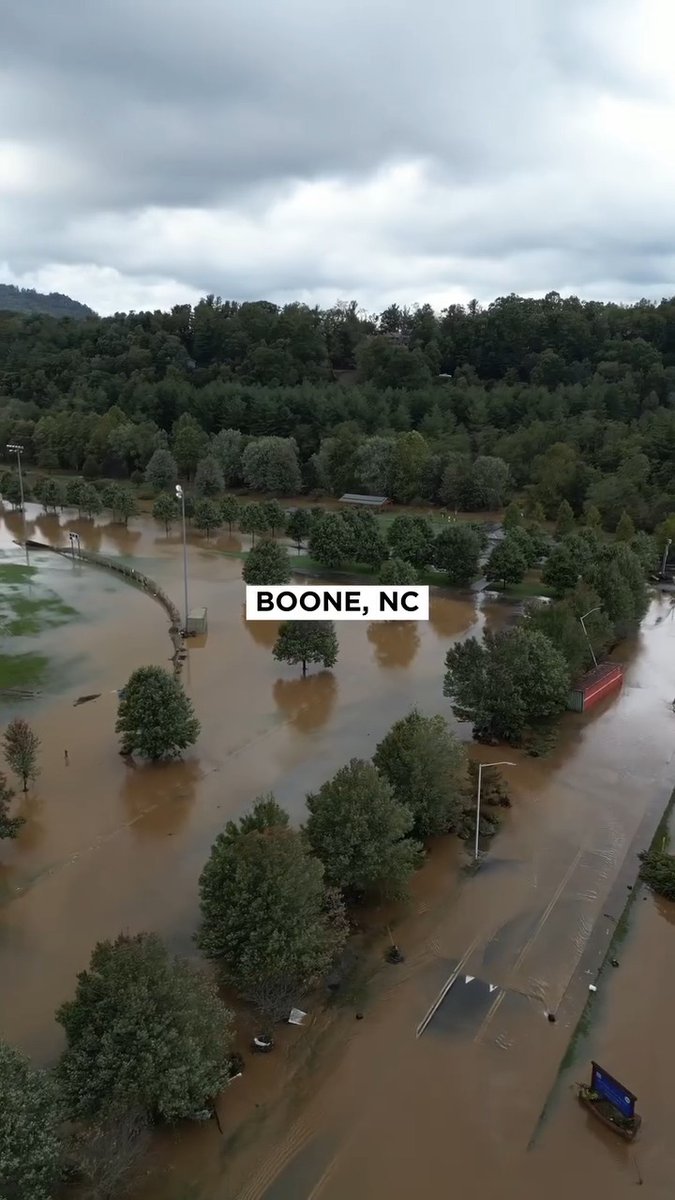
As the damage and various needs brought on by Hurricane Helene continue to unfold, Samaritan’s Purse is currently responding in five locations across the U.S. while coordinating with local authorities and assessing the damage in multiple locations. In Florida, our teams are based in Perry and the greater Tampa area, where homes have been severely flooded after Hurricane Helene made landfall as a Category 4 storm. We are also responding in Valdosta, Georgia to help suffering families as they begin their long road of recovery, Boone, North Carolina—home to the Samaritan’s Purse international headquarters—and a large swath of surrounding communities have been particularly hard-hit with toppled trees, flash flooding, road damage, and lack of power and water. We have established a response throughout western North Carolina and are also assisting area hospitals by providing oxygen support for those who have lost power and require the use of oxygen for medical needs. We’ve set up a two-tent unit in the parking lot of Watauga County Medical Center as well as one in Linville at the Cannon Memorial Hospital. You can find more details about our response and how you can volunteer at Please prayerfully consider serving as many volunteers will be needed to serve as the hands and feet of Jesus Christ to help the hurting. For additional details and updates regarding our response, please visit and continue to monitor our social media channels for important updates.

Samaritan's Purse

148,112 Aufrufe • vor 1 Jahr

Benefits of strengthening our shoulder blade muscles: - Improves your posture. - Relieves neck and shoulder stiffness. - Resolves chronic pain. - Increases push and pull power. Focus on these forgotten heroes for the rest of December. You'll feel and look different by the end of the year. Scapular imbalances are typical in my assessments of clients with chronic pain and posture problems. They have so little muscle mass and strength there that they can barely support their shoulder blades. One side is often way too strong compared to the other. It's normal to have a more dominant side, but too much of a difference will affect you negatively over time. Do 3-5 sets of these exercises twice a week: - DB = Dumbbell. - BW = Body weight. - Rest 60s between exercises. - Rest 48-72 hours between workouts. - All exercises can be done without equipment. Week 1 and Week 3 Day 1 1 - DB Side-Lying External Rotations, 10-12 reps/arm (0:02) 2 - DB Bent-Over Scapular Retractions, 10-12 reps/arm (0:07) Day 2 3 - Unilateral DB T3 Raises, 10-12 reps/arm (0:12) 4 - Bench-Supported Reverse Flys, 10-12 reps (0:16) Week 2 and Week 4 Day 3 5 - Cable Standing 90 Degree External Rotation, 15-20 reps/arm (0:22) 6 - Standing Scapular Retraction, 15-20 reps with a 3s hold each rep (0:27) Day 4 7 - Lying Prone Y Raises, 10-12 reps with a 3s hold at the top of each rep (0:31) 8 - Bent-Over Reverse Fly, 15-20 reps (0:37) // I often discuss these exercises on my timeline because they have helped so many of my clients over the years. Focus on your shoulder blade muscles, and watch your body transform for the new year.

Alex Bernier

21,924 Aufrufe • vor 1 Jahr

The government has sent Public Works to Ozumba Mbadiwe to patch the road instead of giving it to Julius Berger, Craneburg, Lubrik, or any other reputable contractor to fix it once and for all. With the billions we generate in IGR, we can comfortably construct or comprehensively rehabilitate one major state road every month. I didn't say every year,I said every month. In eight years, that would amount to hundreds of kms of major roads across the state, while the government could still build flyovers, bridges, and interchanges. That is why I keep saying we are being deliberately denied a good road network. This is not a federal problem; it is a Lagos State problem. Go and verify my statement. Even some of the poorest states in Nigeria, with IGRs of just ₦2–₦3 billion, are constructing quality roads. Some Lagosians are richer than some states, yet Lagos is the one without a proper road network. The painful part is that fixing roads is the most basic responsibility of any government. Even a decent guy with no connections, no big portfolio, no influence, and no experience attracting investments could still overhaul the road network of Lagos. He may not build rail lines, seaports, or free trade zones, but he can at least give residents good roads. Look at Lagos today. The skyscrapers, high-rise buildings, and beautiful developments are already there. What is missing is a road network that matches the city. Good roads would completely transform the appearance of Lagos and bring out its beauty. This is not a long-standing Lagos problem. It is a problem of this particular administration. For reasons I still cannot understand, they have deliberately allowed the roads to deteriorate. Instead of comprehensive reconstruction, all we see is patching. We can afford better. One major road every month is achievable with Lagos' revenue. So why are we still patching roads instead of rebuilding them properly? I genuinely hope the government explains why we are deliberately denied the quality road network this city deserves by now.🥺 Babajide Sanwo-Olu Obafemi Hamzat Damilola Sonayon James Seyi Tinubu ENIOLA BADMUS I am Dayo Amusa Lagos Min of the Environment and Water Resources The Lagos State Govt LASEPA Oluwaseun Osiyemi Tokunbo Wahab Lagos State Ministry of Works and Infrastructure Funke Akindele 📷: Patching of Ozumba Mbadiwe highway as opposed to total overhaul that is required to increase the beauty of the area. We are pleading with the government to please give us comprehensive solid road network all accross the state, please 🙏

Mide.O 🩷

23,848 Aufrufe • vor 1 Monat

Held annually in July in Hakata-ku, FukuokaCity 🇯🇵, "Hakata Gion Yamakasa" is a Shinto ritual held at Kushida-jinja Shrine, the central shrine home of the local deities of Hakata. The festival has a 750-year history and is designated an Important Intangible Folk Cultural Property of Japan and a UNESCO Intangible Cultural Heritage. It is uniquely observed in a very traditional manner that has also been passed down for generations. All participants are males and during the festival they are not allowed to have relations with women because they are regarded as servants of the gods, and not allowed to eat cucumbers because their shape resembles the crest of the deity of the Yamakasa Festival. Large and gorgeous ritual implements called "Kazariyama" are also displayed at various places, which create a very festive mood all over the city and are great spots for taking photos. As the idea of yamakasa has roots that can be traced back 750 years, when Shoichi Kokushi, a Shinto Buddhist priest, lived in a town that was faced with a deadly epidemic. In order to remedy this problem, he chose to be carried through the streets on a float while sprinkling holy water on residents. Running through five kilometers of Fukuoka City, each of the seven teams representing the seven districts are pitted against each other in an intense race watched by crowds from all over. The floats that you see the teams carrying are known as kakiyama floats – they stand 5 meters tall and weigh a ton. Since they don’t have wheels, water is splashed in front of the participants as they run as a way of reducing the friction between the road and the undersurface of the float. The first event, the oshiotori ceremony, is held on the 1st of July at Hakozaki Shrine, during which representatives from the teams run towards the beach and fetch sand that is then sprinkled at the entrances of their houses for good luck. They also purify themselves with the saltwater from the beach before running back to their floats. Between the conclusion of the oshiotori and the final race, various rehearsals for the grand finale are held. The final race is held on July 15th but you can watch any of the practice runs held between the 10th and the 14th – some of which take place along the final route. At 4:59 a.m. on the 15th, teams will depart from the Kushida Shrine. Because the festival is so well-known amongst the locals, be sure to show up a little earlier to guarantee yourself a good viewing spot. The festival reaches its peak on the final day, July 15, with a dynamic event named "Oi Yamakasa" held early in the morning. The whole area is divided into seven districts and each district has its own float carried by participants dressed in uniforms called "mizu-happi", and they compete with one another in a timed race from Kushida-jinja Shrine to the front of the Ishimura Manseido Main Store, the former town magistrate’s office, in Susaki-machi. At the Oi Yamakasa final event, "Ichiban Yama", the first group, appear at 4:59 a.m. at the precincts of Kushida-jinja Shrine shouting "oisa!", while the drums pound and clapping rise from the spectators. They sing the "Hakata Iwai Medeta" song, which only Ichiban Yama is allowed to sing, in unison with the audience. You are sure to be overwhelmed by the atmosphere and excitement that is created. 🎥© sukegaki_0818 #archaeohistories

Archaeo - Histories

21,151 Aufrufe • vor 13 Tagen

Many areas of Bengaluru are suffering from severe water shortage. The Government & citizens should come together to address the issue. Water shortage in Bengaluru is a result of multiple factors. The city requires upwards of 2050 million liters per day (MLD). Out of which, 1450 MLD is secured through Cauvery water & the balance through borewells. Bengaluru has 11,000 borewells under the control of BWSSB & a whopping 4.5 lakh private borewells. Of these, close to 40% have either dried up or have precariously low levels of water. In the period between 2017 & 2024, while supply of Cauvery has remained at 1450 MLD, the demand has drastically increased at unprecedented levels. More than 1.5 lakh new water connections, including to large apartments, have come up within this period itself. There is grave discrepancy between the demand and supply. Another factor that adds up to the issue is the failure in maintaining the lake ecosystem in the city, thanks to neglect and encroachments. This has resulted in substantial reduction of aquifers. Mindless white topping of roads is further reducing the ground water level in the areas. Unbridled construction, unprecedented migration, deterioration of the lake ecosystem & mindless white topping and concretization of the city preventing adequate recharge, have all contributed to the current water crisis. Generally, large mega cities are either next to a river or a sea. However, this is not the case with Bengaluru. In order to secure the water requirements of Bengaluru, there is a need to transfer (pump) the water from almost 100 kms (upstream). Hence, procuring water for a city like Bengaluru is an extremely expensive affair. As a result, we cannot have a disproportionate reliance on Cauvery water & must therefore focus on increasing ground water levels and sustaining the lake ecosystem. To add to the current crisis, water tankers which were earlier available for ₹700-₹800 per tanker, are now being sold at ₹2000-₹3000 per tanker. There is a need to solve this issue by strategizing both immediate and long-term solutions. In the immediate future, 1) There is an urgent need to redrill/flush the already existing borewells. 2) For addressing this emergency, we will have to dig new borewells at select locations, while not abusing the already abused ground water. 3) The tanker mafia, which is now indulging in unfair profiteering requires to be regulated. A cap must be fixed on the prices. If not, the Government must takeover. 4) Cauvery Phase 5 project needs to be operationalized immediately. BWSSB Chairman told me he will be able to complete by end of April. This needs to be expedited. 5) Government must provide water to low-income areas for free and cap the prices of tankers for other areas. In the long-term, this issue must be dealt with in a comprehensive manner addressing the following: 1) Bengaluru receives 3.5 TMC of rainwater every year, but due to the failure of our RWH mechanism, ground water recharge is not effective. This is the responsibility of the civic authorities as well as the general public. 2) We must ensure that further encroachment of the lake ecosystem is eliminated on a war footing. Our lakes are our cities lifeline. 3) Mindless white topping of all roads must be stopped. We must focus on increasing ground water levels in the stressed areas. 4) Cauvery Phase 6, which will provide an additional 6 TMC of water, needs to be planned and operationalized in a proper way & at a fast pace. 5) BWSSB is the in-charge of just supply of Cauvery water and regulates sewerage in the city. But it does not regulate lakes, aquifers and storm water drains, which come under the purview of the Lake Development Authority or the BBMP. Hence, our focus must be to set up one institution which will have access to and regulate all aspects of water in the entire city. Bengaluru’s population was slated to touch 1.5 crore by 2030 by BWSSB estimates. However, we have breached this mark in 2024 itself. Therefore, our efforts to safeguard the city’s water requirements must be extremely aggressive with practical targets. What was once the city of 1000 lakes, parks and rivers like Vrishabhavati and Arkavathi, now stares at a bleak future. This is the time to wake up, avoid petty political tussles and address this issue in unison on a war footing.

Tejasvi Surya

267,141 Aufrufe • vor 2 Jahren