Loading video...

Video Failed to Load

Go Home

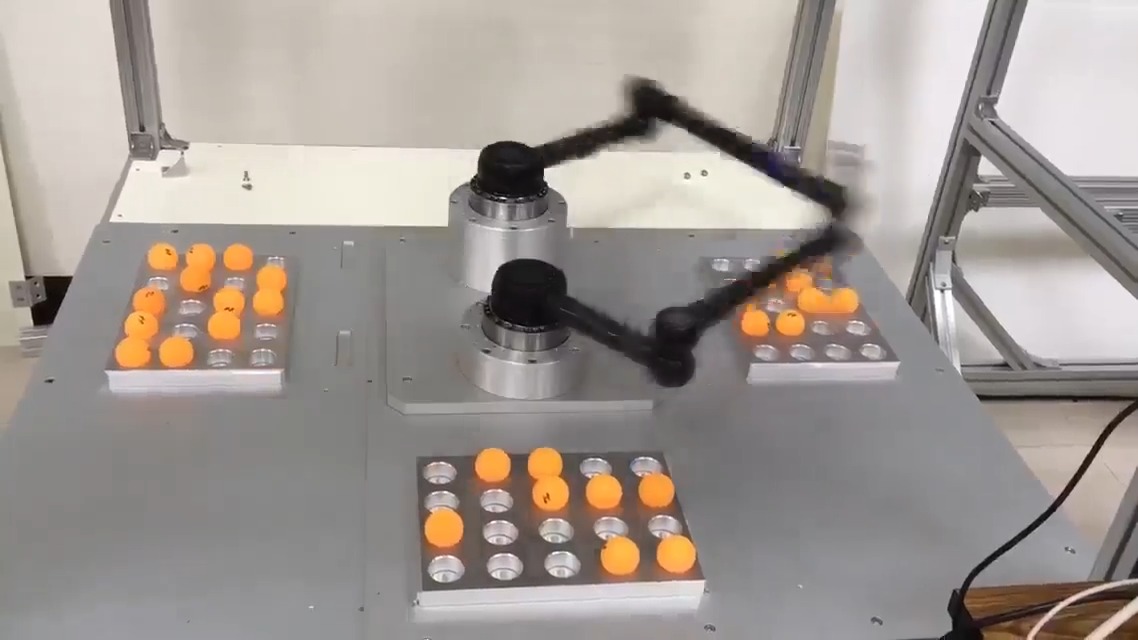
Vision-language models can control robots, but what if the prompt is too complex for the robot to follow directly? We developed a way to get robots to “think through” complex instructions, feedback, and interjections. We call it the Hierarchical Interactive Robot (Hi Robot).

116,845 views • 1 year ago •via X (Twitter)

11 Comments

Physical Intelligence's profile picture
Physical Intelligence1 year ago

Hi Robot uses a high-level VLM policy to parse instructions, camera observations, and user feedback (e.g., interjections) to decide what to do. Full blog post:

Physical Intelligence's profile picture
Physical Intelligence1 year ago

Just like when you are trying to cook a new kind of recipe, and you “talk” through it: first I add the salt, then the onions… the robot “talks” to itself to walk through a complex task, and then our π0 VLA follows these steps.

Physical Intelligence's profile picture
Physical Intelligence1 year ago

A person can talk to the robot while it’s doing this, interjecting, providing feedback, and making additional requests, like in this shopping scenario.

Physical Intelligence's profile picture
Physical Intelligence1 year ago

Hi Robot allows users to define new tasks through prompts, modifying how the robot should perform a task – for example, in this example the robot changes its behavior from the standard “bussing” policy based on user commands.

Physical Intelligence's profile picture
Physical Intelligence1 year ago

To learn more about Hi Robot, check out our blog post: The full-length paper is here:

Yang's profile picture
Yang1 year ago

Want to learn how practical AI skills and automations for your business and work? Check out our 50+ step-by-step video tutorials 100% FREE 20+ hours of Ai and Automation goodness absolutely free 🥳

Brett Peirce's profile picture
Brett Peirce1 year ago

Ummm.... The aluminum pan was recycling... Lol

Venky's profile picture
Venky1 year ago

Pretty cool. Curious - How is this different than reasoning or chain of thought in LLMs?

Allison Barr Allen's profile picture
Allison Barr Allen1 year ago

Very cool

Ryan Ray 🦏's profile picture
Ryan Ray 🦏1 year ago

and ppl still think it's not coming for blue collar

Oli's profile picture
Oli1 year ago

damn absoloutely phenomenal work

Related Videos

China unveils humanoid robot with lifelike skin and blinking eyes built for daily life | Prabhat Ranjan Mishra, Interesting Engineering Large Language Models (LLMs) and Vision-Language Models (VLMs) help process and interpret complex data from human interactions. A Shanghai-based company has developed humanoid robots that appear as real as humans. The advanced bionic humanoid robot is integrated with self-supervised AI algorithms. Named Elf V1, the robot can perceive the world, communicate, learn, and interact intelligently with its surroundings. Developed by AheadForm Technology, the robot offers up to 30 degrees of freedom, powered by a precise control system and an advanced AI learning algorithm. Robot offers expressive facial features The robot offers expressive facial features, moving eyes, and synchronized speech. It can also convey emotions and understand human non-verbal cues, making interactions more natural and engaging. The robot has highly interactive capabilities and lifelike appearances. AheadForm expects that its robots could soon seamlessly integrate into daily life, providing assistance, companionship, and support across various industries. “We believe that by developing realistic and expressive robot heads, we can bridge the gap between humans and machines, fostering a new era of interactive and intelligent robotics,” said the company in a statement. Reports revealed that to avoid the “uncanny valley” effect and be able to interact with us, they are given lifelike skin and capabilities to read our emotions and respond appropriately using dynamic expression simulation and emotion generation tech. Bionic skin and high-precision control system The Elf V1 series of humanoids features 30 facial muscles animated by brushless micro-motors and managed by a high-precision control system. Paired with an ability to detect their users’ emotions with low latency and bionic skin, their facial expressions are nearly identical to those of humans, reported CGTN. The company claims it’s pioneering the development of realistic humanoid robots designed to revolutionize human-robot interaction. It’s enhancing sophisticated humanoid robot heads that can express emotions, perceive their environment, and interact seamlessly with humans. By combining cutting-edge AI and advanced robotics, AheadForm aims to bring life to machines and transform how humans engage with technology. AI models boost robots’ responsiveness Seamless integration of Large Language Models (LLMs) and Vision-Language Models (VLMs) into the humanoid robots can help them process and interpret complex data from human interactions, enabling the robot to learn and adapt in real-time, achieving human-level understanding and responsiveness. AheadForm uses Brushless Motors that deliver ultra-quiet operation and high responsiveness, specifically designed for precision facial movements in humanoid robots. With its compact size, lightweight design, and energy efficiency, this motor is the ideal choice for next-generation robots that require precise, subtle facial control to create a truly human-like experience. Previously, the company unveiled the Lan Series that features realistic humanoid robots with soft skin and 10 degrees of freedom, offering a lifelike appearance and intuitive movements. This series is designed for cost-efficiency, for applications prioritizing mobility and manipulation.

Owen Gregorian

179,005 views • 8 months ago