Video yükleniyor...

Video Yüklenemedi

Ana Sayfaya Dön

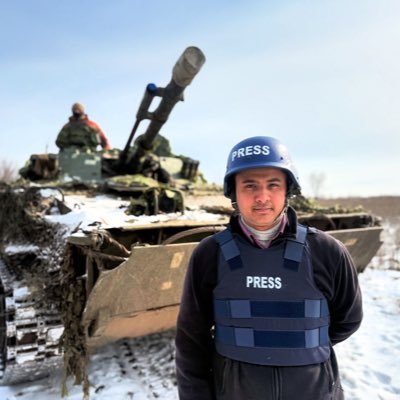
Visual: Pakistan captures Afghan Taliban’s Topsar post in the Topsar sector, Pakistan’s flag raised as part of Pakistan’s ongoing retaliatory operation name Ghazab Lil Haq following Taliban’s unprovoked military aggression.
13,991 görüntüleme • 7 ay önce •via X (Twitter)

0 Yorum

Yorum bulunmuyor

Orijinal gönderinin yorumları burada görünecek

Benzer Videolar

#ISPR Rawalpindi, 4 March, 2026 Field Marshal Syed Asim Munir, NI (M), HJ, #COAS & CDF of #Pakistan visited Wana in South Waziristan to review the prevailing security situation and operational preparedness along the Western border. Field Marshal laid a floral wreath at the Shuhada Monument to pay homage to the martyrs who rendered supreme sacrifices in defence of the motherland. The Field Marshal offered Fateha and reaffirmed that the sacrifices of Shuhada remain the cornerstone of Pakistan’s security and resilience. During the visit, the Field Marshal was given a comprehensive briefing on the security environment, ongoing intelligence-based operations and measures in place for border management. The Field Marshal was briefed in detail regarding ongoing Operation Ghazab lil Haq and developments along Pakistan–Afghanistan border. Field Marshal Syed Asim Munir interacted with the officers and troops deployed in forward areas, commending their unwavering professionalism, operational vigilance, and high morale during the ongoing skirmishes. He lauded their steadfast commitment to safeguarding Pakistan’s sovereignty and ensuring peace and stability in the region. The Field Marshal emphasised that use of Afghan soil by Fitna al Khawarij and Fitna al Hindustan for acts of terrorism against Pakistan was unacceptable and all necessary measures would be taken to neutralize the threat emanating from across the border. The Field Marshal reiterated that peace could only prevail between both sides if the Afghan Taliban renounced their support for terrorism and terrorist organisations. Appreciating the Pakistan Army’s operational preparedness, the Field Marshal expressed full confidence in the combat readiness, synergy, and resilience of the formations deployed along Pakistan-Afghanistan Border. Upon arrival, the Field Marshal was received by the Corps Commander Peshawar.

Pakistan Armed Forces News 🇵🇰

10,911 görüntüleme • 6 ay önce

General Headquarters, Rawalpindi Islamic Republic of Pakistan | 🇵🇰 276th Corps Commanders’ Conference Field Marshal Syed Asim Munir, NI (M), HJ, Chief of Army Staff (COAS) & Chief of Defence Forces (CDF) of Pakistan, presided over the 276th Corps Commanders’ Conference (CCC) at General Headquarters (GHQ), Rawalpindi. The Forum offered fateha for the Shuhada of the Armed Forces, Law Enforcement Agencies, and innocent civilians, reaffirming that their sacrifices remain the foundation of Pakistan's security, unity and resilience. The Forum reviewed prevailing security environment, expressing satisfaction over the operational preparedness, professionalism, and combat readiness of the Pakistan Armed Forces. The Forum expressed serious concerns over the continued use of territory under control of Afghan Taliban regime by Indian sponsored terrorist groups including Fitna al Khawarij (FAK) and Fitna al Hindustan (FAH) to orchestrate attacks inside Pakistan. The forum affirmed that lasting peace and stability in the region is contingent upon preventing use of Afghan Taliban controlled territory by Indian terrorist proxies for which Afghan Taliban regime is directly responsible. Pakistan has unequivocal right to defend its people from terrorism and the Armed Forces shall continue Intelligence Based Operations against terrorism emanating from Afghan Taliban controlled territory under the ambit of Operation Ghazab-lil-Haq. In addition to the kinetic actions, Forum underscored immediate need for putting in place robust governance structures in restive areas which are directed towards public service and welfare as well as to break the nefarious terror-crime nexus thriving under vested political patronage. The Forum noted that post comprehensive defeat inflicted in Mark-e-Haq, there is increased reliance on an evolving pattern of externally supported hybrid warfare and disinformation campaigns to cause unrest. The Forum condemned all such forms of state supported financing, facilitation or sponsorship of proxies and underscored that any attempts to use hybrid means to destabilize Pakistan would continue to be countered with strategic clarity and firm resolve. Reviewing the evolving regional landscape, the Forum appreciated Pakistan's constructive role in promoting dialogue, de-escalation and regional stability. It reaffirmed Pakistan's commitment to peaceful conflict resolution, respect for international law and enhanced regional cooperation to address shared security challenges. The Forum, taking note of Indian rhetoric surrounding the Indus Waters Treaty (IWT), reaffirmed the guidance given in National Security Committee (NSC) directive of 24 April 2025. The Forum expressed resolute commitment to undertake all measures necessary to ensure availability of Pakistan’s rightful share of water as per the directives of the Government and inspirations of the people of Pakistan. The Forum rejected and strongly condemned the ongoing human rights violations and unilateral demographic engineering in Indian Illegally Occupied Jammu and Kashmir (IIOJK), declaring that Kashmir remains the jugular vein of Pakistan. Reaffirming Pakistan's unyielding diplomatic, political and moral support to Kashmir cause, the Forum emphasized that true regional stability hinges entirely on granting the Kashmiri people their inalienable right to self-determination in accordance with United Nations Security Council resolutions. In his concluding remarks, the COAS & CDF directed commanders to follow up expeditiously on the multi-domain transformation plan in line with evolving character of war. He also called upon the commanders to maintain highest standards of vigilance, operational readiness and professional excellence emphasizing integrated responses to conventional, sub-conventional and hybrid threats while safeguarding Pakistan's sovereignty and national interests at all cost.

Eagle Eye

11,063 görüntüleme • 2 ay önce

#ISPR – Rawalpindi, May 2, 2025 Chief of Army Staff (COAS), General Syed Asim Munir, Nishan-e-Imtiaz (Military), chaired a special Corps Commanders Conference held at the General Headquarters (GHQ) today. The forum conducted a comprehensive review of the current geo-strategic environment, with particular focus on the ongoing tensions between Pakistan and India and the overall regional security situation. The forum reaffirmed that the Armed Forces of Pakistan stand ready with full force against any form of aggression or adventurism to defend the sovereignty and territorial integrity of the motherland. The Army Chief praised the professionalism, high morale, and operational preparedness of the armed forces, emphasizing that the Pakistan Army stands shoulder to shoulder with its nation and will defend the country at all costs. He stressed the importance of vigilance and preemptive readiness on all fronts. The forum expressed serious concern over the recent intensification of atrocities in Indian Illegally Occupied Jammu and Kashmir (IIOJK), especially following the Pahalgam incident, and the targeting of innocent civilians across the Line of Control (LoC). It stated clearly that such inhumane and unprovoked acts only escalate tensions in the region and will be met with a clear, forceful, and appropriate response. The forum also strongly criticized India's continued use of crises as a distraction from its internal failures and its repeated unilateral actions to manipulate the situation. It recalled how the Pulwama incident in 2019 was used as a pretext to revoke Article 370 and change the status of Occupied Kashmir. Similarly, the Pahalgam incident appears to be another calculated move by India aimed at diverting Pakistan’s focus from its western front—where it is achieving significant success against terrorism—and from its efforts toward economic recovery. These tactics, intended to provide breathing space to Indian proxies, will never succeed. The forum also expressed grave concern that India is now using the Pahalgam incident as an excuse to undermine the Indus Waters Treaty and attempt to deprive Pakistan of its inalienable water rights. Using water as a weapon threatens the survival of over 240 million Pakistanis and could lead to strategic instability in South Asia. It was also emphasized that India’s military and intelligence agencies are directly involved in terrorist incidents inside Pakistan. Such state-sponsored actions are a blatant violation of international law and are unacceptable in any civilized society. The forum reiterated Pakistan’s firm commitment to peace, stability, and development, while making it clear that any attempt to impose war will be met with a decisive and crushing response. The will of the Pakistani people will be upheld at all costs, God willing. The forum concluded by stating unequivocally that Pakistan's path to peace and development cannot be blocked by terrorism, coercion, or aggression—whether direct or through proxies. All Indian efforts to destabilize the region will be thwarted with determination and foresight. The conference concluded with the Army Chief expressing full confidence in the operational preparedness, defensive capabilities, and high morale of Pakistan’s armed forces, sending a clear message to the nation that Pakistan is fully prepared to confront any enemy at every level.

Defence Index

16,262 görüntüleme • 1 yıl önce

🇮🇳 & Cavemen Misconceptions Before Conflict: Public Support India believed that Pakistan’s polarized environment would prevent its people from supporting their armed forces. They were proven wrong when the Pakistani nation united resolutely against India. The Taliban assumed they could leverage the "Islamic biradar card" to avoid Pakistan’s retaliation. However, fed up with terrorism, the Pakistani people overwhelmingly supported action against terrorists. International Support India assumed years of diplomatic posturing, amplified by Jaishankar’s laser eyes moments, would rally global support and isolate Pakistan. They failed miserably on the diplomatic front. Afghanistan expected China and Russia to come to their rescue, but the international community had largely abandoned them, urging compliance with the Doha Agreement. Propaganda Warfare India believed its vast media apparatus would dominate the international narrative. Instead, they became a laughingstock after falsely claiming to destroy Lahore’s nonexistent seaport, losing credibility both globally and domestically. Afghan accounts, backed by Indian support, thought fake news and emotional propaganda would incite panic in Pakistan. Their efforts backfired, exposing and embarrassing them. Military Response India, clinging to the delusions of 2019, believed a border would shield their jets and limit the conflict to an aerial skirmish. They were stunned when seven Indian jets were shot down deep in their territory, showcasing Pakistan’s military resolve and shocking the world. Afghanistan assumed their sleeper cells and guerrilla tactics would keep Pakistan on the defensive without retaliation. Pakistan disproved this by striking Kabul twice in one week with its air force, with more actions likely to follow. Superiority Complex One important aspect to add in this is the strange superiority complex both these countries cling onto, one sees itself as a global superpower, while the other boasts of defeating superpowers. Each is trapped in its own delusions, and Pakistan has taken the responsibility to bring them back to reality. Current Threats Now, both India and Afghanistan think they can pressure Pakistan with threats of water disputes, terrorism, or political unrest. To them, I offer this quote: "Heat not a furnace for your foe so hot that it do singe yourself."

Mohsin Ali

14,452 görüntüleme • 11 ay önce