Loading video...

Video Failed to Load

Go Home

"We feel like we're just getting started" -Greg Powers on Hell Frozen Over. Join us for Sun Devil Hockey's first The NCHC playoff appearance tomorrow night. 🎙️ Fox Sports 910 🎙️ 6:30 p.m. Pre-Game 7:00 p.m. Puck Drop #BeTheTradition #ForksUp Tyler Paley Alex Coil

11,235 views • 1 year ago •via X (Twitter)

0 Comments

No comments available

Comments from the original post will appear here

Related Videos

When Michael Jackson Collapsed backstage💔💔💔😭😭 Michael Jackson Collapsed Backstage — And What Happened Next Still Feels Unbelievable Tokyo, Japan. December 30, 1992. Tokyo Dome. The Dangerous World Tour. 55,000 fans had been waiting for hours. Michael Jackson was set to go on at 8:30 p.m. But at 8:27 p.m., inside a dressing room beneath the stadium, everything stopped. No warning. No buildup. His body simply shut down. His legs gave out. His consciousness faded. The tour doctor rushed in, checking vitals. The manager began preparing for the worst — how do you tell 55,000 people the show is canceled? Security was already bracing for chaos. Then, at 8:29 p.m. — one minute before showtime — Whitney Houston walked into the room. What happened over the next three minutes has never been fully revealed. But at 8:32 p.m., Michael Jackson stepped onto that stage… and performed for two full hours with an energy no one could explain. To understand those three minutes, you have to understand what led up to them. By late 1992, the Dangerous World Tour had pushed Michael to his limits. Night after night, he delivered two-hour performances filled with nonstop dancing, live vocals, and near-perfect precision. It wasn’t sustainable. “It was like running a marathon while singing,” one tour physician later recalled. “And then doing it again the next night… and the next.” By the time the tour reached Tokyo, the strain was visible. He was losing weight. Sleeping irregularly. Running purely on adrenaline and willpower. “Between shows, he looked drained,” said tour director Kenny Ortega. “But the moment he hit the stage… something switched on.” What no one fully realized was that he was running on empty. Each performance was pulling from a reserve that wasn’t being refilled. And eventually, the body collects its debt. December 30 was supposed to be the final Tokyo show before a short break. “Just one more show… then I can rest,” Michael kept saying. But he’d been saying that for weeks. That day started like any other. Light meal at 2 p.m. Vocal warm-ups at 4. Costume and makeup at 6. Everything seemed normal. Except for one detail. His hands were shaking. “I had never seen that before,” recalled makeup artist Karen Faye. “He always had steady hands. That day… there was a tremor.” When asked if he was okay, Michael brushed it off. “Just a little tired.” At 6:30 p.m., Whitney Houston arrived at the venue. She was in Tokyo for her own shows and had come to support him. The two shared a real friendship — built on mutual understanding of fame, pressure, and the cost of it all. She checked in with his team. “He seems tired, but okay,” they told her. She asked to see him before the show. Michael sent back a message: “I’ll see her after. I need to focus.” By 7:30 p.m., he was getting into costume. The gold pants. The military-style jacket. But he was moving slower than usual. Every movement looked deliberate… like it took effort. “Are you sure you’re okay?” Karen asked again. “I’m fine,” he said. “Just saving energy for the stage.” At 8:27 p.m., his body gave out. And three minutes later… somehow… he was back. What Whitney said. What she did. What happened in that room… No one has ever fully explained it. But the show went on. And for 55,000 people that night, it was just another unforgettable Michael Jackson performance. For the few who knew what happened backstage… It was something else entirely.

RickelleXO

13,393 views • 2 months ago

Introducing Beast League: a fun mobile super sports universe blended with beasts, starting with basketball! 🏀🦁 Play for free, earn Beast Coin, trade collectibles (NFTs), compete in tournaments, win trophies, and evolve with your beasts to unlock new features! 💪🎮 What sets us apart? At Beast League, our principle is putting gamers first and fun first! 🎮💥 With a playable game already in action, there's no need to wait for years to enjoy. Plus, with over 50k downloads and glowing reviews, our players love the game! 🌟📲 Here’s how the game looks like (check the gameplay video): elephant doing slam dunks, have you ever imagined that?😎🐘 Where are we now? Right now, our focus is on community building – our top priority! 🌟 We're dedicated to building a community of people who love the game, actively engage with us, and are in it for the long haul. 🎮💬 Plus, we're hard at work finalising our exclusive collectibles (NFTs), set to drop soon! 🔥 What to look forward to? Get ready for an adrenaline-fueled ride with Beast League! 🎉 In just a matter of weeks, we'll be kicking off exciting events like beta testing, airdrops, WLs, and collectibles (NFT) minting – it's going to be epic! 💥 And don't forget: a surprise is coming Q2 this year 🚀💼 Exciting times ahead – join us on this journey! What can you do now? Here's what you can do now to be one of the first Beast OGs: 🔥 Follow us on X, join our Telegram and Discord communities, and start engaging with us today! 📲💬 Questions, conversations, content, memes, are all welcome🫡 Compete for Beast Coin & Collectibles! Download the game today (link in bio, currently available in *U.S., Canada, Brazil, Israel and Ukraine*, will add more countries shortly) and create your Beast Account. It'll automatically create a wallet for you to store Beast Coins and Collectibles you can win from Beast League. #Web3Gaming

Beast League

18,701 views • 2 years ago

Bryson DeChambeau shot a final round 65 to finish 3rd at LIV Golf Korea, just 1 shot out of the playoff. He said after the round that the improvement was due to the work he did with Gemini AI after the 71 on Saturday: “Yeah, the beginning of the first round I felt great. Golf swing felt in sync and then it started getting out of sync and it felt like my hands were getting ahead of me. It continued that way for the next two rounds, and it was very frustrating. “I spent some long hours on the range trying to figure some stuff out and I was talking to AI quite a bit last night trying to go through some different physics principles that makes the club turn over, having some alpha torque and gamma torque put in there. I was like, what makes that possibly do that, and was talking about just grip pressure and tension. “So I came out here today with just a little bit more freer hands, and I felt the club a lot better, and I felt like I could close the club a lot more effectively and then I started striping it. “From then on out, I was able to kind of control it. Still missed some wedges to the right coming in, which is kind of frustrating, but that's just me holding on a little bit rather than just letting it go. “I feel like I'm on the right path now, and I had it okay in the first round, but really felt it -- I felt really good this round. I felt better than I did in the first round, which is a good trend. “Hopefully it continues, and I'm just continuing to learn. That's the thing; this game is so brutal. Missing two cuts at the majors and you feel like you're golden going in there, won a couple events and playing well, and this game can kick you when you're at your highest. “It goes for all of us, not just me. It's everybody here. Everybody wants to win. “I think that's the beautiful part about golf is that it can kick you when you're at your highest or it can bring you up when you're at your lowest, and yet we have to respect the game for that. “So I felt great. Didn't feel great in the middle of the tournament, but then the last round today I felt a lot better. “I'm proud of the way I persevered to finish third without really anything.” And then spoke about the Gemini assisted practice session he had at 8pm: “I was slamming the club in the ground trying to figure out what to do. I was frustrated. Been trying everything in my body. I didn't actually figure it out on the range. I went back and started talking to Gemini and trying to figure out just what it could be to passively make the club turn over. Hands just felt like they were moving forward like this and I couldn't get the club to turn over. Even if I tried to stop it here, it still wouldn't turn over. “So I left kind of frustrated and learned later that night that I just needed to relax my grip pressure and let the thing just fold over naturally. “I'm still working it out. I don't have the answer.” The solo 3rd was a good bounce back from a disappointing missed cut at the PGA Championship. He’ll now head to Valderrama next week for LIV Golf Andalucia before attempting to win his 3rd US Open at the historic Shinnecock Hills in a few weeks. Bryson DeChambeau Crushers GC LIV Golf

Flushing It

420,164 views • 1 month ago

Just in $AMD Anush "Speed is the moat"|ROCm🎙️ In the race to define the future of AI, what's the one advantage that truly lasts? It's not proprietary tech, argues Anush Elangovan Elangovan, VP of AI Software at AMD , but the sustainable speed of innovation. He explains why AMD is rejecting the "walled garden" model for its open source ROCm stack, betting that an open community flywheel is the key to victory. Listen to understand how this open strategy is designed to out-innovate closed systems by empowering developers to solve everything from frontier-model challenges to the mundane, everyday problems that define the "last mile" of AI. AMD ROCm Software: Part 1 Transcript [00:00:00] Andrew Zigler: Joining me is Anush Elangovan, VP of AI software at AMD. And when people talk about AI compute, the conversation often stops at hardware specs, but it's more than just physical chips that win the game. It's also the software ecosystems supporting them. [00:00:18] Andrew Zigler: The prevailing strategy in the industry has been to build something like a walled garden. You know, something closed, proprietary locks, developers in. But AMD is betting on an entirely different play, open source acceleration, and with rock, their open source AI software stack. AMD is building not just hardware parity, but an innovation flywheel that's powered by the community with interoperability and the freedom to scale without all of that pesky lockin. [00:00:48] Andrew Zigler: And in this world, speed is your moat and how fast you can innovate while your platform remains open, flexible, and standardize across all of its applications. That's what we're gonna explore [00:01:00] today. So Anush, I'm really excited to have you here. Welcome to Dev Interrupted. [00:01:04] Anush Elangovan: Thanks for having me. Uh, super excited to chat about it. [00:01:07] Andrew Zigler: Amazing. Well, let's go ahead and dive right in with kind of what I laid it out with in the beginning, the idea of the moat and it being about speed. I wanna unpack that a bit because that came from you when you and I first spoke. And I, and I want to know, you know, how do you define speed inside of AMD beyond just things like hardware, benchmarks. [00:01:27] Anush Elangovan: Yeah, that's a very good question. So when we typically talk about speed, everyone's like, Hey, hardware benchmark specs, right? Like, uh, memory bandwidth or, or flops. And that is one important part of it, uh, AMD does very well. With that, we do have, a, a very good history of executing on that axis. [00:01:47] Anush Elangovan: But when I say speed is the moat, it is about, uh, how we prepare, how we build the muscle to run the race for a long time and run it fast. And it is [00:02:00] not about a single point in time that you've, you've beat some you know, benchmark and, and you declare victory. It's about building the ability to consistently develop and deliver. [00:02:13] Anush Elangovan: Both hardware and software innovation at scale and do it fast, right? Like, you know, we we're increasingly getting to a point where models come out and they're, uh, you know, a year or two ago it was like, Hey, they work on AMD on day zero, which is great, but now they are performing on AMD the day it releases, right? [00:02:32] Anush Elangovan: So, what does it take to Prefetch where the industry is going? Be prepared to intercept. At that point is what you know, I, I refer to as you know, the, the speed factor in, in creating this mode, right? And the mode is just shed all things that hold you back and run as fast as you can. [00:02:53] Anush Elangovan: Uh, because the pace of innovation that is, uh, being seen in, in AI [00:03:00] industries is just. Amazing. Right? And it's like, it's transformational at at how you generate electricity. It's transformational as at how you build data centers. It's transformational at how you deploy compute, networking. It's transformational at what kind of use cases you, you know, uh, use AI for. [00:03:17] Anush Elangovan: Uh, and for that, you need to be prepared to, see what comes tomorrow and be prepared to run the race tomorrow. [00:03:23] Andrew Zigler: Yeah, it's a really great perspective because it highlights that it's not just like a checkpoint that you run through. I like how you called out, like it's not just hitting that benchmark or being the best in class at that moment, in that snapshot, it's about having a. The throughput and about having that dedication to the idea and continuing to deliver on it. [00:03:43] Andrew Zigler: It's not just crossing the threshold, but it's also being the engine. And that's what, that's what protects a business. That is the moat, because the moat is that innovation layer, the faster and more, uh, future forward. That you can work and think, [00:04:00] you know, the better. Uh, we, we talk a lot about like future forward work styles. [00:04:04] Andrew Zigler: Like what are the things I could be doing right now today that are gonna be like, way more useful tomorrow? Let, let's abandon those, workflows that are older and that kind of like, that translates into. An advantage when you work that way. You know, what kind of things have you learned working with, uh, like across all spectrums of people who would use ROCm, right? [00:04:23] Andrew Zigler: You have like the developers, but then you also have the enterprises and you have this large span of adoptees, right? So what is the, what does that look like that you learn? [00:04:32] Anush Elangovan: Yeah, so, so the way I look at it is there are gonna be pockets of different, uh, you know, cadences, right? Like, so people who are deploying in enterprises, for example, right? The validation and how long it takes for them to deploy an LLM that's secure. It's, with guardrails, et cetera, maybe longer. [00:04:52] Anush Elangovan: but you still have to go through the process and you have to be prepared to like, walk that walk to deploy an enterprises. That doesn't mean it's [00:05:00] not fast, that's as fast as you can do for that industry, right? And if you are deploying AI in healthcare, right, it's, it's got its own, uh, cycle. [00:05:07] Anush Elangovan: but in each one of these, you want to see how, like, go down to the essence of what is it that you actually have to do. And, you know, I, I, I like how you framed it. It's like it's, you shed your prior assumptions of how things are done, right. And, and you kind of build up from a, uh, first principles, uh, approach to say, this is how I could use AI to unlock, whatever I'm doing. [00:05:33] Anush Elangovan: And, and, some of it, you know, it's good to really step back and look at. Just question every part of it, right? Like right now you're getting chat GPT and, Gemini competing for like, math, olympiads and, and, uh, college, uh, reasoning, uh, tests. Right? And, and those are like that, that is amazing and increasingly like complex tasks that they're trying to do. [00:05:58] Anush Elangovan: But there may also be like. [00:06:00] More mundane things that AI could, could get applied to. Right? And, and so when we think about shedding old ways, you wanna shed it not just in like the tip of the spear. It's like, you know, I'm gonna see what's the frontier model. It's also, it could be something as simple as. [00:06:18] Anush Elangovan: How do you choose a, a movie, uh, you know, like a recommendation system, right? Or, or, uh, an automated, uh, flight, uh, rebooking system. So the moment, you know, your flight is late, uh, right now it's a notification, right? It's like, oh, you got a text message saying your flight's late. And I got that like three times this week. [00:06:38] Anush Elangovan: But anyway, uh, and, and, and, and, I was just like, okay, so if I were to rethink this. All this MCPs that we have that should be hooked up into an MCP that says, your flight's delayed. Here are your options. If you want, you know, these are the paid options. Yeah. Here are the free options. This will get you back into your you know, Toronto airport [00:07:00] tonight. [00:07:00] Anush Elangovan: Or if you stay, here's a hotel plus this, plus this, plus. It's just like, go ahead is all I should say. Versus now I'm like, okay, can someone, you know, can I call a travel agent? Can I do this? Can I go online and log into And you know, so we gotta fundamentally rethink even those like small, nuances of, things that we do that can be automated out and AI is really, really good at doing something like this, right? Maybe I just explained an AI startup idea right now. Somebody should just start that. [00:07:29] Andrew Zigler: I think you did. Yeah, you definitely did. Someone, one of our listeners is definitely going to lift that off of you. I, I, I, you know, I hate being on the receiving end of those. You feel a little helpless and then you have to like, follow the whole flow. So I know what you mean. Like I, I like how you called out that the build and this like. [00:07:45] Andrew Zigler: Where speed is your moat and the innovation layer is protecting you, is what makes you better than your competitors. How you scale that and you bring that to market. So by understanding the problems that you're solving, uh, throwing away those older assumptions, but also [00:08:00] recognizing that like. We're building every single day, new things and new ways of using stuff that we're still figuring out the implications of. [00:08:08] Andrew Zigler: And so when you have a lot of velocity and you're introducing a lot of new ideas, and maybe you have that workflow now that automatically rebook your flight off of your late flight text message, and uh, I know I would certainly use it, but you know, what kind of philosophies guide the way that y'all think about building this ecosystem to manage that stability while letting folks. [00:08:29] Andrew Zigler: Play with the speed and the assumptions and the airplane re bookings. [00:08:34] Anush Elangovan: so, so I think, you know, we need to peel one layer down, right? and the philosophy is, Hey, we, we just discovered electricity, right? And you know what we're gonna do? We are gonna make motors, uh, or dynamos, right? Like engines. Uh, sure. We don't know if it's gonna be a Ferrari that you're gonna make, or it's a a a a dump truck. [00:08:57] Anush Elangovan: That's good for doing this. But let's [00:09:00] let, which is also required, right? You need a dump truck. You need a garbage truck. And, [00:09:04] Andrew Zigler: Yeah. You need the [00:09:04] Anush Elangovan: course you need, uh, a Ferrari for a midlife crisis, right? So, [00:09:09] Andrew Zigler: precisely. [00:09:10] Anush Elangovan: But, but my, uh, point is what do we build next? And, uh, and this is what I meant by like, okay, let's, let's take those baby steps to build the. [00:09:20] Anush Elangovan: Infrastructure that's required that we know we'll have to use, right? So, so if I just discovered electricity, okay, great. Now one, how do I save this electricity and how do I use it? So there's battery technology, so you need to do something like that, right? Like so. But then you also want to make it into an actionable thing. [00:09:37] Anush Elangovan: You want to make it for like automobiles, or you wanna use it for, you know, powering, uh, entire cities. So it is that transformational. So, uh, AI is that transformational. So, if you distill down, it'll, it'll come down to how do we think about, what we can do with this this fundamental technology that, We may not be aware of what it [00:10:00] is gonna unlock next, but at least you know the next step is clear, right? It's like a dense fog, you know, it's gonna be like, it, it's the right path. You see the light, but it's kind of like out there and, and the steps you're taking are concrete and you're like, okay, this is good. [00:10:16] Anush Elangovan: I, this is better than where I was or where we were. So we are moving forward. So you can build with the. Intuition from what you see in the short term and a tactical view, but towards what you think the future is gonna be. [00:10:28] Andrew Zigler: Right. You almost like we're all in this like fog of war, right? And like you said, you're reaching out and you're trying to step through it. You could think of it too, as like you're in the dark and your hands are up in front of you and you know that. You're, you're not gonna run your face into a wall because your hands are out in front of you, but you're not gonna maybe do much better than that. [00:10:45] Andrew Zigler: So that's kind of like, I think the eco, the, the industry, the world that we find ourselves in, uh, and we all have to, then this becomes the power of an ecosystem, of a group of people working together to create that layer of, [00:11:00] uh, of establishing the [00:11:01] Anush Elangovan: exactly. And I, I, I just, instead of, you know, saying fog of war I describe it as like, you're in this. Beautiful valley with like a morning, uh, fog that's in. You can smell the flowers. You, you hear the birds. You are like, okay, it's, we are in like, uh, utopian paradise and yes, I just need to like, continue the walk, right? [00:11:24] Anush Elangovan: and then move forward with that, conviction that you're in the right spot. [00:11:27] Andrew Zigler: Yeah. So let's talk about that ecosystem world. This nice, I love how you describe it, this grassy side of a hill in the morning that's covered in some mist and maybe we can't see 30 feet in one direction, but it sure is a beautiful hill and it smells nice. And so we're all here. And why is, in that world, why is. [00:11:44] Andrew Zigler: You know, open source, their strategic advantage that y'all are going for in the AI hardware market. And, and then how does like ROCm turn that into wins for people within that ecosystem? [00:11:56] Anush Elangovan: you know, the, the way we look at it is this, is kind of like how I view [00:12:00] AI and the ecosystem, right? But, but it is for everyone to enjoy. Uh, and so we do want to make sure that. You know, it is, uh, beneficial for everyone. [00:12:09] Anush Elangovan: The ecosystem can come in and, and innovate. It's an open innovation engine. and uh, it is very different from, you know, having a walled garden with, Hey, only I know how to do this and I'm gonna do it and throw it over the fence and you can use it or keep walking, right? So we'd like to be good citizens that way, but also. [00:12:30] Anush Elangovan: Uh, it is self-fulfilling in a way, right? Like it, the, the pace at which we innovate with open source is unmatched. Like, you know, our serving engines are like VLLM and, and sg l. Those things, uh, those frameworks are like super, super aggressive in terms of how fast they come out with features and how fast they can you know, get performant models out. [00:12:52] Anush Elangovan: And that compared with what, uh, you'd get from, you know, the likes of like T-R-T-L-L-M or something is always lagging, right? Because you [00:13:00] just can't keep up with you know, 200 commits a week just on one particular model to get that model really performant [00:13:06] Andrew Zigler: And, and, and in that world where, you know, everyone can enjoy the winds of this, what kind of customer stories or innovation stories have really stood out to you and excite you about building and creating this place for developers? [00:13:19] Anush Elangovan: Yeah. So I think the parts that are super exciting for me are when when we get to see a customer that is first skeptical. Then they start a little like, okay, fine, we'll give you a chance. Uh, we do a simple, uh, POC and then they're like, huh, this seems to work. Yeah, we told you it works. [00:13:42] Anush Elangovan: You don't have to change one line of code. Really? Yes, no need to change one line of code. Okay, let's try a production workload. So then they try it. Oh, you're more performant than the competition. Yes. We're more performant than, than the competition. So how much does it cost? And we're like, oh, it's your TCO is better with, uh, [00:14:00] AMD. [00:14:00] Anush Elangovan: So again, they're like, wow, okay, good. So now how do we deploy at scale? And then we go deploy it at scale. And when they give a thumbs up on that and they say, this is good, right? That's when you know, you, you see it go full circle from like, oh, we, we've never heard about AMD to like actually deploy to tens of thousands of GPUs In the order of a few months, right? It, it, it really is fascinating to see and very exciting and invigorating to [00:14:28] Andrew Zigler: Yeah. At like a great exposure to a lot of interesting problems. And, and then people using the infrastructure, the, the technology available to solve those problems. Really specific problems by the way, that's often why they're bringing their data and AI to it, uh, is because it is really specific and important for them. [00:14:45] Andrew Zigler: And there's a, a lot I think that other engineering orgs can learn and even emulate from AMD's success and, and having this open source ecosystem and it causing this acceleration within. You [00:15:00] know, uh, customers and enterprises that use and adopt the tools and, and, and that creates an advantage. And that goes back to why we're talking and like the real thesis of our conversation today. [00:15:10] Andrew Zigler: So how do you think engineering leaders that are listening to this and obviously tapping into this great success AMD has from an open source flywheel, how do you think other, other folks building in the same space can foster that open, first, that open source oriented culture in order to, you know, accelerate their innovation goals? [00:15:29] Anush Elangovan: Yeah, that's a very good question. So the startup that um, was acquired by AMD we, we built, I mean, we started off doing iot stuff and you know, smart ring and all that, right? But in the, the end of like, uh, and not the end, the last six years of the company was building ML compilers. [00:15:47] Anush Elangovan: And ml, ML compilers are like super, uh, complicated, sophisticated, advanced algorithms, dah, dah, dah. but it was all open source, right? So our VCs were like, wait, what do you mean your core [00:16:00] IP is open source? And um, the speed is the moat applied even then, right? It was just like, yes, if you have an idea that. [00:16:08] Anush Elangovan: Because someone saw this idea that you are, they're gonna be able to catch up, then you probably have the wrong idea anyway. But if they are, you know, you execute and they're gonna catch up, that you should assume they're gonna catch up. Right? So you gotta move forward. So keeping it open source is super important. [00:16:25] Anush Elangovan: But also to your question on like, you know, the learnings from an AMD standpoint, right? If there are, hard problems, I'd say dig in and work through it, right? Like there's no way but through it, right? That should be the simple mentality. And more, uh, frequently than not. you'll see that you'll just make it through in a, in, in good form. [00:16:52] Anush Elangovan: But if you doubt it and you're like, oh, I don't know if I should commit, if I'm, I, you know, what should just commit to do the right thing [00:17:00] every step, right? Every step, and just keep taking one step in front of the other. And in no time you'll see that you'll be running. Right. And, and yes, the first few steps will be like, yeah, everyone's complaining about your software quality. [00:17:15] Anush Elangovan: Everyone's complaining about this and that, and it doesn't work. And, and a few steps in, you know, you get, you get the hang of all the complaints that are coming in. You get the feedback loop. You're like, okay, what, what are you prioritizing again? One step in front of the other, right? You just keep knocking that out and then you get to a point where you're, it just becomes second nature, right? To do the, to do the right thing. And, and then yes, if someone gives you two options, you'll be like, fine. This is, uh, you know, there's always the resource trade off. There's always a human capital trade off, but what's the right thing to do? of course, I, I'm pragmatic about what we choose, but, but if the right thing for your long-term success is dig in, go first, principles, make it [00:18:00] happen. [00:18:00] Anush Elangovan: Well. Then just go for that. There's, there is no shortcut to [00:18:04] Andrew Zigler: acknowledging, you know, how it aligns with your mission, your core company goals, and what you're looking to achieve. And, and I, I love how you rightfully called out that in the open source world and you know, you have your technology that you've built, what you think is your moat upon, right? [00:18:22] Andrew Zigler: It's your code and, and to open source that, or to just make it where anyone could peer in is, you know. Scary in one regard, but two, it just kind of feels like you're handing away your throne room in some kind of sense, a very direct feeling sense. But the ultimately, you were really right to call out, and this is something I think about all the time, that the real power there is still the speed This the speed. [00:18:42] Andrew Zigler: That was the moat at the beginning of our conversation. It's the speed in combination with your. Very specific domain understanding of what you're building and what you're creating, and your new role as the steward of that world and how people plug into it, which [00:19:00] has frankly, a lot more influence and power than lording over a closed. [00:19:04] Andrew Zigler: You know, repository or an ecosystem, and like you said, like throwing things over the wall. Sure. There, there might be people always on the other side of that wall, but you're not gonna have a great connection with them. You're not gonna be able to really clearly understand them. I, I like your metaphor of the side of the field of the mountain a lot more. [00:19:23] Andrew Zigler: But, but in the, in this world, you know, where. That speed is, is the power and, and open source is just one way that you can harness that speed to get really far ahead and to innovate. , There's other parts of this equation that you can be experimenting with too, and I'd love to pick your brain about them as a software leader and, and, and one of them is about looking forward and kind of understanding that future that we're all building towards and beyond today's models and hardware. [00:19:48] Andrew Zigler: You know, what do you see as the next major bottleneck or opportunity in the AI compute space? As, as you know, enterprises and folks start to get a little more mature about what's available to [00:20:00] them. [00:20:00] Anush Elangovan: Yeah, I think, the bottleneck and opportunity is, uh, what I'd call, call walking the last mile of ai. Right. Uh, and like I I, I gave you an example, uh, previously, but, but it's similar to that. It's like there are cases where Humans have so many, uh, things to do in your day. You know, like the, if we sit down and actually had a customer focus like, okay, these customers lives, I'm gonna save four hours of this customer's life. And if you actually sit down and look at all of that, it'll be. Easily automatable, easily you know, uh, applicable, uh, for ai, right? [00:20:39] Anush Elangovan: Like, but then making it happen is gonna take a little bit, right? It's like maybe it's, uh, paying your utility bill, right? Or something like that, right? Or, or, your healthcare explanation of benefits. Uh, like, I'm sure you get an explanation of benefits, and I'm like, I, I don't even know what that thing is. [00:20:55] Anush Elangovan: It's just like EOB and like. [00:20:57] Andrew Zigler: it's a big, a big old PDF. Yeah, [00:21:00] exactly. [00:21:01] Anush Elangovan: Like, like, I'm like great straight to the, uh, shredder, right? And but that could be, you know, automated with the ai, right? It, it, it'd be like, Hey, the summary of this thing is you went and visited this day. Everything is okay. Everything is paid for, so don't worry, it's not a bill. [00:21:17] Anush Elangovan: That again, the same, uh, thing, but the sense of what that information overload is could be. Digested by ai, uh, accumulated over time and retrieved when you need it. Like, I don't, I actually don't even need to know this EOB right now, unless of course, whenever I need to know it, that maybe, you know, like for some benefits I need to figure out what do, what did I do over the past year and how do I apply it? Source:

Mike

14,195 views • 7 months ago

I just left a briefing with important updates to share with you from the Executive on the ongoing snow emergency as we deal with freezing temperatures. While I appreciate the hard work of District workers, the government’s response has fallen far short of what DC residents deserve. I know many residents are understandably angry and disappointed over streets that still need to be cleared and sidewalks that are impassable. We need clear communication and better coordination. Here’s what you need to know: * New heavy equipment started being used last night for snow removal * Crews are prioritizing public safety buildings, 24/7 locations like shelters, government buildings * A lot of alleys will not be passable until next week * Residential trash/recycling/food waste collection is going to be very delayed due to conditions of alleys * DPW is working on ideas to get trash from alleys, including deploying leaf crews not on snow removal to assist * Tomorrow, we will have a better sense from meteorologists of the impacts of any potential weekend storm * Anticipate DCPS making a call about school tomorrow by 5 p.m. tonight Ongoing snow removal efforts: * 280 plows on DC streets with supervisors checking routes * 90 dump trucks picking up snow piles from corners and moving to RFK parking lots * 30 pieces of heavy equipment loading snow where snow is too high. Starting downtown and moving outward Some good news: * Very few isolated power outages * Gas stations have fuel and grocery stores are starting to restock * 8 Recreation Centers remain on standby but haven’t needed to use any for emergency warming and shelter space * 50 new Snow Heroes joined in the last 24 hours to help seniors and people with disabilities shovel sidewalks – volunteer here:

Councilmember Brooke Pinto

161,247 views • 5 months ago

#TAEMIN Global Spin Live at the Grammy Museum - Fan Questions segment [FULL] 🎙️Host: What was the first song you heard from Taemin? 💎Audience: [shouts a bunch of songs] 🐣Taemin: What is your guys’ favorite song? 💎Fan: NEMO! My cat is named Nemo! Taemin: Oh my cat is named Ggung! 1:55 🎙️Question 1: Do you get embarrassed listening to your own voice? [from Denise] 🐣Taemin: When I record my sexy songs like Sexuality, Criminal, something something, I have to acting more emotional—sexy vibe right? Sometimes very embarssed [demonstrates with the sexy part of Want] 2:55 🎙️Question 2: Taemin, your choreo is always so unique. What’s your favorite choreo that you’ve ever danced? [from Stasia] 🐣Taemin: Honestly my choreographer is in here, Kasper! His choreo is very cool but very hard and fast and aggressive, energetic, but I love that style. So for example—Advice. Recently my favorite song is Flame of Love. It’s Korean style, the moves are more contemporary style, that’s more interesting to me recently Lastly my favorite song is Criminal. That song is very conceptive and also choreographed by Kasper. 5:00 🎙️Question 3: What would you consider to be your greatest achievement in live? [from Emily] 🐣Taemin: When I was young I go to audition for…to be artist. So that is my very important moment. I did it! I debuted! 5:50 🎙️Question 4: What is your favorite pre-show ritual [from Gloria] 🐣Taemin: I always clean my teeth, it’s refreshing….and then recently I started consuming things that are a little sour like lemon juice. It helps with the bloating a little bit. And they said it helps with anxiety. 🎙️Host: It helps with bloating?? 🐣Taemin: ah yes!… ah…maybe? That is not… please search it please! [lololololol he was scared he was giving unproven medical advice] 7:20 🎙️Question 5: If you could collaborate with any artist globally who would it be and what kind of sound do you want to create together? [from Jihae] 🐣Taemin: Ah that’s what you’re curious about! There’s so many artist that I love so it’s really hard to pick one but maybe Billie Eilish? I love her attitude. She could draw in concentration even when she makes small sounds and in contrast I can do something much more energetic and maybe the contrast could create something very special. 9:00 🎙️Question 6: Do you ever sing or perform for your cats? 🐣Taemin: I put them on my lap and I maneuver them a little bit and they dance a little bit [Taemin demonstrates the song he sings them] 🎙️Host: Do you do it to your music or other people’s music? 🐣Taemin: It’s an improvised song! 🎙️Host: Are you gonna show these videos? 🐣Taemin: I don’t have hands to film it! Lol 10:15 🎙️Question 7: What’s the style of your new album? 🐣Taemin: You know just yesterday I was sorting through all the music that I wrote and it kind of gets categorized into 3 categories! We have songs that are really powerful and energetic, and songs that are really emotional and beautiful, and then the third category is a little different…maybe RnB? and now it’s something I have to think about how to present these all together. #TAEMIN_Grammy_Museum

cindy 🌥️

17,455 views • 5 months ago

With The January 6th Footage Being Released Today By Speaker Johnson Proving Literal Treason, Now Seems Like The Perfect Time To Reflect On This On The Record Evidence That Nancy Pelosi Spoke With The Chief of the Capitol Police SEVERAL TIMES On Jan 6th. Nancy Pelosi Was Briefed About What Was Going On 🚨 “A second set here. In a press conference on January 7th, Speaker Pelosi called for your resignation on national television. I am calling for the resignation of the Chief of the Capitol Police, Mr. Sund, and I have received notice from Mr. Irving that he will be submitting his resignation. Speaker Pelosi also stated that she had not talked to you since the initial breach of the Capitol, but according to your transcribed interview... You're on the phone with Speaker Pelosi a few times. Well, let me just say this. Many of our Capitol Police just acted so bravely and so with such concern for the staff, for the members, for the Capitol, for the Capitol of the United States. Many of them and they deserve our gratitude. But there was a failure of leadership at the top of the Capitol Police. And I think Mr. Sund... uh... he hasn't even called us since this happened i had made aware that i would be saying that we're calling for his resignation can you explain that discrepancy? yeah that is uh... that that is correct i spoke to speaker Pelosi three times uh... that evening and she went on national tv and said i'd never spoken to her but i spoke to her three times the three uh... three times were the first time when i went over to brief at the secure location. I had called House Sergeant Arms Irving, told him I was going over to brief the Vice President. I was also going over to do a personal assessment of the Capitol. At that point, things were getting under control. Went over there, briefed him on when we can get them back into chambers with Mr. Irving being fully aware. He said he wanted to get Speaker Pelosi on the phone. He made a phone call from his cell phone at approximately 534 where I first briefed Speaker Pelosi. The second call was when I left that location, as I was walking away I met up with Mr. Stanger and we started walking over to the Senate to go brief the Senate when Jennifer Hemingway, I believe it was Jennifer Hemingway, handed me the cell phone and it was Emily Barrett's cell phone calling her and it was Speaker Pelosi on the other line. This is my second call with Speaker Pelosi. Questioning the information I'd given to Vice President Pence about when we can get back into chambers, I assured her that information was correct. I could get them back into chambers by 7 p.m. and the call ended. That was call number two. Call number three was 6.25 p.m. I was over at the Senate from the secure location, I mean from where the Senate had been sequestered, and on a cell phone using Robert Karam's cell phone, they dialed leadership who was over or off site at a secure location, and I briefed all of the leadership of the plans to get them back into chambers. That would have been call number three with Speaker Pelosi. So you didn't have one call, you didn't have two calls, you had three calls, so Speaker Pelosi's comments that she didn't speak to you are inaccurate. That is correct, sir. Let me just say this, many of our Capitol Police just acted so bravely.” The real Insurrection at the Capitol done by the Feds and a Treasonous group of people within our own government to subvert American Tax Payers votes for the REAL elected President of the United States, Donald Trump. Release the J6 was a success. Now we need punishments. #J6Footage

Wall Street Apes

855,910 views • 2 years ago

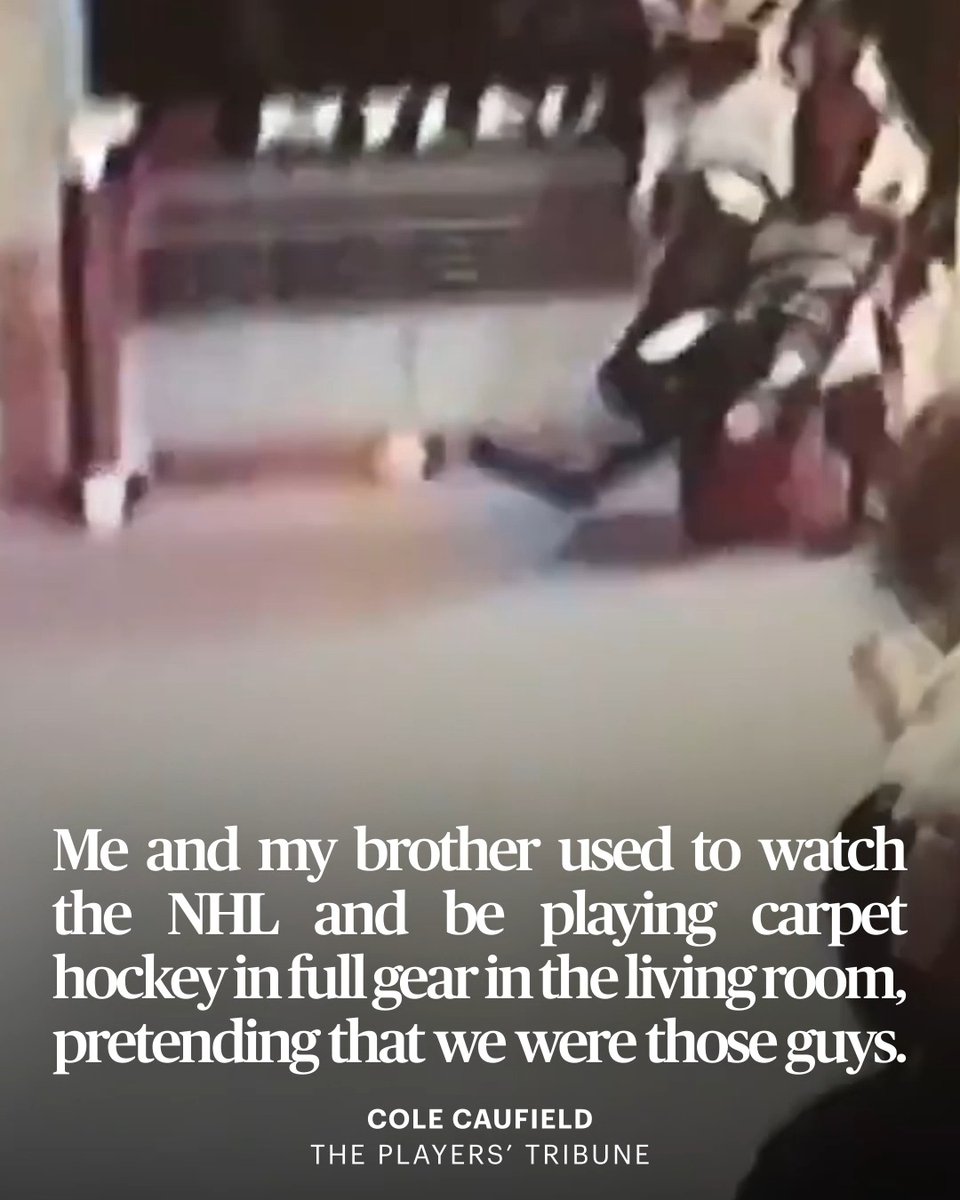
Cole Caufield’s first moments in the NHL: “When I got called up at the end of the 2021 regular season, I didn’t even think I was going to play. We were on a road trip out west, and I was just along for the ride. Healthy scratch. Get acclimated. Practice with the guys. And man, those were some guys. Shea Weber. Carey Price. Eric Staal. Corey Perry. Tyler Toffoli. I was coming into that room probably looking like the water boy. I couldn’t have been more starstruck. We’re at a morning skate in Calgary, and it was a bag skate, of course. I’m thinking I’m going back to the hotel for a nice nap, throw on the suit, sit up in the press box and have a Gatorade. We’re on the bus and somebody tells me, ‘Hey, you’re playing tonight.’ I thought they were joking. I said, ‘Oh my God, we just bag skated. I’m toast.’ I called my parents and my brother, and that was an awesome moment, just them getting choked up and saying, ‘We’ll be watching you on TV.’ That was the hardest nap of my life. I couldn’t even sit still. I mean…. I’m somebody who started skating in diapers. Me and my brother used to watch the NHL and be playing carpet hockey in full gear in the living room, pretending that we were those guys. I demanded to wear my hockey socks and everything. So yeah, that night in Calgary was pretty much the greatest 15 minutes and even plus-minus of my life. I thought that was probably going to be it — a couple games at the end of the season. But we had a few injuries, and somehow I ended up in the playoff lineup. Everything went so fast that I don’t even think I had time to be nervous. I’ll never forget, I was just so happy to be there and so amped up that we were at a morning practice at the start of Round 2 against Winnipeg, and we’re just supposed to be warming up the goalies, right? Nice and easy. We’re in the shootout line, and I get up to the front, and I had this goosebumps moment where I guess it finally sunk in like, ‘You’re a Montréal Canadien. You’re coming down on Carey Price right now. This is unbelievable.’ I came flying down like a bat out of hell at a freaking morning practice after Game 2 of a playoff series — guys are literally still yawning, stretching — and I absolutely rip one on net. As soon as I let it go, I thought, Oh s***. I smoked Carey right in the face. The sound was insane. Everybody stopped. You could have heard a pin drop in there. All I could think was, Is Shea looking at me? Is he going to kill me? I wanted to dig a hole in the ice and hide. Thank God, it was Carey Price. He shook it off like it was nothing, and he’s the chillest guy ever, so he wasn’t even mad at me. But then I skated back to the line and one of our vets just looked at me and said…. ‘Hey kid?’ ‘Yeah?’ ‘Don’t ever f****** do that again.’ Noted. Noted. I think I went five-hole on Carey for the next two months. The puck never left the ice.” Cole Caufield | Canadiens Montréal

The Players’ Tribune

36,239 views • 2 months ago

One hundred days have passed since those two nights. The two nights where I felt the meaning of everything everywhere all at once. I was full of joy, pride, anger, worry, despair, uncertainty, hope, belief, and everything in between. They were as glorious as they were sorrowful. A nation was telling a romantic, dramatic, violent love story. The story of Iran and our absolute love for it. What transpired after is not that different. Those of us who are survivors of the January massacre feel like we are still there. We are still experiencing the exact same wave of emotions. We remember. We remember the heavy metallic smell of gunpowder in the air. We remember the ash of the fires we lit up dancing in the cold wind. We remember how we illuminated a sky that stood darker than ever, because the occupying syndicate had initiated a total blackout. Digital and electrical. They tried to plunge us into the absolute dark. We remember how the light of the phones they had severed from the outside world became beacons in our hands. We held them up in the dark, desperate to show the world exactly how many of us were fighting and how we were holding the line. We remember how we felt when we stood around the fires we started, chanting Javid Shah together. It felt like that fire was our collective will. We stood around it because our unity was the very thing breathing the fire of courage into every single one of us that night. The words I had held dear for so long hit me deep in my core when I was standing beside that fire, taking my place in the Lion and Sun Revolution. I remember them echoing throughout my entire existence: "The legends of my homeland are not forgotten myths, My people still breathe fire through the darkest rifts. Alive and standing firm where shadows meet, Fear and ignorance have died upon their feet." I remember being amazed to see our true flags everywhere, because I knew exactly how hard it was to acquire one under the gaze of a terrorist syndicate. I remember the rapid gunshots. I remember the taste of tear gas in my throat, the ache of my mussels throughout my bosand the sickening worry over my friends and loved ones burning a hole inside my gut. And I remember seeing the spark of pure, undeniable fear in the eyes of their thugs. I remember all of it. My rage will not let me forget a single second. Each moment of each day, awake or asleep, I feel that exact same mixture of feelings while I watch foreign politicians play their diplomatic games and broadcast their confusing noise. And that is exactly how I know in my heart that we will end this regime one way or another. Because even if the world turns away, I know I have my compatriots to rely on, both outside and inside this country. I know we will keep moving forward no matter what. Now, to those sitting in absolute safety who tell us to just go pick up a gun and fight for our freedom: Speaking as an Iranian civilian locked inside this country, first I have to ask you, where the hell do I get a gun or the ammunition to load it? I am not saying we cannot get weapons. I am trying to tell you that what you say is infinitely harder than it sounds from your safe distance. But regardless of your advice, be absolutely sure of this fact: we are not sitting by asking for our freedom to be handed to us on a silver platter like some privileged kid. We have already fought and bled on the asphalt for our liberation. When the time comes, we will do so again. We will not forget. We will not forgive. And we will take our country back. Pāyandeh #Irán. Javid Shah.

Decado

40,452 views • 2 months ago

i often describe lightcell energy 🔆 as building portable dyson spheres. harnessing the power of spectrally pure, chemically fueled, man made stars. and it's remarkable that within just a few months of starting experiments, we started achieving brightnesses greater than the sun ever shines on earth. (note, in large part because it is 1/600,000th of our sky -- a limitation that our lightcells, our "dyson spheres" do not have, wrapping around our emitter.) within a few months, in a garden shed in Canada, we achieved over 3 suns, over 300,000 nits (cd/m^2). within a few more months, in our lab in San Francisco, Jon, Steve and I achieved almost 7 suns, 670,000 nits. albeit destructively to the apparatus! at temperatures that eroded our cutting torch, our salt supply, our quartz tubes, or cracked. our sapphire. but this was in 2023! to a large extent, the development over the past couple of years, from mid 2023, to 2024, and all this year, was a steady effort to invent and develop, in some cases for the first time, for any team on earth, a materials stack, and everything relevant to to, to make high temperature parts for (a) continuous operation, and (b) that could tolerate the extreme temperatures and chemical environment necessary to vaporize and condense salt, in a continuous cycle, with no moving parts. we basically continuously tried the stupidest thing that could possibly work. some things, like "use table salt" worked out amazingly well -- though they had knock on requirements, like now you have to reform and condense sodium chloride in heat exchangers other things, we tried all the stupidest things we could think of, until we ran out of stupid things to try. Then we had to start trying clever things. Like, the material that we chose, alumina, which can handle the molten NaCl, and the temperature, and will not further oxidize, since it is already an oxide, is super hard, as in high stiffness. It has finite thermal expansion. You must therefore relieve the thermal expansion via curvature. You can ONLY POSSIBLY survive thermal gradients and cycles through curvature. This will requires you pioneering a field. Roll up your sleeves. It has been an epic journey getting this far! Of course, it is yet unwritten if lightcell energy 🔆 can even complete it, much less by the end of the year, but, i can certainly set a medium term goal: more than 1,000,000 nits (cd/m^2, or ~1kw/m^2). brighter than any firework. maybe achieved by New Years? that will be a hell of a firework, and a beautiful omen. 1000x brighter than HDR, 10x brighter than 1kW/m^2, 10 suns, the max brightness of a Sun, incident on the Earth's surface here's the twist: it would now not be cheating to use recuperation AND oxygen enrichment if you're burning green hydrogen from electrolysis, since you can set up to hold on the oxygen. it's for this reason, and many more that I'm excited to welcome my heroes, Terraform Industries / Casey Handmer to lightcell energy 🔆's SAFE and Cap Table. We're building the Yin to Terraform Industries' Yang of abundant hydrogen and synthetic fuels. We are excited to work on both the technology and the multi megascale to gigascale development sites -- energy campuses, power centers -- to build revolutionary, cost effective proving grounds for synthetic fuels and energy technology. Thank you so much. We are empowered and inspired by your belief and investment in us. We will make it count 🫡 Thank you again, as well, very much, to our many investors who we have not yet tagged, and will tag, on our THANK YOU FOR SUPPORTING US ON SAFES WHILE WE WERE JUST A DREAM post, soon to come. Hope to paint funding announcements in a new, golden light!

Danielle Fong 🔆

274,983 views • 7 months ago

I'm pumped to announce that DFS Mastermind is officially LIVE! I know I teased it some and showed it off but the pre-launch is over and now we build… The journey is just getting started and some of you have already joined in on the project with me. Thank you so much for your support! The early feedback is strong and has been that this concept of premium DFS evergreen content on demand, so to speak, where the community helps create and impact the content/ideas is a game-changer. So, what is DFS Mastermind? It's a passion pursuit project I created for all those that want to take DFS more serious with focus on the new topics and trends, review/application, information and education. All while collaborating with others that have that same curiousty and hunger for more knowledge! This includes content like: • Process/Strategy videos watching over my shoulder and listening as I explain my exact process across different sports and bringing in others that excel at sports I’m not as skilled/experienced with. • Case Studies/Review videos learning how I review and apply certain concepts I pick up from other top players and for other DFS sports. • Exlusive Interviews with DFS players - both professional and casual to learn more about their history, journey and see what we can pick up and learn from their past, lifestyle, mindset etc. • LIVE Events where we hop on a Zoom call together to collaborate and discuss topics around DFS sports, strategy, process, game theory, along with Q&A sessions etc. All this and MORE! There’s also a private Discord for reflection/collaboration before and after events and to discuss new content releases, share thoughts and ask questions that are sparked from watching/listening to them. Everything releases in both audio and video format, so you can take it in your own way, on your own time. If you miss a LIVE Event, it’s recorded and available for playback at your convenience. A completely new, innovative way to see things. Along with the ability to impact the content you see via the community-controlled content aspect! Important to note, this community won’t give you any projections, picks, plays, tools, data etc. (See Ship It Nation 🚀). It will instead give you evergreen knowledge and insight on topics many DFS players struggle with daily. A way to learn at your own pace and be part of collaborations with other DFS players of all skill levels. No matter what DFS sites you’ve been with or are currently at, this community is a great add-on for you. There’s something you can take away and apply across all the things I’ll cover because the community is helping decide it, proving a majority wants it! My mission is to help others get better at DFS and continue to grow the game we all love! Even if it does tilt us heavy at times! If you’ve ever enjoyed any of my work, this is a way to help ME, help YOU! This also helps the entire community. Join US: I truly appreciate if you can reply and/or help share this post. Thank you! Any questions, just shoot me a DM. I read all replies and respond to all DMs! P.S. I'm also offering a couple bonuses right out of the gate: 1.Most know I love a good giveaway, so why not kick things off with one of the biggest I’ve ever done! 👀 Anyone that joins the journey and supports will get entered into a draw on Dec. 23, 2024 for 1 $3,333 Ultimate Main Event Millionaire ticket on DraftKings, taking place Dec. 29, 2024. 2.When I first kicked this project off publicly, I asked thousands of DFS players to send in topics/questions they struggle with. Thanks to the 350+ that sent in questions, as it helped me create: DFS MIND MAP: TOP 10 TOPICS, TIPS, TRICKS & TIDBITS This is a 3hr30min Masterclass that everyone receives when they join the community. I’ll show more on that tomorrow but it’s a HUGE value to get you started and you’ll be part of the early group that receives it! 🧠🧩💡

Tyler Tamboline

60,031 views • 1 year ago

[260408] skynani tiktok live full trans. (starts at 0:33) 🐶: hello! i pressed the wrong button and accidentally went live 🐶: so might as well chat for a bit 🐶: euh we just wrapped up on set 🐶: today was the limit. it was another... brutal Q (filming queue) 🐱: *to himself* haaa sky's live 🐶: i can't take it anymore (the brutal filming) 🐶: *points camera to 🐱* give me a 3-word review for today's Q 🐱: to the max 😅 🐶: it was over the top. beyond "to the max" 🐱: truly the max... 🐶: right now... i'd rank this Q as one of the most brutal ones ever 🐱: top 3 let's say 🐶: top– yeah top 3 for sure 🐱: top 3 🐶: look at this. it's all international fans. thai people aren't awake yet 🐱: hello, good morning everyone 🐶: hello, wakey wakey 🐱: wakey wakey, how are you? 🐶: how are you? you're fine, i'm not fine 😅 🐱: 😂 🐱: we gonna go to take a shower na 🐶: take a shower and then... 🐱: sleep 🐶: and then sleep... 🐱: now please 🐶: sleep– sleep like at least 24 hours 🐱: ohhh 🐱: or should we go to a temple? 🐶: a temple? should we– 🐱: go make some merit 🐶: we really should make a merit 🐱: yeah.. shouldn't even pray for blessings anymore (just need to make merit and cleanse the bad luck) 🐶: true. but let's go for it everyone! the final stretch! 🐶🐱: 💪💪 🐱: it's for wu! please give us your support too 🐶: right. please support us and the whole team/crew too 🐱: yeah 🐶: today was a real "bloody struggle" 🐱: please look forward to wu. we're giving it our all 🐶: ah let me ask you this. is it true or not, that you couldn't stop hiccuping during your scene today? 🐱: it's true! i don't even know why! 🐶: 😂 🐱: it happened to me like 3 times in a row! 🐶: and it wasn't even hiccuping outside the scene. it happened while– 🐱: yeah! i hiccuped during the scene every single time! and it was the exact same scene every time too, a scene that was like ohhh 🐶: and at first– at first i didn't know you were hiccuping. i was like "what is that sound?" i thought it was a train making sounds 🐱: and i had to like try to create the emotion (of the scene) but while i was talking i was like *hiccup sound* 🐶: yeah 🐶: *points out a comment to 🐱* 🐱: what? *looks at comment* 🐶: so weird/strange 🐱: can i just rest for a bit? 😅 🐶: *to comment?* not yet na! 😂 🐶: *reading comment* susu na! (fighting na!) 🐱: fighting, man! 🐶: i see this "keep fighting" comment... are you really telling me to fight? 🐱: fight on everyone! 🐶: yeah ✌️ 🐱: peteniran, fight on! 🐶: everyone, fighting! ✌️ 🐱: ✌️ 🐶: we'll get through this together 🐱: 😅😭 🐱: ackkkk!! 🐶: let's go! 🐱: ackkkkkkkkk!!! 🐶: okay that's about it everyone. you guys should go back to sleep 🐱: good night 🐶: what day is today? 🐱: good morning 🐶: today is wednesday. ahh let's go– 🐱: is it wednesday already?! 🐶: of course it's wednesday 🐱: isn't it tuesday? 🐶: we started filming on tuesday 🐱: 😂😵‍💫😵 🐶: it's already 6:30 am 🐱: 😫😭 🐶: it's wednesday now 🐱: oh... 🐶: this is the literal definition of... "staying up until the sun hits your eyes" 🐱: fight on, sky! fight on to us! 👏 🐶: heui we've reached siam already! 🐱: well done! (x2) (to us) 👏 🐶: we're at siam! everybody get hyped! 🐱: 😂 🐶: okay bye bye everyone 🐱: good night 🐶: goodnight– *something happens off screen* 🐶🐱: EUIII!! 👤 (driver?): *says sth* 🐶: eui phi calm down 😅 #skynani #สกายนานิ

𝙚𝙧𝙜𝙤 ✧

38,043 views • 3 months ago

From Creator to Founder: The Rollercoaster Journey of Building Chatter Social Man, what a journey it’s been so far. Four years ago, I was just another creator, spending late nights on Clubhouse during the height of the pandemic. Like so many others, I was searching for connection, for community, for something meaningful. But what I found there wasn’t just connection—it was purpose. Alongside my brother, Jonathan Bing, we built a nightly show that reached over 5 million people. Imagine that: 5 million lives touched by conversations that felt real and unfiltered, all on a platform that at its peak had 10 million monthly active users. Clubhouse was magic. But then the decline began. Watching the platform struggle, I couldn’t help but reflect: what made it great? What went wrong? And what could the future look like if we did things differently? The Spark of Chatter As a content creator, I understood the needs of both creators and users. I knew what excited people, what kept them engaged, and what made them leave. Clubhouse had tapped into something special, but it had missed the mark on scalability and sustainability. By September 2023, I couldn’t stop thinking about the potential for something new—something that brought back the magic of real-time interaction but made it scalable, engaging, and sticky. And so, I set out to build Chatter Social. But I wasn’t a tech founder. I didn’t have a background in software development or a network of Silicon Valley insiders. What I did have was determination and the belief that if I could bring the right people together, we could build something extraordinary. Building the Team The journey to build Chatter started with assembling a team. Through my network from my days on Clubhouse, I found Samir, my first CTO. He believed in the vision and was instrumental in getting the project off the ground. Shortly after, I connected with Tyler, our Head of Design, whose creativity brought life to our ideas. A developer joined us soon after, and we were off to the races. By the end of 2023, Samir had to step away due to other commitments, and we promoted the developer to CTO. At the same time, I brought on Banko, a Sony music executive, as our CMO. Banko’s connections led to one of our biggest early wins: landing Davido, a global superstar, as an owner-ambassador. To this day, I still marvel at the fact that Davido believed in our vision when all we had were Tyler’s Figma designs. From Dream to Reality Early 2024 was a whirlwind. We hired Yurii and Vasyl, two developers from Ukraine who brought incredible skill and dedication to the team. Vasyl, in particular, stood out as a leader and has since earned an equity position in the company. But despite these wins, we were facing growing pains. Our new CTO struggled to meet deadlines, and as a result, I found myself constantly pushing back the launch date. What started as a January release turned into February, then March, then April, then May. By then, people on Twitter Spaces—where I had been hyping up the platform—started doubting if we even had a product. Launch and Lessons June 1, 2024, marked a turning point. It was the day my son Noah was born and the day we launched Chatter in private beta. We started with just 40 users, but by the end of the month, we had grown to 1,000. The engagement was unbelievable. Users loved it, even though we had launched with just one feature: live rooms. This represented less than 20% of what we had planned, but it was enough to show that we were onto something big. In July, we launched our public beta on the App Store as an invite-only platform. Within 48 hours, Chatter ranked as a top 30 social app in over 30 countries. But our invite system throttled access, and most users couldn’t get in. While engagement metrics soared for those inside, our AWS costs exploded. In August, our AWS bill hit $10,000. By September, it had climbed to $15,000, and we were drowning in bugs and glitches. The breaking point came when our CTO became unresponsive, often disappearing during critical moments. Users were dropping off, frustrated by the issues, developers were confused and the team was also growing increasingly frustrated, I made the tough decision to let him go. A New Beginning Enter Horane, a long-time user of Chatter who had been with us since private beta. He was the first to discover some of the most innovative use cases for the platform and had a deep passion for its potential. After meeting him in person at a Chatter event, I knew he was the right person to step into the CTO role. When Horane took over, we discovered just how bad the situation was. Key areas of the codebase were locked, and there were no separate environments for development and production. Every fix seemed to break something else. But through sheer determination and countless 18-hour days, Horane stabilized the platform. Today, Chatter is far from perfect, but it’s stable. The bugs that plagued us have been reduced to moderate issues, and our core users—those who stuck with us through the chaos—are still engaged on the platform. Looking Ahead: Chatter V2 While the platform is stable now, we’ve shifted our focus to Chatter V2. This is where the magic really begins. V2 isn’t just an improvement; it’s a complete reimagining of the platform. It includes all the features we couldn’t release in V1 because we were too busy putting out fires. Imagine this: Chatter V1, with only one live feature, was incredibly sticky. Now think about what happens when we release a fully loaded platform with all the innovative features we’ve been working on behind the scenes. The possibilities are endless. V2 is slated to hit TestFlight by the end of December, with a public release in January 2025. And this time, we’re ready—not just with the product but with the lessons we’ve learned. The Hard Lessons This journey has taught me more than I ever thought possible: 1) Your Team is Everything: The right people can make or break your vision. Finding people who believe in your mission is just as important as finding people with the right skills. 2) Adaptability is Key: As a non-technical founder, I had to learn about development, DevOps, and product management on the fly. Challenges will push you to grow, whether you’re ready or not. 3) Trust the Process: Every setback, every delay, every bug—it all taught us something. Without those lessons, we wouldn’t be building the incredible V2 product we are today. 4) Resilience is Non-Negotiable: From technical disasters to predatory investors who tried to exploit my desperation, I’ve had to fight for this vision every step of the way. What’s Next December is shaping up to be an exciting month. We have some amazing events planned on the platform to close out the year, bringing our core community together as we prepare for the V2 launch. When V2 drops, it will mark a new era for Chatter. This isn’t just a social audio platform or a social audiovisual platform. Chatter is all about interactive experiences—making social media social again in ways that are truly unique. The public launch is slated for February 2025, and for the first time, we’ll have the marketing dollars to tell the world about Chatter. Our core community has been our biggest cheerleaders, and I can’t wait to see how the world reacts when they experience what we’ve built. Final Thoughts This has been the hardest year of my life, but also the most rewarding. To other founders, or anyone thinking about starting a company: know this—it will test you in ways you can’t imagine. You’ll face betrayal, doubt, and moments where you feel like giving up. But if you believe in your vision and refuse to quit, you’ll find a way forward. Thank you to everyone who has supported me, my team, and Chatter. We’re just getting started. Let’s talk about it. 🚀 If this story inspired you, please like and share it so others can learn from my experiences. The journey is far from over, but I’m more excited than ever for what’s to come.

Nelson Epega

43,340 views • 1 year ago

We are very sad to share the loss of a member of our NFRSA family. RPD Alfie - ‘Alf’ for short, and who served for an astonishing ten years with WMP Dog Unit and West Midlands Police, slipped away with his tennis ball in his mouth last week and Darryl, his handler, shared his wonderful story. “Alf was gifted to West Midlands Police when he was just 10 months old. The reason given by his then owner (who was in tears) “he was so destructive we can’t do a thing with him. He’s a pain in the arse.” What should’ve been a 6 week course was completed in 4 weeks. Turns out he just needed a job.! Alfie went on to work for 10 years during which time he found numerous amounts of drugs, cash and firearms. On one occasion we arrived for our first early shift of the week. A shooting had occurred during the night in a particularly nice part of Birmingham and Alfie and I were tasked with searching for the outstanding firearm. Arriving at the scene I spoke with the Sgt in charge of the search team. “It’s a massive area full of all kinds of s**t. Could you just run Alf over it to see if he shows any interest anywhere. I’ll be in the van, give us a shout.” In typical Alfie fashion, off he went like a stabbed rat, clambering over all manner of junk only to freeze. He’d found it.!! The Sgt hadn’t even taken the froth off his coffee. No matter what time of day or night, no matter what the weather or search conditions Alfie gave his all. With his wonky front foot to his long whippy tail, he made me laugh everyday, he was a real little character. This was summed up on one particular occasion. Monday morning, refresher training. The instructor “We’ve been asked to give a demo at HQ for some VIPs.” Me “No, I don't do media” Later in the day we found ourselves at HQ in front of 100 or so VIPs, all sat in a lecture theatre waiting to be amazed by one of West Mids finest.! The instructor “I’ve hidden the gear (Drugs) in the electrical socket underneath the main screen so everyone can see him work.” In we go and Alfie goes to work, gradually getting closer & closer to the drugs. Standing on his back legs,front feet on the wall. I’m looking on like a proud Dad. Alfies almost on top of the drugs when all of a sudden he drops what he’s doing and shoots towards the audience, running between legs beneath the chairs towards the buffet..!! Oh dear, I thought.! Alfie, having helped himself to a Somosa came running back whilst struggling to swallow the thing. He then went straight back to the drugs giving a perfect “freeze” indication which got a round of applause from the now hysterical audience..!! I reluctantly gave a “click” for a job well done and he come flying over for his ball. As if things couldn’t get any worse and just for good measure Alfie started rolling around on his back all happy with himself and revealed his “pink lipstick”..!! That was Alfie.🥰🐾 Following retirement Alfie went to many a shoot with my wife Jane and our daughter Milly, retrieving & flushing game birds. He was a natural. He passed with a tennis ball in his mouth just the way he wanted. It was an absolute pleasure and honour to have worked Alfie. He put a smile on my face every single day. RIP Little man❤️” What a little star he was - thank you for your service Alfie. Sweet dreams.

NFRSA

15,328 views • 5 months ago