正在加载视频...

视频加载失败

We made an explainer on the power of single cell technology to help understand biology and disease at a single cell level. Thanks Illumina for production support. Clip below and full video at:
19,797 次观看 • 3 年前 •via X (Twitter)

4 条评论

Damien Harkin 的头像
Damien Harkin3 年前

@illumina @shalinhnaik @AliciaOshlack @drjosephpowell @GarvanInstitute @PeterMacRes @WEHI_research Nicely done Shalin!

Sterling Cooley 的头像
Sterling Cooley2 年前

Hey! I wanted to make sure you saw we're doing a Live Webinar for the Ultra Skool Learn how to use Ultrasound Vagus Nerve Stimulation - people are having absolutely WILD experiences on this

Illumina 的头像
Illumina3 年前

@shalinhnaik @AliciaOshlack @drjosephpowell @GarvanInstitute @PeterMacRes @WEHI_research Well done! 👏

Daniel Dlugolenski 的头像
Daniel Dlugolenski3 年前

@illumina @shalinhnaik @AliciaOshlack @drjosephpowell @GarvanInstitute @PeterMacRes @WEHI_research @JensDurruthy

相关视频

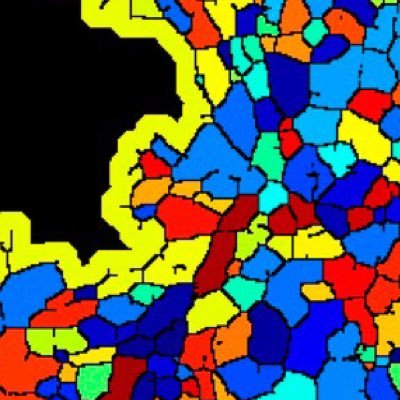
How does an embryo reliably "compute" its form - "cell by cell" - using only local interactions and mechanics, yet produce a precise global body plan? I’m excited to share our Nature Methods paper "MultiCell: geometric learning in multicellular development", presenting #AIxBiology research led by Haiqian Yang and the result of a great collaboration with Ming Guo, George Roy, Tomer Stern, Anh Nguyen and Dapeng Bi. A long-standing challenge in developmental biology is to predict how thousands of cells collectively self-organize as tissues fold, divide, and rearrange. In MultiCell, we represent a developing embryo as a dual graph that unifies two complementary views of tissue mechanics with single-cell resolution: cells as moving points (granular) and cells as a connected foam (junction network). This lets the model learn dynamics from both geometry and cell–cell connectivity. On whole-embryo 4D light-sheet movies of Drosophila gastrulation (~5,000 cells), our model predicts key cell behaviors and the timing of events, including junction loss, rearrangements, and divisions with high accuracy, at single-cell resolution. Beyond prediction, the same representation supports robust time alignment across embryos and offers interpretable activation maps that highlight the morphogenetic "drivers" of development. The broader goal is a foundation for cell-by-cell forecasting in more complex tissues, and eventually for detecting subtle dynamical signatures of disease. Kudos to the team for this inspiring collaboration with brilliant researchers to push the boundary of AI for biology! Citation: Yang, H., Roy, G., Nguyen, A.Q., Buehler, M.J., et al. MultiCell: geometric learning in multicellular development. Nature Methods (2025), DOI: 10.1038/s41592-025-02983-x Code/data links are in the manuscript.

Markus J. Buehler

387,977 次观看 • 7 个月前