Video wird geladen...
Video konnte nicht geladen werden
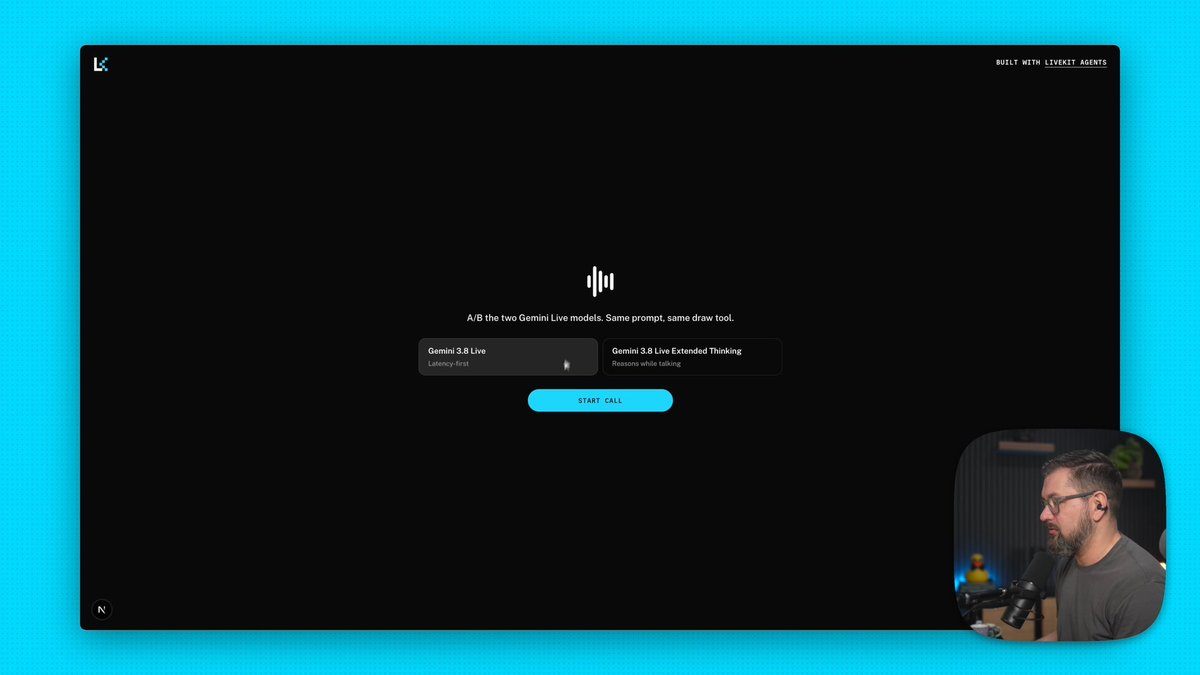
We shipped Agent Console, a realtime debugging surface for voice agents. Talk to your agent and see the entire pipeline live, from audio and latency to tool calls, transcripts, and participant state. Available now in the LiveKit Cloud dashboard.

12,124 Aufrufe • vor 5 Monaten •via X (Twitter)
10 Kommentare

Will never debug any other way again

This is quiet insane and helpful for every voice debugging

We had left LiveKit because of the slow time to get logs, hopefully it will be much better

This is huge. We're using LiveKit Cloud for Aria! Live audio rooms where domain expert AI voice agents speak alongside real people in 13 languages! Debugging the voice pipeline in real-time is exactly what we needed! Trying this today.

Realtime console is useful—how do you capture and replay exact audio plus agent state so nondeterministic failures reproduce reliably?
If you support replaying deterministic state and tool calls like Agent Persona does you can triage voice regressions far faster and validate fixes locally.

Read more in our blog:

Debugging voice agents without seeing the pipeline in real time is like trying to fix a car with the hood welded shut. This changes everything for anyone building conversational AI.
Latency metrics are noise unless paired with automated fault triggers; what checkpoints or alerts tie latency spikes to specific tool calls or transcripts?

Awesome job guys