Loading video...

Video Failed to Load

Go Home

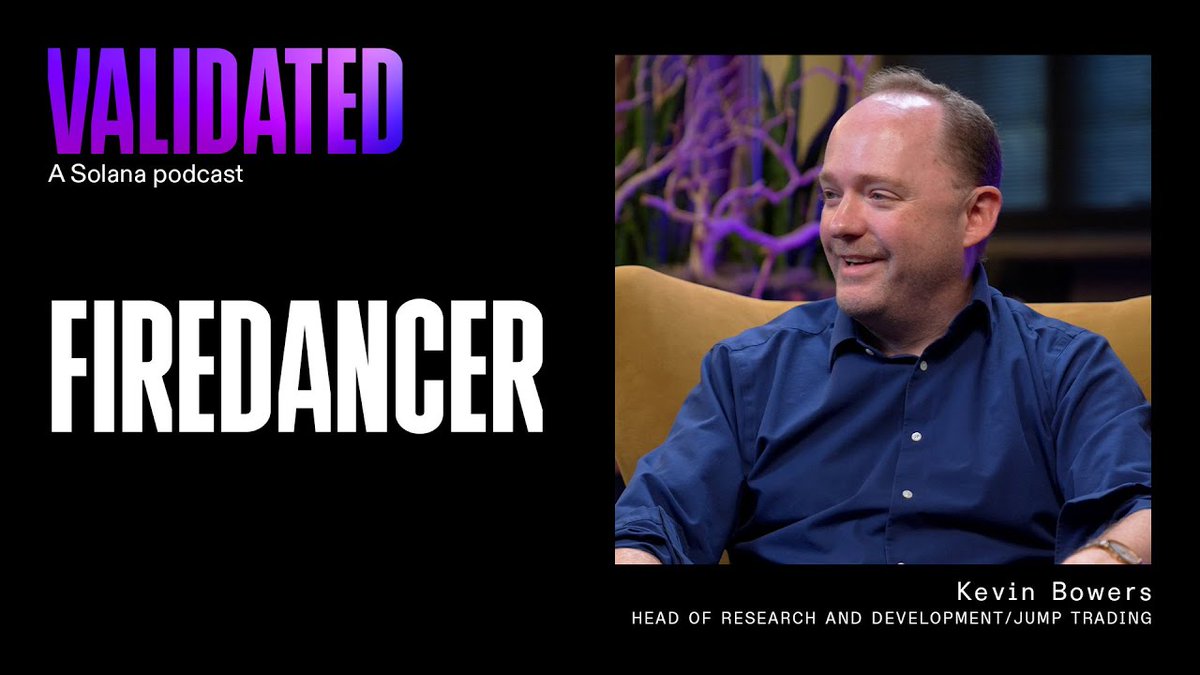
🔥💃 We’re now running Firedancer v0.3 on mainnet! Validators running Firedancer benefit from cutting-edge security, reliability, and performance, improving Solana's liveness and safety. Learn why delegating to AR’s validator supports Solana's future ⇣

21,844 views • 1 year ago •via X (Twitter)

7 Comments

asymmetric research's profile picture
asymmetric research1 year ago

We’ve been working on Firedancer since day one, collaborating with Solana client teams to build a secure, high-performance validator tailored to Solana’s needs. This isn’t just a milestone for Firedancer, but the entire ecosystem.

asymmetric research's profile picture
asymmetric research1 year ago

Security is a long-term game. Our integrated security engineering team has been deeply involved in Firedancer from day one: - Performing in-depth security reviews - Implementing a sophisticated fuzzing strategy - Running an active bug bounty program - Hosting and managing security contests - Collaborating with top-tier firms like @Neodyme, @Atredis and @cure53berlin

asymmetric research's profile picture
asymmetric research1 year ago

Details: ▸ Firedancer audit competition leaderboard ▸ Active bug bounty program ▸ Neodyme audit

asymmetric research's profile picture
asymmetric research1 year ago

Back in 2023, our CTO, (@_fel1x) presented the Firedancer security story at Solana Breakpoint, breaking down the architecture and its potential.

asymmetric research's profile picture
asymmetric research1 year ago

Our work continues. In addition to running Firedancer on mainnet, we will continue operating it in testnet to ensure continuous improvements, harden its core, and push the boundaries of security and performance.

asymmetric research's profile picture
asymmetric research1 year ago

Delegating to the Asymmetric Research validator is a vote for safety and security on Solana. Here’s a quick guide to how to get started ⇣

asymmetric research's profile picture
asymmetric research1 year ago

We’re incredibly proud of @jump_firedancer’s progress since inception, and grateful for the ongoing trust of the Solana community. This is just the beginning!
Related Videos

Watch Joanna Zeng @ SOON (🔴,💊)📍🇺🇸🗽 (Mainnet Arc) interview one of the best & brightest of Solana Matt Sorg 🍨, VP of tech Solana Foundation, as he elucidates Solana's vision and the early formations of Solana's future. The latest developments taking place on Solana: • AlpenGlow Upgrade: Developing multi-leader consensus, asynchronous execution, and pipelining for scalability → lowering Solana's latency to 100ms • Asset Tokenization: Build a universal identity and asset layer for tokenized assets enabling new capital formation mechanisms. • Phased Growth: Starting with native assets, then fostering a mature ecosystem of high-quality tokens like BTC. • Standards & Tools: Developing SVM to connect ecosystems and facilitate high-speed transactions. Quick Highlights on SOON's high-performance copy trading platform on Drift. • Diversified Revenue: Building new income streams for streamers on Twitch SOOP can reduce reliance on inconsistent viewer donations or sponsorships. • Social Trading: Live trading streams with enable viewers to watch and participate alongside traders, creating an interactive, community-driven experience. • Shared Incentives: Streamers earn ongoing commissions as long as viewers engage, aligning interests and incentivizing content. • All-in-One Platform: Combining trading, chatting, and speculation in a single platform makes the experience more engaging and social. Solana is going to be the Layer-1 blockchain to bring the multi-trillion dollar financial industry on-chain. Listen to the full interview from Solana Accelerate 👇

SOON - Solana Optimistic Network (Mainnet Arc)

28,148 views • 1 year ago

Most $TAO holders staking right now are trusting the wrong validators. Not because they are careless. Because nobody explained what the numbers on the Validators page actually mean. There is a tool inside Taostats that shows you exactly which validators are genuinely working and which ones are collecting your emissions without contributing anything to the network. It is free. It is live. And almost nobody is using it correctly. Here is exactly how to read it. Step 1: Understand what Dominance actually measures. Dominance is not popularity. It is not a ranking of which validator is best. It describes a validator's Stake Weight as a percentage of all validator stake weights combined across the network. Stake Weight is calculated as: root stake multiplied by 0.18, plus all alpha staked across subnets converted into TAO. Root stake is deliberately discounted at 18 percent of its face value. Alpha stake carries the full weight. This means a validator with deep subnet-level staking is structurally more powerful than one sitting purely on root, even if their raw TAO numbers look similar on the surface. When you see a validator with rising Dominance over time, it is not just getting more popular. It is getting more alpha stake directed toward it across active subnets. That is a meaningful signal about where serious capital is moving inside the network. Step 2: Check the Take percentage before you delegate anything. Take is the percentage of emissions the validator keeps for itself. Everything above that number flows to you as a nominator. A validator with a 18 percent Take keeps 18 percent of the emissions their position generates and distributes the remainder to stakeholders. A validator with a 50 percent Take is keeping half of what your stake earns. Most people never look at this number before delegating. It is the first number you should check. A high Take is not automatically a red flag if the validator is genuinely performing well and contributing to the network. But a high Take combined with low VTrust in their subnet performance page is the exact combination that should make you move your stake immediately. Step 3: Open the Validator Performance page and find the VTrust score. This is the number most holders never see. VTrust measures how closely a validator's weight assignments align with the honest stake-weighted majority across the network inside each subnet they operate in. Validators are responsible for evaluating miner output and assigning scores. Those scores go into Yuma Consensus and determine which miners earn emissions. A validator doing genuine evaluation work will have weights that align closely with the honest consensus. High VTrust. Consistent emissions. Reliable nominator returns. A validator that is weight copying, meaning they are simply copying the Yuma consensus scores back onto themselves rather than doing real evaluation, will show a flagged return on Taostats. Their nom/24hr/1k TAO score appears in red. This is Taostats telling you directly: this validator is extracting value from the network without contributing to it. When you stake to a weight copying validator, you are funding a free rider. Step 4: Watch the 24hr Nominator Change column. This number moves fast and it tells you something before any other signal does. A validator losing nominators over consecutive days is a validator that informed stakers are quietly leaving. A validator gaining nominators rapidly while their VTrust is healthy is a validator attracting attention for the right reasons. The 24hr column is the on-chain version of sentiment before sentiment becomes a narrative on social media. Step 5: Check Active subnets alongside Total Weight. Active tells you the number of subnets where the validator has a parent or child hotkey running. A validator with high Total Weight but low Active subnets is concentrated. They are running a specific strategy in specific markets. A validator with broad Active coverage across many subnets is building a wider surface area for emissions and is more exposed to the overall network performance rather than any single subnet cycle. Neither is inherently better. But knowing which type of validator you are delegating to tells you what you are actually betting on when you stake. Step 6: Check the Weight Change column over time. Total Weight is a snapshot. Weight Change is momentum. A validator with stable or growing Total Weight over consecutive days is attracting net new stake consistently. A validator with declining Weight Change is losing stake faster than it is gaining it. Most people look at the current number. The people positioning correctly are watching which direction the number is moving and how fast. The difference between a good validator and a dangerous one is not obvious from the outside. It is not the name. It is not the size. It is the VTrust score, the Take percentage, the nominator trend, and whether Taostats is showing their return in red or not. Every one of those signals is sitting on the Validators page right now. Free. Live. Updated every block. The investors who read the data layer before the narrative layer will not need to explain their staking decisions later. Open Taostats tonight. You will want to find this post when you do.

2xnmore

11,771 views • 1 month ago