Video wird geladen...

Video konnte nicht geladen werden

Zur Startseite

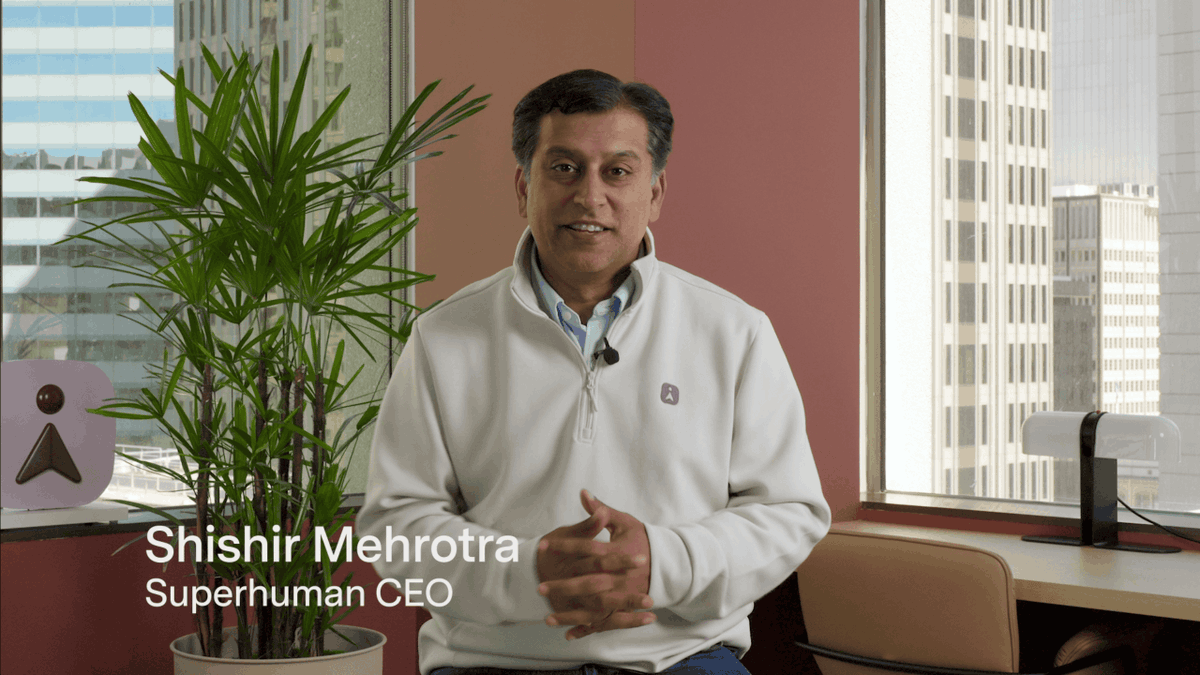
We've spent years building LlamaParse into the most accurate document parser for production AI. Along the way, we learned a lot about what fast, lightweight parsing actually looks like under the hood. Today, we're open-sourcing a light-weight core of that tech as LiteParse 🦙 It's a CLI + TS-native...

581,217 Aufrufe • vor 4 Monaten •via X (Twitter)

0 Kommentare

Keine Kommentare verfügbar

Kommentare vom Original-Post werden hier angezeigt

Ähnliche Videos

PDF parsing is still painful because LLMs reorder text in complex layouts, break tables across pages, and fail on graphs or images. 💡Testing the new open-source OCRFlux model, and here the results are really good for a change. So OCRFlux is a multimodal, LLM based toolkit for converting PDFs and images into clean, readable, plain Markdown text. Because the underlying VLM is only 3B param, it runs even on a 3090 GPU. The model is available on Hugging Face . The engine that powers the OCRFlux, teaches the model to rebuild every page and then stitch fragments across pages into one clean Markdown file. It bundles one vision language model with 3B parameters that was fine-tuned from Qwen 2.5-VL-3B-Instruct for both page parsing and cross-page merging. OCRFlux reads raw page images and, guided by task prompts, outputs Markdown for each page and merges split elements across pages. The evaluation shows Edit Distance Similarity (EDS) 0.967 and cross‑page table Tree Edit Distance 0.950, so the parser is both accurate and layout aware. How it works while parsing each page - Convert into text with a natural reading order, even in the presence of multi-column layouts, figures, and insets - Support for complicated tables and equations - Automatically removes headers and footers Cross-page table/paragraph merging - Cross-page table merging - Cross-page paragraph merging A compact vision‑language models can beat bigger models once cross‑page context is added. 🧵 1/n Read on 👇

Rohan Paul

149,292 Aufrufe • vor 1 Jahr

Web scraping will never be the same. (100% open-source visual search at scale) PixelRAG is a retrieval system that skips HTML parsing completely. Instead of scraping a page into text and embedding chunks, it screenshots the page and retrieves the image. A vision-language model reads the answer straight off the pixels. Why that matters: parsing is where web RAG quietly loses information. - A single HTML-to-text parser can drop 40%+ of a page. - Tables, charts, and layout get flattened or thrown out. - Swapping parsers alone can move accuracy ~10 points on the same docs. PixelRAG indexes the page a person actually sees. The team built a visual index of all of Wikipedia, 30M+ screenshots, and it still beats the strongest text RAG baseline by 18.1% on text-only QA. The repo also ships a Claude Code plugin that gives Claude eyes. It lets Claude screenshot any URL and read the rendered page instead of scraping the DOM. So you can hand it a live page, an arXiv paper, or your local site and ask what it actually looks like. One setup script. No MCP server, no backend. How the pipeline works: - Renders each document (web, PDF, image) to image tiles. - Embeds them with Qwen3-VL-Embedding, LoRA fine-tuned on screenshots. - Builds a FAISS index and serves a search API. A stronger reader model lifts accuracy with no re-indexing, since the index is just pixels. Everything is open-source under Apache-2.0. GitHub repo: Talking about RAG, I recently wrote an article on a new approach that makes retrieval much more efficient by cutting corpus size by 40x, reducing tokens per query by 3x, and improving vector search relevance by 2.3x. The article is quoted below.

Akshay 🚀

937,884 Aufrufe • vor 27 Tagen

We’re open sourcing the first document OCR benchmark for the agentic era, ParseBench. Document parsing is the foundation of every AI agent that works with real-world files. ParseBench is a benchmark that measures parsing quality specifically for agent knowledge work: ✅ It optimizes for semantic correctness (instead of exact similarity) ✅ It has the most comprehensive distribution of real-world enterprise documents It contains ~2,000 human-verified enterprise document pages with 167,000+ test rules across five dimensions that matter most: tables, charts, content faithfulness, semantic formatting, and visual grounding. We benchmarked 14 known document parsers on ParseBench, from frontier/OSS VLMs to specialized parsers to LlamaParse. Here are some of our findings: 💡 Increasing compute budget yields diminishing returns - Gemini/gpt-5-mini/haiku gain 3-5 points from minimal to high thinking, at 4x the cost. 💡 Charts are the most polarizing dimension for evaluation. Most specialized parsers score below 6%, while some VLM-based parsers do a bit better. 💡 VLMs are great at visual understanding but terrible at layout extraction. GPT-5-mini/haiku score below 10% on our visual grounding task, all specialized parsers do much better. 💡 No method crushes all 5 dimensions at once, but LlamaParse achieves the highest overall score at 84.9%, and is the leader in 4 out of the 5 dimensions. This is by far the deepest technical work that we’ve published as a company. I would encourage you to start with our blog and explore our links to Hugging Face to GitHub. All the details are in our full 35-page (!!) ArXiv whitepaper. 🌐: Blog: 📄 Paper: 💻 Code: 📊 Dataset: 🎥 YouTube:

Jerry Liu

107,866 Aufrufe • vor 3 Monaten

I vibe coded a new product on the side while running Every 📧—and today we're launching it for free. It's called Proof, and it’s a live collaborative document editor where humans and AI agents work together in the same doc. It’s built from the ground up for the kinds of documents agents are increasingly writing: bug reports, PRDs, implementation plans, research briefs, copy audits, strategy docs, memos, and proposals. It's fast, free, and open source—available now at Why Proof? When everyone on your team is working with agents, there's suddenly a ton of AI-generated text flying around—planning docs, strategy memos, session recaps. But the current process for collaborating and iterating on agent-generated writing is…weirdly primitive. It mostly takes place in Markdown files on your laptop, which makes it reminiscent of document editing in 1999. That’s why we built Proof. What makes Proof different? - Proof is agent-native. Anything you can do in Proof, your agent can do just as easily. - Proof tracks provenance: A colored rail on the left side of every document tracks who wrote what. Green means human, Purple means AI. - Proof is login-free and open source: This is because we want Proof to be your agent's favorite document editor. How we use Proof Every 📧: - Brandon Gell had OpenAI's Codex write a feature plan in Proof, then tagged my personal Claw (R2-C2) in Slack to review it. R2-C2 left feedback, I added comments, Brandon's agent revised the plan, and then Codex executed on it. Brandon submitted a PR to production without writing a line of code. - Austin Tedesco texts his Claw ideas while he's out on a run, then has it maintain a running Proof doc for his weekly food newsletter. He dictates drafts using Naveen Naidu's Monologue, writes into the outline himself, and uses the provenance gutter to track what's his voice vs. the agent's. - Kieran Klaassen uses it as a lightweight scratchpad for his compound engineering workflow. He brainstorms with an agent in the terminal, shares to Proof with one click, then opens the doc to leave comments and tells the agent to go work on them. His take: Proof's job is to communicate about writing and ideas. Proof is free, open source, and requires no login. I built the whole thing by vibe coding between meetings. I sat down with Brandon, Kieran, and Austin on Every 📧's AI & I to demo it live and talk about how it's changing the way we work. If you're building with agents and need a better way to collaborate on text, this one's for you. Watch below! Timestamps Introduction and the origin story of Proof: 00:02:00 From Mac app to collaborative web editor: 00:07:24 What makes Proof "agent native": 00:09:00 Live demo—watching an agent join and write inside a shared document: 00:14:30 How Austin uses Proof for creative writing and food journalism: 00:20:51 The challenge of multiple agents editing one document simultaneously: 00:24:30 When AI-written docs are better read by agents than by humans: 00:26:48 Brandon's agent-to-agent collaboration loop: 00:29:30 Proof as a lightweight scratchpad versus existing tools like Notion and GitHub: 00:37:09 Why Proof is open source and what that means for builders: 00:42:18

Dan Shipper 📧

32,905 Aufrufe • vor 4 Monaten