Загрузка видео...

Не удалось загрузить видео

На главную

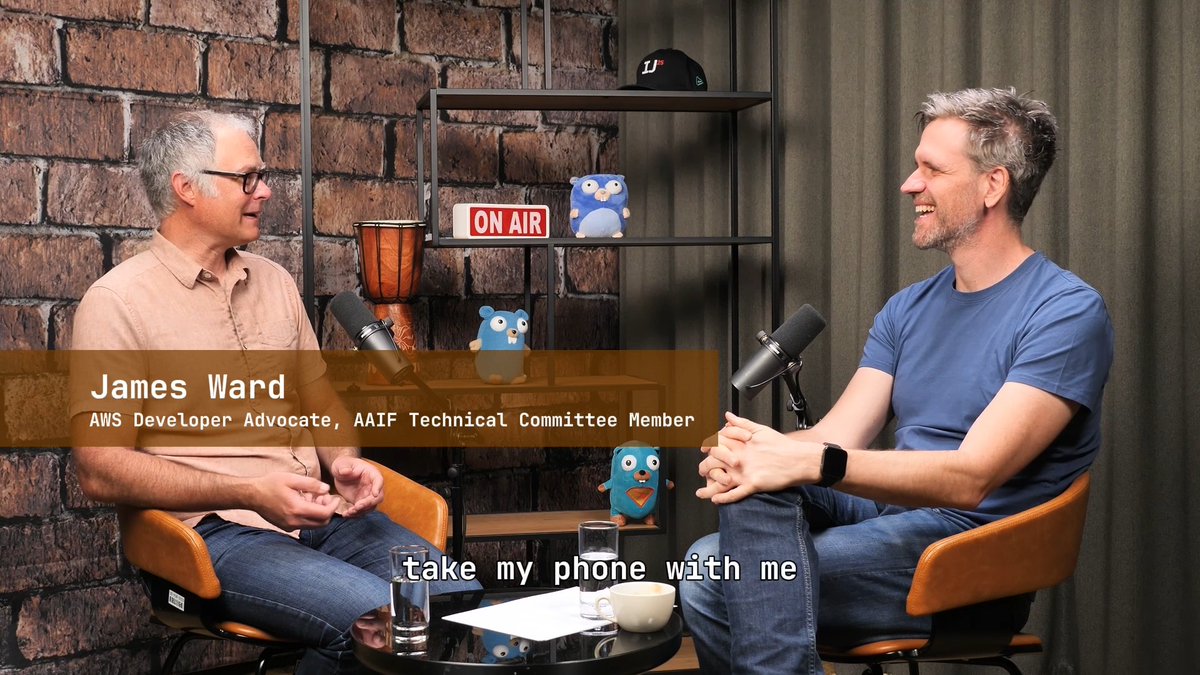
What’s changing in Java startup performance? Spring Boot engineer Moritz Halbritter explains GraalVM Native Image vs Project Leyden, developer experience in Spring Boot, and why AI still struggles with real-world Java codebases. 🎥 Watch now:

13,501 просмотров • 4 месяцев назад •via X (Twitter)

Комментарии: 0

Нет доступных комментариев

Здесь появятся комментарии из оригинального поста

Похожие видео

AI INTERVIEW: OPENAI'S SECRET WEAPON AI agents are no longer just hype—they're here to revolutionize automation, Web3, and beyond. SwarmNode.ai is building a serverless AI agent platform for scalability, efficiency, and real-world impact. In this exclusive interview, he reveals how AI swarms can outperform single models, why OpenAI’s Operator is just the beginning, and how crypto is fueling AI innovation. Plus, he breaks down DeepSeek’s game-changing AI breakthrough, the future of agent monetization, and why serverless AI could be the next frontier in automation. 01:37 – From Engineering to AI: The journey into artificial intelligence. 02:43 – The GPT-3 Moment: How OpenAI’s tech pulled him in. 04:10 – AI’s Biggest Challenge: Why real-world use cases lag behind. 05:05 – OpenAI’s Operator: Why it’s “rudimentary” (for now). 06:25 – Crypto & AI: How tokens help bootstrap AI startups. 08:15 – Can You Bootstrap a Startup with a Token? The trade-offs. 09:56 – 90% of AI Token Holders Don’t Use the Product—Does It Matter? 11:18 – What is SwarmNode?: AI agents, hosted serverlessly. 14:23 – AI Swarms: Why multiple agents outperform single models. 16:08 – What is a Swarm? A simple definition of collaborative AI. 17:32 – “How Can I Make Money with AI?”: Real-world use cases. 18:41 – AI Bounties: Hiring devs to build your custom agent. 20:50 – The Future of AI Marketplaces: Monetizing pre-built agents. 23:15 – DeepSeek’s Disruption: Why it’s good news for AI. 24:46 – Is SwarmNode Compatible with DeepSeek? How it integrates. 26:17 – SwarmNode vs. AI Launchpads: What makes it different? 27:42 – Why Serverless Matters: Cost savings & efficiency. 29:53 – AI Agents in the Real World: Booking flights, managing workflows, and more. 31:11 – Building SwarmNode for Developers: Why it started as a personal project. 32:27 – Explosive Growth: 200,000 AI agent executions in 5 weeks. 34:41 – Why SwarmNode Agents Aren’t Visible on 𝕏 Yet. 36:46 – Startup Hiring Lessons: Finding top AI talent. 39:15 – Why SwarmNode is Built in Python (and What’s Next). 40:32 – Scaling AI Workloads: Handling traffic surges. 41:42 – AWS & Cost Challenges: The biggest monetization hurdle. 42:58 – 2025: The Year of Mass AI Adoption. 45:22 – Should We Be Worried About AI’s Rapid Growth? 46:46 – The Most Underrated AI Tools Right Now. 47:34 – What’s Next for SwarmNode?: Making AI accessible to everyone.

Mario Nawfal

338,236 просмотров • 1 год назад

In 2026, I expect we’ll see the birth of the first AI-native university. Over the past several years, universities have dabbled in AI-enabled grading, tutoring, and scheduling. But what’s emerging now is deeper, an adaptive academic organism that learns and optimizes itself in real time. Picture an institution where courses, advising, research collaboration, and even building operations continuously adapt based on data feedback loops. Schedules optimize themselves. Reading lists evolve nightly and rewrite themselves as new research appears. Learning paths shift in real time to meet each student’s pace and context. We’re already seeing precursors. ASU’s campus-wide partnership with OpenAI produced hundreds of AI-driven projects across teaching and administration. SUNY now embeds AI literacy into its general education requirements. These are the building blocks for more foundational deployment. In the AI-native university, professors become architects of learning, curating data, tuning models, and teaching students how to interrogate machine reasoning Assessment shifts, too. Detection tools and plagiarism bans give way to AI-aware evaluation, grading students on how they use AI, not whether they used it. Transparency and tactful application replaces prohibition. And as every industry struggles to hire people who can design, govern, and collaborate with AI systems, this new university becomes the training ground, producing graduates fluent in orchestration who help augment a rapidly shifting workforce. This AI-native university will become the talent engine for a new economy. Do you think an AI native university will arise in 2026? Leave your thoughts in the comments.

Emily Bennett

37,934 просмотров • 7 месяцев назад

⚫️ UNCANNY VALLEY: AI IN SPORTS — FAIR OR UNFAIR ADVANTAGE? Are we witnessing the end of human merit in sports? Swupnil Sahai 🎾🧠—ex-Tesla engineer and co-founder of SwingVision—thinks AI isn't just changing the game. It's redefining the rules, the training, even the players themselves. From iPhones that out-call line judges to AI coaching that levels the field, this episode explores what happens when everyone has a superpower—and why the next era of sports might feel more like cyborg vs. cyborg. But Swupnil says the real win? It's access. AI could democratize elite performance for everyone. Welcome to The Uncanny Valley Weekly Series with Dr Danish, Fridays at 4:20PM ET, ONLY on 𝕏. Episode 8: THE AUGMENTED ATHLETE—ARE WE ALL AI JUICING NOW? 00:22 – “It’s already better than us at some tasks.” 01:21 – Why user-friendly AI will explode in the next 24 months. 02:41 – Most people still underestimate what’s coming. 04:30 – Universal basic income? Guardrails? Swupnil says we better start now. 06:08 – “AI might be more dangerous than nukes.” 07:30 – The kill switch question—and why Tesla has it right. 08:27 – AI is now coaching, calling, and editing your tennis matches. 09:25 – AI > coach? Why SwingVision is training better and cheaper. 10:29 – The Elon Musk moment that changed everything. 12:48 – On-device AI: faster, private, and zero marginal cost. 15:21 – No data? No problem. Building training sets from scratch. 16:32 – AI won’t ruin sports—it could equalize them. 17:43 – Microchips and implants: when tech becomes the body. 19:29 – Will SwingVision become more than sports? 20:00 – Craziest prediction: AI commentators for every high school game. 21:50 – Subscription vs. surveillance: the real cost of AI access. 23:42 – Hardware is king—and it’s catching up fast. 24:54 – “10 people will run the next billion-dollar startup.” 25:33 – His biggest fear? “Regulation is too slow—and bad actors move fast.” 26:06 – His message to AGI in 2040: “Hey... we come in peace.” 28:33 – Trusted by pros like Andy Roddick + 100+ D1 teams. 29:36 – Are we all just juicing with AI now? 30:48 – “It’s still up to you. It’s on your racket. Literally.”

Mario Nawfal

1,602,951 просмотров • 1 год назад